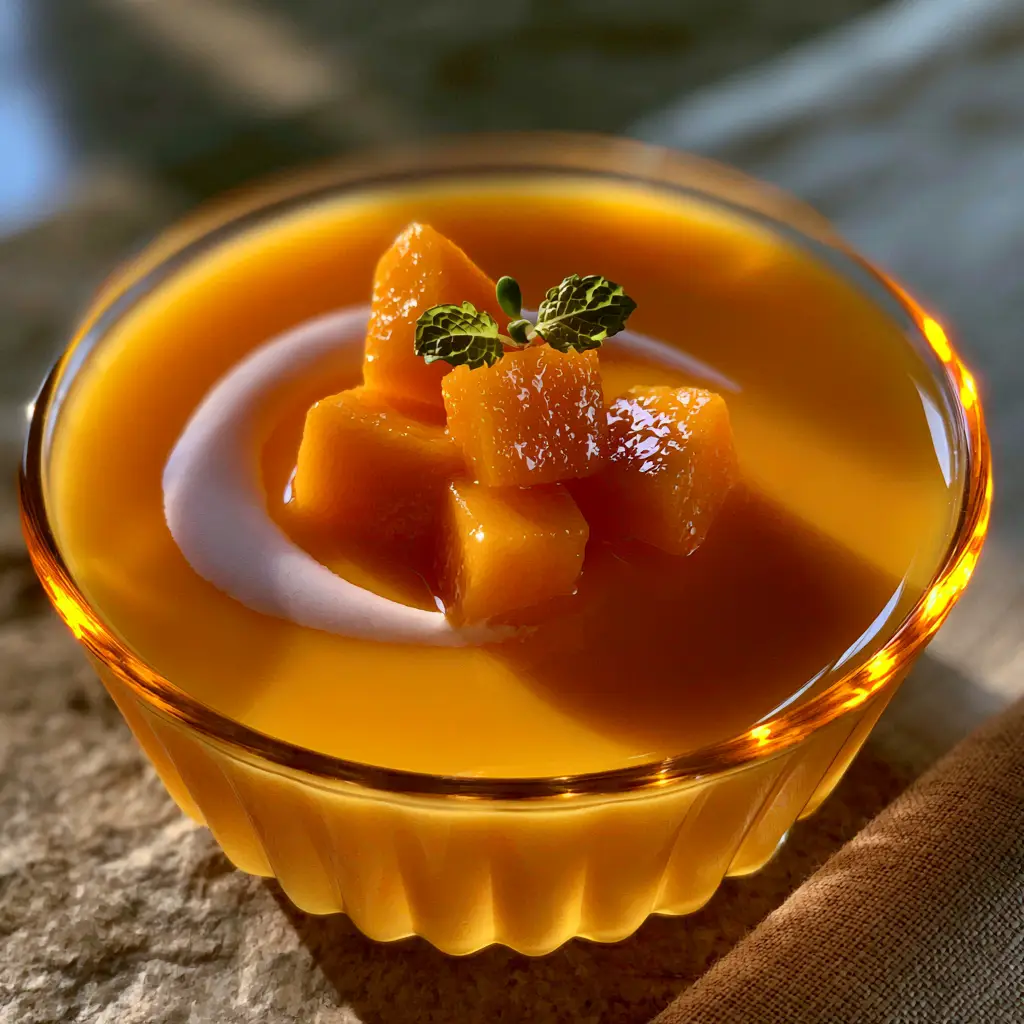
Imagine a dessert that captures the very essence of a tropical sunset. This Mango pudding is not just a treat; it is a sensory experience defined by its vibrant golden-orange hue, an exceptionally glossy surface, and a texture so silky it glides across the palate. Whether you are seeking a refreshing end to a spicy meal or a show-stopping centerpiece for a summer brunch, this recipe delivers a professional-grade result that looks like it stepped right out of a high-end food magazine.
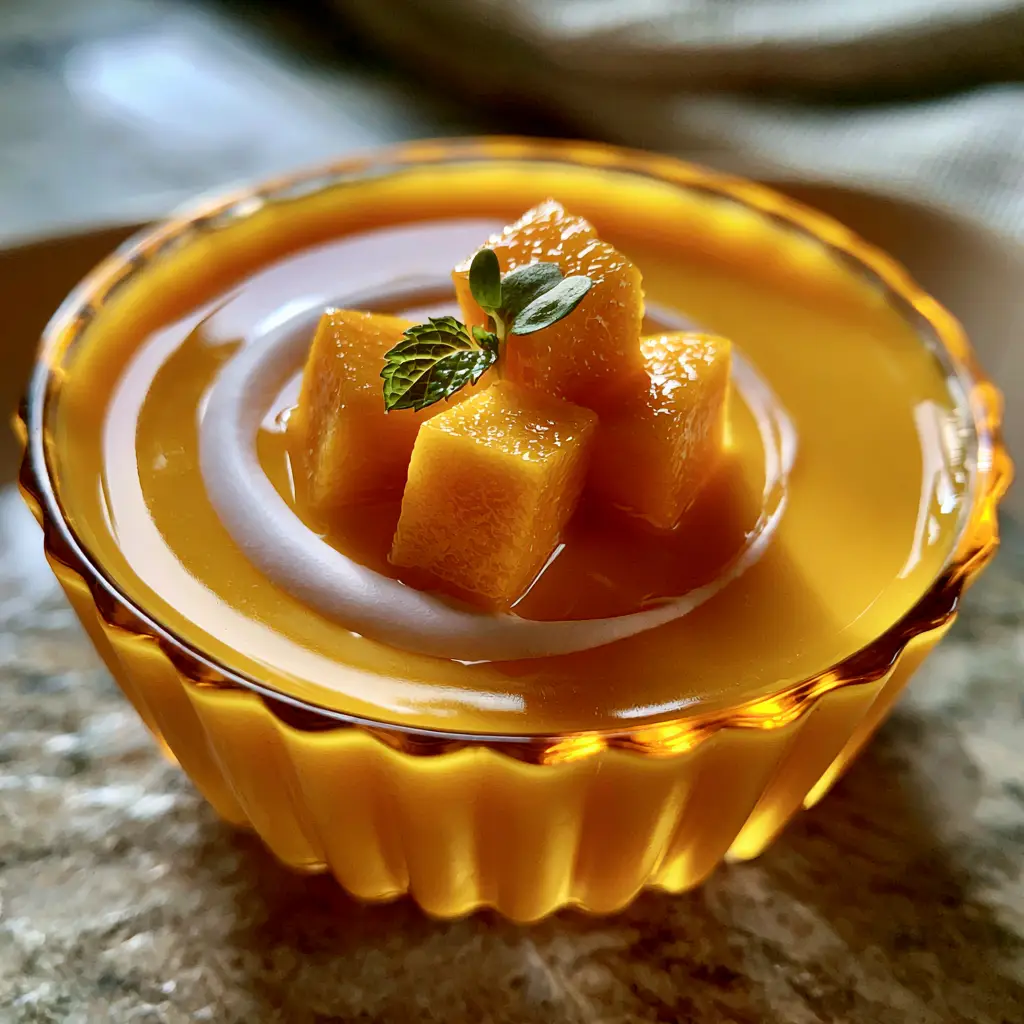
The secret to this specific version lies in the balance between the intense fruit puree and the rich, velvety mouthfeel of thickened coconut milk. When caught in the warm, directional glow of golden hour sunlight, the pudding takes on a glowing amber rim-light that highlights its moisture and precision. In this guide, we will walk through the forensic culinary details required to achieve that perfect set—firm enough to hold its shape in a minimalist fluted ramekin, yet soft enough to melt instantly.
Why This Vibrant Mango Pudding Recipe Works
- Visual Forensic Perfection: By using a chilled mango puree base, we ensure a deep, natural orange color that avoids the artificial look of store-bought mixes.
- Textural Contrast: We pair the velvet-smooth set cream with three perfectly cubed, juicy fresh mango chunks to provide a burst of fresh juice against the dense pudding.
- The Signature Garnish: A delicate, thin swirl of white coconut cream and evaporated milk catches the light, creating a professional “handheld smartphone photo” aesthetic.
- Scientifically Calibrated Set: We use precise gelatin measurements to ensure the surface remains glossy and moist, never rubbery or dull.
Essential Components for the Perfect Mango Base
Fresh Ripe Mangoes: You will need approximately 2 lbs (900g) of mangoes, preferably Alphonso or Ataulfo. These varieties provide the fiber-free, buttery texture and deep golden color essential for a vibrant result.
Thickened Coconut Milk: 1 cup (240ml) of full-fat canned coconut milk serves as the structural fat. This ensures the pudding has a rich, lingering flavor that complements the acidity of the fruit.
Granulated Sugar: 1/2 cup (100g) of sugar is necessary not just for sweetness, but to help macerate the fruit and create that glossy, light-reflecting surface.
Gelatin Powder: 1 tbsp (10g) of unflavored gelatin is the “invisible” architect. It provides the structural integrity required to serve this in a fluted ramekin while maintaining a delicate wobble.
Evaporated Milk: 1/4 cup (60ml) for the final drizzle. This adds a specific dairy richness and a stark white contrast against the orange base, catching the directional light beautifully.
Fresh Mint: A single micro-mint leaf or a small sprig. This adds a singular point of green contrast that makes the golden-orange tones pop in photos.
Professional Tools for a Minimalist Presentation
To achieve the look of a macro-photographed masterpiece, you will need a high-speed blender to ensure the puree is absolutely void of fibers. A fine-mesh sieve is also non-negotiable for straining the mixture before it sets. For the presentation, use minimalist fluted glass ramekins; the ridges in the glass catch the “golden hour” shadows, adding depth to the final image. A precision offset spatula or kitchen tweezers will help you place your three mango cubes with surgical accuracy.
Step-by-Step Evolution of a Masterpiece
Preparing the Vibrant Golden Puree
Start by peeling and dicing your mangoes. Reserve about 1/2 cup (75g) of the best-looking fruit to create those precise cubes later. Place the remaining fruit in a blender and process until it is a liquid gold consistency. For an elite finish, pass this puree through a fine-mesh strainer to remove any microscopic fibers that could disrupt the silky texture.
Blooming and Incorporating the Binder
In a small bowl, sprinkle the gelatin over 1/4 cup (60ml) of cold water. Let it sit for 5 minutes until it looks like a translucent sponge. Gently heat the coconut milk and sugar in a small saucepan over medium-low heat just until the sugar dissolves; do not let it boil. Stir in the bloomed gelatin until it completely vanishes into the white liquid, ensuring no gritty granules remain.
The Fusion of Fruit and Cream
Slowly whisk the warm coconut milk mixture into the chilled mango puree. The temperature change is critical here; the warmth of the milk helps the gelatin distribute evenly, while the cool puree begins the setting process. Continue whisking until the mixture is a uniform, vibrant orange. If you see any bubbles on the surface, gently skim them off with a spoon to maintain that exceptionally glossy finish.
The Art of the Chilled Set
Pour the mixture into your fluted glass ramekins, leaving about 1/4 inch (0.5cm) of space at the top. Place them in the refrigerator for at least 4 hours, though overnight is preferred for the best structural integrity. Cover them loosely with plastic wrap to prevent a “skin” from forming, which would dull the surface gloss.
Expert Tips for Visual and Sensory Success
- The Gloss Factor: If your pudding looks dull after setting, a very brief (2-second) pass with a kitchen torch or a warm spoon over the surface can bring back that moisture-rich shine.
- Precision Cubing: Use a very sharp paring knife to cut your mango into exactly 1cm cubes. The visual prompt calls for a “precise pile of three,” so choose the three most perfect cubes for each serving.
- The Drizzle Technique: Use a dropper or a very small spoon to create the thin swirl of coconut cream. If the cream is too thick, thin it with a teaspoon of the evaporated milk.
- Sensory Cues: When fully set, the pudding should have a slight “jiggle” when the ramekin is tapped, but the surface should remain unbroken and velvet-smooth to the touch.
Mastering the Presentation and Pairings
This dessert is a staple in any classic Chinese recipe collection, often served as a refreshing palate cleanser. To turn this into a full tropical spread, consider serving it alongside a decadent mango float for a study in mango textures. If you are preparing a multi-course meal, this pudding provides a bright contrast to heavier dishes like savory teriyaki chicken or even a crisp teriyaki chicken wrap.
For a breakfast-inspired twist, you could even serve a smaller portion alongside one of your favorite healthy breakfast smoothie recipes. The key is to keep the surrounding elements neutral in tone, much like the stone countertop in our visual prompt, to let the golden-orange pudding remain the star of the show.
Frequently Asked Questions
Yes, you can substitute the gelatin with 1 teaspoon of agar-agar powder and use extra coconut cream instead of evaporated milk for the drizzle.
Yes, you can use frozen mango chunks, but ensure they are fully thawed and drained of excess water before pureeing to maintain the correct consistency.
Straining the puree to remove fibers and skimming off air bubbles before chilling are the best ways to ensure a smooth, light-reflecting surface.
Alphonso or Ataulfo (Honey) mangoes are best because they are non-fibrous, buttery, and have an intense golden-orange color that ensures a vibrant result.
This usually happens if the gelatin wasn’t fully bloomed in cold water first or if the mangoes were extremely acidic. Ensure you use the precise measurements provided.
The Ultimate Vibrant Mango Pudding Recipe
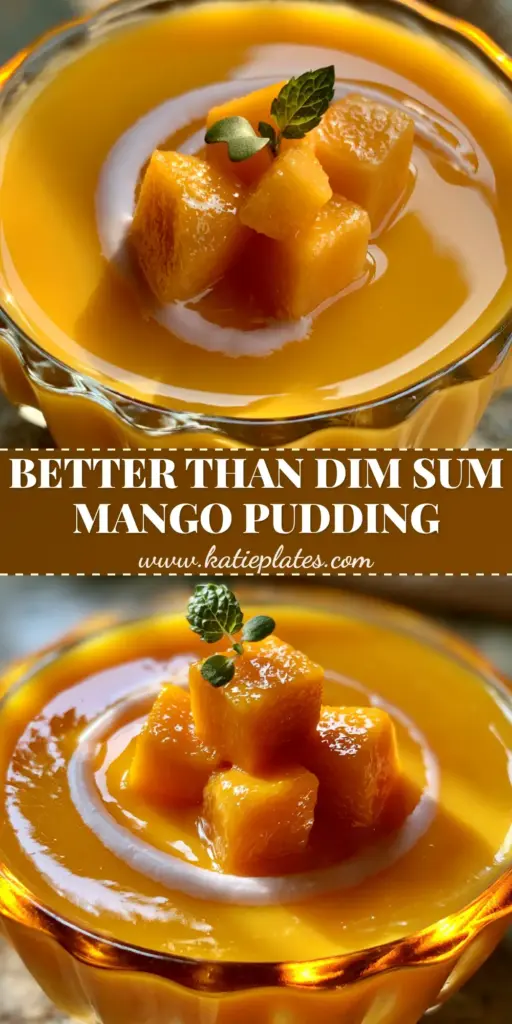
Mango pudding: The Ultimate Silky and Vibrant Dessert Guide
Ingredients
Equipment
Method
- Peel and dice mangoes, reserving a few perfect cubes for topping. Blend the rest until smooth and strain through a fine-mesh sieve into a large bowl.
- Sprinkle gelatin over 1/4 cup cold water. Let stand for 5 mins. Heat coconut milk and sugar until dissolved, then stir in the gelatin until melted.
- Whisk the warm coconut mixture into the mango puree. Pour into ramekins and refrigerate for at least 4 hours until the surface is glossy and set.
- Before serving, place three mango cubes on top, add a single mint leaf, and drizzle with a thin swirl of evaporated milk.
Notes
Ensure the gelatin is fully dissolved to avoid a grainy texture.
Storing and Preserving the Gloss
This Mango pudding is best enjoyed within 48 hours of preparation to maintain its moisture and vibrant color. Keep the ramekins tightly covered in the refrigerator. Note that the fresh mango cubes and mint leaf should only be added immediately before serving, as the mint will wilt and the mango cubes may lose their sharp edges if left to sit on the moist surface for too long.
While you can freeze mango puree, we do not recommend freezing the finished pudding. The gelatin structure will break down upon thawing, resulting in a grainy texture and the loss of that signature silky mouthfeel. If you have leftover evaporated milk, it can be stored in an airtight container for up to 5 days.
Closing & Call to Action
Creating this Mango pudding is an exercise in culinary precision and aesthetic appreciation. From the directional golden hour lighting to the final micro-mint leaf, every detail contributes to a dessert that is as beautiful as it is delicious. We invite you to try this recipe and experience the velvet-smooth texture for yourself. If you enjoyed this guide, please leave a comment below and share your results! Don’t forget to follow us on Pinterest and pin this recipe to your favorite dessert boards for later.