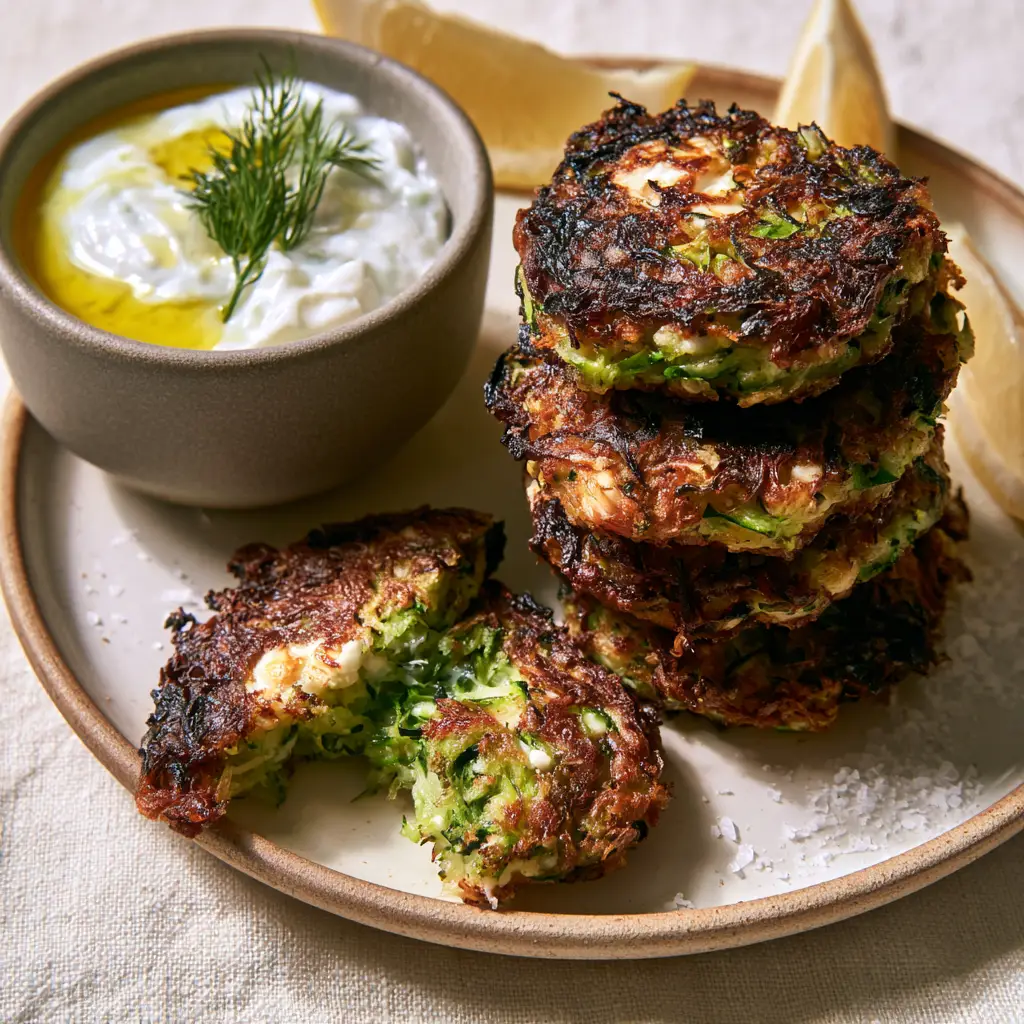
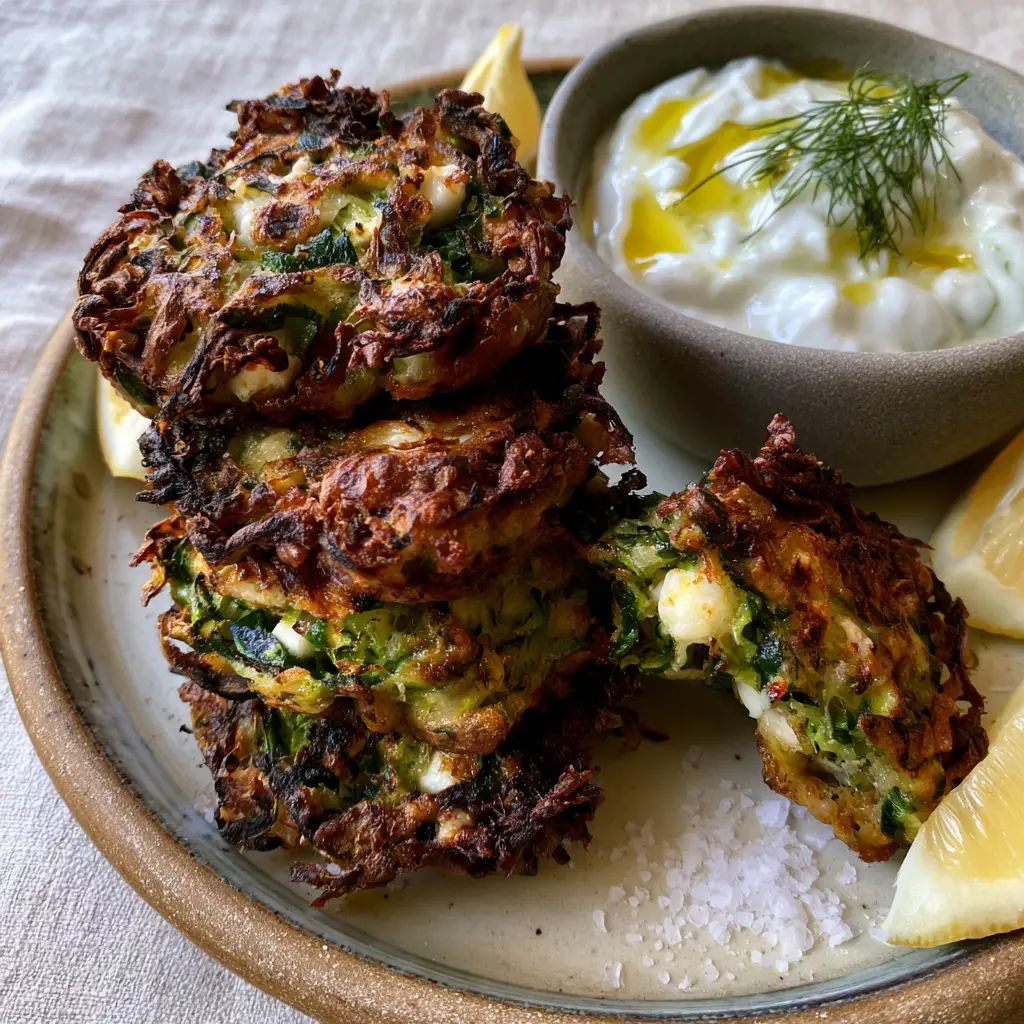
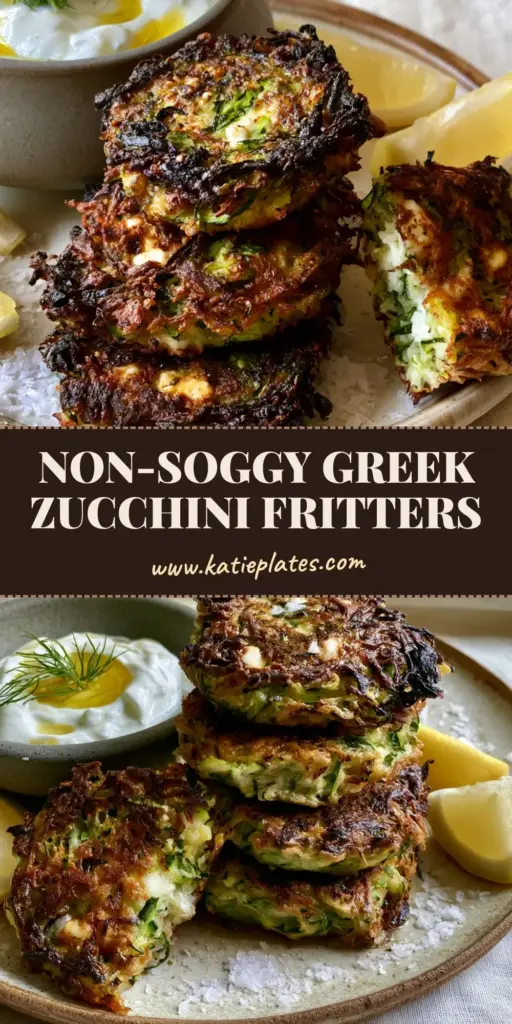
Greek Zucchini Fritters, known traditionally as Kolokithokeftedes, are the crown jewel of the Mediterranean mezze platter. When done correctly, they offer a transformative sensory experience: a shattering, golden-brown exterior with charred lacy edges that give way to a steaming, airy, and herbaceous interior.
The secret to achieving that handheld smartphone-photo-worthy crunch lies not just in the ingredients, but in the culinary physics of moisture control. This recipe ensures your fritters are never soggy, but rather vibrant green gems speckled with melted feta and aromatic herbs.
Whether you are looking for a light summer lunch or a standout appetizer for your next gathering, these fritters deliver a punch of flavor. Paired with a cooling, thick Greek yogurt tzatziki and a bright squeeze of lemon, they represent the pinnacle of rustic Greek soul food.
Why You Will Fall in Love With These Extra-Crispy Zucchini Cakes
- Unrivaled Texture: The combination of high-heat searing and a precision-engineered batter creates deeply browned, lacy edges that contrast perfectly with a soft, airy center.
- Flavor Harmony: Salty feta crumbles melt into the batter, while fresh dill and mint provide a cooling, aromatic lift that balances the richness of the olive oil.
- Visual Masterpiece: With vibrant green zucchini shreds and a glossy pool of extra virgin olive oil on the side, this dish looks as professional as it tastes.
- Versatile Pairing: These fritters complement everything from a Mediterranean orzo salad to a more substantial classic stuffed zucchini feast.
The Anatomy of Ingredients: Foundational and Flavor-Focused
To recreate the visual recipe blueprint exactly, we must balance the moisture-heavy zucchini with structural binders and high-impact aromatics. Every ingredient serves a specific scientific purpose in the pursuit of the perfect fritter.
Fresh Zucchini (1.5 lbs / 680g): The star of the show provides the vibrant green color and moist interior; choose medium-sized zucchini for the best seed-to-flesh ratio. Large zucchini often contain too much water and can lead to a mushy texture.
Kosher Salt (1 tsp / 6g) for Sweating: This is a foundational “invisible” ingredient used to draw out excess moisture through osmosis before mixing. Without this step, the zucchini will release steam during frying, preventing the lacy edges from forming.
Feta Cheese (1 cup / 150g): Use high-quality sheep’s milk feta for those iconic white speckles of melted goodness. The saltiness of the feta seasons the batter from within, creating savory pockets of flavor.
Fresh Dill & Mint (1/4 cup each / 10g): These herbs provide the essential Greek aromatic profile. Finely chopped, they distribute evenly to ensure every bite is fragrant and fresh.
All-Purpose Flour (3/4 cup / 95g): This serves as the primary binder, absorbing any remaining moisture to create a cohesive batter. It is the canvas upon which the golden-brown crust is built.
Baking Powder (1 tsp / 5g): This is the secret to the “airy, non-soggy interior” seen in the visual prompt. It creates tiny carbon dioxide bubbles that lift the batter as it hits the hot oil.
Large Eggs (2): Eggs provide the protein structure needed to hold the shredded zucchini and feta together. They also contribute to the rich, golden-brown color during the Maillard reaction.
Extra Virgin Olive Oil (For Frying): A high-quality oil with a decent smoke point is required to achieve those charred, lacy edges. It adds a fruity, peppery depth that vegetable oils simply cannot match.
Essential Equipment for Culinary Success
Achieving hyper-realistic textures of crunch and cream requires the right tools. A box grater with large holes is essential for creating those distinct, visible shreds of zucchini.
A heavy-bottomed cast iron skillet or a stainless steel pan is highly recommended. These materials retain heat efficiently, ensuring the oil temperature doesn’t drop when you add the batter, which is the key to preventing oil absorption.
Finally, a clean kitchen towel or cheesecloth is non-negotiable. You will need significant leverage to squeeze the liquid out of the zucchini, a task that paper towels simply aren’t strong enough to handle.
Step-by-Step: Mastering the Art of Greek Zucchini Fritters
Phase 1: The Moisture Extraction Ritual
Coarsely grate the zucchini into a large bowl. Sprinkle with the kosher salt and toss well to combine; let this sit for at least 20 minutes to allow the salt to break down the cell walls.
Transfer the zucchini to a clean kitchen towel and wring it out with all your might. You should extract at least 1/2 cup to 3/4 cup of green liquid; the zucchini should feel significantly drier and look like a compact ball of shreds.
Phase 2: Building the Aromatic Batter
In a large mixing bowl, whisk the eggs until frothy, then stir in the chopped dill, mint, and crumbled feta. Add the squeezed zucchini and toss to coat the shreds in the egg mixture.
Sift in the flour and baking powder, stirring gently until just combined. The batter should be thick and chunky, not runny; if it seems too wet, add another tablespoon of flour to maintain the structural integrity.
Phase 3: The Precision Sear for Lacy Edges
Heat 1/4 inch (6mm) of extra virgin olive oil in your skillet over medium-high heat. To test if it is ready, drop a tiny piece of batter into the oil; it should sizzle vigorously immediately.
Carefully drop heaping tablespoons of the mixture into the pan, flattening them slightly with the back of the spoon. Do not overcrowd the pan, as this will lower the oil temperature and lead to sogginess.
Fry for 3-4 minutes per side. Look for the visual cue of dark, golden-brown edges turning almost charred and lacy. The fritters should be rigid enough to flip without breaking.
Phase 4: The Finishing Touches
Transfer the hot fritters to a wire rack rather than paper towels to maintain the airflow and preserve the crunch. Immediately sprinkle with flaky sea salt while the surface oil is still wet.
Prepare the tzatziki by combining thick Greek yogurt, grated cucumber, garlic, lemon juice, and more dill. Drizzle a golden pool of olive oil over the top as described in the visual blueprint.
Expert Tips for the Crispiest Results
- Temperature Control: If the oil is too cool, the fritters will absorb fat and become greasy. If it’s too hot, the outside will char before the interior is cooked through. Aim for a steady sizzle.
- The Double Squeeze: Even after the first squeeze, the zucchini may release more water. Do a second check before adding the flour to ensure the driest possible base.
- Don’t Overmix: Once you add the flour, stir only until incorporated. Overworking the batter develops gluten, which can make the fritters tough rather than airy.
- Fresh Herbs Only: Dried herbs cannot replicate the vibrant green specks or the bright flavor profile required for authentic Greek Zucchini Fritters.
Optimal Storage and Reheating Strategies
Greek Zucchini Fritters are best enjoyed immediately while the lacy edges are at their peak crispness. However, if you have leftovers, they can be stored in an airtight container in the refrigerator for up to 3 days.
To reheat, avoid the microwave at all costs, as it will turn the fritters soft and gummy. Instead, place them in a 375°F (190°C) oven or an air fryer for 4-5 minutes until the exterior regains its crunch.
These fritters also freeze exceptionally well. Freeze them in a single layer on a baking sheet before transferring to a freezer bag; reheat directly from frozen in a hot oven for a quick snack or part of a Ramadan feast.
What to Serve with Your Zucchini Fritters
For a light, vegetarian-friendly lunch, serve these fritters alongside a zucchini noodle dish to double down on the garden-fresh flavors. The creamy tzatziki provides the perfect foil for the salty, fried exterior.
If you are hosting a summer BBQ, they make a fantastic side for grilled meats or a refreshing rice bowl. The lemon wedges included in the blueprint are essential for cutting through the richness of the fried batter.
For a complete Mediterranean spread, consider pairing them with other small plates like shrimp oreganata or a classic Greek salad. The contrast of textures between the crispy fritters and fresh vegetables is sublime.
Frequently Asked Questions
While you can bake them at 400°F (200°C), they will not achieve the signature charred lacy edges and deep golden-brown crunch provided by shallow frying in olive oil.
It is best to fry the fritters immediately. If the batter sits, the salt in the feta and zucchini will continue to draw out moisture, making the mixture runny and the results soggy.
Use enough olive oil to shallow fry and ensure the oil is hot (medium-high heat) before dropping the batter. Do not overcrowd the pan, as this causes the temperature to drop.
All-purpose flour is standard, but you can use chickpea flour for a gluten-free option that adds a slightly nutty flavor and maintains a good structural bind.
Sogginess is usually caused by excess moisture in the zucchini. Ensure you salt the grated zucchini and squeeze it vigorously in a kitchen towel to remove all liquid before mixing the batter.
The Perfect Greek Zucchini Fritters Recipe
Greek Zucchini Fritters: The Ultimate Guide to Crispy, Lacy Kolokithokeftedes
Ingredients
Equipment
Method
- Grate the zucchini into a large bowl. Add kosher salt, toss, and let sit for 20 minutes to draw out water.
- Place zucchini in a kitchen towel and squeeze firmly until at least 1/2 cup of liquid is removed and the shreds feel dry.
- Whisk eggs, herbs, and feta. Fold in zucchini, then sift in flour and baking powder. Stir until just combined.
- Heat oil in a skillet. Drop heaping tablespoons of batter and fry for 3-4 minutes per side until golden-brown with charred, lacy edges.
- Transfer to a wire rack and immediately sprinkle with flaky sea salt. Serve with tzatziki and lemon wedges.
Notes
Use a wire rack instead of paper towels to keep the edges crispy.
Join the Conversation and Share the Crunch!
These Greek Zucchini Fritters are a testament to how simple ingredients, when treated with the right technique, can create a world-class dish. The combination of lacy edges and a feta-studded interior is something every home cook should experience.
If you made this recipe, I would love to hear how it turned out! Did you achieve those perfect charred edges? Leave a comment below and tell me about your experience. Don’t forget to follow me on Pinterest for more culinary inspiration and visual recipe guides.
Sharing is caring—pin this recipe to your favorite boards so you always have the secret to non-soggy zucchini fritters at your fingertips!