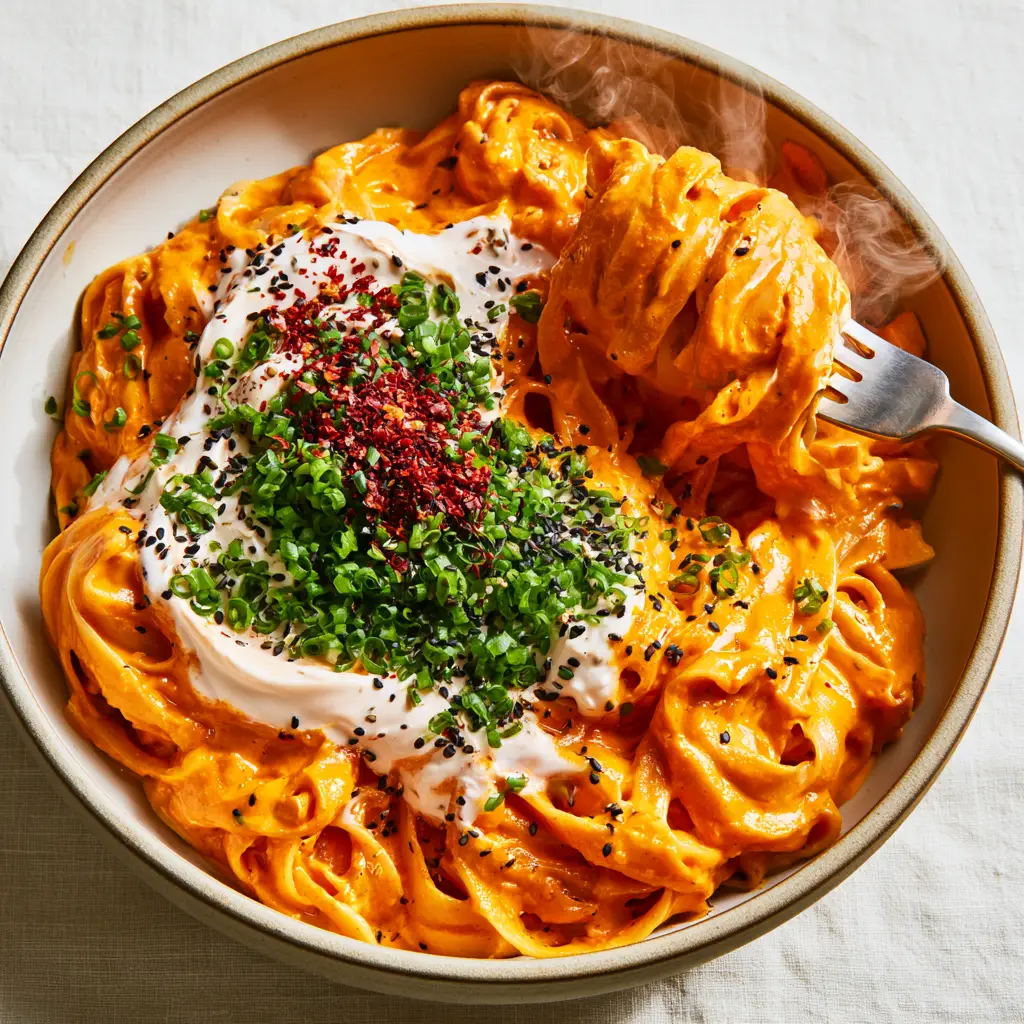
When the worlds of Italian comfort and Korean bold spice collide, the result is nothing short of spectacular. This Gochujang pasta is a vibrant, velvety masterpiece that has taken the culinary world by storm, offering a deep umami warmth that common tomato sauces simply cannot replicate. Imagine thick strands of fettuccine, perfectly al dente, draped in a glossy, deep-orange sauce that clings to every curve of the noodle.
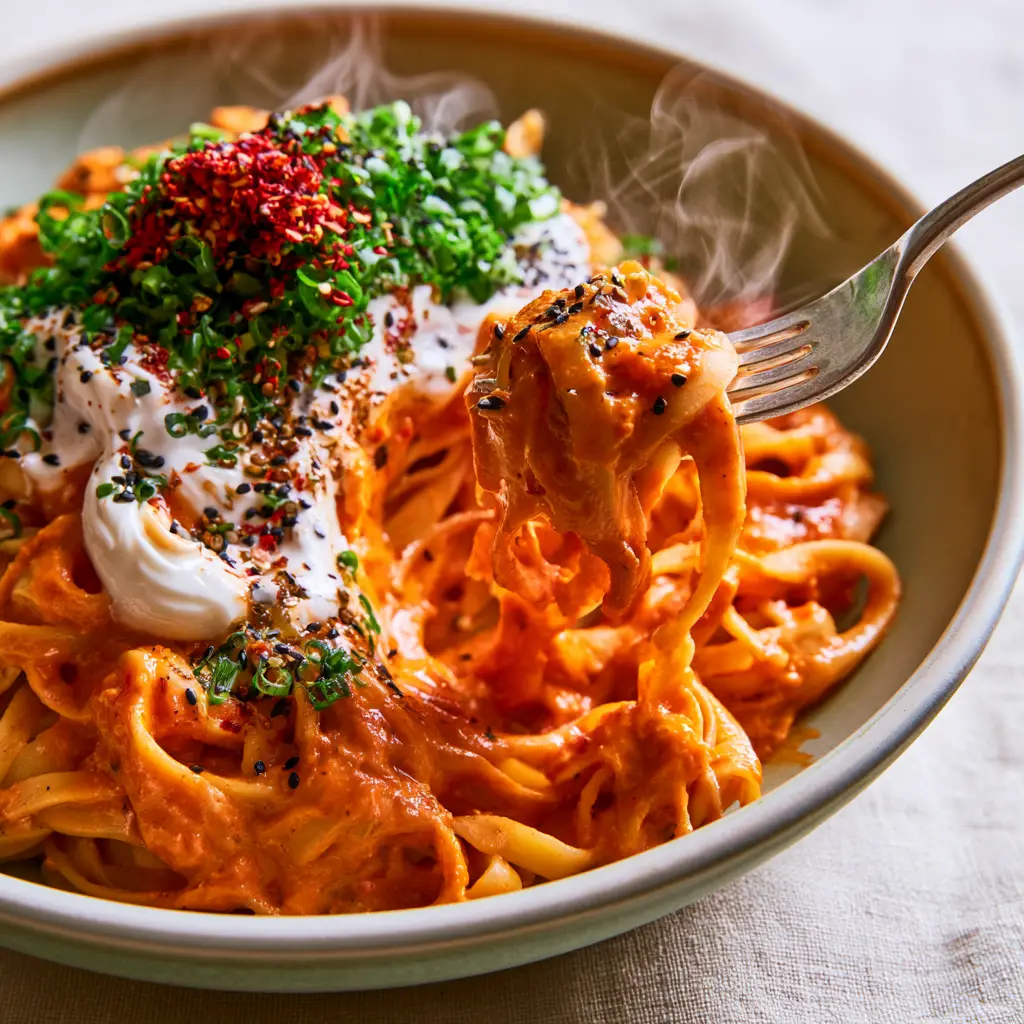
The visual appeal of this dish is as striking as its flavor profile. As you lift a forkful of pasta, you are met with wisps of steam and a luxurious “sauce pull” that signals a perfectly emulsified rose sauce. Topped with a dramatic swirl of fresh heavy cream and a mosaic of bright green scallions and toasted black sesame seeds, this dish is a feast for the eyes and the palate.
Whether you are looking for a quick weeknight dinner that feels like a high-end bistro meal or a unique addition to your rotation of special occasion recipes, this Gochujang pasta delivers. It bridges the gap between spice-forward Asian cuisine and the silky textures of Mediterranean cream sauces, creating a fusion experience that is both sophisticated and incredibly approachable.
Why This Vibrant Korean Rose Pasta is a Weeknight Game Changer
- The Perfect Emulsion: Unlike thinner sauces, this Gochujang-based cream sauce is engineered to be thick and velvety, ensuring it never pools at the bottom of the bowl.
- Complex Flavor Profile: You get the sweetness of fermented chili, the bite of fresh garlic, and the cooling richness of heavy cream in every single bite.
- Visual Sophistication: The contrast between the deep orange sauce, the white cream swirl, and the black sesame seeds makes this a “restaurant-quality” dish you can make in 20 minutes.
- Customizable Heat: By adjusting the ratio of gochujang to cream, you can tailor the spice level from a gentle warmth to a bold, fiery kick.
Essential Components for Your Korean-Italian Fusion
Fettuccine Noodles: I recommend using thick fettuccine because the wide surface area is ideal for carrying the heavy, glossy sauce described in our visual blueprint. You want a pasta that can stand up to the robust texture of the cream and chili paste.
Gochujang (Korean Chili Paste): This is the soul of the dish. It provides the signature deep orange color and a fermented, savory-sweet heat that defines the flavor profile.
Heavy Cream: This ingredient creates the “rose” effect, mellowing the spice of the chili paste into a luxurious, velvety sauce. We also use an extra swirl at the end for that iconic visual contrast.
Unsalted Butter (Foundational): Essential for blooming the gochujang and sautéing the aromatics. It provides the fat necessary to carry the fat-soluble flavors of the chili.
Fresh Garlic and Shallots: While invisible in the final smooth sauce, these provide the aromatic foundation that prevents the cream from tasting one-dimensional.
Pasta Water (The Secret Binder): Never discard your pasta water! The starch in the water is the “glue” that allows the oil-based gochujang and the water-based cream to emulsify into a glossy coating.
Green Scallions: These provide a necessary hit of freshness and a bright green visual pop against the orange background. Use both the white parts for cooking and the green parts for garnish.
Toasted Black Sesame Seeds: These add a nutty crunch and a dramatic color contrast that completes the “macro close-up” aesthetic of the dish.
Crushed Red Pepper Flakes: For those who want an extra layer of visible spice, a pinch of these adds texture and a secondary heat profile.
The Tools for Success
To achieve the professional results seen in our visuals, you will need a large pasta pot for boiling your fettuccine and a wide, deep skillet or sauté pan. A wide skillet is crucial because it allows the sauce to reduce evenly and provides enough space to toss the noodles vigorously without breaking them. You will also want a sturdy pair of tongs to create that perfect “pasta swirl” in the center of your ceramic bowl.
Using a microplane or fine grater for your garlic is another pro-tip. This ensures the garlic melts into the sauce, contributing flavor without leaving chunky bits that would disrupt the “velvety and glossy” texture we are aiming for.
Mastering the Method: Step-by-Step Gochujang Pasta
1. Preparing the Pasta Foundation
Bring a large pot of heavily salted water to a rolling boil. Add 12 oz (340g) of fettuccine and cook until it is about 2 minutes shy of al dente. It is vital to undercook the pasta slightly at this stage, as it will finish cooking directly in the sauce, absorbing the spicy cream into the heart of the noodle.
2. Aromatics and Blooming the Gochujang
While the pasta boils, melt 2 tbsp (30g) of unsalted butter in your skillet over medium heat. Add finely minced shallots and garlic, sautéing until they are translucent and fragrant—listen for a gentle sizzle, not a harsh pop. Add 3 tbsp (45g) of Gochujang paste. Use your spatula to “bloom” the paste in the butter for 60 seconds; you will see the color deepen to a dark, rich crimson and the smell will become toasted and sweet.
3. Creating the Glossy Rose Sauce
Slowly pour in 1 cup (240ml) of heavy cream while whisking constantly. Watch as the dark red paste and white cream marinate into a vibrant, deep-orange hue. To achieve that “thick and velvety” texture, add 1/2 cup (120ml) of the starchy pasta water. The sauce should look glossy and be thick enough to coat the back of a spoon—this is the “creamy pull” we want to see later.
4. The Marriage of Pasta and Sauce
Use tongs to transfer the fettuccine directly from the water into the skillet. Toss vigorously over medium-high heat. The friction of tossing, combined with the starch in the pasta water, will create a “sauce cling” that ensures every strand is drenched. Look for the visual cue of the sauce thickening until it no longer runs, but instead wraps around the noodles like silk.
5. The Final Visual Flourish
Plate the pasta in a ceramic bowl using a twisting motion to create height. Immediately drizzle a swirl of fresh heavy cream over the top—don’t stir it in! Top with a heavy sprinkle of finely chopped green scallions, a teaspoon of toasted black sesame seeds, and a pinch of red chili flakes. The steam should be rising naturally from the heat of the pasta, creating those beautiful wisps seen in the professional photography.
Chef’s Secrets for the Perfect Glossy Finish
- The Temperature Rule: Never boil your sauce once the heavy cream is added. Keep it at a gentle simmer to prevent the cream from curdling or the fats from separating.
- The Gloss Factor: If the sauce looks matte or dry, add a splash more pasta water and a cold knob of butter at the very end. This technique, known as “monter au beurre,” creates a professional high-gloss finish.
- Pasta Water Quality: Make sure you salt your pasta water like the sea. This not only seasons the noodle from within but the salt also helps the starch release into the water, making your sauce stickier and more cohesive.
- Freshness Counts: Chop your scallions at the very last second. This preserves the “bright green” color and the crisp texture that contrasts against the soft noodles.
Storing and Reheating Your Gochujang Pasta
This pasta is best enjoyed immediately while the emulsion is at its peak. However, if you have leftovers, they can be stored in an airtight container in the refrigerator for up to 3 days. Note that the pasta will absorb the sauce as it sits, so it may appear drier the next day.
To reheat, do not use the microwave if possible, as it can cause the cream sauce to break and become oily. Instead, place the pasta in a skillet with 2-3 tablespoons of milk or water. Reheat over low heat, tossing constantly until the sauce loosens up and regains its glossy, creamy consistency.
Perfect Pairings to Complete the Meal
To balance the richness and spice of the Gochujang pasta, I recommend serving it with something bright and acidic. A side of Greek zucchini fritters provides a wonderful textural contrast. If you want to keep the meal light, a crisp cucumber salad or even some watermelon fries can offer a refreshing palate cleanser between spicy bites.
For those looking for a more substantial side, a piece of crusty bread or even a small portion of shrimp oreganata works beautifully, as the lemon and herb notes in the shrimp cut through the heavy cream of the pasta sauce. If you’re planning a larger spread, this pasta sits perfectly alongside a coconut chicken rice bowl for a full-on Asian-fusion feast.
Common Questions About Creamy Gochujang Pasta
Absolutely. Substitute the butter with oil, use a high-fat coconut milk or cashew cream instead of heavy cream, and ensure your Gochujang paste is vegan-certified.
Yes! While fettuccine is great for holding thick sauces, pappardelle or even rigatoni are excellent substitutes that capture the creamy rose sauce well.
The secret is emulsification. Use starchy pasta water and toss the pasta vigorously in the skillet. Adding a cold knob of butter at the very end also adds a professional shine.
It has a medium heat level, but the heavy cream and butter significantly mellow the fermented chili’s fire. You can control the spice by using 1-2 tablespoons of Gochujang instead of 3.
A rose sauce refers to the mixture of a red base (like Gochujang or tomato) with white cream, resulting in a vibrant pink or deep-orange color and a velvety texture.
The Full Recipe Card: Creamy Spicy Gochujang Fettuccine
Gochujang Pasta: The Ultimate Creamy, Spicy Korean Fusion Fettuccine
Ingredients
Equipment
Method
- Cook fettuccine in salted boiling water until just under al dente. Reserve 1/2 cup (120ml) of pasta water before draining.
- Melt butter in a skillet over medium heat. Sauté minced garlic and shallots until fragrant and translucent.
- Add the Gochujang paste to the skillet. Stir constantly for 1 minute until the paste darkens and becomes fragrant.
- Whisk in heavy cream and reserved pasta water. Simmer gently until the sauce is thick, glossy, and a vibrant deep-orange.
- Add the cooked fettuccine to the skillet. Toss vigorously until the sauce clings to every strand.
- Divide into bowls. Add a swirl of fresh cream, chopped scallions, black sesame seeds, and red pepper flakes.
Notes
Undercook the pasta by 2 minutes so it finishes cooking in the sauce for maximum flavor absorption.
Bring the Heat to Your Kitchen
This Gochujang pasta is more than just a trend; it is a masterclass in how simple ingredients can be transformed into something visually stunning and flavor-packed. From the velvety “rose” sauce to the nutty crunch of black sesame, every element is designed to provide a sensory experience that lingers long after the bowl is empty. The deep orange hue and the steam rising from the bowl make it an absolute showstopper for any dinner table.
If you enjoyed this fusion journey, I would love to hear your thoughts! Did you add extra chili flakes? Did the cream swirl work for you? Please leave a comment below and share your creations. For more visual inspiration and recipe ideas, be sure to follow me on Pinterest and save this recipe to your favorite boards.