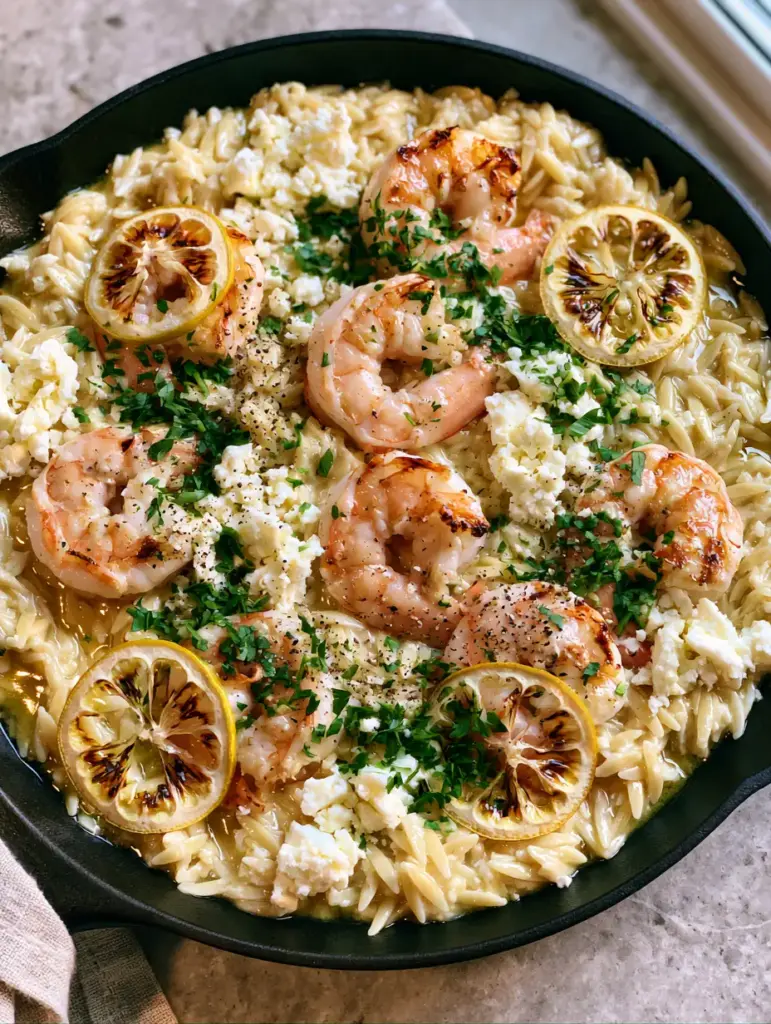
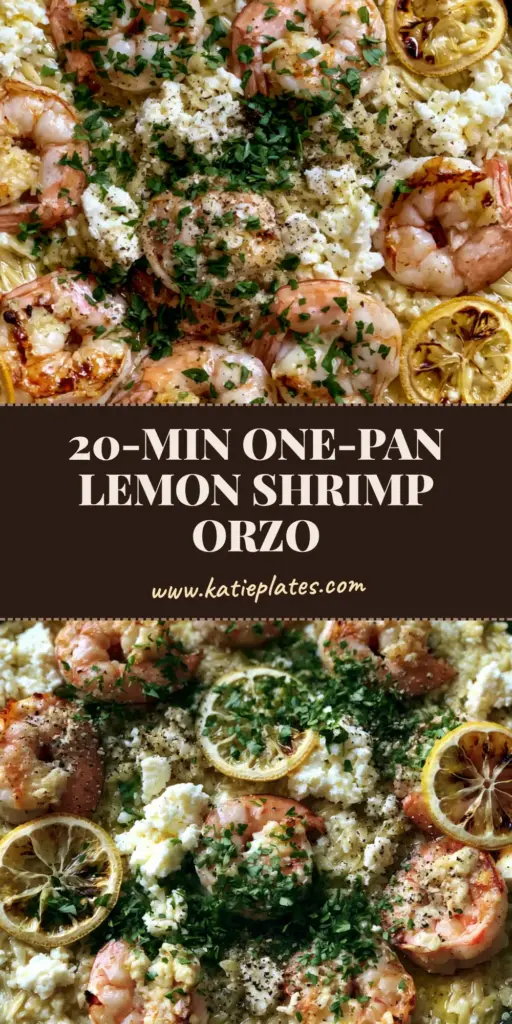
The Lemon Feta Orzo Shrimp is the ultimate intersection of Mediterranean elegance and weeknight practicality. Imagine succulent jumbo shrimp, their edges perfectly seared to a light pink with golden-brown charred highlights, resting atop a bed of creamy, al dente orzo. This dish isn’t just a meal; it’s a sensory experience where every grain of pasta is coated in a light golden lemon-garlic emulsion that glistens under the light. Whether you are hosting a dinner party or seeking a sophisticated solo meal, this one-pan wonder delivers high-impact flavor with minimal cleanup.
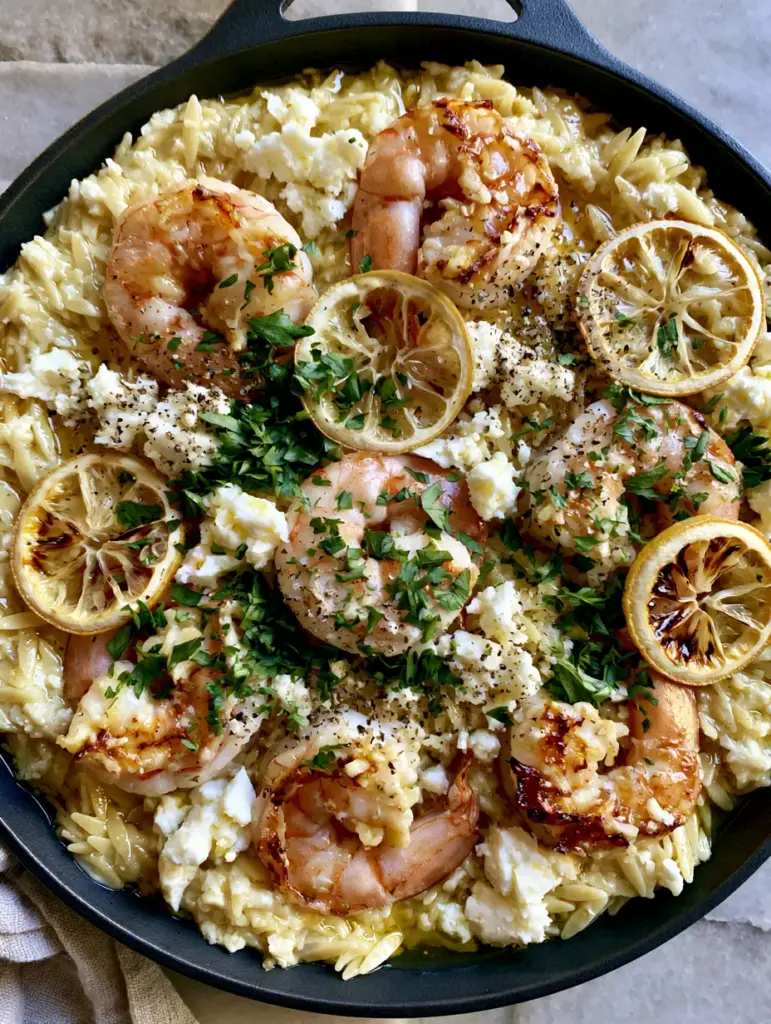
Visually, the dish is a masterpiece of contrast. The bright white chunks of crumbled feta cheese soften against the heat of the skillet, while finely minced fresh flat-leaf parsley and cracked black pepper provide a vibrant green and bold black finish. The centerpiece of the presentation includes three ultra-thin, charred lemon wheels that add a smoky citrus depth to the overall profile. Every element, from the olive oil glisten to the matte black cast iron skillet, works in harmony to create a professional, gourmet aesthetic in your own kitchen.
Why This One-Pan Masterpiece Works
- Textural Harmony: You get the snap of perfectly seared jumbo shrimp against the velvety, risotto-like consistency of the simmered orzo pasta.
- The Emulsion Factor: Unlike watery pasta dishes, our technique creates a tight lemon-garlic broth reduction that clings to the orzo rather than pooling at the bottom.
- Visual Sophistication: With charred lemon wheels and vibrant herbs, this recipe mimics the high-end plating of gourmet seafood restaurants.
- Minimal Equipment: One shallow cast iron skillet is all you need to achieve the deep caramelization and even heat distribution required for this dish.
The Anatomy of Flavor: Essential Ingredients
Jumbo Shrimp (with tails): We use large shrimp to ensure they stay succulent and juicy during the high-heat searing process. Leaving the tails on not only provides a visual “handle” but also adds a deeper crustacean flavor to the rendered oil.
Orzo Pasta: This rice-shaped pasta is the heart of the dish. It absorbs the lemon-garlic broth, releasing just enough starch to create a creamy texture without the need for heavy cream.
Crumbled White Feta: Choose a high-quality sheep’s milk feta stored in brine. It provides the necessary salty tang and a creamy mouthfeel as it begins to melt into the warm pasta.
Fresh Lemons: We use lemon in two ways: juice for the bright acidity in the sauce and thin wheels that are charred in the skillet to provide a caramelized garnish.
Garlic and Shallots: These aromatics form the flavor base. The garlic provides punch, while the shallots offer a delicate sweetness that balances the acidity of the citrus.
Chicken or Vegetable Broth: A high-quality broth is the liquid gold that cooks the orzo. If you’ve enjoyed a classic Mediterranean orzo salad, you know that the liquid used to hydrate the pasta defines its final flavor.
Fresh Parsley and Cracked Black Pepper: These aren’t just garnishes; they provide the “pop” of freshness and heat that cuts through the richness of the olive oil and feta.
Essential Culinary Tools for a Professional Finish
To achieve the exact look of our Lemon Feta Orzo Shrimp, a 12-inch (30cm) matte black cast iron skillet is preferred. The heavy bottom allows for a superior sear on the shrimp and even simmering of the pasta. You will also need a sharp chef’s knife for the ultra-thin lemon slices and a fine-mesh sieve to rinse the orzo if desired, though leaving the starch on often helps the emulsion. A silicone spatula or wooden spoon is essential for scraping up the fond—those brown bits on the bottom of the pan that hold all the flavor.
The Science of the Perfect Sear
Achieving the Golden-Brown Shrimp Highlights
The secret to the “succulent jumbo shrimp” described in our blueprint is a dry surface and high heat. Pat your shrimp completely dry with paper towels before seasoning. When they hit the hot olive oil in your cast iron skillet, the Maillard reaction occurs, creating those beautiful golden-brown charred highlights and light pink edges. Do not overcrowd the pan; sear them in two batches if necessary to ensure they fry rather than steam.
Caramelizing the Lemon Wheels
Before you cook the pasta, sear three ultra-thin lemon wheels in the residual shrimp oil. This softens the rind and concentrates the sugars. These charred wheels are a critical visual element, providing a gourmet “burnt orange” hue to the top of the dish. Once charred, set them aside to be placed back on the dish just before serving.
The Orzo Toasting Technique
To keep the orzo “al dente” and prevent it from becoming a mushy mass, toast the dry grains in the skillet for 1-2 minutes until they smell nutty. This creates a protective barrier around the starch, ensuring each grain remains distinct while glistening in the light golden lemon-garlic emulsion. This technique is similar to how you would start Mediterranean-style fillings or a risotto.
Step-by-Step Culinary Execution
Phase 1: The Searing and Charring
Heat 2 tbsp (30ml) of extra virgin olive oil in the skillet over medium-high heat. Season your jumbo shrimp with salt and a bit of cracked black pepper. Place them in the pan and sear for 90 seconds per side until you see the distinct pink edges and charred spots. Remove the shrimp and quickly sear the lemon wheels for 30 seconds per side until they show dark grill marks. Set both aside.
Phase 2: Building the Aromatics
Lower the heat to medium. Add another tablespoon of oil if the pan looks dry. Sauté finely minced shallots and 4 cloves of minced garlic. You should hear a gentle sizzle, not a harsh pop. The smell should be fragrant and sweet. Add the dry orzo to the pan, stirring constantly to coat every grain in the flavored oil and toast them lightly.
Phase 3: The Broth Reduction
Deglaze the skillet with a splash of white wine or a bit of the broth, scraping up all the brown bits from the shrimp. Pour in 2.5 cups (600ml) of chicken broth and the juice of half a lemon. Bring to a gentle simmer. Cover and cook for about 8-10 minutes. You are looking for the “glistening” visual—where the liquid has mostly absorbed, leaving behind a creamy, golden emulsion.
Phase 4: The Final Assembly
Stir in the crumbled feta cheese, allowing it to soften but not completely disappear. Place the seared shrimp and charred lemon wheels back on top of the orzo. Sprinkle a heavy dusting of finely minced fresh flat-leaf parsley and an extra crack of black pepper over the entire skillet. Serve immediately directly from the pan for that rustic, gourmet look.
Expert Tips for Culinary Success
- Don’t Overcook the Shrimp: Shrimp cook very quickly. Remove them from the pan the moment they turn opaque and C-shaped; they will continue to warm through when you add them back at the end.
- Quality of Feta Matters: Use a block of feta and crumble it yourself. Pre-crumbled feta often contains anti-caking agents that prevent it from softening beautifully like the “bright white chunks” in our visual prompt.
- The Broth Ratio: If the orzo looks too dry before it is tender, add an extra 1/4 cup (60ml) of broth. You want it creamy, not dry like a pilaf.
- A Finishing Glisten: For that “olive oil glisten” seen in professional photography, drizzle a tiny bit of high-quality finishing oil over the dish just before it hits the table.
Maximizing Your Leftovers
This Lemon Feta Orzo Shrimp is best enjoyed fresh, as the orzo will continue to absorb liquid as it sits. However, if you have leftovers, store them in an airtight container in the refrigerator for up to 2 days. To reheat, add a tablespoon of water or broth to loosen the emulsion and warm gently on the stovetop over low heat. We do not recommend freezing this dish, as the texture of the orzo and the snap of the shrimp will be compromised.
What to Pair With Your Lemon Feta Orzo Skillet
Because this dish is rich and creamy, it pairs perfectly with a crisp, acidic side. A refreshing watermelon and feta salad provides a beautiful temperature and texture contrast. If you want to keep with the Mediterranean theme, a classic Greek salad or even some oregano-heavy seafood appetizers would round out the meal beautifully. For a summer gathering, consider serving this alongside festive summer sides to keep the table vibrant and diverse.
Frequently Asked Questions
You can use acini di pepe or small couscous, but the cooking time and liquid ratios will vary. Orzo is preferred for its creamy, rice-like texture.
Yes, but ensure they are completely thawed and patted extremely dry with paper towels to achieve the required golden-brown charred highlights.
The emulsion forms when the starchy pasta water reduces and binds with the lemon juice and olive oil. Don’t drain the orzo; cook it directly in the broth.
A block of Greek feta in brine is best. It has a higher moisture content, allowing the chunks to soften into the pasta without drying out.
Mushy orzo usually results from overcooking or using too much liquid. Toasting the dry orzo in olive oil first helps maintain its structure.
The Perfect Lemon Feta Orzo Shrimp Recipe
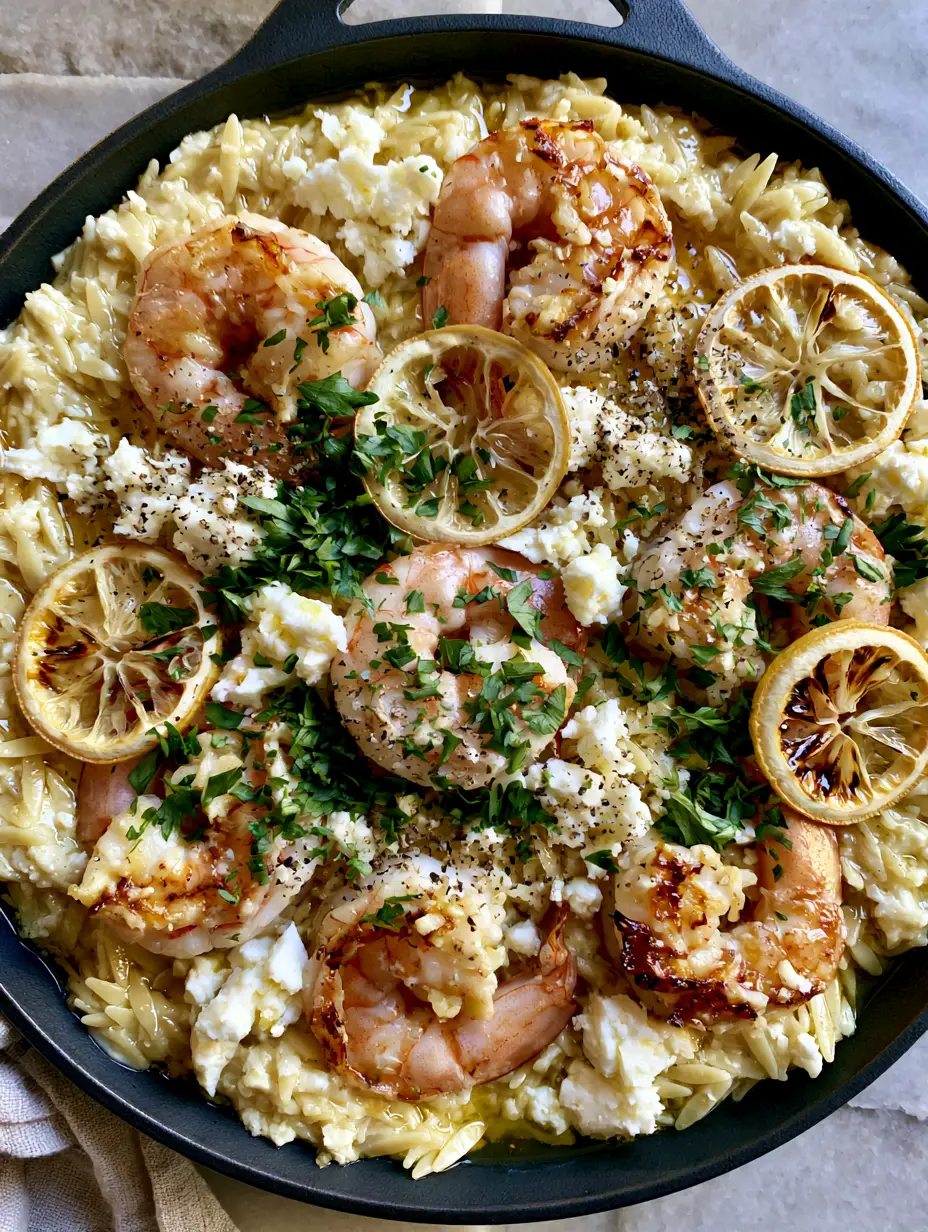
Lemon Feta Orzo Shrimp: The Ultimate One-Pan Mediterranean Skillet
Ingredients
Equipment
Method
- Heat 2 tbsp olive oil in a skillet. Pat shrimp dry, season, and sear for 90 seconds per side until pink with golden highlights. Remove.
- Place lemon wheels in the same pan for 30 seconds per side until charred. Remove and set aside.
- Add remaining oil, shallots, and garlic. Sauté for 1-2 minutes until fragrant.
- Add orzo to the skillet, stirring for 2 minutes to toast the grains.
- Add broth and lemon juice. Simmer covered for 8-10 minutes until liquid is mostly absorbed and creamy.
- Stir in feta, top with shrimp and charred lemons. Garnish with parsley and pepper.
Notes
Do not rinse the orzo; the natural starches help create the creamy golden emulsion.
Elevate Your Dinner Table Today
The Lemon Feta Orzo Shrimp is more than just a quick dinner; it’s a vibrant, flavorful journey to the Mediterranean coast. By following these professional techniques—from the hard sear on the jumbo shrimp to the careful emulsion of the lemon-garlic broth—you can recreate a restaurant-quality dish in your own kitchen. We invite you to share your results and tag us in your creations! For more visual inspiration and organized meal planning, be sure to follow us on Pinterest and save this recipe to your favorite boards.