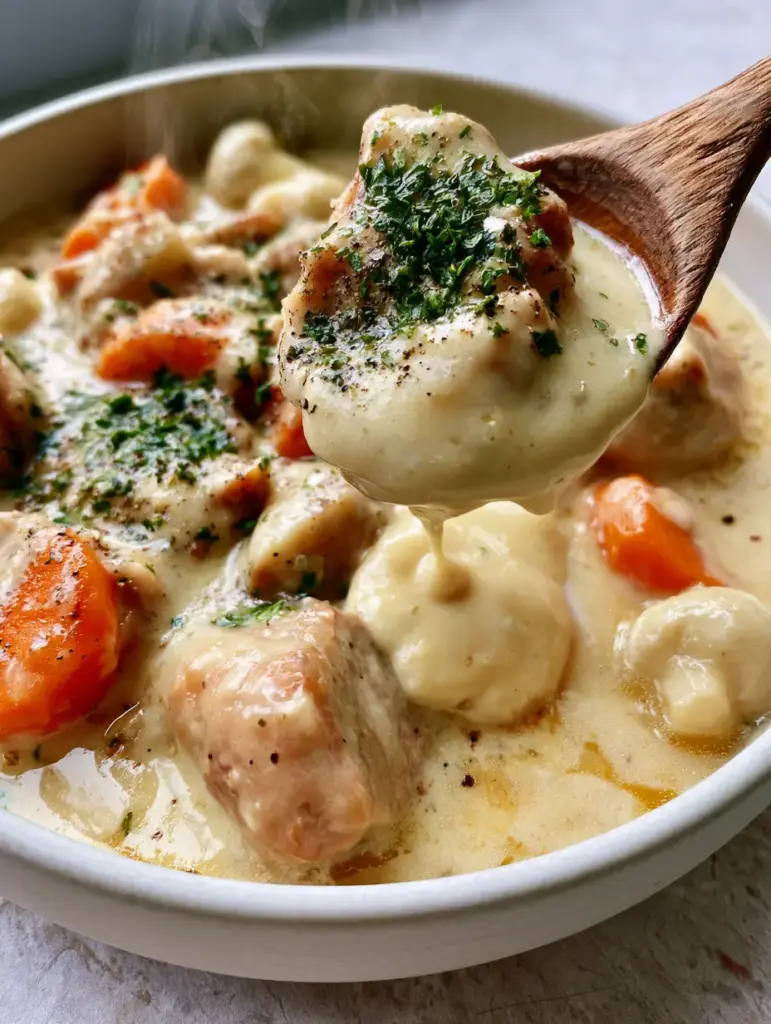
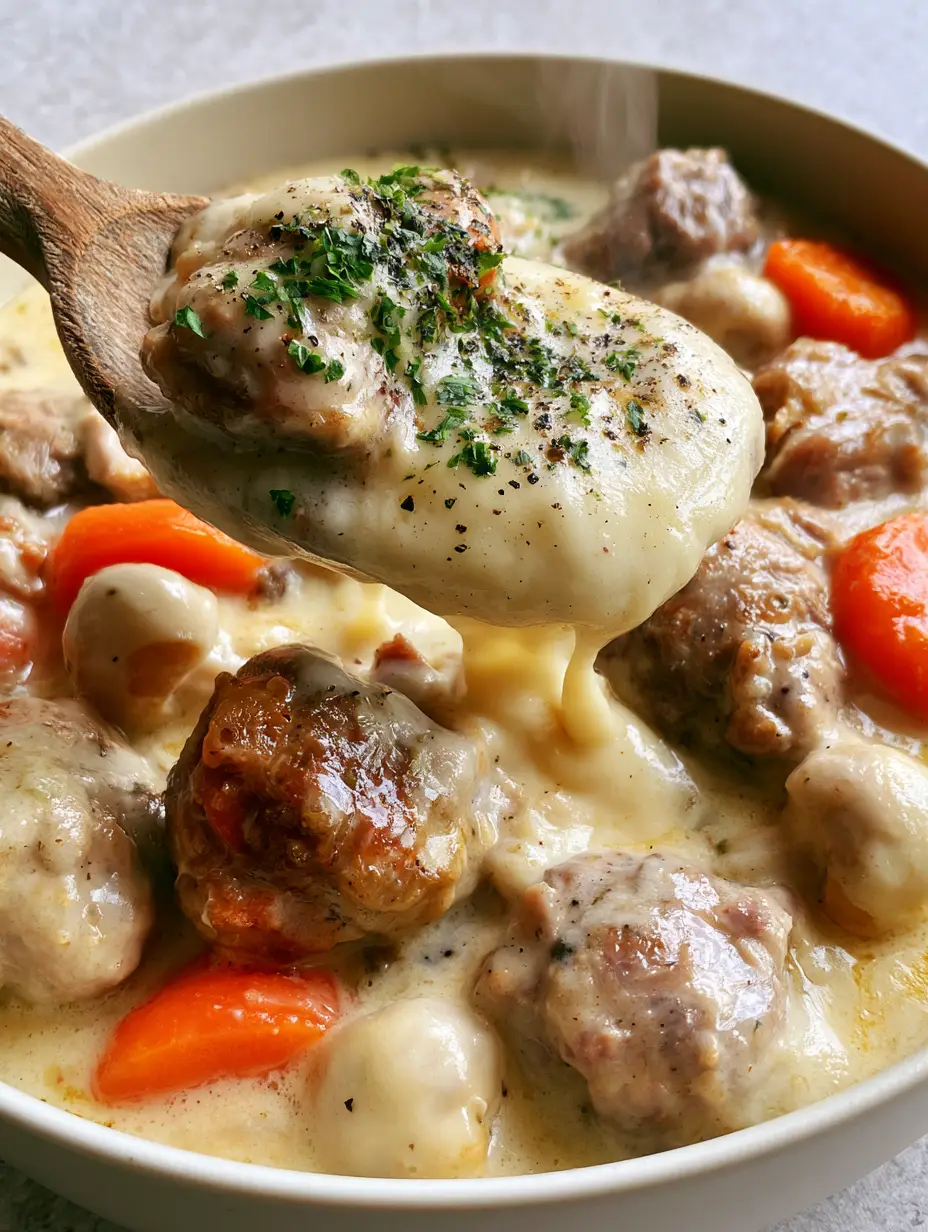
Experience the pinnacle of French comfort food with this authentic Blanquette de Porc. This isn’t just a stew; it is a masterclass in texture, showcasing ultra-tender pork shoulder submerged in a thick, glossy, ivory-colored velvet cream sauce. Every spoonful delivers a delicate balance of savory meat, earthy mushrooms, and the sweetness of tender carrot rounds.
The beauty of the Blanquette de Porc lies in its “white” preparation. Unlike traditional stews where meat is seared until dark, here the pork is poached to maintain a pristine, pale color and succulent moisture. This technique ensures every chunk of meat is glistening and perfectly moist, reflecting the soft, natural morning light of a gourmet kitchen.
Whether you are hosting a sophisticated dinner party or seeking a soul-warming family meal, this recipe provides the sensory cues you need. From the rising steam to the way thick droplets of sauce fall back into the bowl, you will learn to master the nuances of French culinary science.
Why This Velvety Blanquette de Porc Is a Kitchen Masterpiece
- The Signature Texture: A thick, ivory cream sauce that achieves a “velvet” mouthfeel through a classic French liaison.
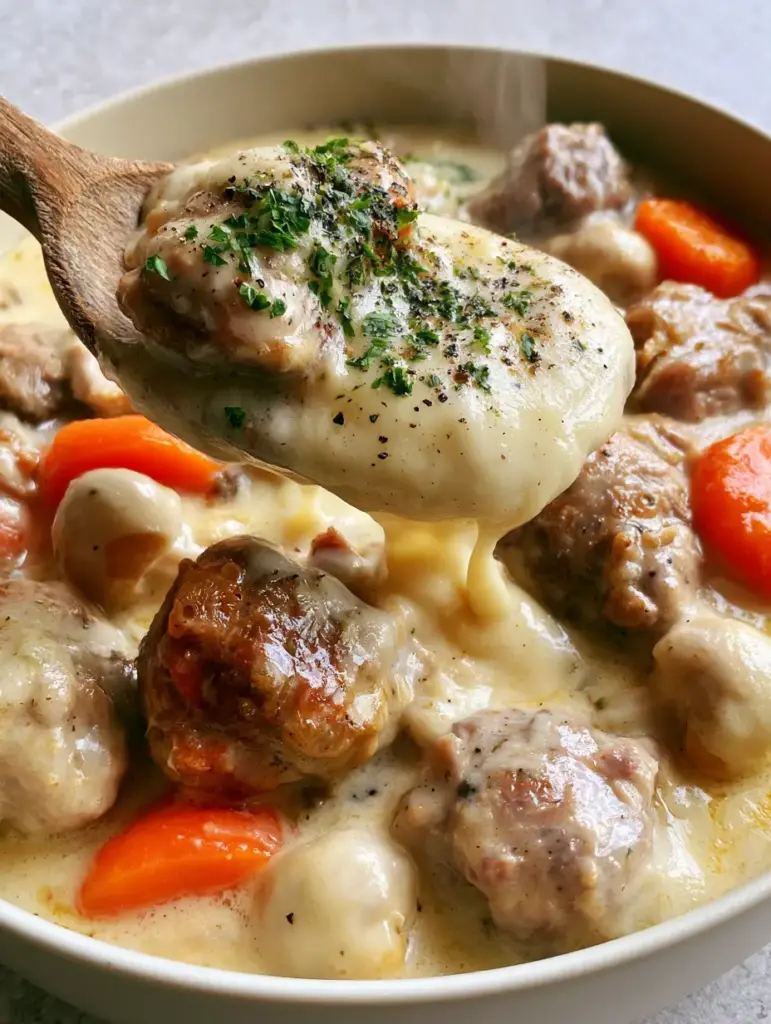
- Visually Stunning: Bright orange carrot rounds and firm white button mushrooms provide a beautiful color contrast against the pale sauce.
- Succulent Pork: By using pork shoulder, we ensure the meat remains tender enough to be broken with a wooden spoon.
- Aromatic Depth: A subtle blend of white wine, bouquet garni, and fresh parsley creates a complex flavor profile that isn’t overpowering.
- Perfect Gloss: The sauce features a glossy reflection that indicates perfect emulsification and fat balance.
The Science of the Ivory Foundation: Essential Ingredients
Pork Shoulder (2 lbs / 900g): This cut is chosen for its higher fat content and connective tissue, which breaks down into gelatin, adding body to the sauce. Ensure you cut them into large, uniform 1.5-inch (4cm) chunks for even cooking.
White Button Mushrooms (8 oz / 225g): These should be kept whole if small or halved if large to maintain a firm, “snappy” texture that contrasts the soft meat. They absorb the cream sauce while retaining their earthy integrity.
Carrots (3 large / 250g): Sliced into thick rounds, these provide the “bright orange” visual pops described in our culinary blueprint. They are simmered until soft but not mushy.
Heavy Cream (1 cup / 240ml): This is the backbone of the “ivory-colored velvet” sauce. Use a high-fat cream to ensure the sauce doesn’t break when combined with acidic elements.
Egg Yolks (2 large): Used in the final “liaison” stage, yolks provide the thick, glossy finish and the rich ivory hue that defines a true Blanquette.
Unsalted Butter (4 tbsp / 60g) and All-Purpose Flour (1/4 cup / 30g): These form a “blond roux,” which provides the structural thickening for the sauce without adding unwanted brown color.
Dry White Wine (1/2 cup / 120ml): Use a Sauvignon Blanc or Pinot Grigio to add a necessary hit of acidity that cuts through the richness of the cream.
Aromatic Bouquet: One yellow onion studded with cloves, a bouquet garni (thyme, bay leaf, parsley stems), and 4 cups (1L) of high-quality chicken or veal stock form the poaching liquid.
Tools Required for a Professional Finish
To achieve that “rustic matte white ceramic bowl” look, you need the right tools. A heavy-bottomed Dutch oven is essential for maintaining a steady, low simmer. This prevents the pork from becoming tough and keeps the sauce from scorching.
You will also need a fine-mesh strainer. To get that perfectly smooth, glossy sauce reflection, straining the poaching liquid to remove any stray bits of onion or herb is a non-negotiable step for elite home cooks.
How to Master the Blanquette de Porc: Step-by-Step Instructions
Phase 1: The Gentle Poach for Ultra-Tender Meat
Start by placing your pork shoulder chunks into the Dutch oven. Cover them with cold water and bring to a boil for 2 minutes. This “blanching” step removes impurities, ensuring your final sauce remains a pure, clean ivory.
Drain the water and rinse the meat. Return the pork to the pot and add the stock, white wine, onion with cloves, and the bouquet garni. The liquid should just cover the meat. Bring to a very gentle simmer; you should only see a few small bubbles breaking the surface.
Cover and cook for 75-90 minutes. You are looking for a specific visual cue: the pork should look “moist and glistening” and should yield easily when pressed with a wooden spoon.
Phase 2: Preparing the Vibrant Vegetables
While the meat is simmering, prepare your vegetables separately to maintain their distinct colors and textures. In a small skillet, melt 1 tbsp (15g) of butter with a splash of water. Add the carrot rounds and a pinch of salt.
Cover and steam for about 10 minutes until soft. In a separate pan, sauté the whole button mushrooms in butter until they are firm and lightly golden but not browned. Set these aside; we will nestle them into the sauce at the very end.
Phase 3: Crafting the Velvet Cream Sauce
Once the pork is tender, remove the meat and strain the poaching liquid into a clean bowl. Discard the aromatics. In the same Dutch oven, melt the remaining butter and whisk in the flour to create a blond roux. Cook for 2 minutes without letting it brown.
Gradually whisk in 3 cups (710ml) of the strained poaching liquid. Simmer until the sauce thickens. In a small bowl, whisk together the heavy cream and egg yolks. This is your “liaison.”
Temper the liaison by adding a ladle of hot sauce to the cream mixture, then slowly pour the mixture back into the pot. Stir constantly over low heat. Watch for the transformation: the sauce will turn into a thick, glossy, velvet cream that coats the back of a spoon.
Expert Tips for a Glossy, Professional Result
- Never Boil After Adding Eggs: Once the egg yolk liaison is added, do not let the sauce boil. High heat will curdle the eggs, ruining that ivory smoothness.
- The “Spoon Test”: When the sauce is ready, a wooden spoon lifted from the pot should show “thick droplets of sauce slowly falling back,” exactly like our visual blueprint.
- Achieving the Glow: If the sauce looks dull, whisk in a cold pat of butter (15g) right before serving to enhance the glossy reflection.
- Freshness is Key: Only add the finely minced fresh flat-leaf parsley and cracked black pepper at the very second of serving to keep the colors vibrant.
What to Serve with Your French Pork Stew
To soak up every drop of that incredible ivory sauce, you need a side dish that provides a neutral but textured base. While crusty baguette is traditional, many enjoy the contrast of a Mediterranean side. This stew pairs beautifully with buttery Moroccan couscous or even a side of crispy lemon-roasted potatoes for a fusion twist.
If you are looking for a more vegetable-forward pairing, consider serving this alongside a light cooked eggplant salad to balance the richness of the cream sauce. For those who love a potato-heavy meal, seasoned potato wedges offer a great structural contrast to the soft carrots and meat.
Frequently Asked Questions
It is not recommended. Pork loin is too lean and will become dry and tough during the long simmering process. Pork shoulder has the necessary fat and connective tissue to stay succulent.
The gloss comes from the emulsification of the egg yolks and butter. For an extra sheen, whisk in a small piece of cold butter just before serving and ensure your sauce was properly strained.
A Blanquette is a ‘white stew’ where neither the meat nor the fat is browned during cooking. This preserves the pale ivory color and results in a more delicate, creamy flavor compared to the caramelized notes of a traditional brown stew.
Curdling usually happens if the sauce is boiled after the egg yolk and cream liaison is added. Always keep the heat low and never let the sauce reach a boil once the yolks are incorporated.
The Definitive Blanquette de Porc Recipe
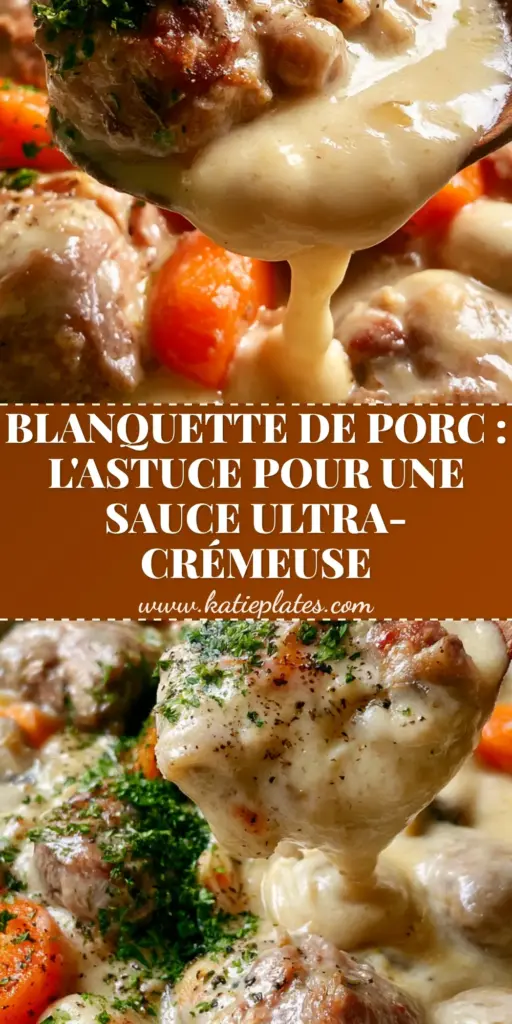
Blanquette de Porc: The Ultimate Creamy French Pork Stew Recipe
Ingredients
Equipment
Method
- Place pork chunks in a Dutch oven, cover with cold water, and boil for 2 minutes. Drain and rinse meat to ensure a clean, ivory sauce.
- Return pork to the pot with stock, wine, clove-studded onion, and bouquet garni. Simmer gently for 75-90 minutes until meat is tender and moist.
- Steam carrot rounds in butter and water until soft. Sauté mushrooms in butter until firm. Set aside.
- Strain the poaching liquid. Make a blond roux with butter and flour, then whisk in 3 cups of the liquid until thickened.
- Whisk cream and egg yolks. Temper with hot sauce, then stir back into the pot over low heat until glossy and thick. Do not boil.
Notes
For a glossier finish, whisk in a cold tablespoon of butter right before serving.
Final Thoughts on This French Classic
The Blanquette de Porc is more than a meal; it’s an exercise in culinary patience and precision. By focusing on the “white” cooking technique and the delicate egg yolk liaison, you create a dish that is as visually stunning as it is delicious. The combination of rising steam, cracked black pepper, and that signature ivory sauce makes this a favorite for any serious home cook.
If you enjoyed this deep dive into French technique, please consider sharing this recipe to Pinterest or signing up for our newsletter for more gourmet blueprints. Don’t forget to leave a comment below telling us how your velvet sauce turned out!