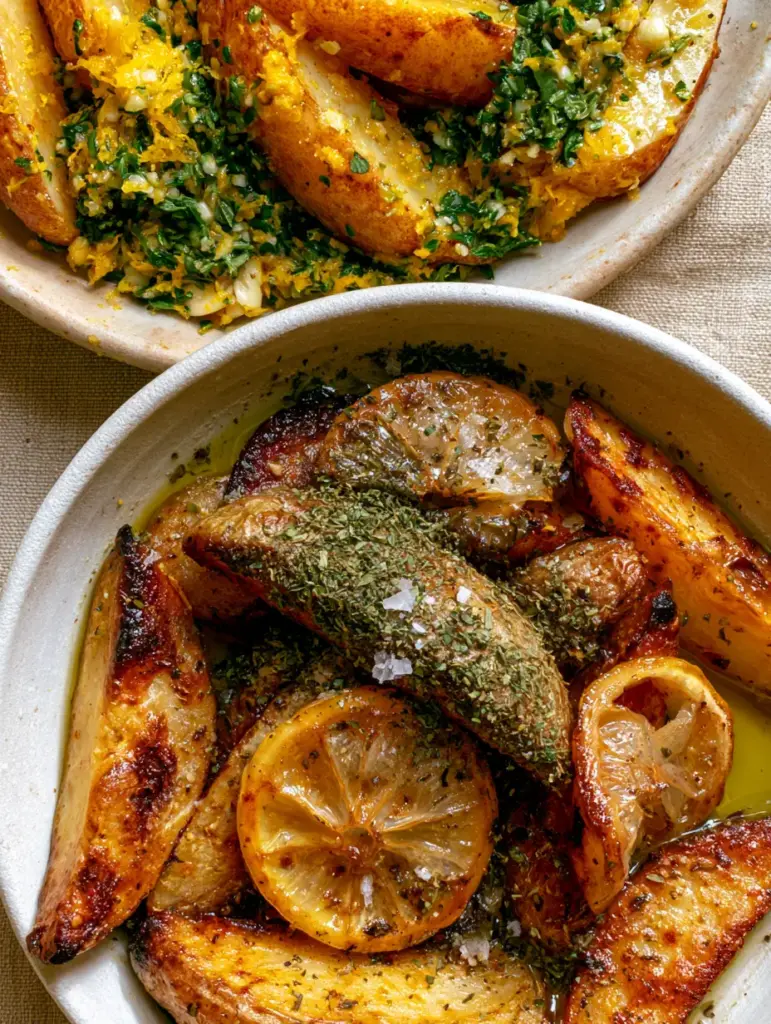
When it comes to Mediterranean comfort food, few dishes rival the sensory explosion of authentic Greek potatoes. These aren’t just your standard side dish; they are a masterclass in contrasting textures, featuring a shatteringly crisp, blistered exterior that gives way to a soft, buttery, and lemon-infused center.
The secret lies in the harmony between the high-heat roasting process and the acidic brightness of fresh citrus. By the time these Greek potatoes leave the oven, they are glistening with a light sheen of herb-infused extra virgin olive oil and adorned with translucent, caramelized lemon wheels that have concentrated in sweetness.
In this guide, we will walk through the culinary science required to achieve that deep golden-brown crust you see in our professional photography. Whether you are serving these at a Sunday family dinner or as a meal-prep staple, the aroma of toasted oregano and roasted garlic will transform your kitchen into a seaside taverna.
Why These Are the Best Greek Roasted Potatoes You’ll Ever Taste
- Shatteringly Crisp Edges: We utilize a high-heat technique that ensures every wedge has a blistered, deep golden-brown crust.
- Buttery, Melt-In-Your-Mouth Centers: The potatoes are roasted in a precise amount of liquid, allowing them to steam internally while the outsides crisp up.
- Caramelized Lemon Infusion: Unlike recipes that only use juice, we include thin lemon wheels that caramelize in the pan, adding a complex sweet-tart profile.
- Herb-Forward Aroma: A heavy hand of dried Greek oregano and fresh flat-leaf parsley provides that signature Mediterranean earthiness.
- Forensic Visual Appeal: Every element, from the coarse sea salt flakes to the glistening olive oil, is designed for a restaurant-quality presentation.
Hand-Selected Ingredients for Authentic Mediterranean Flavor
Achieving the perfect Greek potatoes requires more than just a recipe; it requires selecting the right structural components. Each ingredient serves a specific culinary purpose in achieving the visual and textural results described in our blueprint.
Yukon Gold Potatoes: We recommend 3 lbs (1.36kg) of Yukon Golds because their natural starch content creates a creamy, buttery interior that holds its shape under high heat. Their thin skins also blister more effectively than starchy Russets.
Extra Virgin Olive Oil: You will need 1/2 cup (120ml) of high-quality oil to create that glistening sheen and to facilitate the Maillard reaction. This fat acts as the heat conductor that fries the potato surface while it roasts.
Fresh Lemon Juice and Zest: Use the juice of 2 large lemons (approx. 1/2 cup or 120ml) and the zest of one. The acidity breaks down the potato pectin just enough to allow the edges to become “shatteringly crisp.”
Dried Greek Oregano: Use 2 tbsp (6g) of dried oregano, as it has a more concentrated, savory flavor than fresh. It stands up to the high oven temperatures without burning to a bitter crisp.
Minced Garlic: 6 cloves (30g) of garlic provide the aromatic backbone. We add these in two stages to ensure some bits become sweet and golden while others stay pungent.
Chicken or Vegetable Stock: 1/2 cup (120ml) of stock is the “invisible” ingredient. It allows the potatoes to braise slightly before the liquid evaporates, leaving only the fat to crisp the skins.
Coarse Sea Salt Flakes and Black Pepper: Coarse flakes are essential for that visual “crunch” and to provide bursts of seasoning that don’t just disappear into the potato.
Fresh Flat-Leaf Parsley: This is our vibrant green garnish that cuts through the richness of the oil and the intensity of the garlic.
Kitchen Tools for Culinary Excellence
To achieve the blistered golden-brown results seen in our 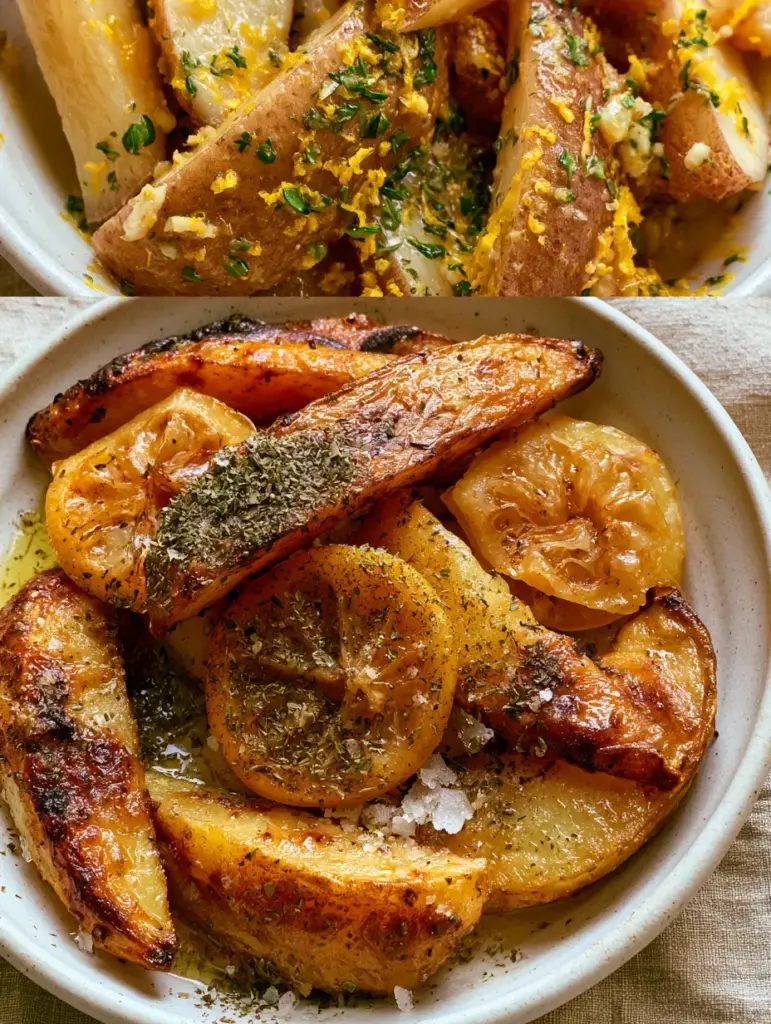
A sharp chef’s knife is required to create uniform “thick-cut” wedges. If the wedges are uneven, some will turn to mush while others remain hard, ruining the consistency of your Greek potatoes.
Lastly, a microplane for zesting the lemons ensures the bright yellow zest is fine enough to coat every inch of the raw potato wedges before they hit the oven. This creates the flavor foundation visible in our raw-prep close-ups.
Step-by-Step Guide to Blistered Perfection
Preparing the Potato Canvas
Begin by preheating your oven to 425°F (220°C). Scrub your 3 lbs (1.36kg) of Yukon Gold potatoes thoroughly, but do not peel them; the skin is essential for achieving that blistered texture.
Cut each potato into thick, uniform wedges. Aim for about 6 to 8 wedges per potato, depending on the size. In a large mixing bowl, toss the raw wedges with the lemon zest, half of the minced garlic, and 1 tbsp (3g) of the dried oregano.
The Braising and Infusion Phase
Arrange the seasoned wedges in a single layer in your roasting dish. Do not crowd the pan, as this will lead to steaming rather than roasting. Pour the 1/2 cup (120ml) of olive oil, 1/2 cup (120ml) of lemon juice, and 1/2 cup (120ml) of stock over the potatoes.
Nestle the thin lemon wheels between the potatoes. Sprinkle with half of your coarse sea salt. Cover the dish tightly with foil and roast for 20 minutes; this softens the centers and infuses them with the garlic and citrus liquid.
The High-Heat Blistering Phase
Remove the foil and increase the oven temperature to 450°F (230°C). This is where the magic happens. Roast uncovered for another 30-35 minutes.
About halfway through this phase, use a spatula to gently flip the wedges. You are looking for a visual cue: the edges should start to look deep golden-brown and slightly bubbly or “blistered.”
The Final Garnish and Serve
Once the potatoes are “shatteringly crisp” and the lemon wheels are translucent and caramelized, remove the pan from the oven. Toss in the remaining minced garlic and the rest of the dried oregano while the oil is still sizzling.
Transfer to a rustic matte white ceramic dish. Garnish with a heavy sprinkle of fresh flat-leaf parsley and a final dusting of coarse sea salt flakes. The potatoes should be glistening with a light sheen of herb-infused olive oil.
Professional Tips for the Best Results
- Don’t Overcrowd: If the potatoes are touching too much, they won’t blister. Use two pans if necessary to ensure airflow.
- The Stock Secret: Using stock instead of just water adds a layer of umami that makes the Greek potatoes taste like they came from a high-end restaurant.
- Salt Timing: Use half the salt during cooking and half at the end. The final sprinkle provides that hit of salinity that balances the acidity of the lemon.
- Temperature Control: If your potatoes aren’t browning, move the rack to the top third of the oven for the last 10 minutes.
Preserving Your Leftovers
While these are best served immediately to enjoy the “shatteringly crisp” texture, leftovers can be stored in an airtight container for up to 4 days in the refrigerator. Avoid freezing, as the cellular structure of the roasted potato will become mealy upon thawing.
To reheat, do not use a microwave. Instead, place the wedges back on a baking sheet at 400°F (200°C) for about 10 minutes. This will revive the blistered exterior and ensure they are still glistening and delicious.
What to Pair with These Savory Wedges
These Greek potatoes are incredibly versatile and serve as the perfect anchor for a Mediterranean feast. They are a classic accompaniment to Lemon Herb Roasted Chicken (coming soon) or a beautifully charred grilled leg of lamb.
For a lighter lunch, serve them alongside a crisp Traditional Greek Salad (coming soon) topped with a thick slab of feta cheese. If you enjoy dipping, they are the ultimate vessel for a cool, garlic-heavy Creamy Tzatziki Sauce (coming soon).
Common Questions About Mediterranean Roasted Potatoes
You can, but the texture will be different. Russets are starchier and will be fluffier inside, but they may fall apart more easily during the braising phase compared to the waxy-creamy Yukon Gold.
No, it is better to leave the skins on. The skin of Yukon Gold potatoes provides the structure needed to achieve those signature blistered, shatteringly crisp edges.
The key is the olive oil and stock. The moisture prevents the sugar in the lemons from burning early, allowing them to slowly become translucent and sweet as the liquid evaporates.
Dried Greek oregano is preferred for roasting. It has a higher concentration of oils and can withstand the high oven temperatures better than fresh oregano, which tends to turn black and bitter.
Soggy potatoes usually result from overcrowding the pan or not using enough heat. Ensure the potatoes are in a single layer with space for air to circulate, and don’t skip the final high-heat phase at 450°F.
The Master Recipe: Greek Potatoes
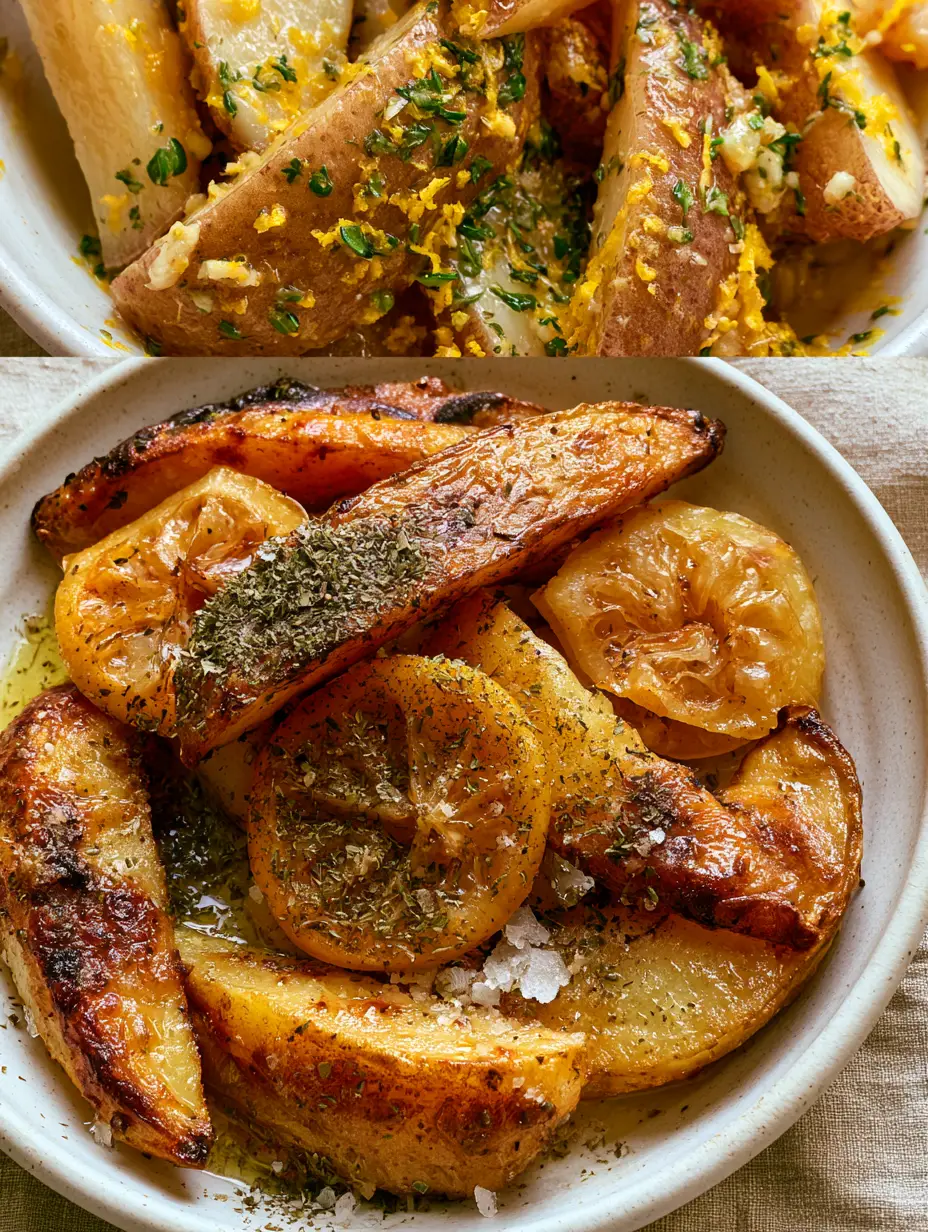
Greek Potatoes: The Ultimate Crispy Lemon Garlic Roasted Wedges
Ingredients
Equipment
Method
- Preheat oven to 425°F (220°C). Toss potato wedges with lemon zest, half the garlic, and 1 tbsp oregano.
- Place wedges in a roasting pan. Add olive oil, lemon juice, stock, and lemon wheels. Season with salt.
- Cover tightly with foil and roast for 20 minutes to soften the centers.
- Remove foil and increase heat to 450°F (230°C). Roast for 30-35 minutes, flipping once, until deep golden-brown and blistered.
- Toss with remaining garlic and oregano. Top with fresh parsley and coarse sea salt before serving.
Notes
Ensure the pan is not overcrowded to achieve shatteringly crisp edges.
Closing & Call to Action
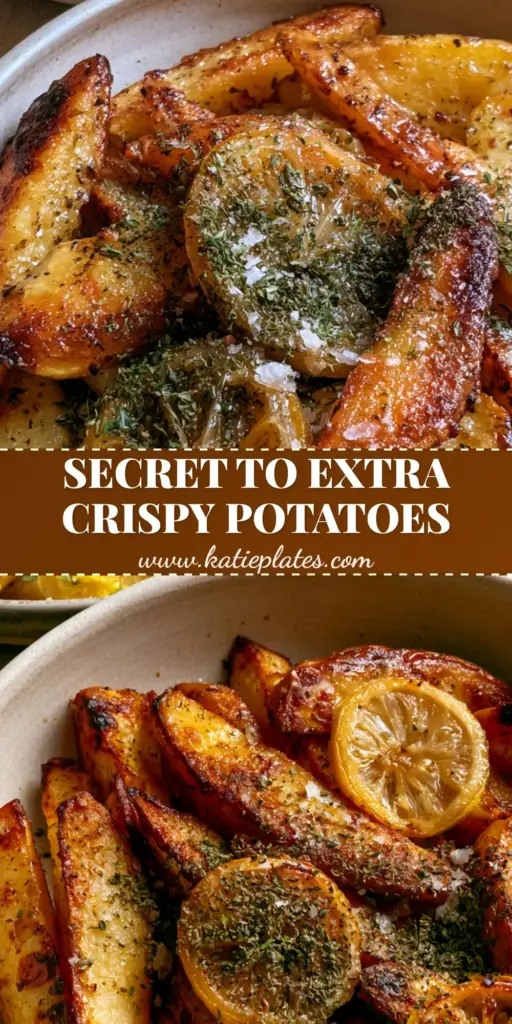
Mastering the art of the Greek potato is a milestone for any home cook. The combination of high-heat blistering and the deep infusion of lemon and garlic creates a side dish that often outshines the main course. We hope you enjoy the “shatteringly crisp” edges and buttery centers of this authentic recipe.
If you made these, please leave a comment and a star rating below! Your feedback helps our community grow. Don’t forget to save this recipe to your “Mediterranean Sides” board on Pinterest so you can find it whenever the craving for crispy, citrusy potatoes strikes.