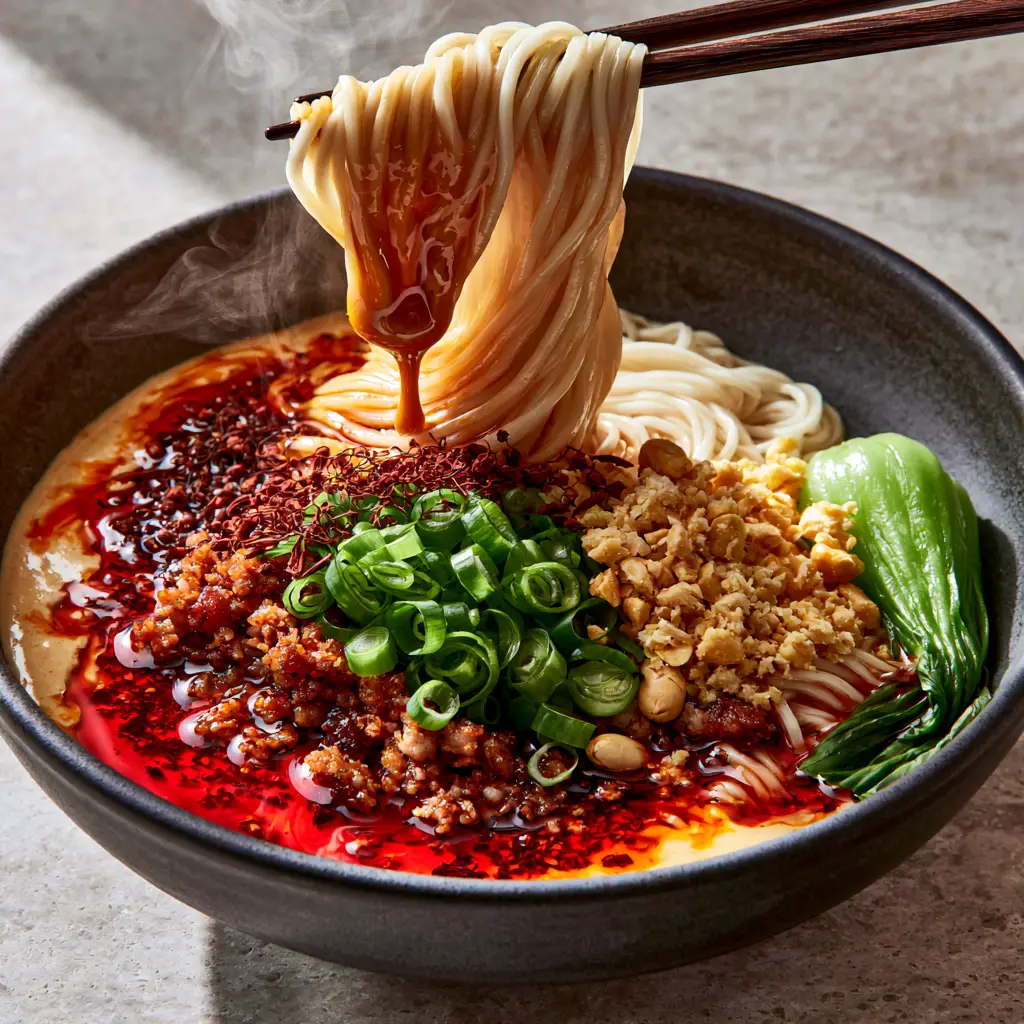
If there is one dish that captures the electric energy of Chengdu’s street food scene, it is Dan Dan Noodles. This iconic Sichuan dish is a masterclass in balance, layering numbing spice, savory richness, and a hit of acidity that keeps you coming back for another bite. When you look at a bowl of these noodles, you aren’t just seeing a meal; you are seeing a vibrant landscape of textures and colors.
Imagine long, bouncy wheat noodles being lifted high with dark wood chopsticks, each strand dripping with a satiny, glossy red chili oil and creamy sesame paste sauce. The contrast of the emerald-green scallions against the matte charcoal ceramic bowl creates a visual feast before the first taste even hits your tongue. Whether you are a fan of a classic Chinese recipe or you’re looking to recreate that specific Chinese takeout recipe flavor at home, this version delivers on every sensory promise.
The secret lies in the architecture of the bowl—the way the crispy minced seared pork sits atop the noodles, nestled next to a vibrant blanched baby bok choy and a generous dusting of red Sichuan peppercorn husks. This recipe guide will walk you through the culinary science of achieving that perfect “mala” (numbing and spicy) sensation while ensuring your noodles maintain that signature bounce.
Why This Authentic Sichuan Noodle Dish Works
- Textural Harmony: You get the crunch of golden toasted peanuts and crispy pork crumbles paired with the silkiness of the sesame-chili sauce.
- The “Mala” Experience: A dual-layered heat from the vibrant red chili oil and the numbing Sichuan peppercorn dust.
- Visual Brilliance: The striking contrast of bright emerald scallions and deep red oils makes this a centerpiece-worthy dish.
- Restaurant Quality: By focusing on the “bouncy” alkaline noodle texture, we avoid the common pitfall of mushy homemade pasta.
The Anatomy of Authentic Ingredients and Substitutions
To achieve the visual and flavorful depth seen in our Dan Dan Noodles, every ingredient serves a specific purpose. We aren’t just tossing things in a bowl; we are building a foundation of flavor.
Thick Alkaline Wheat Noodles: These provide the “bouncy” structure required to hold up the heavy sauce. Use 12 oz (340g) of fresh or dried thick wheat noodles. If you can’t find specific Dan Dan noodles, a thick lo mein or even a sturdy linguine can work in a pinch, though the chew will differ.
Minced Pork (The Topping): Use 8 oz (225g) of ground pork with a decent fat content (80/20). The fat renders out during the searing process, allowing the meat to become “crispy minced crumbles” rather than just cooked meat.
Chinese Sesame Paste: Unlike Mediterranean tahini, Chinese sesame paste is made from toasted seeds, giving it a deeper, nuttier profile. You’ll need 3 tbsp (45g). If you must substitute, use natural peanut butter mixed with a teaspoon of toasted sesame oil.
Vibrant Red Chili Oil: This provides the “glossy red” sheen. Use 4-5 tbsp (60-75ml) of high-quality Sichuan chili oil, preferably with the sediment (flakes) included for extra texture. This is the same type of bold heat you might enjoy in Lebanese spicy potatoes.
Sichuan Peppercorns: These provide the numbing “dust” on top. Toast 1 tsp (2g) of whole husks and grind them fresh for the most potent aromatic experience. This is a staple in many Chinese recipes for that signature tingle.
Preserved Mustard Greens (Sui Mi Ya Cai): This is an “invisible” foundational ingredient. Use 3 tbsp (45g) to sauté with the pork; it provides the fermented, salty umami that defines authentic Dan Dan sauce.
Aromatic Finishes: You will need 2 heads of baby bok choy, 3 stalks of fresh sliced scallions, and 1/4 cup (35g) of crushed toasted peanuts for the final assembly.
Essential Kitchen Tools for the Perfect Sear
To get the pork truly crispy and the bok choy perfectly blanched, you need the right gear. A heavy-bottomed carbon steel wok or a large cast-iron skillet is ideal for heat retention.
A spider strainer or slotted spoon is necessary for fishing the bouncy noodles out of the boiling water without losing their texture. You will also want a small mortar and pestle to create that fine Sichuan peppercorn dust that coats the top of the dish.
Step-by-Step Evolution of the Ultimate Dan Dan Bowl
Searing the Crispy Pork Crumbles
Heat 1 tbsp (15ml) of neutral oil in your wok over high heat until shimmering. Add the minced pork, spreading it out into a thin layer. Let it sit undisturbed for 2 minutes to develop a deep golden-brown crust.
Break the meat apart and add the preserved mustard greens and 1 tsp (5ml) of dark soy sauce. Continue to sear until the pork is dark, mahogany brown and noticeably crispy. Remove from the heat and set aside; these crumbles should look like savory little nuggets of gold.
Whisking the Satiny Sesame Base
In a medium bowl, combine the toasted sesame paste, red chili oil, 2 tbsp (30ml) of light soy sauce, 1 tbsp (15ml) of black vinegar (Chinkiang vinegar), and 1 tsp (5g) of sugar. Whisk vigorously until the sauce is glossy and perfectly emulsified.
The texture should be “satiny”—thick enough to coat the back of a spoon but loose enough to pool at the bottom of your charcoal ceramic bowl. If it’s too thick, add a tablespoon of hot noodle water later to thin it out.
The Art of the Bouncy Noodle and Blanched Greens
Bring a large pot of water to a rolling boil. Add your baby bok choy and blanch for exactly 60 seconds until the stalks are tender-crisp and the leaves are vibrant green. Remove and plunge into ice water to stop the cooking.
In the same boiling water, add your wheat noodles. Cook according to package directions, but aim for 30 seconds less than the “al dente” suggestion. We want them bouncy and resilient. Drain well, but do not rinse; the surface starch helps the satiny sauce cling to every strand.
Final Assembly and Visual Plating
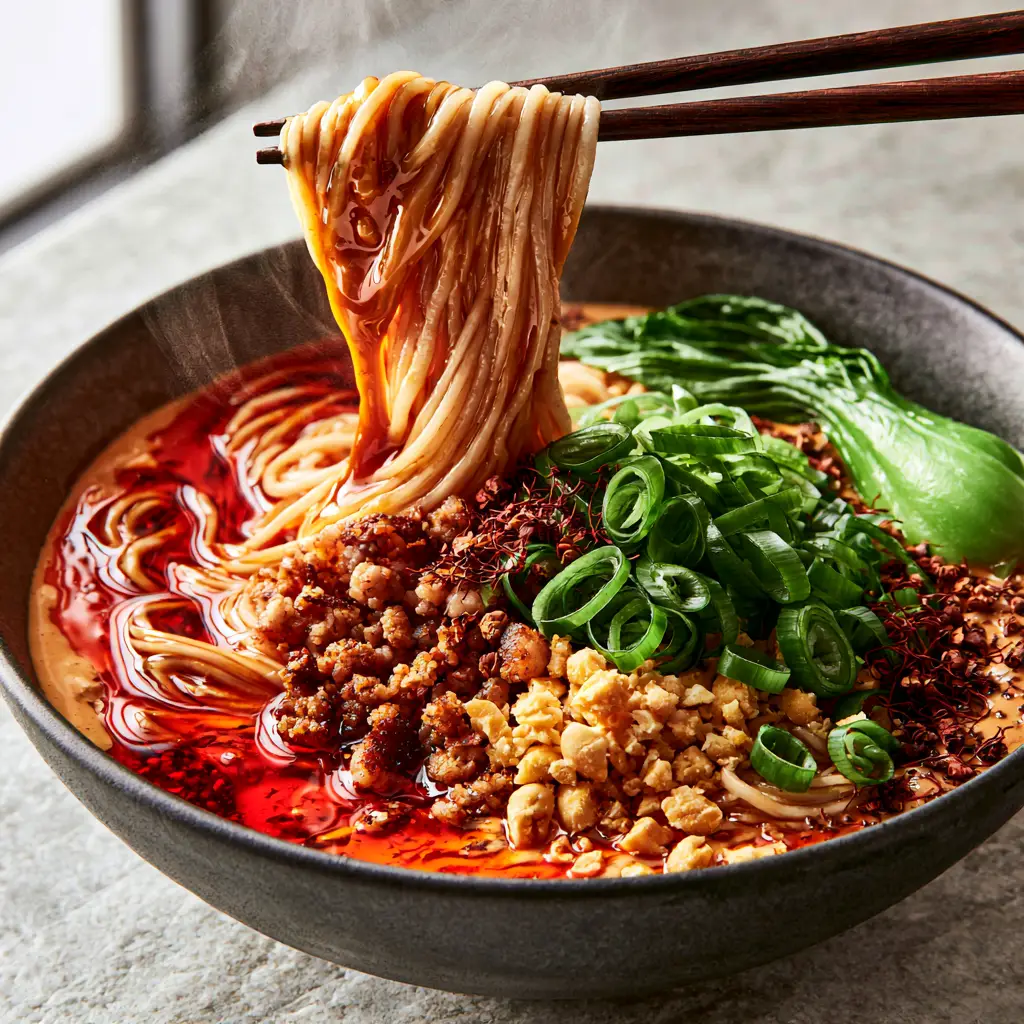
Place a generous pool of the sesame-chili sauce at the bottom of your matte charcoal bowl. Nestled the warm, bouncy noodles on top. Use your dark wood chopsticks to lift and swirl the noodles slightly so they start to pick up the red oil.
Top with the crispy pork crumbles, a handful of bright emerald scallions, the crushed toasted peanuts, and the blanched bok choy on the side. Finish with a final dusting of Sichuan peppercorn husks for that aromatic punch.
Expert Tips for Culinary Success
- Don’t Overcrowd the Pan: When searing the pork, if you add too much at once, the meat will steam instead of crisping. Cook in batches if necessary to get those crunchy crumbles.
- Toast Your Peppercorns: Raw Sichuan peppercorns can taste soapy. Toasting them in a dry pan for 2 minutes awakens the oils and creates a much more pleasant numbing effect.
- Emulsify the Sauce: If your sesame paste has separated in the jar, stir it thoroughly before measuring. A well-mixed paste is the difference between a gritty sauce and a satiny one.
- Serve Immediately: Wheat noodles absorb liquid quickly. To keep that “dripping sauce” look from the Midjourney prompt, serve the dish the moment it is assembled.
Storage, Reheating, and Make-Ahead Advice
Dan Dan Noodles are best enjoyed fresh, as the noodles will eventually soak up all the sauce and lose their bounce. However, you can prepare the components in advance.
The crispy pork and the sesame-chili sauce can be stored in airtight containers in the refrigerator for up to 4 days. When ready to eat, simply boil fresh noodles and bok choy, then assemble. To reheat the pork, use a dry skillet over medium heat to restore its crispiness.
What to Serve with Sichuan Noodles
Since this dish is rich and spicy, it pairs beautifully with cooling side dishes. A smashed cucumber salad or a light avocado tuna salad can provide a refreshing contrast to the numbing heat.
If you are building a larger feast of chicken and vegetable recipes, consider serving these noodles alongside a mild stir-fry to balance the palate. For a fusion twist, the savory depth of this dish actually complements the umami found in seared ahi tuna.
Frequently Asked Questions
Authentic Chengdu-style Dan Dan Noodles are ‘dry,’ meaning they are served with a small amount of concentrated sauce at the bottom rather than in a large bowl of broth.
Yes! Substitute the minced pork with finely chopped shiitake mushrooms or crumbled firm tofu. Sear them in the same way until crispy to maintain the textural integrity of the dish.
The heat comes primarily from the chili oil and the numbing peppercorns. You can reduce the chili oil by half or omit the peppercorn dust if you prefer a milder savory noodle.
Chinese sesame paste is made from toasted sesame seeds, giving it a dark brown color and a deep, nutty flavor. Tahini is usually made from raw or lightly toasted seeds and is much more bitter and thinner.
Look for alkaline wheat noodles, often labeled as ‘Shanghai Noodles’ or ‘Lo Mein.’ Their high pH level gives them the ‘bounce’ and yellow color needed to withstand the heavy sauce.
The Ultimate Authentic Dan Dan Noodles
Dan Dan Noodles: Authentic Sichuan Street Food Recipe
Ingredients
Equipment
Method
- Heat oil in a wok and sear ground pork until a deep golden-brown crust forms. Add mustard greens and dark soy sauce, cooking until meat is crispy crumbles.
- Whisk together sesame paste, chili oil, light soy sauce, vinegar, and sugar in a bowl until glossy and satiny.
- Blanch bok choy for 60 seconds. Boil wheat noodles until bouncy, draining just before they reach full softness.
- Place sauce in the bowl, top with noodles, pork, scallions, peanuts, and bok choy. Dust with ground Sichuan peppercorns.
Notes
If the sauce is too thick, use 1 tbsp of hot noodle cooking water to reach a satiny consistency.
Join the Sichuan Spice Revolution!
We hope you love this deep dive into the world of Dan Dan Noodles. The combination of the bouncy noodles and that signature numbing dust is a culinary journey you won’t soon forget. If you made this dish, we would love to see your results! Leave a comment below and let us know how your “mala” experience turned out.
Don’t forget to share your beautiful bowl on Pinterest and tag us! If you’re looking for more global inspiration, check out our latest recipes ranging from spicy noodles to comforting classics.