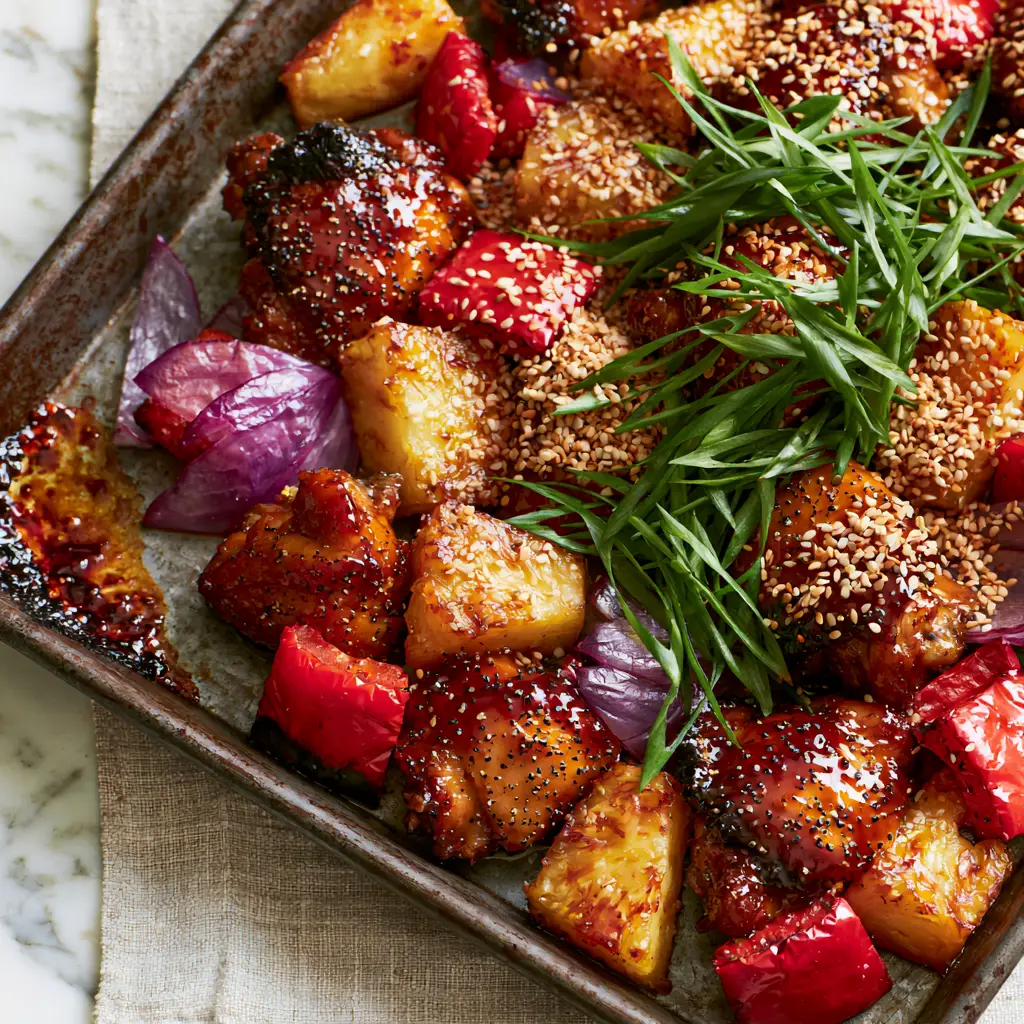
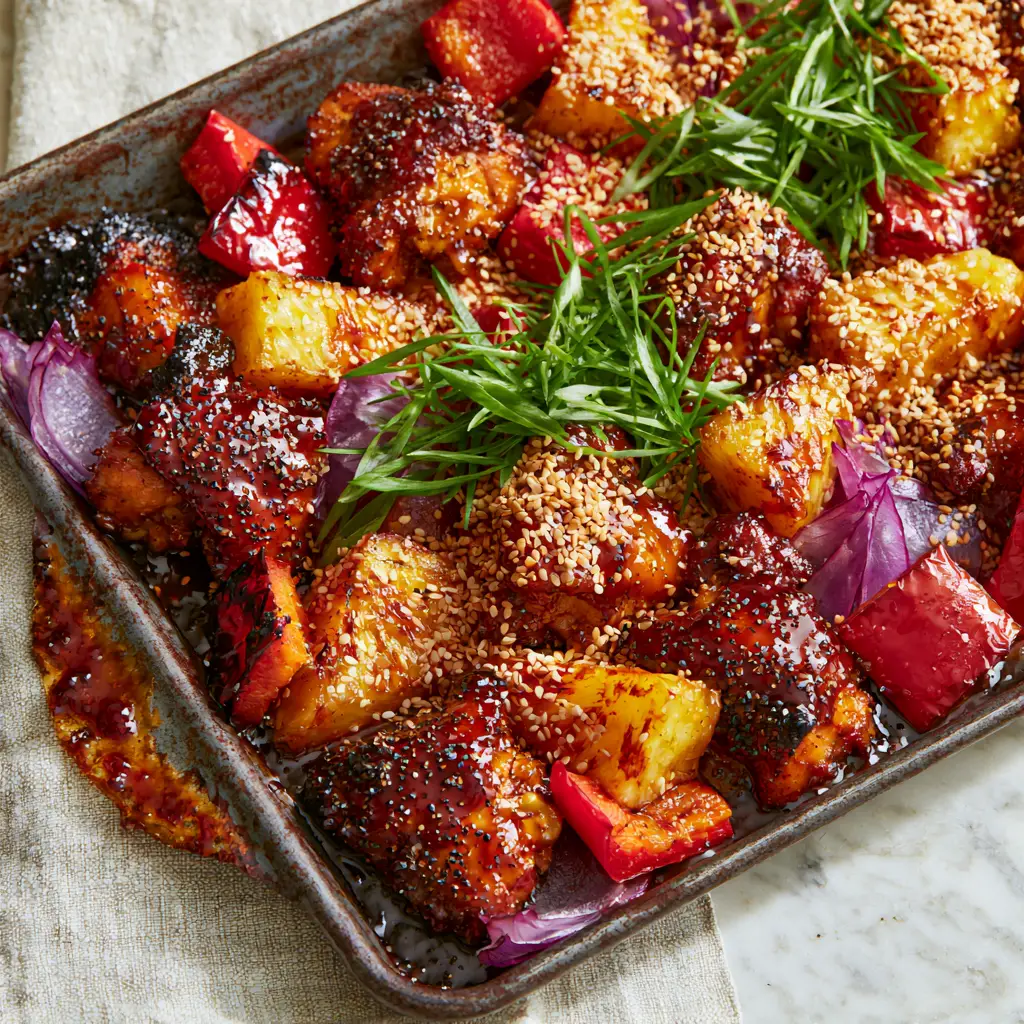
The Hawaiian Chicken Sheet Pan is more than just a convenient weeknight meal; it is a sensory explosion that brings the vibrant spirit of a tropical getaway straight to your kitchen table. Imagine succulent chicken thigh pieces, each coated in a thick, glistening, dark amber teriyaki glaze that catches the light like polished mahogany. As you pull the rustic dark metal pan from the oven, the first thing you notice is the intoxicating aroma of charred pineapple and caramelized red onion mingled with the sharp, earthy scent of freshly cracked black pepper.
This recipe is meticulously designed to mirror the high-quality, handheld smartphone photography style of modern home cooking—unfussy yet undeniably gourmet. Every element, from the vibrant red bell pepper squares with their softened, roasted edges to the translucent purple red onion petals, has been chosen for both flavor and visual impact. The final result is a masterpiece of textures: crispy seared chicken edges, juicy fruit, and a heavy sprinkle of toasted white sesame seeds that adds a delicate crunch to every bite.
Why This Tropical Sheet Pan Dinner is a Weeknight Game Changer
- Visual Masterpiece: The contrast between the deep amber glaze, the golden-brown sear marks on the pineapple, and the spray of bright green scallions makes this dish “plate-ready” the moment it leaves the oven.
- Structural Integrity: By utilizing chicken thighs instead of breasts, we ensure the meat remains juicy even at the high temperatures required to achieve those charred, caramelized edges.
- Complex Flavor Profile: We balance the intense sweetness of the teriyaki and pineapple with the savory heat of cracked black pepper and the sharp bite of red onion.
- Minimal Cleanup: As a true sheet pan meal, the entire dinner—including the caramelization of the sauce—happens on one rustic metal surface, making cleanup a breeze.
The Vibrant Ingredients Behind This Tropical Masterpiece
Every ingredient in this Hawaiian Chicken Sheet Pan serves a specific culinary purpose, contributing to the “glistening” visual and “charred” texture described in our culinary blueprint. We do not just choose ingredients for taste; we choose them for their scientific behavior under intense heat.
Boneless Skinless Chicken Thighs (1.5 lbs / 680g): Thighs are the superior choice here because their higher fat content allows for a longer roasting time, which is essential for developing those dark, caramelized edges without drying out the meat. Cut them into uniform bite-sized pieces to ensure even cooking and maximum surface area for the glaze to cling to.
Thick Teriyaki Glaze (1 cup / 240ml): A standard runny marinade won’t work for this visual; you need a glaze that is thick and viscous. This creates the “glistening” effect and allows the sauce to pool slightly in the corners of the pan, where it undergoes delicious Maillard-driven caramelization.
Fresh Pineapple Wedges (2 cups / 300g): Avoid canned pineapple if possible. Fresh pineapple contains natural sugars that develop beautiful golden-brown sear marks when exposed to high heat, and its structural integrity holds up better than the softer, canned variety.
Red Bell Peppers (2 medium): Sliced into vibrant squares, these provide a pop of color and a softened, sweet crunch. They act as a moisture-rich contrast to the savory chicken and sticky sauce.
Red Onion (1 large): When sliced into wedges, the onion layers separate into “translucent purple petals.” These petals catch the glaze and soften into sweet, umami-rich bites that are visually stunning against the white marble countertop setting.
Toasted White Sesame Seeds & Green Onions: These are the essential “finishing touches.” The seeds provide a heavy sprinkle of texture, while the thinly sliced scallions offer a spray of bright green freshness that cuts through the richness of the dark amber glaze.
Invisible Essentials: You will also need 2 tbsp (30ml) of a high-smoke-point oil (like avocado or light olive oil) to facilitate the initial sear, and 1 tsp (5g) of freshly cracked black pepper to provide those visible dark specks in the glaze.
Essential Kitchen Tools for a Flawless Roast
To achieve the professional results seen in our Midjourney prompt, you need a dark metal sheet pan. Darker pans absorb more heat than shiny aluminum ones, which is the secret to getting that slight caramelization of the sauce against the metal in the corner of the pan. A high-quality chef’s knife is also vital for creating the clean, sharp edges on your red bell pepper squares and the thin, uniform slices of green onion.
Lastly, ensure you have a large mixing bowl to toss the ingredients. This ensures every piece of chicken and vegetable is thoroughly “coated” before it hits the pan, which is the key to that “thick, glistening” finish. If you love the flavors of this dish but want to try a different preparation, you might enjoy these Hawaiian teriyaki chicken kabobs for your next outdoor gathering.
How to Achieve That Perfect Charred Hawaiian Glaze
Step 1: Prep and Prime the Ingredients
Begin by preheating your oven to 425°F (220°C). While the oven heats, pat your chicken thighs dry with paper towels—this is a critical culinary step. Any surface moisture will cause the chicken to steam rather than sear, preventing those charred edges we desire. Cut the chicken into 1.5-inch (4cm) pieces and toss them in a large bowl with the oil and half of the cracked black pepper.
Step 2: The “Double-Coat” Glazing Technique
Add your pineapple wedges, red bell pepper squares, and red onion wedges to the bowl with the chicken. Pour over 3/4 cup (180ml) of the thick teriyaki glaze. Use your hands or a spatula to ensure every single nook and cranny is coated. The glaze should look heavy and glistening even before it enters the oven. Spread the mixture onto your dark metal sheet pan in a single layer, ensuring no crowding, which allows the hot air to circulate and create those golden-brown sear marks.
Step 3: The High-Heat Roast
Slide the pan into the oven and roast for 15-20 minutes. At the 10-minute mark, use a spatula to gently flip the pieces. You are looking for the visual cue of the red onion becoming translucent and the pineapple edges beginning to darken. In the final 5 minutes, turn the broiler on high. Watch closely! This is when the “slight caramelization of the sauce against the metal” occurs and the chicken edges turn a deep, dark amber.
Step 4: The Final Garnish Spray
Remove the pan from the oven. While it is still sizzling, brush the remaining 1/4 cup (60ml) of glaze over the chicken for an extra layer of shine. Immediately sprinkle with the toasted white sesame seeds and the spray of bright green scallions. The heat from the pan will slightly wilt the scallions, releasing their aroma without losing their vibrant color.
Pro-Chef Secrets for the Glossiest Teriyaki Finish
- The “Cool” Finish: If your glaze isn’t looking glossy enough, whisk in 1 tsp of honey or agave before the final brush; the invert sugars provide a mirror-like shine.
- Don’t Crowd the Pan: If the ingredients are touching too closely, they will release steam and the sauce will become watery rather than thick and sticky. Use two pans if necessary.
- Pepper Precision: Use a coarse grind for your black pepper. The “visible cracked black pepper” in the visual prompt is only achievable if the grinds are large enough to stand out against the dark sauce.
- Freshness Factor: Always slice your green onions at a sharp bias (diagonal). This creates more surface area and a more “professional” look for your garnish spray.
Meal Prep and Reheating Your Tropical Leftovers
This Hawaiian Chicken Sheet Pan is a dream for meal prep. The flavors of the teriyaki and the juices from the roasted pineapple actually meld further overnight. Store leftovers in an airtight container for up to 4 days. When reheating, avoid the microwave if possible, as it can make the bell peppers mushy. Instead, place the chicken and vegetables back on a sheet pan in a 350°F (175°C) oven for 8-10 minutes until the glaze sizzles again.
For those looking for a different spin on these flavors for a quick lunch, consider making a teriyaki chicken wrap with any leftover chicken and peppers. It’s a fantastic way to repurpose the ingredients while maintaining that tropical vibe.
What to Serve with Your Hawaiian Masterpiece
While this sheet pan is a complete meal on its own, it pairs beautifully with fluffy jasmine rice or coconut-infused quinoa to soak up that extra caramelized sauce from the pan. If you are looking for a variety of chicken and vegetable recipes to add to your rotation, this dish stands out for its unique sweet-and-savory balance.
If you prefer a more traditional takeout experience at home, you can serve this alongside dan dan noodles or even a light avocado tuna salad for a surf-and-turf style lunch spread. For those following specific dietary needs, this recipe is easily adaptable into a gluten-free teriyaki chicken dish simply by swapping the soy sauce in the glaze for tamari or coconut aminos.
Frequently Asked Questions
You can, but chicken thighs are recommended for this specific visual result. Thighs handle high-heat roasting better, remaining juicy while the glaze caramelizes. If using breasts, reduce the cook time by 5 minutes to prevent drying out.
Fresh pineapple is highly recommended. It has a firmer structure and higher natural sugar content, which allows it to develop those distinct golden-brown sear marks without falling apart like canned pineapple often does.
The secret is using a pre-thickened teriyaki glaze rather than a thin marinade. Additionally, brushing on a fresh layer of glaze immediately after the chicken comes out of the oven provides that high-shine finish.
It can be! Simply ensure your teriyaki glaze is labeled gluten-free or make your own using tamari or coconut aminos in place of traditional soy sauce.
Dark metal pans conduct heat more efficiently and absorb more radiant energy, which is essential for creating the slight caramelization of the sauce against the metal and those sought-after charred edges on the chicken.
The Complete Hawaiian Chicken Sheet Pan Recipe
Hawaiian Chicken Sheet Pan: The Ultimate Sticky Pineapple Dinner
Ingredients
Equipment
Method
- Preheat your oven to 425°F (220°C). Pat the chicken thighs dry and cut them into bite-sized pieces.
- In a large bowl, combine the chicken, pineapple, red bell peppers, and red onion. Add 3/4 cup of the teriyaki glaze, oil, and cracked black pepper. Toss until everything is thickly glistening and evenly coated.
- Spread the mixture onto a dark metal sheet pan. Roast for 15 minutes, flipping halfway through to ensure even searing.
- Turn the oven to the broiler setting on high. Broil for 3-5 minutes until the chicken has charred edges and the sauce caramelizes against the pan.
- Remove from the oven and brush with the remaining 1/4 cup of teriyaki glaze. Generously sprinkle with toasted sesame seeds and sliced green onions.
Notes
Use a dark metal pan for the best caramelization in the corners.
Closing & Call to Action
There is nothing quite like the satisfaction of a one-pan meal that looks like it belongs on the cover of a culinary magazine. This Hawaiian Chicken Sheet Pan delivers on every promise: it’s easy, visually stunning, and packed with layers of charred, sweet, and savory flavor. Whether you are cooking for a busy family or prepping your meals for the week, this recipe is sure to become a staple in your kitchen.
If you enjoyed this recipe, please leave a comment below and let me know how your char turned out! Don’t forget to follow me on Pinterest for more vibrant, easy-to-make dinner inspiration. Save this recipe to your “Sheet Pan Dinners” board so you always have it on hand!