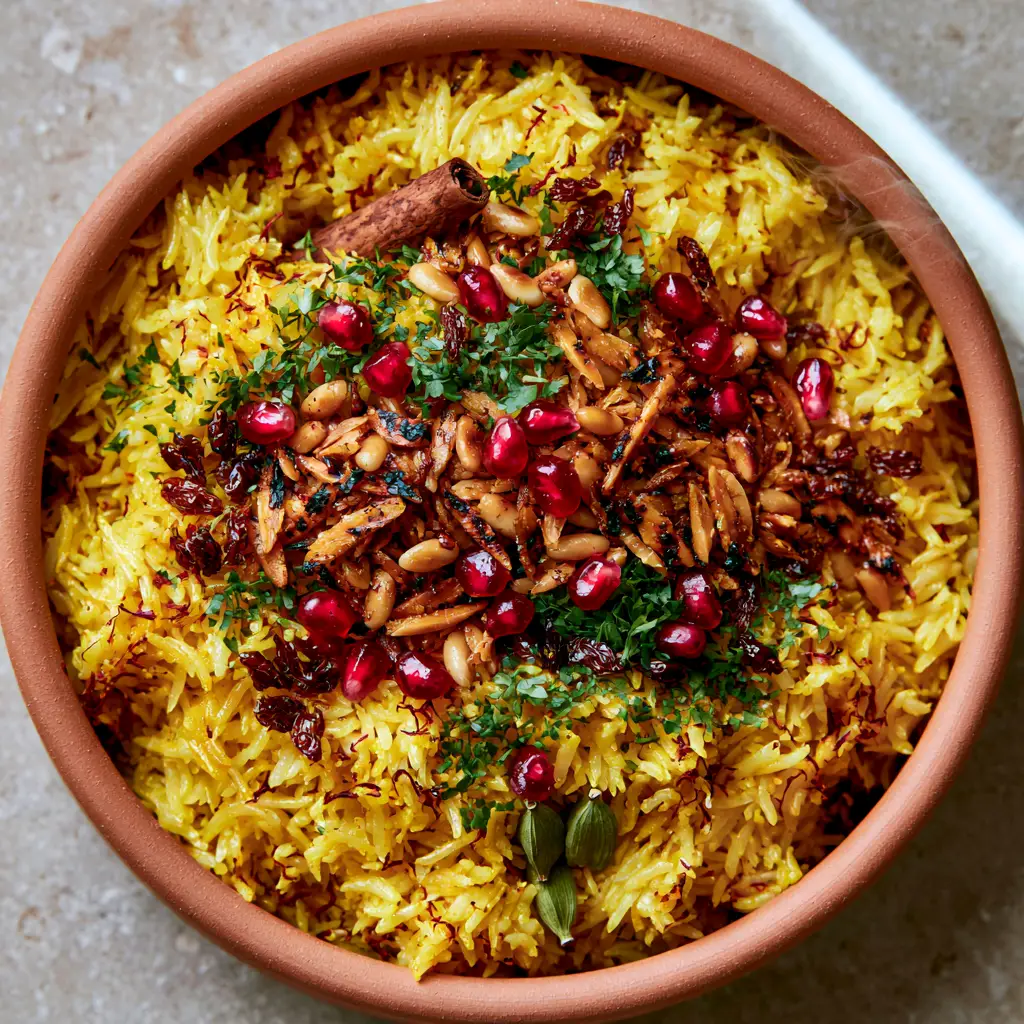
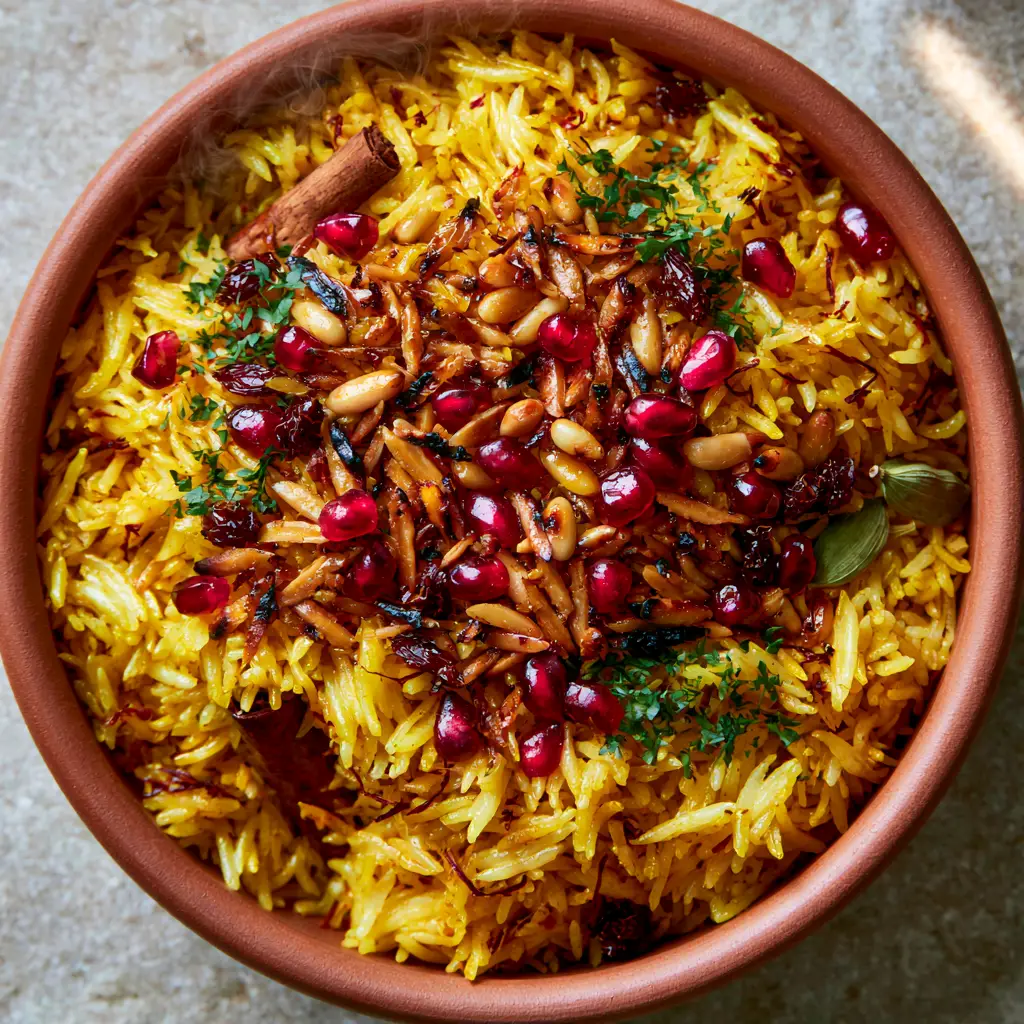
There is something inherently magical about lifting the lid off a shallow matte terracotta pot to reveal a cloud of ethereal steam and the vibrant, golden glow of a perfectly executed Middle Eastern Spiced Rice Pilaf. This isn’t just a side dish; it is a centerpiece of culinary craftsmanship, where every individual grain of long-grain basmati rice stands proud, fluffy, and distinct. The aroma—a heady mixture of warm cinnamon, citrusy cardamom, and the earthy perfume of saffron—immediately transports you to a bustling Levantine kitchen.
Achieving this level of forensic visual accuracy requires more than just boiling rice. It requires an understanding of starch structures, the chemistry of spice extraction, and the delicate art of the “toasting” phase. In this guide, we will break down the science of achieving that vibrant yellow tint and the textural contrast of charred almonds and ruby-red pomegranate seeds that make this dish a viral-worthy masterpiece.
The Sensory Architecture of an Authentic Pilaf
When you look at a professional-grade Middle Eastern Spiced Rice Pilaf, your eyes should immediately register several high-contrast elements. The visual blueprint of this dish relies on the interplay between the warm gold of the rice and the jewel-toned garnishes. Here is what defines the ultimate pilaf experience:
- Perfect Grain Separation: Each grain of basmati should be elongated and individual, never clumping or mushy, thanks to thorough rinsing and precise fat-to-water ratios.
- Vibrant Saffron Infusion: A deep, sunset-yellow hue that penetrates the grains, achieved through a dedicated blooming process rather than just tossing threads into the pot.
- Textural Complexity: The snap of charred slivered almonds, the buttery crunch of toasted pine nuts, and the juicy burst of fresh pomegranate seeds.
- Aromatic Depth: A foundation of whole spices—cinnamon and cardamom—that infuse the rice from within rather than overpowering it with ground powders.
Essential Ingredients for Aromatic Excellence
To recreate the stunning visual in our blueprint, we must select ingredients that offer both structural integrity and vivid color. Here is what you will need for your Middle Eastern Spiced Rice Pilaf:
Long-Grain Basmati Rice: 2 cups (380g). Look for extra-long grain varieties; these contain the highest amylose content, which is the secret to grains that remain separate and fluffy after steaming.
Saffron Threads: 1/2 tsp (0.5g). This provides the “vibrant golden-yellow” tint described in the prompt. We will bloom these in 2 tbsp (30ml) of warm water to maximize pigment extraction.
Whole Cinnamon Stick & Green Cardamom Pods: 1 stick and 3 pods. Using whole spices prevents the rice from looking “dirty” or grey, ensuring the golden saffron color remains the star of the show.
Charred Slivered Almonds & Toasted Pine Nuts: 1/4 cup (35g) each. The almonds are charred for smoky depth, while the pine nuts are lightly toasted to a golden brown for a rich, buttery finish.
Dried Red Barberries (Zereshk): 2 tbsp (20g). These tiny, tart berries provide a visual and flavor contrast to the sweet pomegranate, adding “fine flecks” of red across the golden rice.
Fresh Pomegranate Seeds & Parsley: 1/2 cup (80g) seeds and 1/4 cup (15g) chopped parsley. These are our “ruby-red” and “emerald green” finishing touches that provide the final layer of forensic visual accuracy.
Foundational Liquid: 3 cups (720ml) low-sodium chicken or vegetable broth. While water works, broth adds a savory backbone that complements the aromatic spices. This is excellent when served alongside middle eastern roasted chicken and potatoes.
The Technical Toolkit for Pilaf Perfection
To achieve the “shallow matte terracotta pot” aesthetic, the vessel you choose matters. A wide, shallow pot allows for even heat distribution and prevents the weight of the rice from crushing the bottom layers. You will also need a fine-mesh sieve for the critical rinsing stage, a heavy lid to trap steam, and a small mortar and pestle to lightly crush the saffron threads before blooming.
The Forensic Guide to Fluffy Basmati Perfection
Phase 1: The Starch Removal Ritual
Place your 2 cups (380g) of basmati rice in a large bowl and cover with cool water. Swirl the grains gently with your hand; the water will turn milky white as surface starch is released. Drain and repeat this process 5 to 7 times until the water remains crystal clear. This step is non-negotiable if you want the “perfectly separated” grains seen in the Midjourney prompt.
Phase 2: Extracting the Golden Essence
While the rice drains, lightly grind your saffron threads with a pinch of sugar or salt. Add 2 tbsp (30ml) of hot (not boiling) water and let it sit for at least 10 minutes. This “liquid gold” will be drizzled over the rice during the final stages of cooking to create that multi-tonal golden-yellow effect.
Phase 3: The Fat-Sealing and Toasting Process
In your terracotta pot or heavy saucepan, heat 2 tbsp (30ml) of ghee or neutral oil over medium heat. Add the cinnamon stick and cardamom pods, stirring until they become fragrant and the pods slightly puff up. Add the drained rice and sauté for 3-4 minutes. You are looking for the rice to become translucent at the edges and smell slightly nutty—this “toasts” the grains and coats them in fat, which acts as a barrier against clumping.
Phase 4: The Absorption and Steaming Cycle
Pour in your 3 cups (720ml) of broth and add 1 tsp (6g) of sea salt and a generous amount of cracked black pepper. Bring to a boil, then immediately reduce the heat to the lowest setting. Cover with a tight-fitting lid (or a lid wrapped in a clean kitchen towel to absorb excess moisture). Simmer for 15 minutes. Do not lift the lid; the steam is doing the forensic work of elongating the grains.
Phase 5: The Finishing Flourish
Once the water is absorbed, remove the pot from the heat but keep the lid on for another 10 minutes. This allows the moisture to redistribute. Gently fluff the rice with a fork, then drizzle the bloomed saffron over the top. Scatter your charred almonds, toasted pine nuts, barberries, pomegranate seeds, and fresh parsley across the surface. The steam should be light and ethereal as you serve.
Expert Tips for Success
- The Towel Trick: Wrapping your pot lid in a kitchen towel prevents condensation from dripping back onto the rice, ensuring the grains stay dry and distinct.
- Avoid Over-Stirring: Once the liquid is added, do not stir the rice. Stirring breaks the grains and releases starch, leading to a gummy texture.
- Temperature Control: If your stove runs hot, use a heat diffuser. The goal is a gentle steam, not a hard boil, to keep the rice from scorching.
- Nut Toasting: Always toast your nuts in a dry pan separately. They go from “charred” to “burnt” in seconds, so watch them closely for that perfect dark-golden hue.
Strategic Pairings and Serving Suggestions
This Middle Eastern Spiced Rice Pilaf is a versatile workhorse in the kitchen. For a complete feast, pair it with lebanese spicy potatoes for a double-carb delight that hits all the right spice notes. If you are looking for a lighter protein pairing, it serves as a stunning bed for baked salmon with lemon butter cream sauce, where the citrus in the sauce highlights the cardamom in the rice.
For those following a thematic dinner plan, consider serving this alongside other regional favorites. It works beautifully with grilled meats or even as a base for a deconstructed teriyaki chicken wrap if you want to experiment with fusion flavors.
Storage, Reheating, and Freezing
Storage: Store leftovers in an airtight container in the refrigerator for up to 4 days. The flavors of the cinnamon and cardamom will actually deepen overnight.
Reheating: To maintain the “fluffy” texture, reheat the rice in a microwave with a damp paper towel draped over the top, or on the stovetop with a splash of water to regenerate the steam.
Freezing: This pilaf freezes remarkably well. Freeze in portions for up to 3 months. Thaw in the fridge before reheating using the method mentioned above.
Frequently Asked Questions
While you can, ground spices will tint the entire rice grain a muddy brown color. Whole spices infuse the flavor while allowing the vibrant saffron gold to shine.
Toast the slivered almonds in a dry skillet over medium-high heat, tossing constantly. Remove them from the pan the second they show dark brown spots, as residual heat will continue to cook them.
For this specific texture, long-grain basmati is essential. Other varieties like jasmine are too sticky, and short-grain rice will result in a texture closer to risotto.
Barberries (zereshk) are small, tart dried fruits common in Persian cuisine. You can find them at Middle Eastern grocers or online. If unavailable, chopped dried cranberries are a suitable substitute.
Mushy rice is usually caused by excess starch or too much liquid. Ensure you rinse the rice until the water is completely clear and follow the 1.5:1 liquid-to-rice ratio strictly.
The Ultimate Middle Eastern Spiced Rice Pilaf Recipe
Middle Eastern Spiced Rice Pilaf with Saffron and Pomegranate
Ingredients
Equipment
Method
- Rinse the basmati rice in a fine-mesh sieve under cold water until the water runs completely clear, removing all surface starch.
- Crush saffron threads and steep in 2 tbsp (30ml) of warm water for at least 10 minutes to develop the golden color.
- Heat ghee in a pot over medium heat. Add cinnamon and cardamom pods for 1 minute. Add rice and sauté for 3-4 minutes until toasted and translucent at the edges.
- Add broth, salt, and pepper. Bring to a boil, then reduce to a low simmer. Cover tightly and cook for 15 minutes.
- Remove from heat and let sit, covered, for 10 minutes. Fluff with a fork and drizzle the bloomed saffron over the grains.
- Top with charred almonds, toasted pine nuts, barberries, pomegranate seeds, and fresh parsley. Serve immediately while steaming.
Notes
Toast the nuts in a separate dry pan to ensure they don't burn during the rice steaming process.
Closing and Call to Action
Mastering the Middle Eastern Spiced Rice Pilaf is a rite of passage for any home cook looking to elevate their dinner game. With its vibrant colors and complex aromatics, it is a dish that tastes as good as it looks in a high-angle smartphone photo. If you enjoyed this recipe, please leave a comment below and share your results! Don’t forget to follow me on Pinterest and pin this recipe to your “International Flavors” board for later.