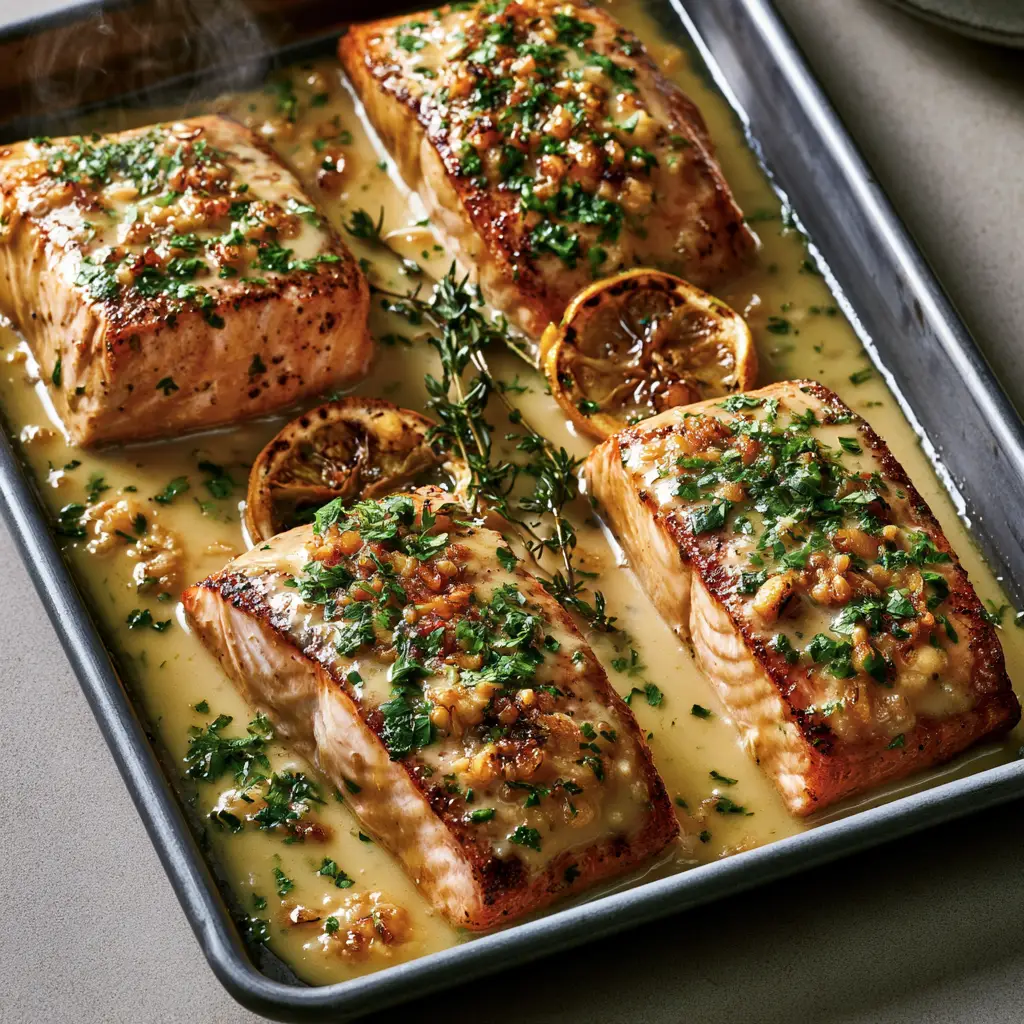
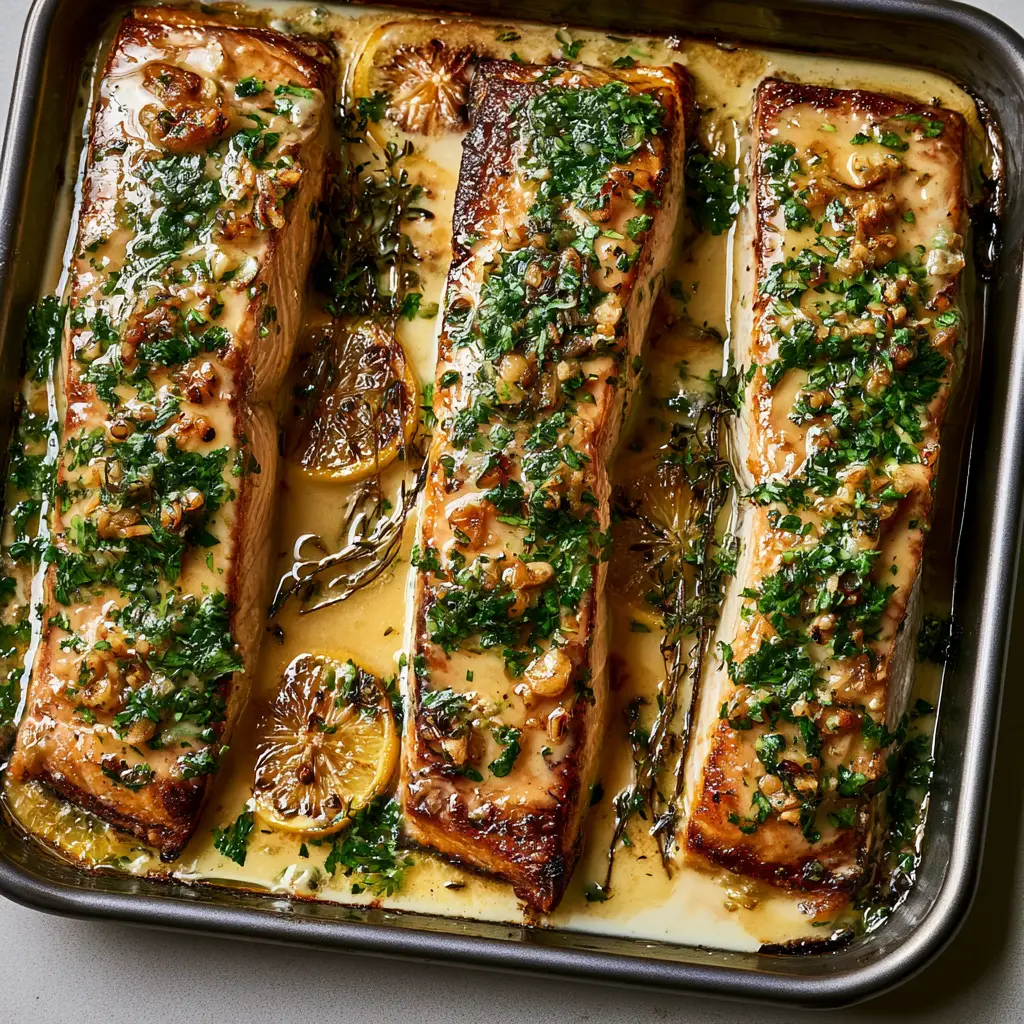
There is a specific, undeniable magic that happens when high-quality Atlantic salmon meets a blistering hot pan and a velvet-smooth emulsion of citrus and dairy. This Baked salmon with lemon butter cream sauce isn’t just another weeknight meal; it is a sensory experience designed to mimic the high-end plating of a coastal bistro right in your own kitchen. Imagine pulling a dark metallic sheet pan from the oven, the residual heat still coaxing steam from the opaque, flaky layers of fish while a glossy, golden sauce bubbles around charred citrus wheels.
The visual appeal of this dish is its first triumph. We are looking for that specific “high-shine” finish on the sauce, where the light catches the ripples of heavy cream and melted butter. The contrast between the deep, golden-brown seared edges of the salmon and the vibrant, scattered green of freshly chopped parsley creates a masterpiece that looks as good on a smartphone camera as it tastes on the palate. Whether you are a seasoned home cook or just beginning your culinary journey, this recipe provides the technical roadmap to achieving restaurant-grade results every single time.
Why This Pan-Seared and Roasted Salmon Recipe Works
- Dual-Texture Mastery: By starting with a hard sear and finishing in the oven, we achieve a crisp, golden exterior while maintaining a moist, tender interior.
- Emulsified Gloss: The sauce utilizes the science of reduction and emulsification to ensure a thick, spoon-coating consistency that never breaks.
- Aromatic Depth: The combination of sautéed minced garlic bits and fresh thyme sprigs infuses the fat, carrying flavor into every fiber of the fish.
- Balanced Acidity: The use of charred yellow lemon slices provides a concentrated, caramelized citrus note that cuts through the richness of the cream.
Premium Ingredients for a Restaurant-Quality Finish
To achieve the exact visual and flavor profile of this Baked salmon with lemon butter cream sauce, ingredient quality is paramount. Every component serves a structural or aesthetic purpose in the final presentation.
Center-Cut Atlantic Salmon: Choose four large fillets, approximately 6oz (170g) each. Center-cut pieces offer uniform thickness, ensuring they cook evenly and provide those beautiful, flaky layers.
Heavy Cream: You will need 1/2 cup (120ml) of high-fat heavy cream. This is the foundation of our glossy sauce; lower-fat alternatives like milk will not achieve the same “high-shine” reflective quality.
Unsalted Butter: 4 tbsp (60g) of high-quality butter allows us to control the seasoning perfectly. We use this to sauté the garlic and create the base of the lemon butter emulsion.
Fresh Garlic: 4-6 cloves of garlic, finely minced. We want visible “bits” of sautéed garlic in the sauce to provide texture and a pungent, savory backbone.
Fresh Herbs: A combination of fresh thyme sprigs and 1/4 cup (15g) of flat-leaf parsley. The thyme is nestled between fillets for aromatic infusion, while the parsley is scattered heavily at the end for color contrast.
Lemons: Two medium lemons. One is juiced for the sauce, and the other is sliced into thin rounds to be charred under the broiler or in the pan for a sophisticated garnish.
Foundational Seasonings: Flaky sea salt and coarsely cracked black pepper. These provide the “crunch” and hit of heat that balances the creamy fat of the salmon and sauce.
Essential Kitchen Tools for Success
To replicate the professional aesthetic of our Baked salmon with lemon butter cream sauce, you need the right conductivity and surface area. A dark metallic sheet pan is preferred as it absorbs heat efficiently, helping to char the lemon slices and maintain the sauce’s temperature.
A heavy-bottomed stainless steel or cast-iron skillet is also required for the initial sear. This provides the “maillard reaction” necessary for those crisp, golden-brown edges. You will also need a fish spatula—a thin, flexible tool that allows you to flip the delicate fillets without breaking the opaque layers.
If you enjoy exploring different seafood techniques, you might also find success applying these searing methods to a seared ahi tuna or even integrating the leftover sauce into a decadent seafood pasta recipe.
Step-by-Step Guide to the Perfect Flaky Salmon
Phase 1: Preparing the Salmon Fillets
Pat the salmon fillets completely dry using paper towels. Moisture is the enemy of a good sear; any surface water will create steam and prevent the crust from forming. Season generously with flaky sea salt and cracked black pepper on all sides.
Phase 2: Achieving the Golden-Brown Sear
Heat 2 tbsp (30ml) of high-smoke-point oil in your skillet over medium-high heat. Once the oil is shimmering and just beginning to wisps of smoke, place the salmon fillets flesh-side down. Press gently with your spatula to ensure full contact. Sear for 3-4 minutes until a deep, golden-brown crust forms. Flip carefully and sear the skin side for only 1 minute.
Phase 3: Crafting the Glossy Garlic Butter Cream Sauce
Reduce the heat to medium and add the butter to the pan. Once melted, toss in the minced garlic. Sauté for 1-2 minutes until the garlic is fragrant and light golden—do not let it burn. Pour in the heavy cream and lemon juice, whisking constantly. Allow the sauce to simmer and reduce for 3-4 minutes until it thickens enough to coat the back of a spoon with a reflective shine.
Phase 4: The Final Bake and Char
Transfer the seared salmon to your dark metallic sheet pan. Pour the garlic butter cream sauce over the fillets, ensuring they are heavily basted. Nestel the lemon slices and fresh thyme sprigs around the fish. Place the pan in a preheated oven at 400°F (200°C) for 5-7 minutes. For the “charred” look, turn on the broiler for the last 60 seconds to blister the lemon slices and brown the sauce clusters.
Phase 5: The Finishing Touches
Remove the pan from the oven and let it rest for 2 minutes. This allows the juices to redistribute, ensuring a flaky, moist texture. Scatter the fresh parsley heavily over the top and add one final pinch of flaky sea salt for a professional finish.
Expert Tips for Visual and Culinary Excellence
- Cold Butter Finish: If your sauce looks thin, whisk in a tablespoon of cold butter right before serving. This “mounting” technique adds an extra layer of gloss and thickness.
- The “Flake” Test: Use a fork to gently press on the thickest part of the fillet. If the layers separate easily (opaque and moist), the salmon is perfectly cooked.
- Charring Lemons: If your oven doesn’t have a strong broiler, sear the lemon slices in the pan with the salmon for 2 minutes per side before assembling the sheet pan.
- Sauce Separation: If the cream begins to separate, add a splash of warm water and whisk vigorously to re-emulsify the fats.
Storage and Reheating Advice
While Baked salmon with lemon butter cream sauce is best enjoyed immediately to preserve the crisp edges, leftovers can be stored in an airtight container in the refrigerator for up to 2 days. To reheat, place the salmon and sauce in a shallow dish, cover with foil, and warm in a 300°F (150°C) oven until just heated through. Avoid the microwave, as it will toughen the proteins and break the cream sauce.
What to Serve with Creamy Lemon Salmon
To balance the richness of the garlic butter sauce, consider serving this dish alongside light, vibrant sides. A crisp green salad or roasted asparagus works beautifully. If you want a more substantial meal, a side of lebanese spicy potatoes provides a wonderful textural contrast. For a fusion twist, the acidity in this dish pairs surprisingly well with some elements of a traditional chinese vegetable stir-fry.
If you’re looking for more salmon inspiration, don’t miss our guide on Mediterranean-style greek salmon which uses similar fresh herb profiles but focuses on feta and olives.
Frequently Asked Questions
You can substitute the butter with a high-quality vegan butter and the heavy cream with full-fat coconut milk, though the flavor profile will shift slightly toward a tropical note.
While you can, half-and-half is more likely to curdle under the acidity of the lemon and won’t produce the same glossy, thick ‘high-shine’ finish that heavy cream provides.
Salmon is done when it reaches an internal temperature of 145°F (63°C). Visually, the meat should be opaque and separate easily into flaky layers when pressed with a fork.
Yes, keeping the skin on helps protect the delicate flesh from overcooking and provides a structural base for the fillet, making it easier to flip without breaking.
Sauces usually break if they are boiled too vigorously or if the lemon juice is added too quickly to very hot cream. To fix it, whisk in a splash of warm water or an extra cold pat of butter off the heat.
Baked Salmon with Lemon Butter Cream Sauce Recipe
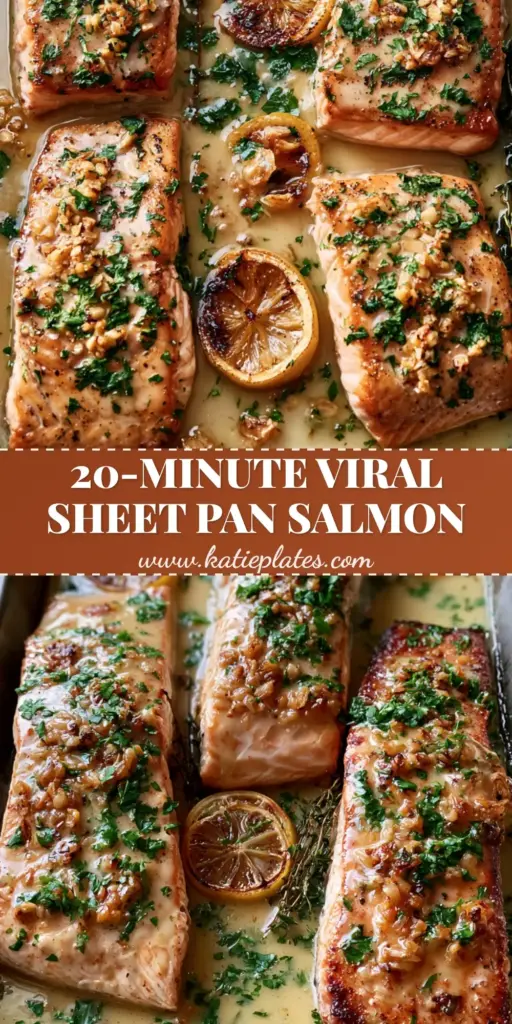
Baked salmon with lemon butter cream sauce: The Ultimate Gourmet Sheet Pan Dinner
Ingredients
Equipment
Method
- Pat the salmon fillets dry with paper towels. Season all sides with sea salt and cracked pepper.
- Heat oil in a skillet over medium-high heat. Sear salmon flesh-side down for 3-4 minutes until golden-brown. Flip and cook for 1 minute. Remove and place on sheet pan.
- In the same skillet, melt butter and sauté garlic for 1-2 minutes. Stir in heavy cream and lemon juice. Simmer for 3-4 minutes until glossy and thick.
- Pour the sauce over the salmon on the sheet pan. Add lemon slices and thyme. Bake at 400°F (200°C) for 5-7 minutes. Broil for 1 minute to char the lemons.
- Garnish with a heavy scatter of chopped parsley and extra sea salt. Serve immediately while steam is rising.
Notes
Patting the salmon dry is the secret to the golden crust.
Closing & Call to Action
Mastering the Baked salmon with lemon butter cream sauce is a milestone for any home cook. It combines technical searing skills with the delicate art of sauce-making to produce a result that is truly world-class. The flaky texture, the hit of charred citrus, and the aromatic garlic clusters create a dish that is as memorable as it is delicious.
We would love to see your kitchen creations! Did your sauce achieve that perfect high-shine finish? Leave a comment below and share your results. Don’t forget to follow us on Pinterest for more gourmet inspiration and save this recipe to your “Dinner Goals” board!