Mastering the art of Kabob Koobideh is a rite of passage for any home cook exploring the vibrant world of Persian cuisine. There is something undeniably primal and sophisticated about ground beef seasoned with nothing more than onions and spices, then molded onto flat stainless steel skewers to achieve that iconic wavy finger-pressed texture. When done correctly, the meat glistens with natural oils and offers a deep brown caramelization that contrasts beautifully against a bed of snowy basmati rice.
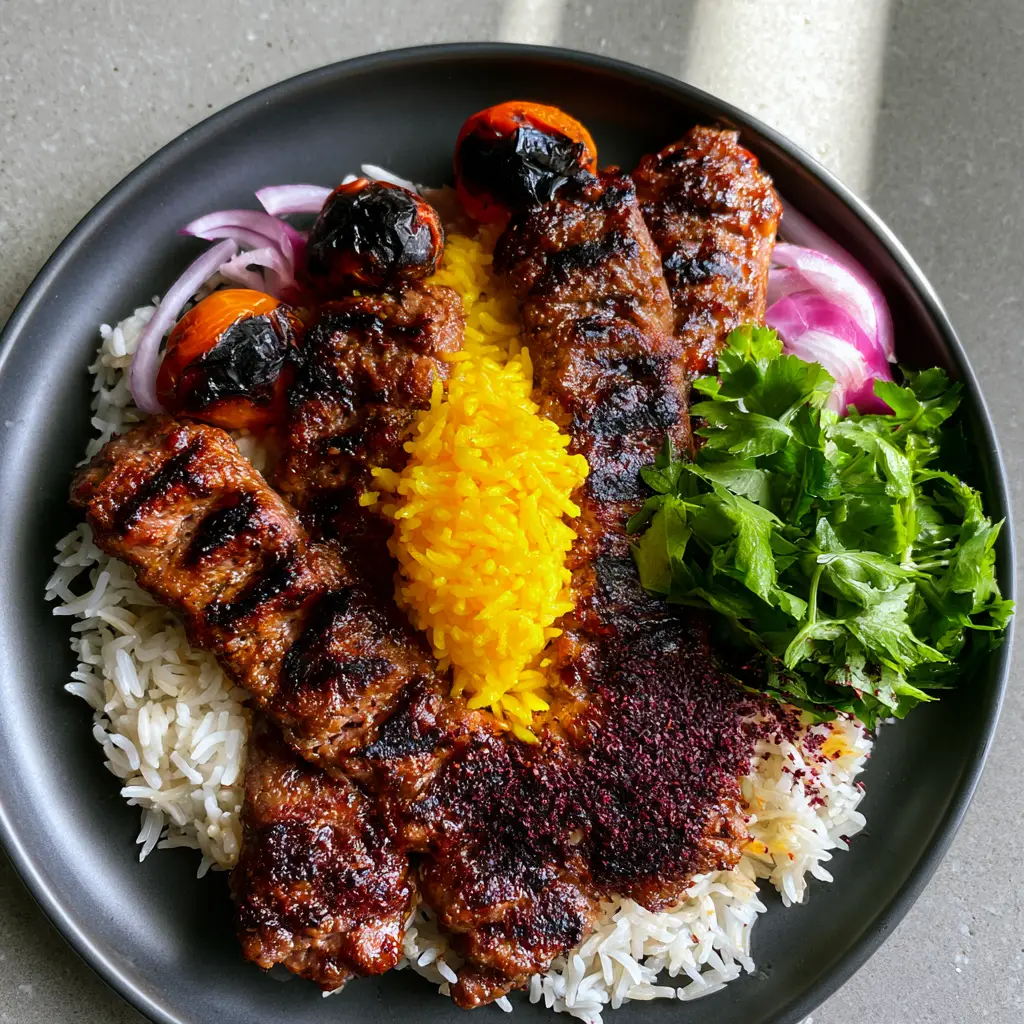
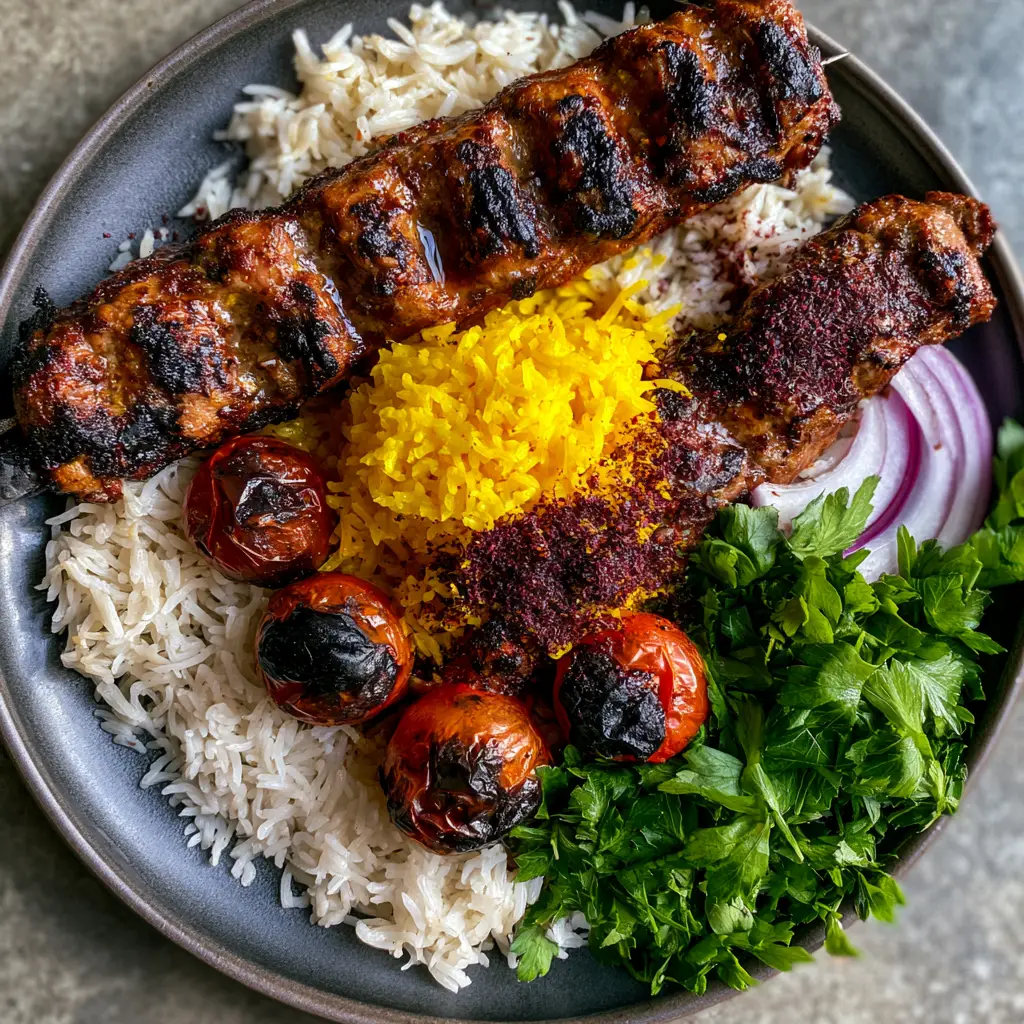
In this guide, we are recreating the exact visual masterpiece found in high-end Tehran eateries. Imagine two long, succulent skewers resting on fluffy long-grain rice, crowned with a vibrant ring of saffron-stained grains and served alongside charred, blistered tomatoes. Whether you are a seasoned griller or a newcomer to the charcoal flame, this recipe ensures your meat stays on the skewer and melts in your mouth.
Why This Authentic Kabob Koobideh Recipe Works
- Visual Texture: We use the traditional finger-pressing technique to create deep ridges that catch the heat and char beautifully.
- Optimal Fat Ratio: Using an 80/20 beef blend ensures those glistening meat juices that soak into the rice below.
- Saffron Infusion: The aromatic contrast between the white basmati and the bright yellow saffron rice creates a professional plating aesthetic.
- Perfect Balance: The acidity of the coarse dark red sumac cuts through the richness of the seared beef perfectly.
The Foundation: Essential Ingredients for Persian Skewers
Ground Beef (80/20): You need a higher fat content to ensure the kabobs remain moist and flavorful during the high-heat searing process. Leaner meat will result in a dry, crumbly texture that lacks the glistening finish we desire.
Yellow Onions: These provide the essential moisture and sweetness, but they must be grated and squeezed dry. The “onion water” is discarded or used for marinades to prevent the meat mixture from becoming too loose.
Bloomed Saffron: A small pinch of ground saffron threads dissolved in a tablespoon of hot water provides the signature golden hue for the rice crown. This is the hallmark of luxury in Persian saffron dishes.
Basmati Rice: Look for “extra long grain” varieties. When prepared correctly, each grain should be separate, fluffy, and aromatic, providing a soft cloud-like base for the heavy meat.
Sumac: This coarse, dark burgundy powder is non-negotiable. It offers a tangy, citrus-like punch that is traditional for all Persian kabob styles.
Invisible Essentials: You will also need kosher salt for seasoning, fine-ground black pepper, and a touch of turmeric for a warm, golden undertone in the meat.
Foundational Tools for the Perfect Sear
To achieve the authentic look, you must use flat stainless steel skewers. Unlike round skewers, flat ones prevent the meat from spinning and allow you to press those iconic wavy indentations into the surface. A heavy-duty charcoal grill is preferred for those blackened char marks, but a high-heat cast iron griddle can work in a pinch.
Step-by-Step: Crafting the Perfect Skewer
Preparing the Meat Mixture
Start by grating two large yellow onions. Place the pulp into a fine-mesh strainer or a cheesecloth and squeeze aggressively until no more liquid remains. In a large bowl, combine the dry onion pulp with 2 lbs (907g) of ground beef, 2 tsp (12g) of salt, 1 tsp (2g) of black pepper, and 1/2 tsp (1g) of turmeric.
Knead the mixture by hand for at least 10 minutes. This is a culinary science requirement; kneading develops the proteins (myosin), creating a tacky texture that ensures the Kabob Koobideh clings to the skewer without falling into the coals.
Threading and Pressing the Wavy Texture
Divide the meat into equal balls, roughly the size of a large orange. Wet your hands with cold water to prevent sticking. Mold the meat around the flat skewer, spreading it evenly until it covers about 8-10 inches of the metal.
Now, use your thumb and forefinger to press deep, rhythmic indentations into the meat. These ridges are not just for show—they increase the surface area for caramelization, resulting in those distinct blackened char marks described in our visual blueprint.
The Art of the Persian Grill
Set your grill to medium-high heat. Place the skewers over the flame and let them sit for 30 seconds before flipping immediately. This initial quick flip sets the meat on both sides so it doesn’t sag. Continue grilling, flipping every minute, until the surface is deep brown and glistening with natural oils.
Blistering the Garnishes
While the meat rests, place whole cherry tomatoes on a separate skewer or directly on the grate. Grill until the skins burst and develop blackened spots. These blistered whole tomatoes provide a sweet, acidic burst that complements the savory beef perfectly.
Expert Tips for Success
- Chill the Meat: After kneading, refrigerate the meat mixture for at least 1 hour. Cold fat handles better and stays on the skewer more reliably.
- The “Flip” Rule: Don’t let one side cook completely before flipping. Frequent turns ensure even rendering of the fat for that glistening finish.
- Rice Hydration: Soak your basmati rice for 30 minutes before boiling to ensure the longest, fluffiest grains possible.
- Onion Moisture: If your meat feels too wet, you didn’t squeeze the onions enough. You can add a tablespoon of chickpea flour to help bind it if necessary.
Perfect Pairings for Your Persian Feast
A plate of Kabob Koobideh is never complete without a side of cool Mast-o-Khiar (Persian cucumber yogurt). The creaminess of the yogurt balances the charred intensity of the meat. If you are looking to create a full spread, consider serving these alongside Ladolemono-dressed vegetables or even a light strawberry lime mocktail to refresh the palate between bites.
For those who love a variety of textures, this dish also pairs beautifully with a side of roasted eggplant. The smoky notes of the eggplant echo the blackened char marks on the beef.
Frequently Asked Questions
While you won’t get the same smoky char, you can bake them on a wire rack at 450°F (230°C) and finish with a high-heat broil to mimic the blackened marks.
Yes, flat stainless steel skewers are essential. Round skewers will cause the meat to rotate and slip, whereas flat skewers provide the surface area needed to hold the ground beef in place.
Sumac is a tangy, dark red spice made from dried berries. It provides a necessary acidic balance to the fatty beef and is a signature flavor component of authentic Kabob Koobideh.
An 80/20 ratio (80% lean, 20% fat) is ideal. The fat renders during grilling, creating the glistening juices that make the kabob tender and flavorful.
This usually happens for two reasons: either the meat mixture has too much moisture (you must squeeze the onion juice out completely) or the meat wasn’t kneaded long enough to develop the necessary protein bond.
Authentic Kabob Koobideh Recipe Card
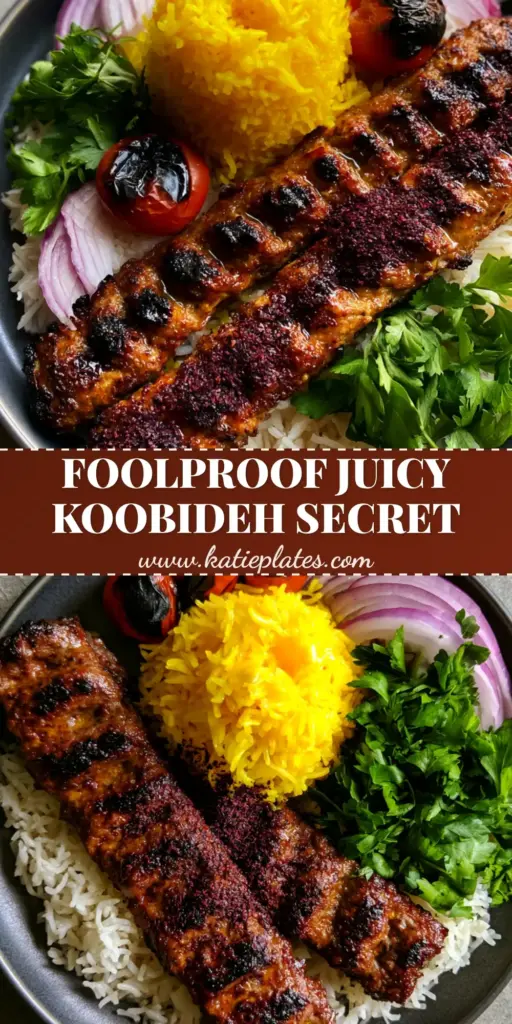
Kabob Koobideh: The Ultimate Guide to Juicy Persian Ground Beef Skewers
Ingredients
Equipment
Method
- Grate onions and squeeze out all liquid using cheesecloth. Mix the dry pulp with ground beef and spices.
- Knead the meat for 10 minutes until it becomes tacky and lightened in color. Chill in the fridge for 45 minutes.
- Divide meat into portions. Mold onto flat skewers and use fingers to press the signature wavy ridges.
- Place skewers on a medium-high grill. Flip within the first 30 seconds, then continue flipping until charred and glistening.
- Grill whole tomatoes until blistered and blackened. Steam basmati rice, mixing a portion with saffron water for the yellow crown.
Notes
Always discard the onion juice to prevent the kabobs from falling off the metal.
Sharing the Persian Grilling Tradition
The beauty of Kabob Koobideh lies in its simplicity and the sensory experience it provides—the smell of the charcoal, the sound of the fat sizzling, and the sight of that vibrant saffron rice. By following these steps, you’ve brought a piece of Persian culinary history into your kitchen.
If you enjoyed this recipe, please leave a comment below and tell us how your skewers turned out! Don’t forget to snap a photo of your glistening kabobs and share them to Pinterest so other home cooks can discover the joy of authentic Persian grilling.