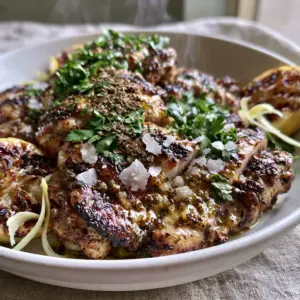
The Chicken Artichoke Skillet is a masterclass in texture and flavor, combining the rustic charm of a cast-iron meal with the elegance of a high-end bistro dish. Imagine juicy, pan-seared chicken thighs with skin so crispy it crackles, nestled in a velvety garlic cream sauce that bubbles with savory intensity. This isn’t just a meal; it is a sensory experience designed to bring the warmth of the Mediterranean directly to your kitchen table.
This recipe focuses on the “Maillard reaction”—that magical chemical process where protein and heat create a golden-brown crust and deep, complex flavors. By utilizing a single skillet, we capture every drop of rendered chicken fat to char our artichokes and caramelize thin lemon wheels, ensuring no flavor is left behind. Whether you are an enthusiast home cook or just looking for a weeknight upgrade, this dish delivers visual drama and culinary excellence in under 40 minutes.
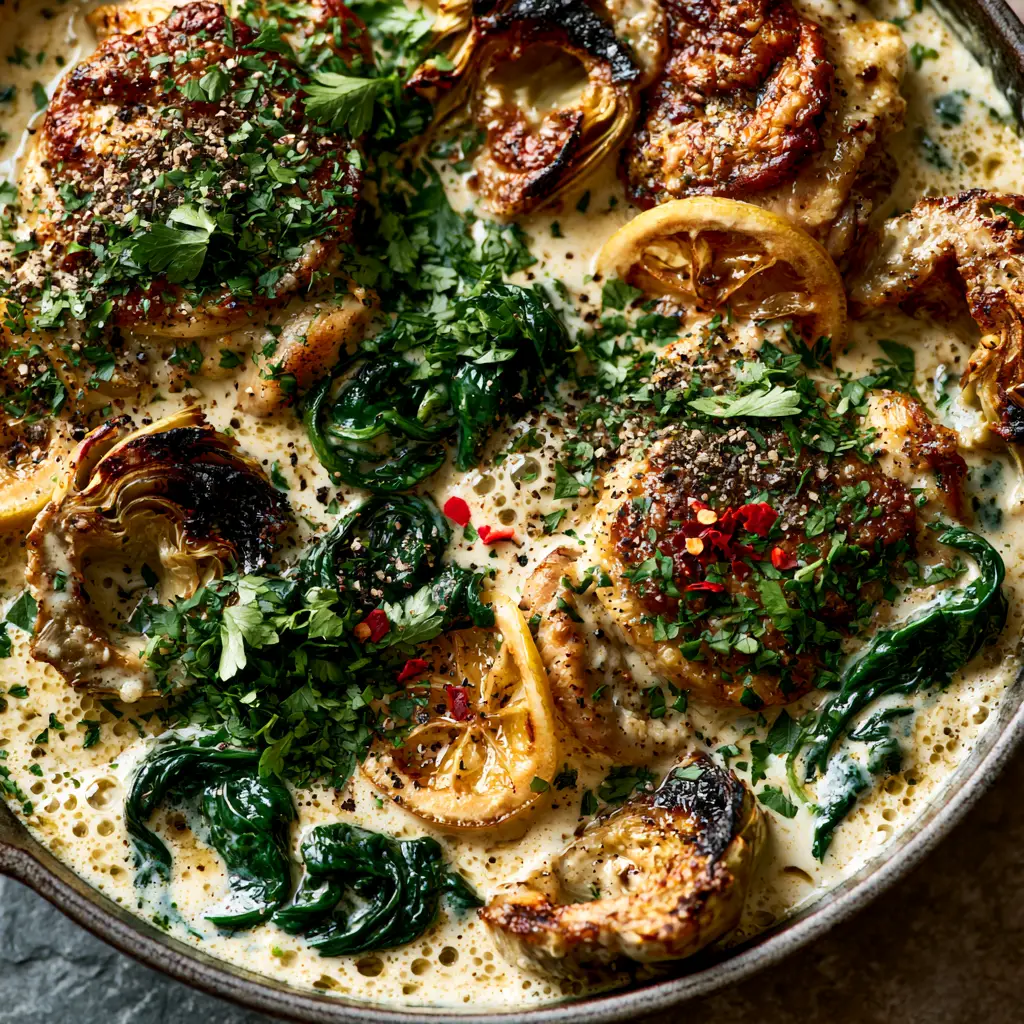
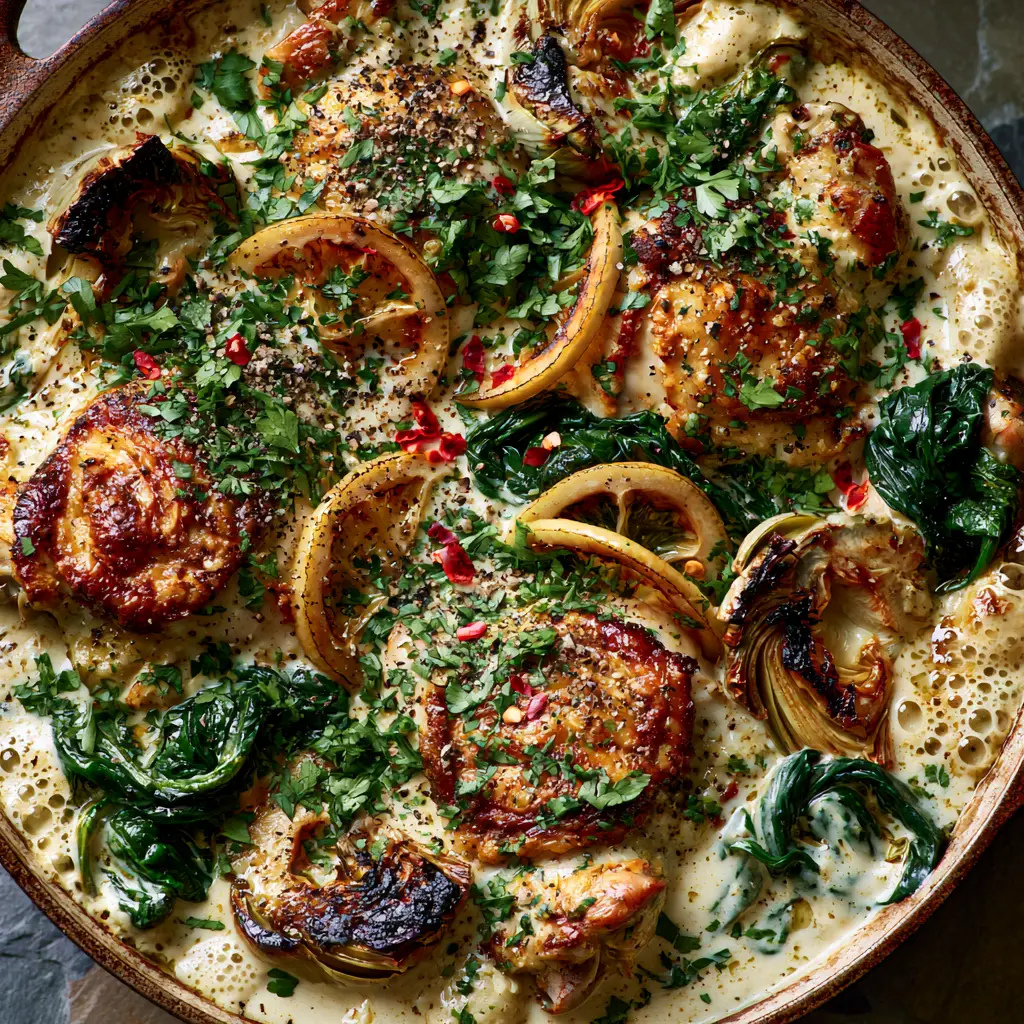
As you prepare this Chicken Artichoke Skillet, you’ll notice the aroma of toasted garlic and bright citrus filling your home. The final result looks exactly like a professional food photograph: vibrant green spinach wilting into a white sauce, punctuated by the blackened edges of charred artichokes and the fiery pop of red chili flakes. It is a dish that proves comfort food can be both sophisticated and deeply satisfying.
Why This One-Pan Masterpiece Works
- Perfectly Rendered Skin: We use a cold-pan start or high-heat sear to ensure the chicken thighs achieve that specific golden-brown hue described in our visual blueprint.
- Charred Complexity: Instead of just tossing artichokes in the sauce, we sear them until they develop blackened edges, adding a smoky depth to the creamy base.
- Balanced Acidity: The inclusion of caramelized lemon wheels cuts through the richness of the garlic cream, providing a bright, zesty finish.
- Ad-Friendly Efficiency: This recipe uses accessible ingredients to create a professional-grade result, making it a staple for anyone who loves savory Greek-inspired chicken dishes.
Essential Pantry Staples for a Gourmet Skillet
Every ingredient in this Chicken Artichoke Skillet serves a dual purpose: building a layer of flavor and creating the specific visual textures seen in our rustic cast-iron presentation.
Bone-In, Skin-On Chicken Thighs: You will need 4 to 6 large thighs. The bone keeps the meat succulent during the high-heat sear, while the skin provides the essential golden-brown crunch and rendered fat for sautéing.
Jarred Artichoke Hearts: Use 1 can (14oz / 400g) of artichoke hearts, drained and patted dry. Drying them is crucial; if they are wet, they will steam rather than develop those signature charred, blackened edges.
Heavy Cream & Chicken Broth: 1 cup (240ml) of heavy cream and 1/2 cup (120ml) of low-sodium chicken broth form the sauce. This combination ensures a thick, velvety consistency that creates visible bubbles when simmering.
Fresh Garlic: 4 to 6 cloves, minced. We sauté these just until fragrant to infuse the cream without burning the delicate bits, ensuring a mellow, sweet garlic profile.
Baby Spinach: 3 cups (approx. 90g) of fresh leaves. These will wilt down into a vibrant dark green, providing a beautiful color contrast against the white garlic sauce.
Lemon: 1 large lemon, sliced into paper-thin wheels. Searing these in the pan caramelizes their natural sugars, turning them into edible, tangy garnishes.
Garnish Flourishes: Fresh flat-leaf parsley (chopped), coarse cracked black pepper, and red chili flakes. These are not optional; they provide the “macro shot” detail that defines the dish’s aesthetic.
Foundational Fats and Seasoning: 2 tbsp (30ml) of extra virgin olive oil, 1 tbsp (15g) of unsalted butter, and kosher salt to taste. The butter helps with the browning of the lemon and artichokes.
Must-Have Tools for the Ultimate Sear
To achieve the rustic, “macro-ready” look of this Chicken Artichoke Skillet, the right equipment is non-negotiable. A 12-inch (30cm) cast-iron skillet is the preferred vessel because of its superior heat retention and ability to create a professional-grade sear.
You will also need a pair of heavy-duty tongs for flipping the chicken without tearing the skin, and a fine-mesh strainer to ensure your artichokes are perfectly drained. A sharp chef’s knife is essential for creating those translucent lemon wheels that caramelize evenly without falling apart.
Developing the Deep Golden Crust
Searing the Chicken Thighs
Pat the chicken thighs extremely dry with paper towels and season liberally with salt and cracked black pepper. Heat 1 tbsp (15ml) of olive oil in your cast-iron skillet over medium-high heat until the oil shimmers but isn’t smoking.
Place the chicken skin-side down and do not move them for 6-8 minutes. You are looking for a deep, golden-brown color and a skin texture that feels rigid when touched with tongs. Flip and cook for another 4-5 minutes, then remove the chicken and set aside on a plate; it will finish cooking in the sauce later.
Charring Artichokes and Lemons
In the same skillet with the rendered chicken fat, add the butter. Place the thin lemon wheels and drained artichoke hearts in a single layer. Cook for 2-3 minutes per side without stirring.
Look for the edges of the artichokes to turn dark brown or slightly blackened, and the lemon flesh to turn a translucent golden-amber. Once charred, remove them from the pan and set them aside with the chicken to preserve their texture.
Building the Velvety Garlic Cream
Lower the heat to medium and add the minced garlic. Sauté for only 30-60 seconds until the aroma hits you, but do not let it brown. Pour in the chicken broth to deglaze the pan, scraping up all the “fond” (the brown bits) from the bottom.
Stir in the heavy cream and bring to a gentle simmer. You want to see thick, velvety white bubbles forming across the surface of the sauce. This is the sign that the sauce is reducing and thickening into the perfect base for your Chicken Artichoke Skillet.
The Final Assembly
Stir the baby spinach into the bubbling sauce, allowing it to wilt for about 1 minute until it turns a vibrant dark green. Return the chicken thighs (and any accumulated juices), charred artichokes, and caramelized lemons to the skillet.
Tuck the lemon wheels between the chicken pieces. Spoon some of the sauce over the chicken meat, but keep the skin exposed to maintain its crispness. Let everything simmer together for 3-5 minutes until the chicken is cooked through (165°F / 74°C).
Expert Strategies for Culinary Success
- Dry the Proteins: Moisture is the enemy of the sear. Always pat your chicken and artichokes dry with paper towels to ensure browning rather than steaming.
- Mind the Garlic: Garlic burns quickly in a hot skillet. If your pan is too hot after searing, remove it from the heat for a minute before adding the garlic.
- Sauce Consistency: If the sauce becomes too thick, add a splash of chicken broth. If it’s too thin, let it simmer for another 2 minutes before adding the spinach.
- Skin Integrity: Never submerge the crispy chicken skin in the sauce. Keep it “above the tide” to ensure that golden-brown crunch remains until the first bite.
Maintaining Freshness: Storage and Reheating
The Chicken Artichoke Skillet is best served immediately to enjoy the contrast between the crispy skin and creamy sauce. However, leftovers can be stored in an airtight container in the refrigerator for up to 3 days.
To reheat, place the chicken and sauce in a small skillet over low heat. Add a tablespoon of water or broth to loosen the cream sauce. To regain some skin crispness, you can place the chicken under a broiler for 1-2 minutes, but watch it closely to prevent burning.
What to Pair with Your Mediterranean Skillet
This dish is rich and flavorful, so it pairs beautifully with sides that can soak up the garlic cream sauce. A bed of turmeric-tinted yellow rice offers a stunning color contrast, or you can serve it with a crusty baguette.
For a lighter option, consider a simple arugula salad tossed in a bright lemon vinaigrette. If you are hosting a multi-course dinner, start with some crispy seafood appetizers to lean into the Mediterranean theme.
Answering Your Common Kitchen Questions
Yes, but be careful not to overcook them as they dry out faster. Reduce the searing time and ensure they reach an internal temperature of 165°F (74°C).
Yes, but ensure you thaw it and squeeze out all excess moisture before adding it to the sauce to prevent it from becoming watery.
Char the artichokes first in the rendered chicken fat/butter before adding the garlic. Garlic only needs about 30-60 seconds to become fragrant.
Absolutely! This recipe is naturally low-carb and high-fat, making it an excellent choice for a ketogenic lifestyle.
Let the sauce simmer for an extra 2-3 minutes before adding the chicken back in. The heavy cream will naturally reduce and thicken as it bubbles.
The Complete Chicken Artichoke Skillet Recipe
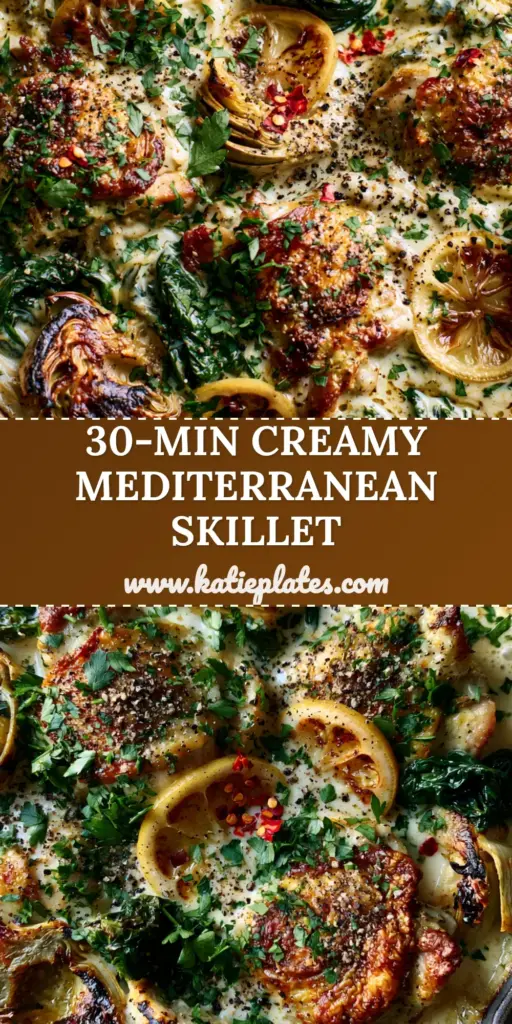
Chicken Artichoke Skillet: The Ultimate Creamy Mediterranean One-Pan Dinner
Ingredients
Equipment
Method
- Pat chicken thighs dry. Season with salt and pepper. Heat olive oil in a cast iron skillet over medium-high heat.
- Place chicken skin-side down. Sear for 6-8 minutes until golden-brown and crispy. Flip and cook for 4-5 minutes. Remove and set aside.
- Add butter to the skillet. Sear artichoke hearts and lemon wheels for 2-3 minutes per side until charred and slightly blackened on the edges. Remove and set aside.
- Reduce heat to medium. Sauté minced garlic for 30 seconds until fragrant.
- Add chicken broth to deglaze the pan. Stir in heavy cream. Bring to a simmer until thick, velvety bubbles appear.
- Stir in spinach until wilted. Return chicken, artichokes, and lemons to the pan. Simmer for 3-5 minutes until chicken reaches 165°F.
- Finish with a heavy scatter of parsley, cracked black pepper, and red chili flakes.
Notes
Ensure the artichokes are patted very dry before charring to achieve the blackened edges.
The Ultimate Weeknight Luxury
This Chicken Artichoke Skillet is a testament to how simple ingredients, when treated with professional technique, can create a world-class meal. From the charred edges of the artichokes to the velvety bubbles in the sauce, every element is designed to satisfy the soul and the palate. We hope this dish becomes a recurring favorite in your home rotation.
If you enjoyed this recipe, please leave a comment below and let us know how your sear turned out! Don’t forget to save this to your favorite boards on Pinterest so you can find it whenever the craving for a creamy Mediterranean dinner hits.