There is a specific kind of magic that happens when you lift the lid of a heavy skillet to reveal a cloud of fragrant steam rising from a bed of vibrant, golden rice. Chicken kabsa is more than just a meal; it is the national dish of Saudi Arabia and a masterpiece of culinary balance. This recipe captures the essence of traditional hospitality, featuring deeply seared chicken and grains of rice that carry the soul of the Arabian Peninsula.
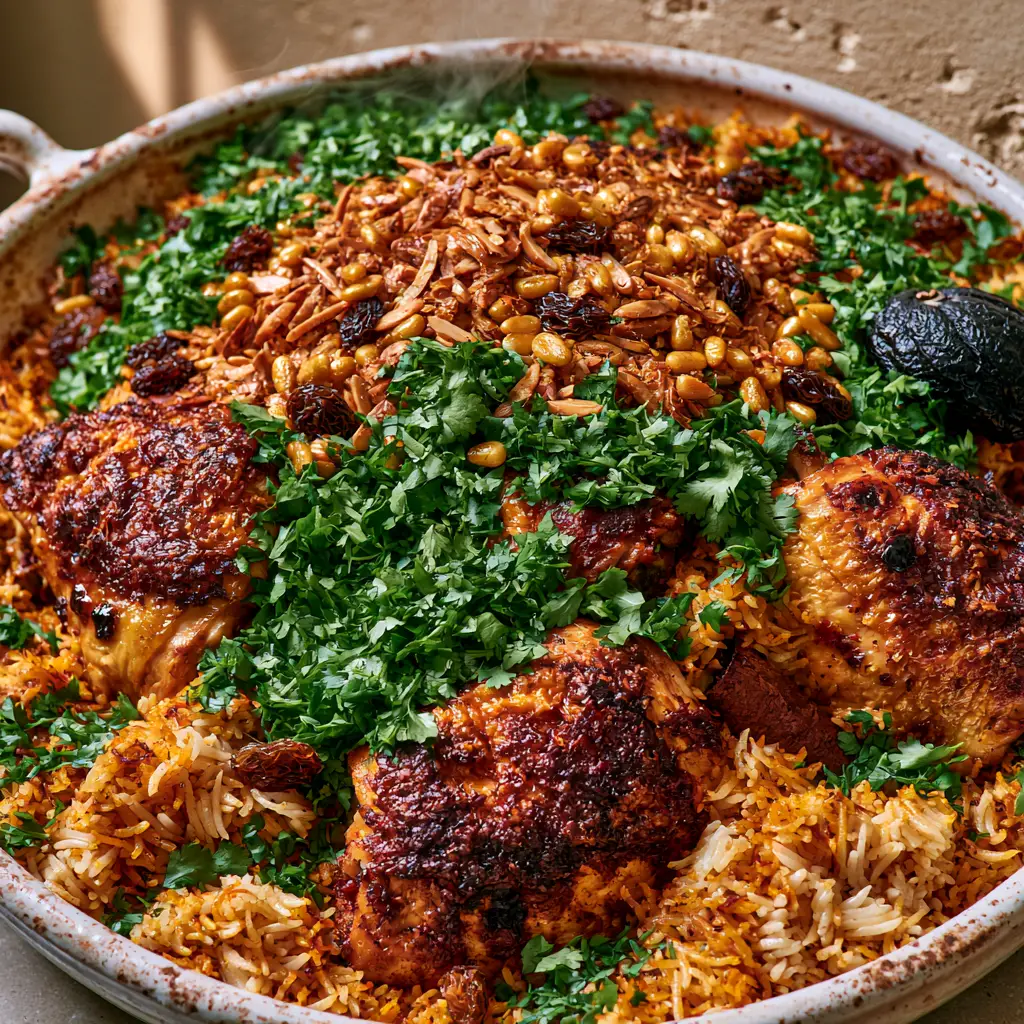
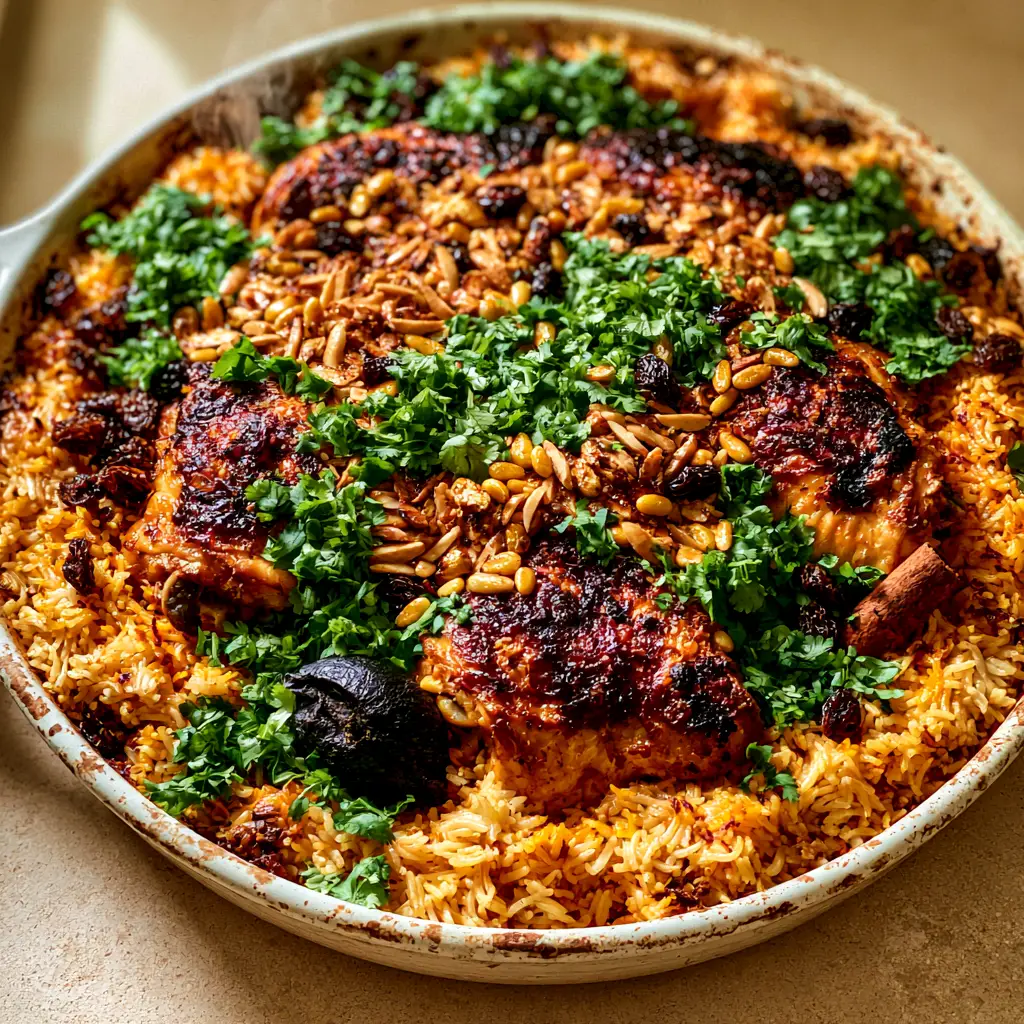
When you look at a perfectly prepared plate of chicken kabsa, the first thing you notice is the contrast. You see the rich, mahogany-hued crispy skin of the chicken thighs resting against the bright, sunset-orange glow of the basmati rice. The scatter of dark raisins and toasted nuts provides a texture that is both sophisticated and incredibly comforting for any home cook.
Whether you are looking for a show-stopping Sunday dinner or a way to expand your spice cabinet, this chicken kabsa delivers on every sensory promise. The aroma of cinnamon and dried lime will fill your kitchen, creating an atmosphere of warmth that rivals even the most beloved middle eastern roasted chicken and potatoes.
Why This One-Pot Chicken Kabsa Recipe Is a Culinary Masterpiece
- Unrivaled Texture Contrast: By searing bone-in chicken thighs separately before finishing them with the rice, we achieve a shatteringly crispy skin that stands out against the fluffy, individual grains of basmati.
- Deeply Layered Aromatics: The inclusion of a whole dried black lime and a whole cinnamon stick infuses the rice with a complex, fermented citrus note and a woody sweetness that ground spices cannot replicate.
- Vibrant Visual Appeal: Using a combination of saffron and traditional Kabsa spices ensures the rice achieves that iconic golden-orange stain seen in professional Mediterranean and Gulf-state kitchens.
- Sophisticated Garnish Palette: The trio of toasted slivered almonds, golden pine nuts, and dark raisins provides a luxury finish that elevates this from a simple chicken dish to a festive centerpiece.
The Anatomy of Authentic Chicken Kabsa Ingredients
To achieve the specific visual and flavor profile of a world-class chicken kabsa, every ingredient must serve a structural or aromatic purpose. While many of these are pantry staples, a few specialty items are the “secret sauce” to authenticity.
Bone-In, Skin-On Chicken Thighs: We use 2 lbs (907g) of chicken thighs because the bone keeps the meat succulent during the rice-steaming process, while the skin provides the essential fats for the Maillard reaction. This ensures the chicken doesn’t just cook; it develops a deep, savory crust.
Long-Grain Basmati Rice: You will need 2 cups (400g) of high-quality basmati. This variety is chosen for its ability to remain “fluffy and individual,” meaning the grains do not stick together, creating the light foundation the dish is famous for.
Dried Black Lime (Loomi): This 1 piece (approx. 10g) is the heart of the dish. It provides a unique, musky, acidic punch that cuts through the richness of the chicken fat and spices.
Saffron Threads: A generous pinch (approx. 0.5g) crushed and soaked in 2 tbsp (30ml) of warm water creates the “vibrant golden-orange” stain. This is the gold standard for coloring rice, far superior to food coloring.
Whole Spices: 1 whole cinnamon stick and 4-5 green cardamom pods provide a slow-release aroma that perfumes the steam rising from the skillet. These are much more potent than their powdered counterparts when simmering.
The Garnish Trio: 1/4 cup (35g) slivered almonds, 2 tbsp (20g) pine nuts, and 1/4 cup (40g) dark sun-dried raisins. These are toasted in 1 tbsp (15g) of butter to add crunch and a concentrated burst of sweetness.
Fresh Cilantro: A heavy garnish of 1/2 cup (15g) freshly chopped cilantro provides the necessary “bright green” contrast to the warm tones of the rice and chicken.
Essential Tools for the Perfect Rustic Presentation
To replicate the “handheld smartphone photo” aesthetic of a rustic kitchen, your equipment choice matters as much as your ingredients. A heavy-bottomed skillet is your best friend here.
Large Cast Iron or Ceramic Skillet: A 12-inch (30cm) skillet allows enough surface area for the chicken to sear without crowding. A rustic white ceramic skillet, as described in our visual guide, holds heat beautifully and provides a stunning contrast to the orange rice.
Tight-Fitting Lid: This is non-negotiable for the steaming phase. To get those “individual grains,” you must trap every drop of moisture inside the pan during the final cook.
Fine-Mesh Strainer: Essential for rinsing the rice. Rinsing removes excess surface starch, which is the primary reason rice becomes gummy instead of fluffy.
Step-by-Step Instructions for Perfect Chicken Kabsa
Phase 1: Preparing the Rice Foundation
Begin by rinsing 2 cups (400g) of basmati rice under cold running water until the water runs clear. Soak the rice in fresh water for 20 minutes; this allows the grains to elongate properly during cooking, ensuring they remain “long-grain and individual.”
Phase 2: Achieving the Deep Golden-Brown Sear
Pat the chicken thighs completely dry with paper towels—this is the secret to crispy skin. Season liberally with salt and a touch of black pepper. In your rustic skillet, heat 2 tbsp (30ml) of neutral oil over medium-high heat.
Place the chicken skin-side down. Listen for a vigorous sizzle; if it’s quiet, the pan isn’t hot enough. Sear for 6-8 minutes without moving them until the skin is a “deeply seared, golden-brown” with “subtle char marks.” Flip and cook for 2 more minutes, then remove the chicken and set it aside on a plate.
Phase 3: Sautéing the Aromatics and Spices
In the same skillet (using the rendered chicken fat), add one finely diced onion and 3 cloves of minced garlic. Sauté until translucent. Add 1 tbsp (15g) of Kabsa spice mix (Baharat), the whole cinnamon stick, and the whole dried black lime.
Pierce the black lime twice with a knife before adding it; this allows the citrus juices to flow into the cooking liquid. Stir in 2 tbsp (30g) of tomato paste and cook for 2 minutes until the paste turns a dark brick red, which contributes to the “golden-orange” rice hue.
Phase 4: The Controlled Simmer and Steam
Drain the rice and add it to the skillet, stirring gently to coat every grain in the spiced oil. Pour in 3.5 cups (830ml) of chicken broth and the prepared saffron water. Nestle the seared chicken thighs back onto the bed of rice, skin-side up.
Bring the liquid to a boil, then immediately reduce the heat to the lowest setting. Cover with a tight lid. Simmer for 18-20 minutes. You will know it is done when the liquid is fully absorbed and “steam wisps” rise when the lid is cracked.
Phase 5: Toasting the Finishing Garnishes
While the rice cooks, melt 1 tbsp (15g) of butter in a small pan. Add the slivered almonds and pine nuts. Toast over medium heat, tossing constantly until they are fragrant and golden. Add the dark raisins at the very last minute just to plump them up.
Expert Tips for Success with Saudi Rice Dishes
- The “No-Stir” Rule: Once you cover the rice, do not lift the lid or stir the pot. Stirring breaks the rice grains and releases starch, leading to a mushy texture rather than the desired “fluffy grains.”
- The Resting Period: After the heat is turned off, let the skillet sit covered for 10 minutes. This allows the moisture to redistribute, making the rice much easier to fluff with a fork.
- Saffron Quality: If you don’t have saffron, a 1/2 tsp (2g) of turmeric can provide the “vibrant golden-orange” color, though the floral flavor profile will change.
- Black Lime Care: Don’t be alarmed by the look of the dried lime; it should look dark and brittle. It is safe to eat around, but most people remove it before serving.
The Best Ways to Store and Reheat Your Kabsa
Chicken kabsa is one of those rare dishes that tastes even better the next day as the spices continue to meld. Store leftovers in an airtight container in the refrigerator for up to 3 days.
To reheat, avoid the microwave if possible, as it can make the chicken skin rubbery. Instead, place the rice and chicken in a pan with a splash of water or broth. Cover and heat on low until the “steam wisps” return. This method preserves the “individual grains” of the basmati.
You can freeze the rice and chicken for up to 2 months. However, the toasted nuts should be stored separately at room temperature to maintain their crunch, as they will soften significantly when frozen and thawed.
What to Serve With This Fragrant Chicken Dish
Chicken kabsa is a rich and hearty meal that benefits from bright, acidic side dishes. A traditional Salata Hara (spicy tomato salsa) or a simple cucumber yogurt dip is the classic pairing.
If you are looking for a fusion experience, this dish pairs surprisingly well with a fresh avocado tuna salad for a lighter lunch the next day. For those who enjoy chicken in all its forms, consider trying a teriyaki chicken or even pineapple chicken for your next meal prep session to see the vast difference in global spice applications.
If you’re craving more Mediterranean flavors, our dump and bake greek chicken offers a similar one-pan convenience with a totally different flavor profile.
Frequently Asked Questions About Authentic Kabsa
While black lime (loomi) provides a unique fermented citrus flavor, you can substitute it with the zest of one lime and a teaspoon of sumac in a pinch.
Rinse the basmati rice until the water is clear, use the exact 1:1.75 rice-to-liquid ratio, and never stir the rice once the lid is on.
Kabsa is highly aromatic and flavorful but not typically ‘hot’ spicy. You can add fresh chilies to the sauté if you prefer more heat.
It is typically a blend of black pepper, coriander, paprika, cardamom, nutmeg, cumin, cloves, and cinnamon.
The vibrant color comes from a combination of real saffron threads, turmeric, and tomato paste that is sautéed until it darkens into the base oil.
The Final Recipe: Authentic Chicken Kabsa in a Skillet
Chicken Kabsa: The Ultimate Guide to Authentic Saudi Arabian One-Pot Rice and Chicken
Ingredients
Equipment
Method
- Heat oil in the skillet and sear chicken thighs skin-side down for 6-8 minutes until deeply golden-brown with char marks. Remove and set aside.
- Sauté onions, garlic, tomato paste, black lime, and cinnamon stick in the rendered fat until fragrant and the paste darkens.
- Add drained rice, broth, and saffron water to the skillet. Place chicken on top of the rice.
- Cover and simmer on low for 18-20 minutes until the liquid is absorbed and rice is fluffy.
- Toast almonds, pine nuts, and raisins in butter. Top the finished dish with the toasted nuts and a heavy handful of fresh cilantro.
Notes
Pierce the black lime with a knife to release its flavor into the rice.
Bring the Flavors of Arabia to Your Kitchen
Making chicken kabsa at home is a journey into the heart of Middle Eastern comfort food. From the deeply seared chicken thighs to the aromatic “golden-orange” rice, every bite tells a story of tradition and spice. We hope this recipe becomes a new favorite in your dinner rotation.
Did you manage to get those perfectly fluffy rice grains? We would love to hear about your culinary success! Leave a comment below, and don’t forget to follow us on Pinterest for more global recipe inspiration. Share your photos and tag us—nothing makes us happier than seeing your rustic skillets full of steam!