Persian Jeweled Rice, or Javaher Polow, is more than just a side dish; it is a shimmering culinary tapestry that represents the pinnacle of Iranian hospitality. Traditionally served at weddings and festive celebrations, this dish is designed to dazzle the eyes before it ever touches the tongue.
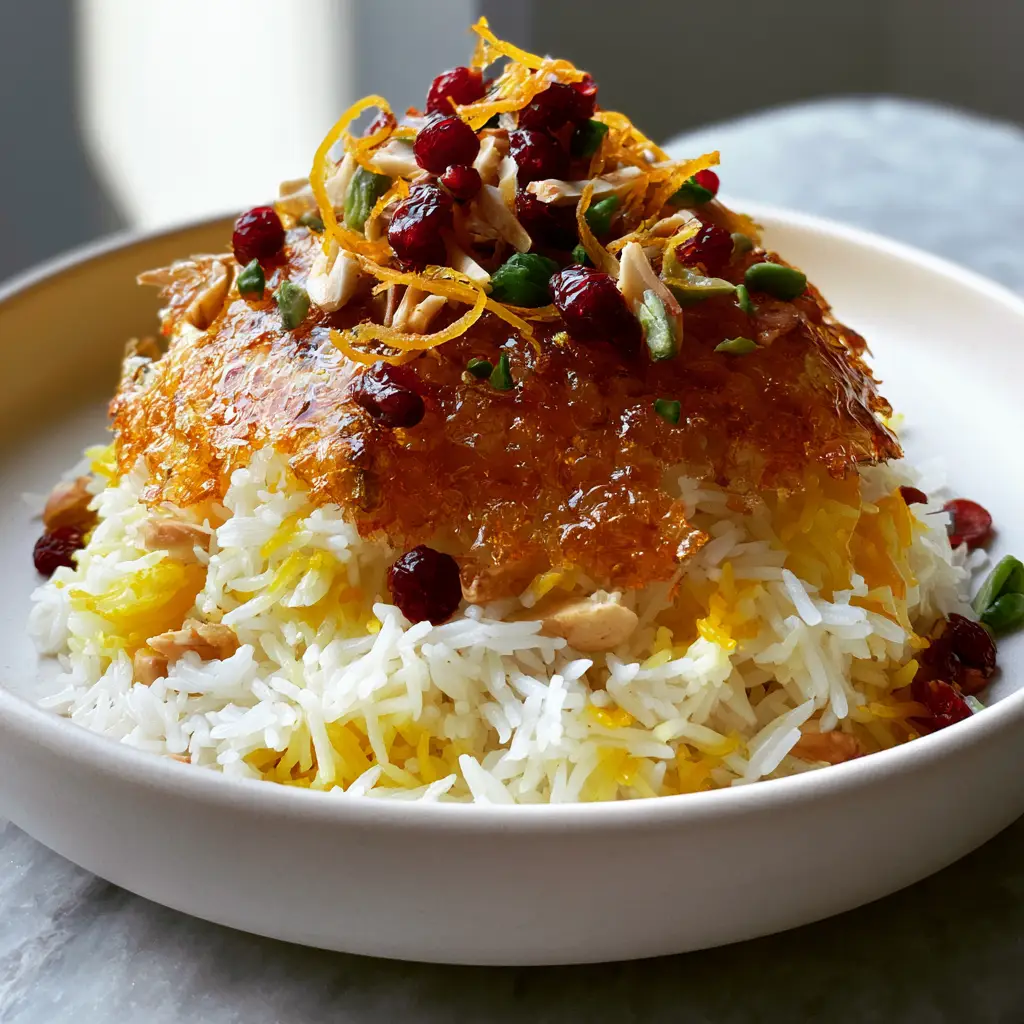
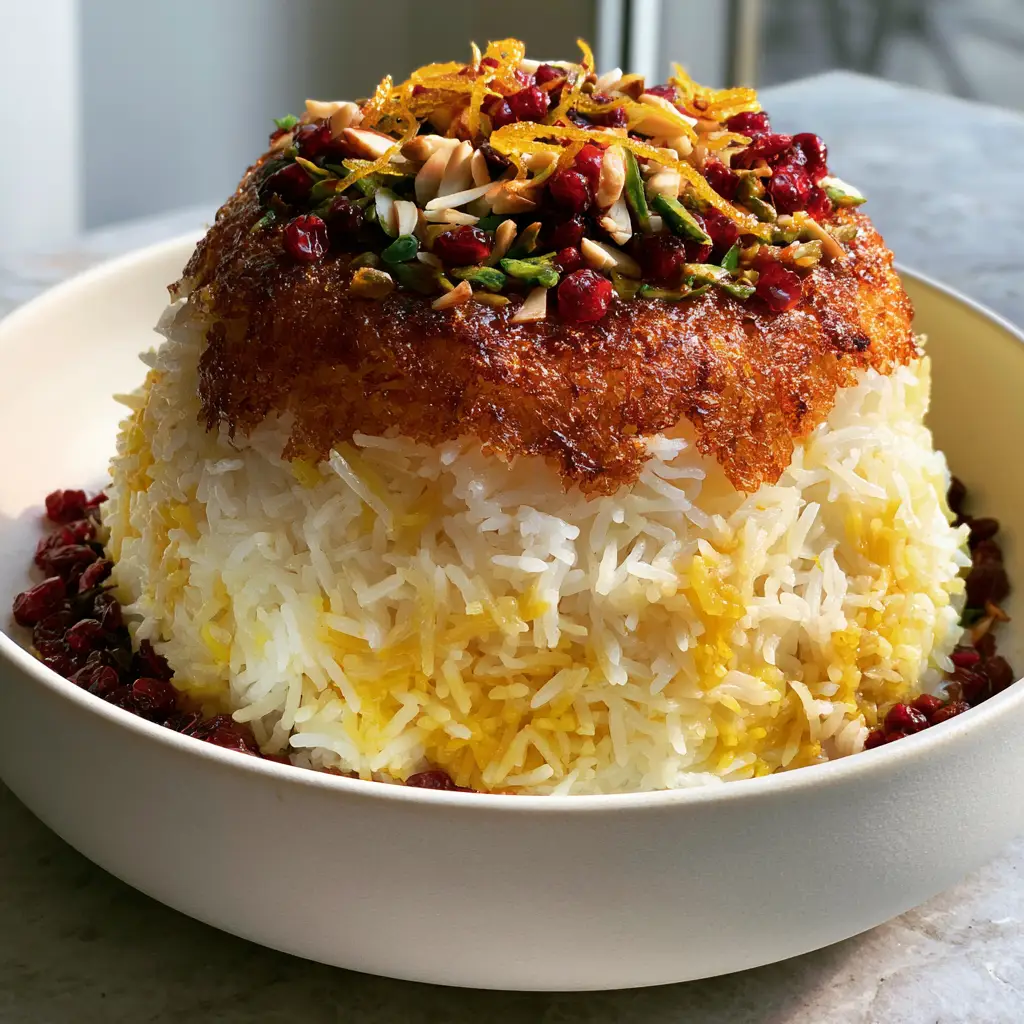
The visual appeal of this recipe is undeniable, featuring a mound of fluffy long-grain Basmati rice where every grain is distinct. A mix of brilliant white and deep saffron-yellow grains creates a vibrant canvas for the “jewels”—crimson barberries, emerald pistachios, and golden orange zest.
In this guide, we will master the technical bridge between a perfectly steamed rice grain and that coveted, glass-like shattered golden-brown potato tahdig crust shown in our smartphone-captured visuals. This is a dish that rewards patience and precision with a texture that is simultaneously soft, crunchy, and aromatic.
Why This Javaher Polow is the Ultimate Table Centerpiece
- Textural Contrast: You get the delicate fluffiness of steamed Basmati paired with the “shattered glass” crunch of a thick potato tahdig.
- Vibrant “Jewel” Tones: The combination of bright crimson barberries and emerald green raw pistachio slivers creates a professional, high-end aesthetic.
- Saffron-Infused Depth: Using authentic Persian saffron ensures a deep, earthy aroma and that iconic golden-yellow hue that coats the rice.
- Sophisticated Flavor Profile: A balanced dance of sweet (candied orange), tart (barberries), and nutty (toasted almonds).
The Pantry Staples Behind Every Vivid Yellow Grain
To achieve the visual and structural integrity of authentic Persian Jeweled Rice, you need specific ingredients that behave correctly under steam. Don’t skip the rinsing process, as surface starch is the enemy of the fluffy grain.
Long-Grain Basmati Rice: Use high-quality aged Basmati, as the long grains need to stretch and remain separate rather than clumping together. 3 cups (600g) of dry rice will provide the volume needed for a majestic mound.
Persian Saffron: A 1/2 tsp (1g) of high-grade saffron threads, ground and bloomed in hot water, provides the “brilliant yellow” grains seen in the visual blueprint. This is the aromatic soul of the dish.
Potatoes for Tahdig: Two medium gold potatoes, sliced into 1/4-inch (6mm) rounds, create the jagged, golden-brown crust at the bottom of the pot. These act as an edible “shield” for the rice.
Dried Barberries (Zereshk): These 1/2 cup (60g) of tiny crimson berries provide the essential tartness that cuts through the buttery rice. They must be rehydrated and sautéed briefly to shine.
Candied Orange Peel: Thin curls of zest from 2 large oranges are blanched and simmered in sugar to remove bitterness while retaining a bright citrus pop. This provides the “jewel” curls mentioned in the prompt.
Nuts and Garnish: 1/4 cup (35g) each of toasted slivered almonds and bright green raw pistachio slivers add the “emerald” and “ivory” highlights. Fresh pomegranate arils provide a final burst of moisture and color.
Foundational Fats: You will need 1/2 cup (115g) of unsalted butter or ghee and 3 tbsp (45ml) of neutral oil. This is scientifically required to fry the potato tahdig and give the rice its signature sheen.
Essential Gear for the Perfect Steam
To achieve the “un-edited, authentic food blog aesthetic,” the cooking vessel matters as much as the ingredients. A heavy-bottomed non-stick pot or a well-seasoned Dutch oven is mandatory to ensure the potato tahdig releases in one shattered, jagged piece.
You will also need a large fine-mesh sieve for the rigorous rice-rinsing process. Finally, a clean kitchen towel to wrap around the pot lid is essential; this absorbs excess steam, preventing the rice from becoming “soggy” and ensuring the grains stay “fluffy and individual.”
A Step-by-Step Guide to the Glass-Like Golden Crust
Phase 1: Rinsing and Parboiling for Length
Wash the Basmati rice in a bowl of cold water, swirling gently with your fingers. Drain and repeat 5-7 times until the water runs completely clear, removing all surface starch for maximum grain separation.
Bring a large pot of water to a boil with 2 tbsp (30g) of salt. Add the rice and boil for 6-8 minutes. Look for the “al dente” visual cue: the grains should be long and soft on the outside but still have a firm “snap” in the middle.
Phase 2: Preparing the “Jewel” Toppings
While the rice parboils, blanch your orange zest curls in boiling water three times to remove bitterness. Simmer the zest in a small pan with 2 tbsp (25g) of sugar and a splash of water until translucent and “candy-like.”
Sauté the dried barberries in a small amount of butter with 1 tsp (4g) of sugar for just 60 seconds. Do not overcook, or they will lose their “bright crimson” color and turn dark brown.
Phase 3: Constructing the Shattered Tahdig
Drain the rice and rinse with cold water to stop the cooking process. In the bottom of your heavy pot, add the oil and a splash of your bloomed saffron water. Arrange the potato slices in a single, tight layer.
Mound the rice over the potatoes in a pyramid shape. Use the handle of a wooden spoon to poke 5-6 holes through the rice to the bottom; this allows steam to circulate and ensures the potatoes fry to a “deep golden-brown.”
Phase 4: The Finishing Steam (Dam)
Wrap the pot lid in a kitchen towel and seal tightly. Cook on medium-high for 5 minutes to set the crust, then reduce to the lowest heat for 45-50 minutes. You should hear a faint “sizzling” sound—the sound of the potatoes transforming into a “glass-like” crust.
Pro Secrets for Grain Separation and Color Pop
- The Ice Cube Trick: Place a small ice cube on top of your ground saffron before adding hot water. This “cold bloom” creates a more intense, vivid orange-yellow pigment.
- Butter Sheen: Drizzle melted butter or ghee over the rice in the final 10 minutes of steaming to ensure every grain glistens in the side-lighting of your photos.
- The “Jagged” Tahdig: To get the shattered, jagged look of the potato tahdig, use a thin spatula to lift the potato slices carefully. Don’t worry if they break; the “shattered” look is the desired aesthetic in modern Persian plating.
- Nuts at the End: Only add the raw pistachio slivers and pomegranate arils at the very moment of serving. This keeps the “emerald green” bright and the fruit “jewel-toned” rather than wilted.
How to Keep Your Jewels Sparkling
Persian Jeweled Rice is best served immediately for the ultimate tahdig crunch. However, you can store leftovers in an airtight container in the refrigerator for up to 3 days. To reheat, add a tablespoon of water and microwave with a damp paper towel on top to restore the moisture to the grains.
Note that the potato tahdig will lose its “glass-like” crispness upon refrigeration. To revive it, try crisping the potato pieces in a dry skillet over medium heat for 2-3 minutes before serving.
Perfect Pairings for a Persian Feast
This rice is a royal accompaniment. To create a full spread, serve it alongside succulent saffron-marinated chicken or a platter of charred ground meat skewers.
For a refreshing contrast, a bowl of creamy Persian cucumber yogurt is essential. If you prefer a more complex rice dish, you might also enjoy exploring savory baked yogurt rice with tender lamb. For those looking for a complete dinner solution, this rice pairs beautifully with herb-heavy roasted eggplant.
Frequently Asked Questions
Jasmine rice is too sticky for this recipe. Authenticity and texture rely on the long, dry, and separate grains of high-quality Basmati rice.
Yes, the towel is essential. It absorbs the steam rising from the rice, preventing it from dripping back down and making the rice grains mushy.
Always ‘bloom’ your ground saffron in a small amount of hot water or over an ice cube first. This releases the maximum pigment before mixing it with the rice.
Dried cranberries chopped into small pieces are the best substitute. Add a squeeze of lemon juice to mimic the specific tartness of Persian barberries.
This usually happens if the heat is too low during the initial 5 minutes or if you didn’t use enough oil. Ensure a heavy-bottomed pot is used to distribute heat evenly.
The Ultimate Persian Jeweled Rice Recipe
Persian Jeweled Rice with Crispy Potato Tahdig and Saffron
Ingredients
Equipment
Method
- Rinse rice 5-7 times until water is clear. Boil in salted water for 6-8 minutes until al dente. Drain and rinse with cold water.
- Blanch orange zest 3 times in boiling water. Simmer with sugar and water until translucent curls form.
- Add oil and saffron water to the pot. Layer potato slices on the bottom. Mound rice on top and poke steam holes.
- Wrap the lid in a towel. Cook on medium-high for 5 mins, then low for 45 mins until a golden-brown crust forms.
Notes
Ensure barberries are only sautéed briefly to keep their bright crimson color.
Closing & Call to Action
Persian Jeweled Rice is a testament to the beauty of slow cooking and meticulous preparation. The contrast of the “shattered” golden potatoes against the “jewel-toned” fruit and nuts creates a dining experience that is both humble and regal. Whether you are hosting a holiday dinner or exploring the depths of Iranian cuisine, this recipe is guaranteed to be the star of the show.
Did your tahdig come out with that perfect golden crunch? I’d love to see your results! Leave a comment below or share your photos on Pinterest. Don’t forget to sign up for our newsletter for more deep-dives into global culinary classics.