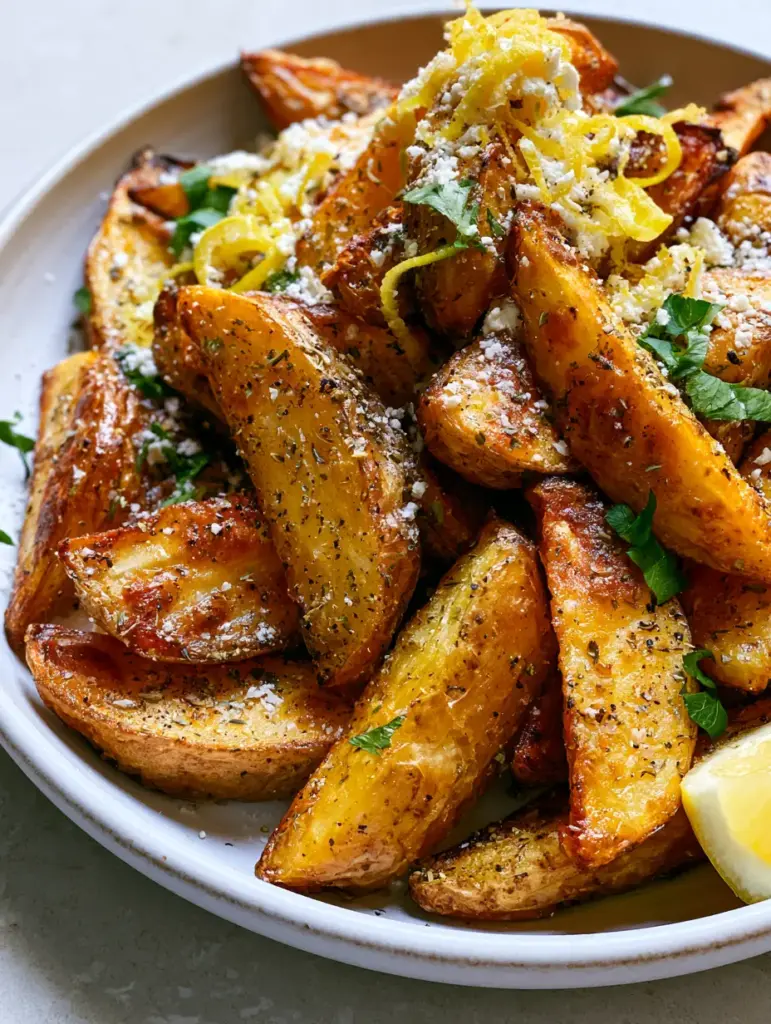
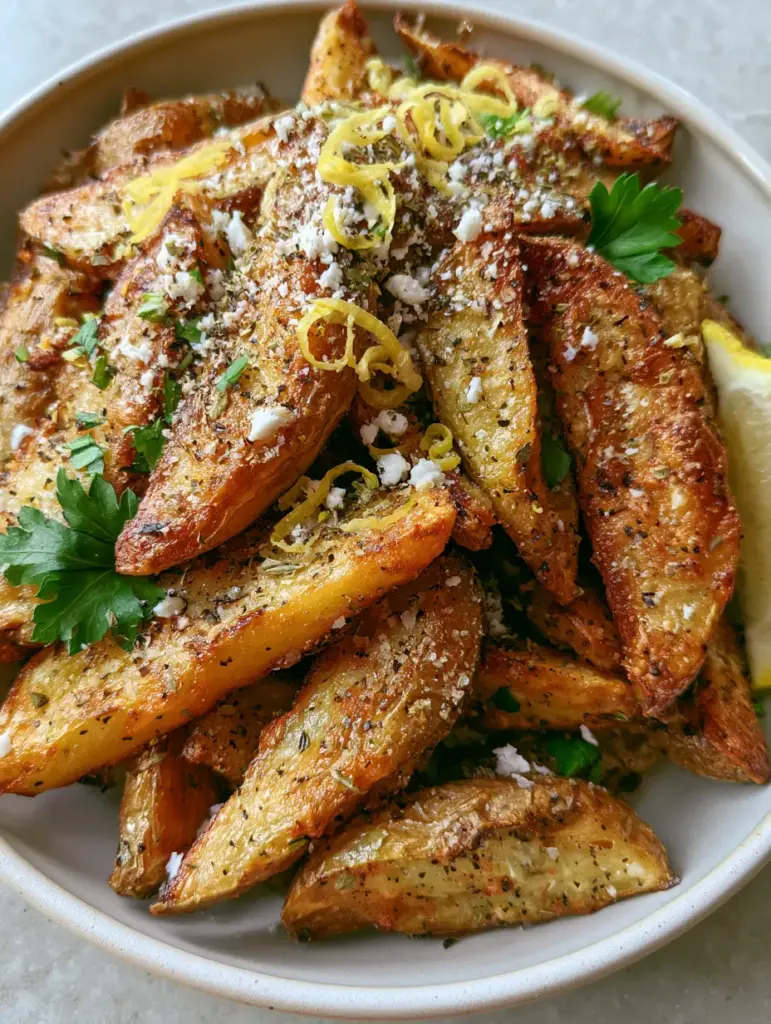
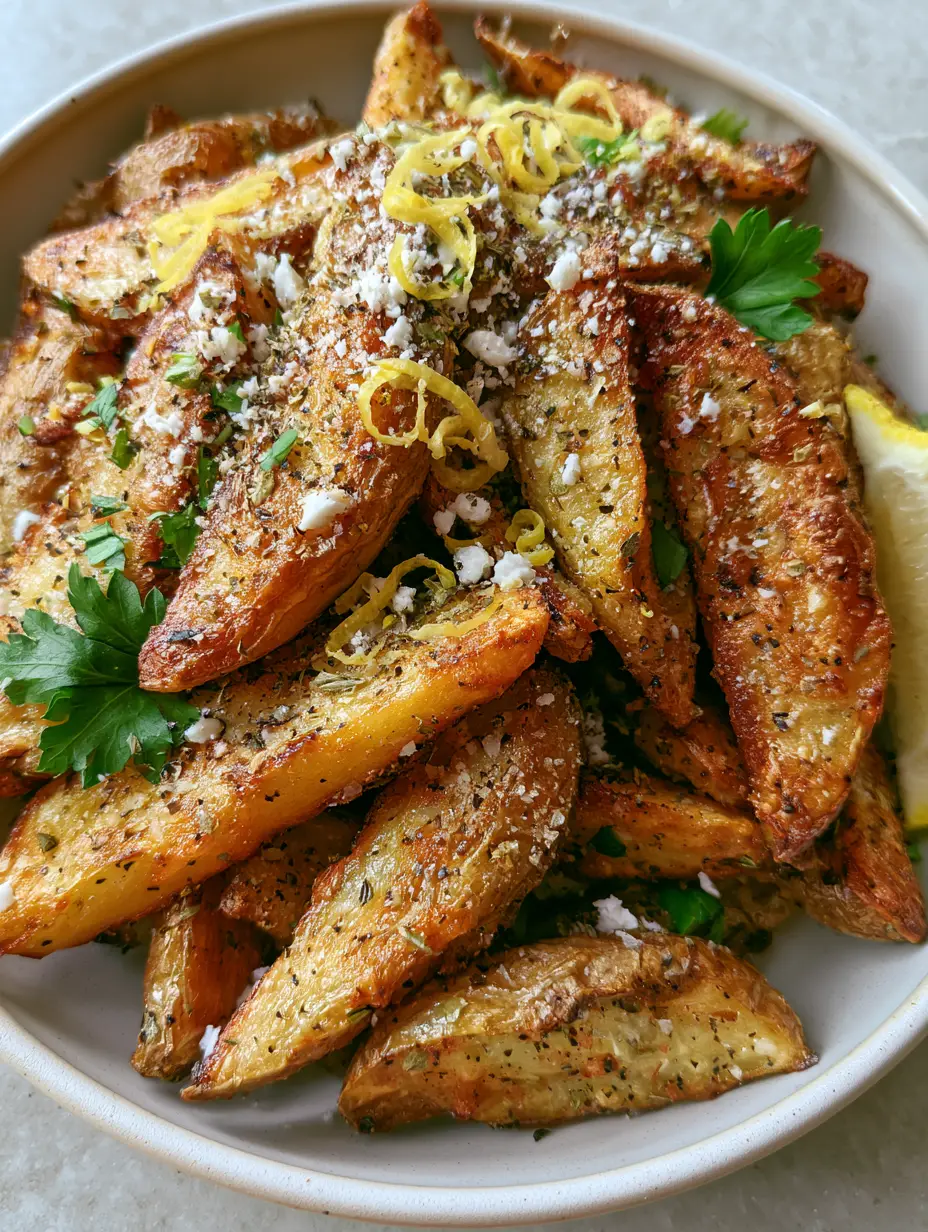
There is a specific kind of magic that happens when a humble tuber meets high heat, cold-pressed olive oil, and the sharp fragrance of the Mediterranean. These Greek potato wedges are not your average side dish; they are a masterclass in textural contrast. Imagine a heap of thick-cut potatoes piled high on a rustic platter, each piece boasting a deeply golden-brown, blistered surface that shatters upon the first bite. Inside, the flesh remains as fluffy and light as a cloud, providing the perfect canvas for the salty punch of feta and the citrusy lift of fresh lemon.
Achieving this level of “craggy” perfection isn’t a matter of luck; it’s a matter of culinary science. We are moving beyond the soggy, oil-laden fries of the past and embracing a technique that maximizes surface area for the Maillard reaction to work its wonders. By the time you pull these out of the oven, the visible flakes of dried oregano and coarse sea salt will be fused to a skin that looks incredibly crunchy, just waiting to be finished with delicate curls of lemon zest and a light dusting of finely crumbled white feta cheese.
Whether you are looking for the perfect accompaniment to Greek chicken souvlaki bowls or you simply want to elevate your weekend snack game, this recipe delivers restaurant-quality results from the comfort of your home kitchen. Let’s dive into the forensic details of how to build the ultimate Greek potato experience.
Why You Will Crave These Craggy, Blistered Wedges
- The “Crag” Factor: Using an alkaline par-boiling method creates a starchy mash on the surface of the potato, which roasts into the craggy, crispy edges seen in professional food photography.
- Symphonic Flavors: The combination of earthy dried oregano, pungent cracked black pepper, and the sharp acidity of fresh lemon zest creates a balanced flavor profile that cuts through the richness of the roast.
- Visual Appeal: With vibrant green flat-leaf parsley and stark white feta against the golden potatoes, this dish is designed to be the centerpiece of any Mediterranean spread.
- Structural Integrity: These wedges are sturdy enough to hold up to heavy dipping, making them a fantastic addition to vegetarian Greek side dishes like hummus or tzatziki.
Essential Ingredients for Mediterranean Potato Perfection
To achieve the specific visual and textural results of our Greek potato wedges, every ingredient must serve a structural or flavor-driven purpose. We do not use “fluff” here; we use components that build a foundation for crunch.
Russet Potatoes (2 lbs / 900g): High-starch Russets are non-negotiable for this recipe. Their low moisture content and high starch levels allow the interior to stay dry and fluffy while the exterior dehydrates into a crisp shell.
Extra Virgin Olive Oil (1/4 cup / 60ml): Choose a high-quality oil with a high smoke point. The oil acts as the heat transfer medium, frying the “crags” created during the par-boiling process.
Baking Soda (1 tsp / 5g): This is our “invisible” hero. Adding baking soda to the boiling water breaks down the potato’s pectin, creating a starchy slurry on the surface that eventually becomes the blistered skin.
Dried Oregano (1 tbsp / 3g): Dried oregano is more potent than fresh in high-heat roasting. It provides that classic Greek aroma that infuses the oil during the cooking process.
Coarse Sea Salt & Cracked Black Pepper: We use coarse salt specifically for those visible, crunchy crystals that provide bursts of seasoning without over-salting the entire dish.
Feta Cheese (1/4 cup / 30g): Look for a block of feta in brine. Finely crumbling it by hand just before serving ensures it stays white and fresh against the hot potatoes.
Fresh Lemon & Zest Curls: The zest contains essential oils that provide a floral aroma, while the fresh lemon wedge on the side allows guests to add acidity to their own taste.
Flat-Leaf Parsley (2 tbsp / 5g): Finely chopped parsley adds a necessary “green” note and visual contrast to the deep gold of the roasted skins.
The Toolkit: Equipment for High-Heat Roasting
To replicate the “handheld smartphone photo” aesthetic of a pile of crispy wedges, you need the right tools to handle the heat. A flimsy baking sheet will warp and cause uneven browning.
You will need a heavy-duty rimmed baking sheet—preferably aluminum—which conducts heat evenly. A large mixing bowl is essential for the “rough-up” phase where we toss the par-boiled potatoes to create that starchy surface layer. Finally, a sharp vegetable peeler or a channel knife is required to create those elegant lemon zest curls that sit atop the finished heap.
Master Class: How to Achieve the Ultimate Greek Potato Texture
Step 1: The Alkaline Par-Boil
Start by scrubbing your Russet potatoes clean, but leave the skin on for that rustic, blistered look. Cut each potato into 8 thick wedges. Bring a large pot of water to a boil and add 1 tbsp (18g) of salt and 1 tsp (5g) of baking soda.
Drop the wedges into the boiling water and cook for exactly 8-10 minutes. You are looking for the edges to be soft and starting to fray, but the wedge should still hold its shape. Drain them thoroughly and let them steam dry for 2 minutes. This “steam drying” is crucial; moisture is the enemy of the crunch.
Step 2: The Rough-Up and Seasoning
Transfer the warm potatoes to a large bowl. Drizzle with the olive oil and add the dried oregano, a generous pinch of coarse sea salt, and cracked black pepper. Now, shake the bowl vigorously. This isn’t just mixing; it’s a culinary technique.
As the potatoes hit each other, the softened exterior turns into a thick, starchy paste. This paste is what creates the “craggy crispy edges” in the oven. Listen for the sound of the potatoes hitting the bowl—it should sound heavy and slightly “shaggy.”
Step 3: The High-Heat Roast
Preheat your oven to 425°F (220°C). Spread the wedges onto your baking sheet in a single layer, ensuring they aren’t touching. If they are crowded, they will steam instead of roast, and you’ll lose that blistered skin.
Roast for 35-40 minutes, flipping them halfway through. Look for the visual cue of “deeply golden-brown” surfaces and a visible “blistered” texture. The potatoes should feel light and sound hollow when tapped with a spatula.
Step 4: The Finishing Flourish
Transfer the piping hot wedges to a rustic matte white ceramic platter. While they are still sizzling, sprinkle the finely crumbled feta over the top. The residual heat will soften the cheese slightly without melting it completely.
Scatter the fresh flat-leaf parsley and the lemon zest curls over the heap. Place a single fresh lemon wedge on the side for that final pop of color and flavor. Serve immediately while the crunch is at its peak.
Expert Secrets for Restaurant-Quality Results
- Never Crowd the Pan: If you want the wedges to look like the heap in the photo, you must roast them in a single, spaced-out layer first. You can pile them high for serving later.
- The Power of Steam-Drying: After draining the potatoes, let them sit in the colander until they stop steaming. This ensures the oil sticks to the potato rather than sliding off a film of water.
- Use Block Feta: Pre-crumbled feta is often coated in cellulose to prevent clumping, which prevents it from melding beautifully with the hot potatoes. Crumble it yourself for the best texture.
- High Heat is Key: Don’t be afraid of the 425°F (220°C) temperature. It’s necessary to dehydrate the potato skin quickly enough to create that “shatter” crunch.
Storage, Reheating, and Freezing Strategy
While these Greek potato wedges are best enjoyed fresh from the oven, you can store leftovers in an airtight container in the refrigerator for up to 3 days. To maintain the crispy edges, do not use a microwave for reheating.
For the best results, reheat the wedges on a baking sheet at 400°F (200°C) for 8-10 minutes until the skin re-crisps. You can also use an air fryer at 375°F (190°C) for 4-5 minutes. Freezing is not recommended for fully roasted wedges, as the cellular structure of the potato will change, leading to a grainy interior upon thawing.
Perfect Pairings: What to Serve with Your Wedges
These potatoes are versatile enough to accompany a variety of Mediterranean and global dishes. For a traditional Greek feast, serve them alongside Greek roast potatoes (yes, more potatoes!) and a big Greek salad. They are also the essential side for a hearty platter of Moroccan kefta kebab.
If you’re looking for something lighter, try pairing them with lemon roasted Greek potatoes and a side of chermoula for dipping. The herbaceous notes of the chermoula perfectly complement the oregano and lemon in the wedges.
Frequently Asked Questions
Yes! Follow the par-boiling and seasoning steps, then air fry at 400°F (200°C) for 15-20 minutes, shaking the basket halfway through until golden and blistered.
Ensure your baking sheet is preheated or use a generous amount of oil. Moving the potatoes only after they have formed a crust (about 20 minutes in) also prevents sticking.
Russet potatoes are the best choice because their high starch content leads to a fluffy interior and an exceptionally crispy, blistered exterior.
Baking soda raises the pH of the water, breaking down the potato’s pectin more effectively. This creates a starchy surface slurry that roasts into extra craggy edges.
Dried oregano has a more concentrated flavor and stands up better to the high heat of roasting without burning or becoming bitter like fresh herbs.
The Official Recipe Card
Greek Potato Wedges: The Ultimate Crispy Roasted Recipe
Ingredients
Equipment
Method
- Bring a large pot of water to a boil with 1 tbsp salt and baking soda. Add potato wedges and simmer for 8-10 minutes until edges are softened.
- Drain potatoes in a colander and let sit for 2 minutes to allow excess moisture to evaporate.
- Place warm potatoes in a bowl with olive oil, oregano, salt, and pepper. Shake vigorously to create a starchy paste on the surface.
- Arrange on a baking sheet in a single layer. Roast at 425°F (220°C) for 35-40 minutes, flipping halfway, until blistered and golden-brown.
- Pile onto a platter and top with crumbled feta, parsley, and lemon zest curls. Serve with a lemon wedge.
Notes
Do not skip the baking soda; it is essential for the blistered texture.
Final Thoughts and Join the Community
Creating the perfect Greek potato wedges is a rewarding journey into the world of culinary textures. The contrast of the blistered, craggy skin against the salty feta and zingy lemon makes this a recipe you’ll return to again and again. It’s a dish that proves that with the right technique, simple ingredients can become extraordinary.
If you enjoyed this recipe, I’d love to hear your thoughts! Leave a comment below or share your crispy potato creations on Pinterest. For more Mediterranean inspiration, don’t forget to check out our other Greek feta roast potatoes and join our newsletter for weekly recipe updates.