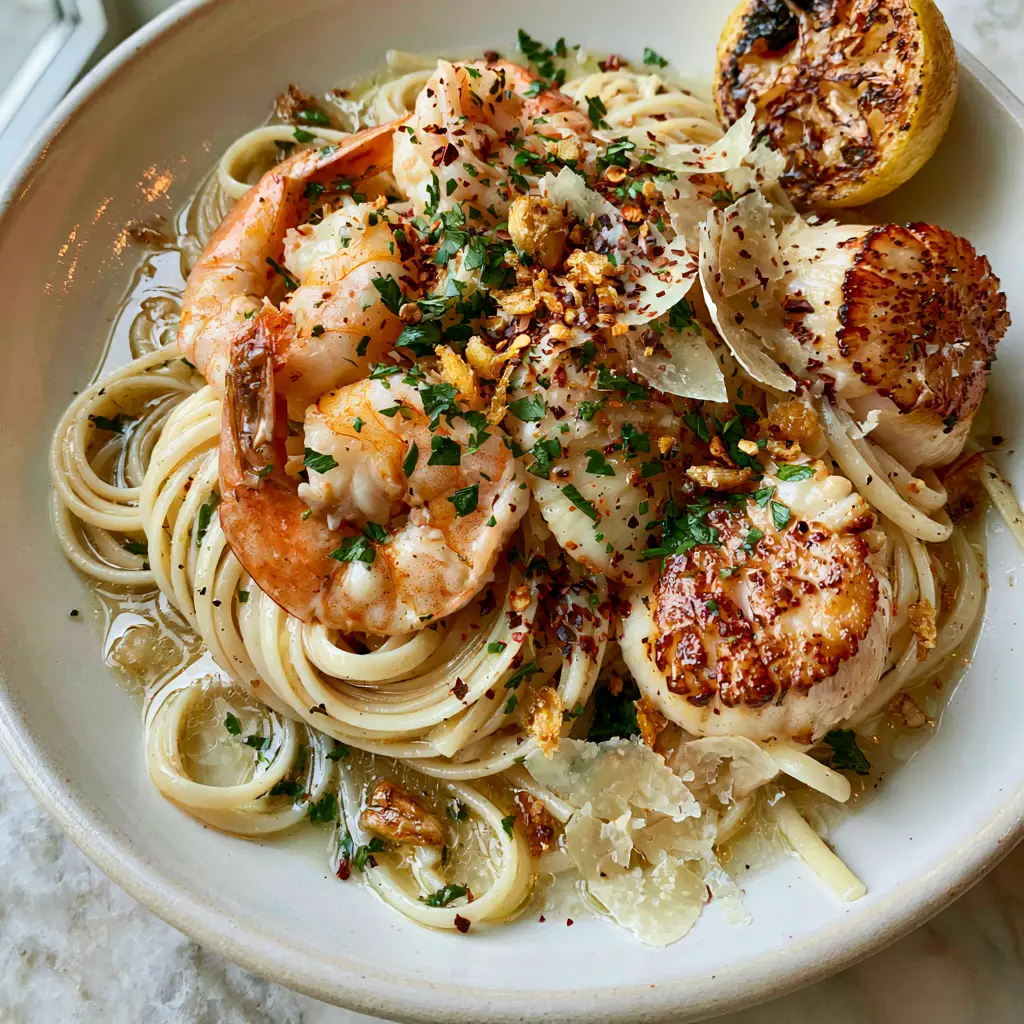
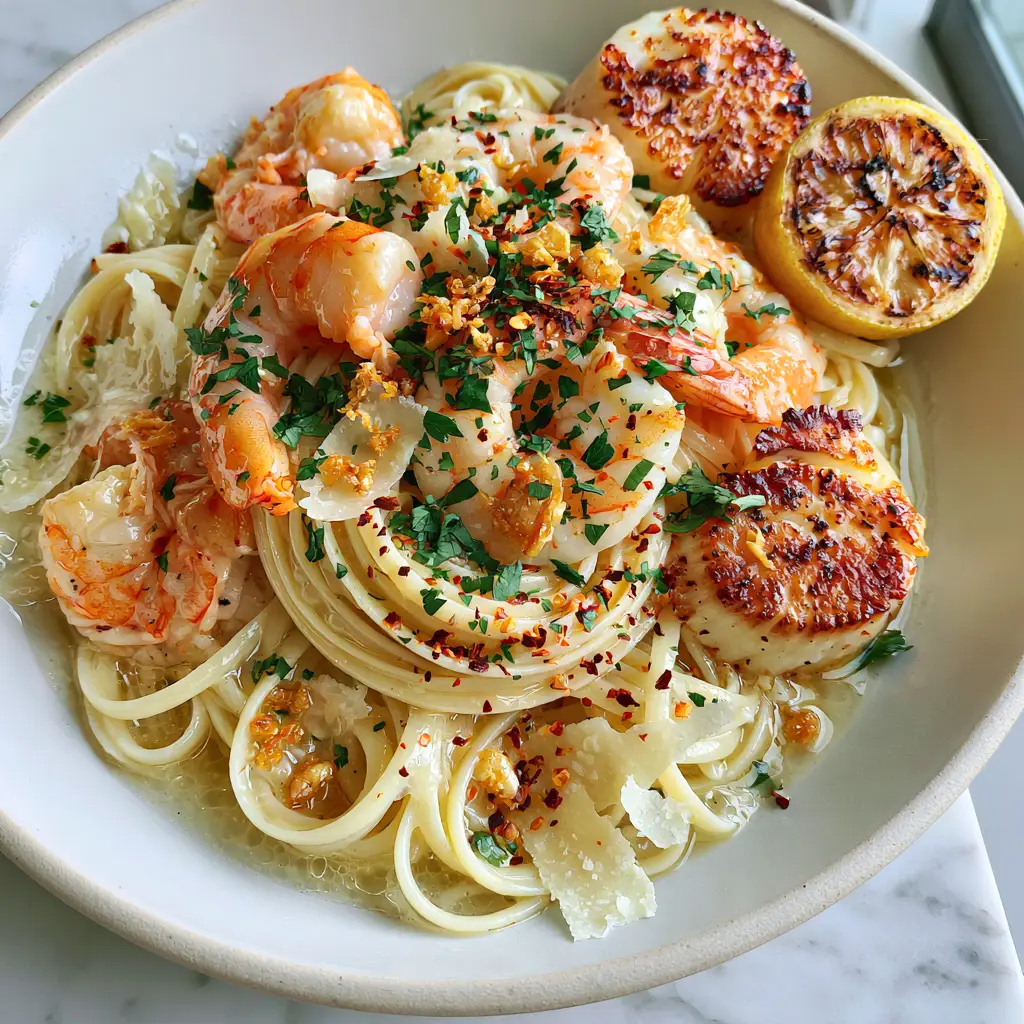
This Seafood pasta recipe is the ultimate expression of coastal elegance, bringing the sophisticated atmosphere of a high-end trattoria straight to your kitchen. Imagine a bowl where every strand of al dente linguine is coated in a translucent, silky white wine and garlic butter sauce that glimmers under the light. The centerpiece of this dish features jumbo, succulent shrimp and sea scallops boasting a thick, golden-brown crust that only comes from a perfect professional sear.
Whether you are hosting a romantic dinner or simply craving the briny sweetness of fresh shellfish, this recipe delivers on every sensory promise. The aroma of minced fried garlic and fresh flat-leaf parsley fills the air, while the bright acidity of a charred lemon wedge balances the rich, buttery finish. Every bite offers a texture-rich experience, from the snap of the shrimp to the melt-in-your-mouth tenderness of the scallops.
Achieving this level of visual and culinary perfection requires attention to detail, but the process is remarkably straightforward once you master the timing. By following our guide, you will learn how to create a restaurant-quality emulsion and a Maillard-reaction crust that looks exactly like a professional food photograph. Let’s dive into the techniques that make this Seafood pasta recipe a recurring favorite in any home cook’s repertoire.
The Allure of a Perfectly Balanced Seafood Bowl
What makes this specific Seafood pasta recipe stand out is the harmony between delicate seafood and a robust, aromatic sauce. Unlike heavy cream-based dishes, this white wine garlic sauce is light yet luxurious, allowing the natural sweetness of the scallops and shrimp to take center stage.
- Textural Contrast: You get the crispiness of fried garlic and seared scallops against the soft, yielding texture of al dente linguine.
- Visual Vibrancy: The contrast of succulent pink shrimp against the green of chopped parsley and the golden-brown crust of the scallops creates a stunning presentation.
- Zesty Finish: The inclusion of a charred lemon adds a smoky, citrusy depth that elevates the entire flavor profile beyond standard pasta dishes.
- Umami Depth: Shaved translucent parmesan cheese melts slightly into the sauce, providing a salty, savory backbone to the seafood.
Essential Components for a Restaurant-Quality Dish
To recreate the visual blueprint of this Seafood pasta recipe, you need high-quality ingredients and a few foundational staples that build the sauce’s structure. Every element in this list serves a specific purpose in achieving that glistening, professional finish.
Linguine: 1 lb (454g) of dried linguine. This flat, narrow pasta provides the perfect surface area for the silky sauce to cling to without being overwhelmed.
Sea Scallops: 8-10 large (approx. 1lb/454g) dry-packed sea scallops. It is vital to use “dry” scallops to achieve that iconic golden-brown seared crust rather than steaming them in their own liquid.
Jumbo Shrimp: 1 lb (454g) jumbo shrimp, peeled and deveined. These should be light pink and orange once cooked, maintaining a moist, succulent interior.
Dry White Wine: 1/2 cup (120ml) of Pinot Grigio or Sauvignon Blanc. The acidity in the wine deglazes the pan, lifting the flavorful browned bits (fond) left behind by the seafood.
Unsalted Butter: 4 tbsp (56g) cold butter. Whisking cold butter into the wine at the end creates the translucent, silky emulsion seen in the visual prompt.
Garlic: 6 cloves, minced. Half will be fried until golden for garnish, and the other half will be infused into the sauce for a deep, aromatic base.
Fresh Flat-Leaf Parsley: 1/4 cup (15g), finely chopped. This provides a burst of color and a fresh, peppery finish that cuts through the richness of the butter.
Crushed Red Pepper Flakes: 1/2 tsp (1g). A delicate sprinkle adds just enough heat to stimulate the palate without overpowering the seafood.
Parmesan Cheese: 2 oz (57g) aged parmesan, shaved into thin, translucent ribbons. Shaving the cheese rather than grating it ensures it looks beautiful and melts slowly.
Lemon: 1 large lemon, halved. Charring the lemon in the pan caramelizes the sugars, making the juice sweeter and more complex.
Extra Virgin Olive Oil: 3 tbsp (45ml). This high-quality oil is necessary for searing the seafood and frying the garlic bits to a perfect golden hue.
Kosher Salt and Black Pepper: To taste. Essential for seasoning the scallops and shrimp to draw out their natural juices during the searing process.
Foundational Tools for Professional Searing
To achieve the “perfect, thin golden-brown seared crust” described in our visual blueprint, you need the right equipment. Using the wrong pan can result in rubbery seafood and a broken sauce.
A wide, shallow ceramic or stainless steel skillet is preferred for this Seafood pasta recipe. The wide surface area allows moisture to evaporate quickly, which is the secret to a hard sear on your scallops. Avoid non-stick pans if possible, as they don’t produce the same level of browning (fond) required for a flavorful sauce.
You will also need a large pasta pot to boil the linguine and a pair of stainless steel tongs to swirl the pasta into that iconic “mound” shape. A sharp vegetable peeler is the best tool for creating those thin, translucent shavings of parmesan cheese that garnish the final dish.
Mastering the Perfect Pan-Sear and Fried Garlic
Step 1: The Golden Garlic Garnish
Heat 1 tbsp (15ml) of olive oil in your skillet over medium-low heat. Add half of your minced garlic and cook, stirring constantly, until the bits turn a pale golden brown and become fragrant. Immediately remove them with a slotted spoon and drain on a paper towel; they will continue to crisp as they cool, becoming the “tiny golden bits of fried garlic” for your garnish.
Step 2: Searing the Scallops for a Golden Crust
Pat the scallops extremely dry with paper towels—this is the most important step for a visual crust. Season with salt and pepper. Increase the heat to medium-high and add 1 tbsp (15ml) of oil. Once the oil is shimmering, add the scallops, ensuring they do not touch.
Sear the scallops for 2 minutes without moving them. You are looking for a deep, golden-brown crust to form on the bottom. Flip and sear for another 60-90 seconds until the sides are opaque but the center remains slightly translucent. Remove and set aside on a warm plate.
Step 3: Sautéing the Succulent Shrimp
In the same pan, add the shrimp. Cook for about 2 minutes per side until they turn light pink and orange with a visible moist texture. Do not overcook, or they will lose their succulent snap. Remove the shrimp and place them with the scallops.
Crafting the Silky White Wine Emulsion
Step 4: Building the Aromatics
Reduce the heat to medium and add the remaining minced garlic and a pinch of red pepper flakes to the skillet. Sauté for 30 seconds until fragrant, being careful not to burn the garlic. The smell should be buttery and pungent, indicating the flavors are releasing into the oil.
Step 5: Deglazing and Emulsifying
Pour in the white wine, using a wooden spoon to scrape up all the golden browned bits from the bottom of the pan. Let the wine reduce by half. Turn the heat to low and whisk in the cold butter, one tablespoon at a time, until the sauce becomes a glistening, translucent, and silky coating.
Step 6: Incorporating the Linguine
Add your al dente linguine directly to the skillet along with a splash of starchy pasta water (about 1/4 cup / 60ml). Toss vigorously to ensure every strand is perfectly swirled and glistening with the sauce. The starch in the water helps the sauce bind to the pasta, creating that professional sheen.
The Finishing Flourish: Garnishing for Visual Impact
Now it is time to assemble the bowl to match the “top-down angled close-up” visual. Place a generous mound of the glistening linguine in a wide artisanal white bowl. Nestled on top, arrange the jumbo shrimp and those perfectly seared scallops, ensuring the golden crust is facing upward.
Intricately garnish the dish by sprinkling the finely minced fresh flat-leaf parsley and the reserved fried garlic bits evenly over the top. Add a delicate sprinkle of crushed red pepper flakes for a pop of color. Finally, layer the thin, translucent shavings of aged parmesan cheese so they catch the light. Place a single charred lemon half on the rim, which you can quickly sear in the empty skillet for 60 seconds before serving.
Chef’s Secrets for Flawless Results
- The Dryness Factor: If your scallops are wet, they will steam and turn gray rather than golden. Use multiple paper towels to squeeze out every drop of moisture before they hit the pan.
- Pasta Water is Liquid Gold: Never drain your pasta water completely. The starch is the “secret” ingredient that turns a thin wine sauce into a silky emulsion that hugs the linguine.
- Don’t Crowd the Pan: Sear the seafood in batches if necessary. If you put too many items in the skillet at once, the temperature drops, and you lose the ability to create that perfect crust.
- Carry-over Cooking: Remove the seafood when it is 90% done. The residual heat will finish the cooking process while you toss the pasta, ensuring the shrimp stay succulent and pink.
Preserving the Delicate Textures
This Seafood pasta recipe is best enjoyed immediately to appreciate the contrast between the hot, seared scallops and the silky sauce. If you have leftovers, store them in an airtight container in the refrigerator for up to 2 days. To reheat, place the pasta in a skillet over low heat with a tablespoon of water or broth, tossing gently until warm. Avoid the microwave, as it will turn the shrimp rubbery and the scallops tough.
We do not recommend freezing this dish, as the delicate texture of the linguine and the emulsion of the wine-butter sauce will break upon thawing, losing the visual and culinary appeal that makes this recipe special.
Perfect Pairings for a Mediterranean Feast
To turn this dish into a full menu, consider serving it alongside other Mediterranean-inspired favorites. A side of lebanese spicy potatoes adds a wonderful earthy heat that complements the seafood. If you are a fan of varied textures, starting the meal with seared ahi tuna creates a sophisticated seafood-forward progression.
For those who love sauce-based dishes, you might also enjoy our mussels pasta or a beautifully baked salmon with lemon butter cream sauce. These dishes share similar flavor profiles and techniques, making them excellent companions for a seafood lover’s rotation.
Common Seafood Queries Answered
Yes, but they must be fully thawed and patted extremely dry. Frozen seafood often releases more moisture, so it’s extra important to dry them to ensure you get a sear instead of a steam.
The secret is dryness. Pat the scallops bone-dry with paper towels, use a very hot skillet (stainless steel is best), and do not move them for at least 2 minutes to allow the Maillard reaction to occur.
Whisk in very cold butter cubes over low heat at the very end. The temperature difference between the hot wine and cold butter creates a stable emulsion that results in a silky, translucent sauce.
Use a dry, crisp white wine with high acidity, such as Pinot Grigio, Sauvignon Blanc, or an unoaked Chardonnay. Avoid sweet wines like Riesling, as they will throw off the flavor balance.
Pasta water contains starch released during cooking. When added to the butter and wine, it acts as a binder, helping the sauce thicken and cling to the linguine strands.
The Ultimate Seafood Pasta Recipe
Seafood Pasta Recipe with Seared Scallops and Garlic Wine Sauce
Ingredients
Equipment
Method
- Cook linguine in salted boiling water until just al dente. Reserve 1/2 cup of pasta water before draining.
- Heat 1 tbsp oil in a skillet. Fry half the minced garlic until golden. Remove and set aside for garnish.
- Pat scallops dry. Season with salt. In a hot skillet with oil, sear for 2 minutes per side until a deep golden crust forms. Remove.
- Sauté shrimp in the same pan for 2 minutes per side until pink and succulent. Remove.
- Add remaining garlic and red pepper to skillet. Add white wine, scraping the bottom. Reduce by half.
- Whisk in cold butter cubes one by one on low heat until the sauce is translucent and glossy.
- Add linguine and pasta water to the sauce. Toss to coat. Top with seafood, fried garlic, parsley, parmesan, and a charred lemon wedge.
Notes
Use a cold butter whisking technique to prevent the sauce from breaking.
Closing & Call to Action
Mastering this Seafood pasta recipe is a milestone for any home cook looking to elevate their dinner game. With its combination of golden-seared scallops, succulent shrimp, and a silky white wine garlic sauce, it is a dish that looks as good as it tastes. The textural complexity and bright, fresh flavors make it a true showstopper.
Did you try this recipe? We’d love to see your results! Leave a comment below and let us know how your sear turned out. Don’t forget to sign up for our newsletter for more restaurant-quality recipes, and be sure to share this post to your favorite board on Pinterest so you can save it for your next special occasion!