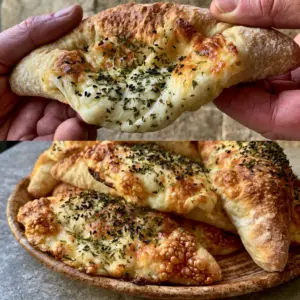
There is a specific, intoxicating aroma that fills the air of a traditional Lebanese bakery at dawn, a scent defined by toasted sesame seeds, earthy wild thyme, and the sharp, bright tang of sumac. This Za’atar Flatbread, also known as Manakish, captures that essence perfectly while utilizing a modern, high-speed technique that bypasses the need for yeast.
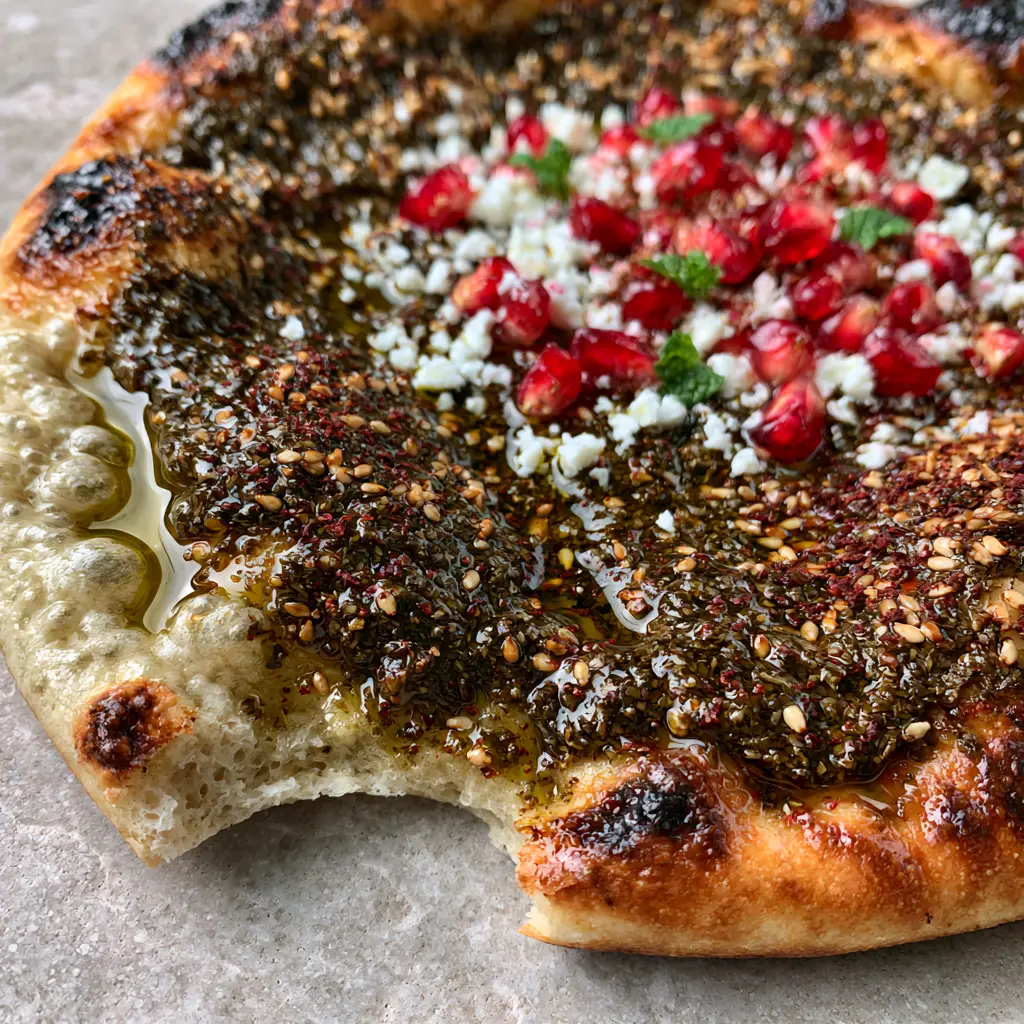
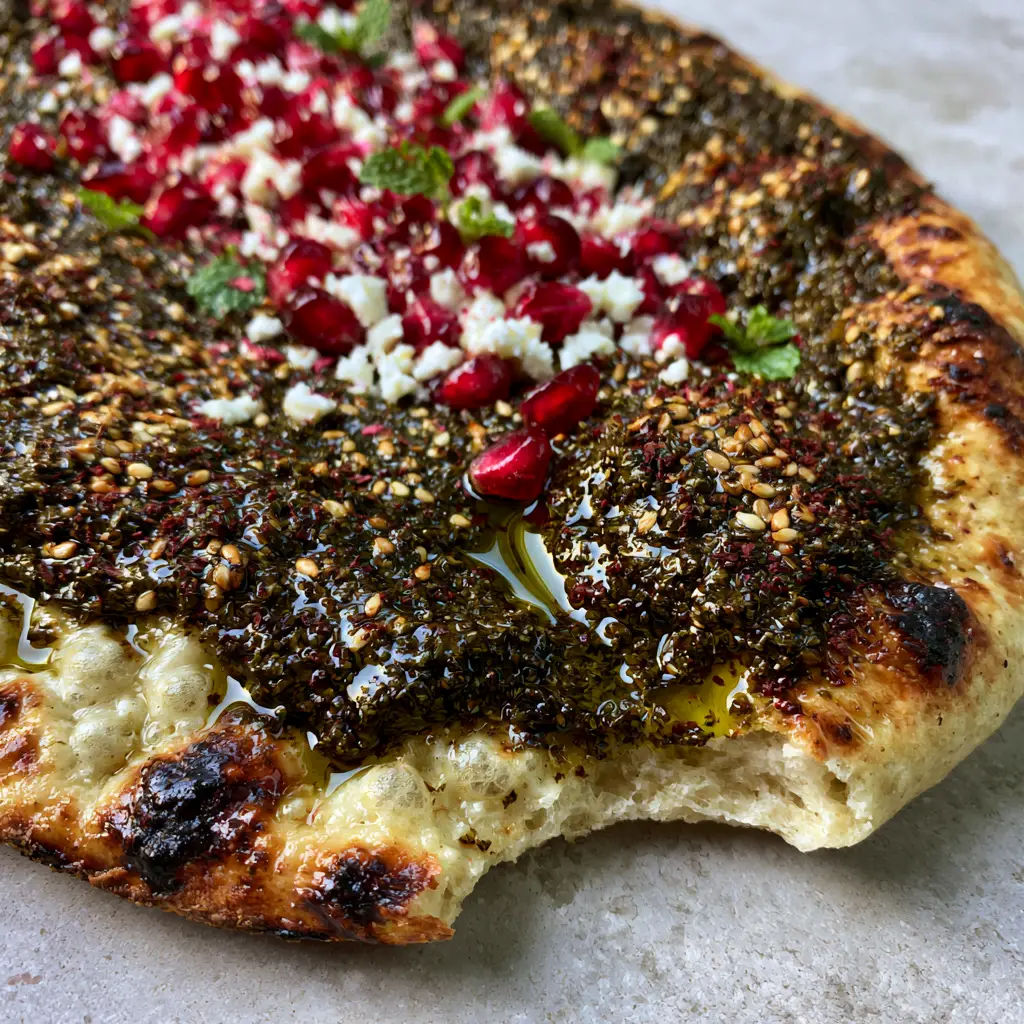
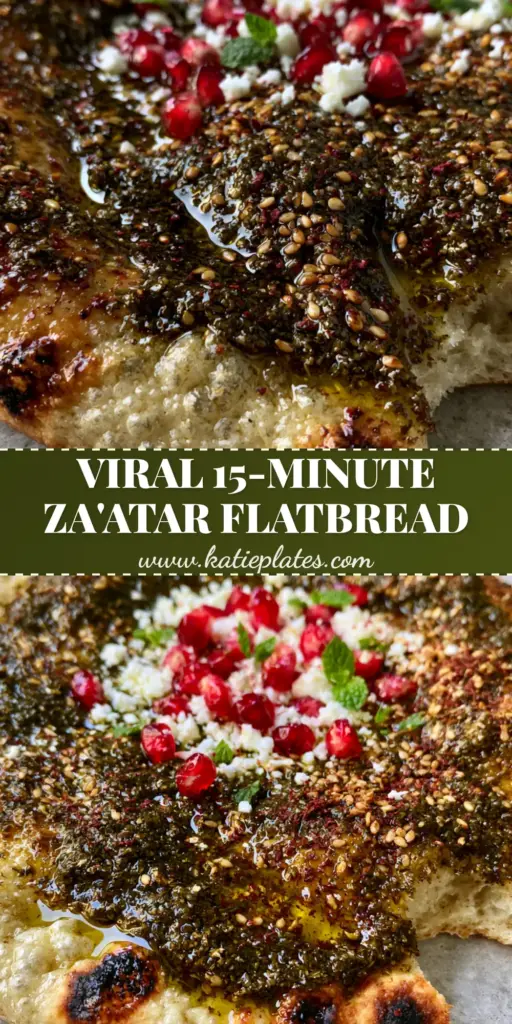
Imagine a handheld piece of art: a soft, bubbly dough that boasts golden-brown blistered edges and a slightly charred crust that crunches with every bite. The surface is not just seasoned; it is heavily coated in a thick, dark green za’atar herb and extra virgin olive oil paste that glistens under the kitchen lights, rich and textured with every spice flake. To finish, we add a sprinkle of bright white crumbled feta, vibrant red pomegranate seeds, and tiny fresh mint leaves for a burst of color and coolness.
This recipe is designed for the home cook who craves the complexity of Middle Eastern street food but needs a reliable, quick-fix solution for a busy weekday morning or a standout weekend brunch. Whether you are tearing into a piece to reveal its soft, airy interior or serving it as part of a larger spread, this Za’atar Flatbread is a masterclass in texture and flavor balance.
Why You Will Fall in Love With This Savory Lebanese Staple
- No-Yeast Convenience: By using a specialized leavening technique, we achieve those iconic dough bubbles and an airy interior without the hours of waiting for a rise.
- Complex Flavor Profile: The thick za’atar and olive oil paste provides a deep, herbaceous base that is perfectly countered by the salty feta and sweet, acidic pop of pomegranate.
- Visual Masterpiece: With its glistening olive oil sheen and ruby red pomegranate seeds, this dish looks as though it stepped right out of a professional food photography studio.
- Versatile Pairing: It serves as a fantastic savory alternative to pancakes or a robust side for a protein-heavy dinner.
The Secret Pantry List for the Perfect Za’atar Flatbread
Creating the perfect Manakish requires a blend of high-quality aromatic spices and foundational ingredients that provide structure to the no-yeast dough. Each component serves a visual and structural purpose to ensure the final result matches our “Visual Recipe Blueprint.”
All-Purpose Flour: 2 cups (250g) of flour provides the structural foundation, ensuring the bread is sturdy enough to hold the heavy herb paste while remaining tender. Ensure you spoon and level your flour for accuracy.
Greek Yogurt: 1 cup (245g) of full-fat Greek yogurt is the “invisible” powerhouse that reacts with the leavening agents to create bubbles and a characteristic tang. The acidity in the yogurt tenderizes the gluten for that soft, airy interior.
Baking Powder: 1.5 tsp (7g) of baking powder provides the immediate lift required for a “no-yeast” dough to puff up and create those golden-brown blistered edges. It mimics the fermentation bubbles usually provided by yeast.
Fine Sea Salt: 0.5 tsp (3g) of salt is essential for seasoning the dough itself, preventing the flatbread from tasting flat or one-dimensional against the bold toppings.
Za’atar Spice Blend: 0.5 cup (50g) of high-quality za’atar, containing dried thyme, toasted sesame seeds, and dried sumac, forms the flavor core. This blend creates the thick, dark green textured paste described in the blueprint.
Extra Virgin Olive Oil: 0.33 cup (80ml) of premium olive oil is mixed with the spices to create a glistening sheen. It also helps conduct heat to the dough, ensuring those charred, crispy edges.
Crumbled White Feta Cheese: 0.25 cup (35g) of feta provides a sharp, salty contrast and a bright white visual pop against the dark green herb paste. Use a block-style feta for better texture.
Fresh Pomegranate Seeds: 2 tbsp (30g) of ruby red pomegranate seeds add a vibrant “jeweled” look and a fresh, juicy crunch that cuts through the richness of the oil. These should be added just before serving to maintain their integrity.
Fresh Mint Leaves: A handful of small, fresh mint leaves provides a cooling aromatic finish and a bright green contrast to the dried herbs. They elevate the dish from a simple bread to a gourmet meal.
Essential Equipment for Achieving the Perfect Char
To achieve the “golden charred crust” and “blistered edges” mentioned in the Midjourney prompt, heat management is everything. While a traditional brick oven is ideal, we can replicate those results with standard kitchen tools.
A heavy-bottomed cast iron skillet or a pizza stone is highly recommended for this Za’atar Flatbread. These tools hold onto heat and transfer it quickly to the bottom of the dough, creating that “bubbly” effect instantly upon contact. You will also need a rolling pin to achieve a uniform thickness and a small mixing bowl to whisk the za’atar and oil into a thick paste.
Step-By-Step Instructions for Artisan Manakish
Crafting the Bubbly No-Yeast Dough
In a large mixing bowl, whisk together the 2 cups (250g) of flour, baking powder, and sea salt. Create a well in the center and add the 1 cup (245g) of Greek yogurt. Using a sturdy spatula, fold the ingredients together until a shaggy dough forms.
Turn the dough onto a lightly floured surface and knead for about 3-5 minutes. You are looking for a specific sensory cue: the dough should be smooth, slightly elastic, and no longer sticking to your hands. Divide the dough into 4 equal portions and roll them into balls.
Creating the Signature Za’atar Paste
In a small bowl, combine the 0.5 cup (50g) of za’atar spice blend with the 0.33 cup (80ml) of extra virgin olive oil. Stir until it forms a thick, dark green paste. If the paste feels too dry, add an extra teaspoon of oil; it should be spreadable but not runny, ensuring it creates that rich, textured surface once baked.
Shaping and Searing for Maximum Blister
Preheat your cast iron skillet over medium-high heat. Roll out one dough ball into a circle approximately 0.25 inches (6mm) thick. Use your fingertips to press small indentations into the surface of the dough—this helps the oil pool and creates those iconic “bubbly” pockets.
Place the dough into the dry, hot skillet. Cook for about 2 minutes until you see large bubbles forming on the surface and the bottom shows golden-brown blistered edges. Flip the dough quickly for 30 seconds to sear the top, then flip back over. Immediately spread a generous layer of the za’atar paste over the bubbly surface.
The Final Garnish and Presentation
Remove the Za’atar Flatbread from the heat and place it on a serving board. While the bread is still steaming and the olive oil is glistening, sprinkle over the crumbled white feta cheese. The residual heat will soften the feta slightly without melting it completely.
Finish by scattering the vibrant red pomegranate seeds and small mint leaves over the top. This contrast of the warm, savory bread and the cold, fresh fruit is what defines the authentic Lebanese Manakish experience. Tear the bread at the edge to reveal that soft, airy interior before serving immediately.
Expert Tips for a Professional Results
- Don’t Over-Knead: Since this is a no-yeast dough, over-kneading can make the flatbread tough. Stop as soon as the dough is smooth to keep the interior airy.
- High Heat is Key: To get the “charred” look from the Midjourney prompt, your pan must be very hot. If the bread takes longer than 3 minutes to cook, your heat is too low.
- Quality of Za’atar: Not all blends are equal. Look for one where you can clearly see the toasted sesame seeds and sumac flakes for the best visual and flavor profile.
- The Yogurt Temperature: Use room-temperature yogurt to ensure the baking powder activates efficiently, resulting in more “bubbly” dough.
Storage, Reheating, and Freezing Advice
Za’atar Flatbread is best enjoyed fresh off the skillet, but it can be stored if necessary. Place leftovers in an airtight container at room temperature for up to 2 days. To reheat, avoid the microwave, as it will make the crust soggy. Instead, place it in a dry skillet or a 350°F (175°C) oven for 3-5 minutes until the oil glistens again.
For long-term storage, you can freeze the unadorned cooked flatbreads for up to 2 months. Thaw at room temperature and apply the fresh za’atar paste and garnishes after reheating to maintain the “fresh” visual appeal of the mint and pomegranate.
What to Serve with Your Za’atar Flatbread
While this Manakish is a meal in itself, it pairs beautifully with other Middle Eastern delicacies. Serve it alongside Batata Harra for a complete vegan-friendly feast. If you’re looking for a hearty lunch, it acts as a perfect scoop for a bowl of hummus or as a side to a fragrant Chicken Kabsa.
For those who enjoy a fusion breakfast, try pairing a slice of this savory bread with a refreshing morning smoothie to balance the richness of the olive oil and herbs. The acidity of the sumac also makes it a great companion to grilled meats or a light salad.
Frequently Asked Questions
Yes, you can prepare the dough and store it in the refrigerator for up to 24 hours. However, for the most ‘bubbly’ and airy result, it is best cooked immediately after mixing while the baking powder is most active.
The secret is to sear the dough in a very hot skillet first, then add the za’atar paste. This ensures the bread cooks through and chars while the delicate herbs only warm up and release their oils.
The base recipe uses Greek yogurt and feta cheese. To make it vegan, simply use a plain soy or coconut-based yogurt and omit the feta or replace it with a plant-based salty crumble.
If you can’t find a pre-made blend, you can mix dried thyme, dried oregano, toasted sesame seeds, and plenty of sumac. The sumac is vital for that signature tangy flavor.
Usually, this is because the skillet wasn’t hot enough or the baking powder was expired. Ensure your pan is preheated until a drop of water flicked onto it sizzles instantly.
Authentic Za’atar Flatbread (Manakish) Recipe Card
Za'atar Flatbread (Manakish): The Ultimate Quick No-Yeast Recipe
Ingredients
Equipment
Method
- In a large bowl, whisk flour, baking powder, and salt.
- Stir in the Greek yogurt until a shaggy dough forms, then knead on a floured surface for 3-5 minutes until smooth and elastic.
- Mix za'atar and olive oil in a small bowl to create a thick, glistening paste.
- Roll dough to 0.25 inches. Place in a hot cast iron skillet for 2 minutes until bubbly and charred on the bottom. Flip briefly, then flip back.
- Spread za'atar paste over the hot bread. Remove from heat and top with crumbled feta, pomegranate seeds, and fresh mint.
Notes
Use room-temperature yogurt for the best rise.
Bringing the Flavors of Lebanon to Your Kitchen
Mastering the Za’atar Flatbread is a rite of passage for any home cook looking to explore the vibrant world of Levantine cuisine. With its combination of bubbly dough, rich oils, and fresh garnishes, it satisfies every sensory craving from crunch to tang. We hope this recipe brings a little bit of Mediterranean sunshine to your table!
If you enjoyed this recipe, please leave a comment below and let us know how your bubbles turned out! Don’t forget to share your creations on Pinterest and tag us so we can see your beautiful charred crusts. Happy baking!