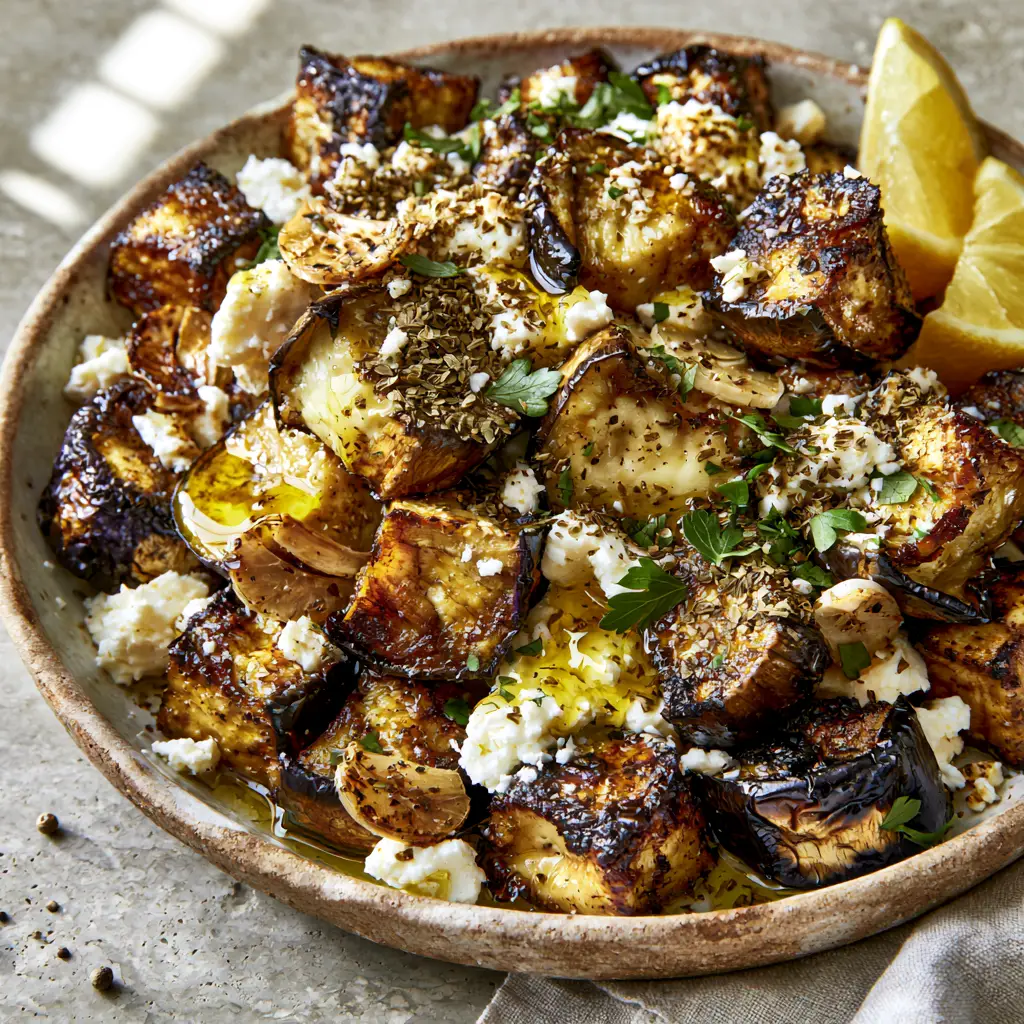
There is a specific culinary magic that happens when high heat meets the humble aubergine. This Greek style roasted eggplant is the ultimate testament to that transformation, turning a spongy, mild vegetable into a platter of charred, caramelized gold. If you have ever struggled with soggy or bitter eggplant, this technique is the game-changer you have been waiting for.
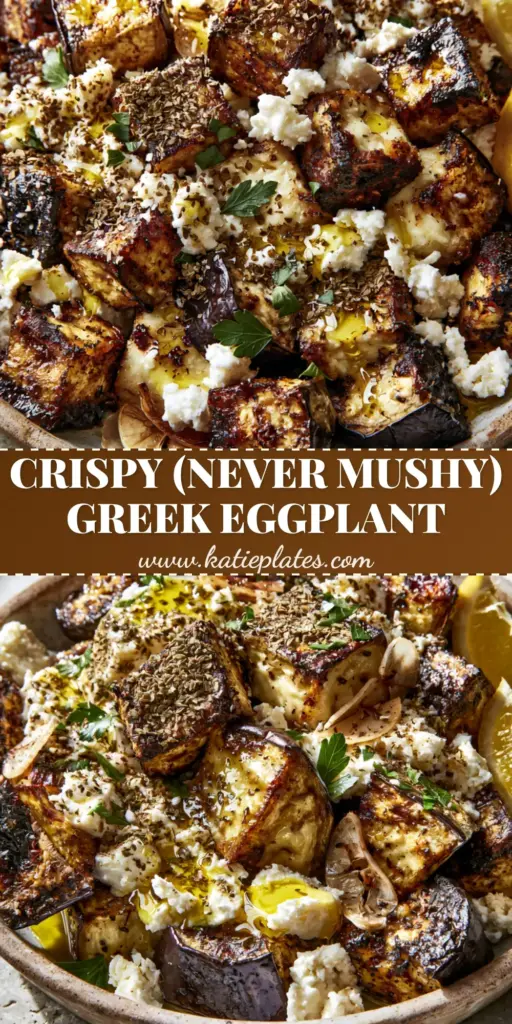
Imagine a rustic ceramic platter piled high with cubes that boast deep golden-brown edges and blistered, smoky skins. As your fork pierces the exterior, you hit a center that is buttery, creamy, and practically melts on the tongue. This isn’t just a side dish; it is a sensory journey through the Mediterranean coast.
We finish the dish with sharp, salty crumbles of white feta cheese and a heavy, glistening drizzle of the finest extra virgin olive oil. The aroma of dried oregano and fresh flat-leaf parsley mingles with the mellow sweetness of thin-sliced roasted garlic. A final squeeze of vibrant lemon cuts through the richness, creating a perfectly balanced bite every single time.
Why This Greek style roasted eggplant Recipe Is a Total Game-Changer
- The Perfect Texture Contrast: By roasting at a high temperature, we achieve a “shattered” crispy skin while maintaining a custard-like interior that feels incredibly indulgent.
- Flavor Depth via Roasted Garlic: Instead of raw garlic that can bite, we use thin slices that caramelize alongside the eggplant cubes, turning sweet and nutty.
- Salty-Acid Balance: The combination of brined feta and fresh lemon wedges provides the essential “pop” that elevates the earthy notes of the roasted vegetable.
- Visual Masterpiece: With its vibrant greens, snowy whites, and deep purple-charred hues, this dish is designed to be the centerpiece of any Greek appetizer platter.
The Foundation: Choosing Your Ingredients for Success
Globe or Italian Eggplant: You will need 2 large eggplants (about 2 lbs / 900g). Look for firm, heavy fruits with shiny, unwrinkled skin; this ensures the interior is moist and not full of bitter seeds.
Kosher Salt (1 tbsp / 15g): This is an “invisible” but vital ingredient used to sweat the eggplant. It breaks down the cellular structure, allowing the eggplant to roast rather than steam, while also removing any residual bitterness.
High-Quality Extra Virgin Olive Oil (1/2 cup / 120ml): Use a robust oil for the roasting process and a delicate, fruity oil for the final drizzle. Eggplant is a sponge, so the quality of the fat you use directly dictates the final flavor.
Fresh Garlic Cloves (4-5 cloves): Slicing these paper-thin allows them to fuse with the eggplant cubes. They should emerge from the oven looking like translucent amber chips.
Greek Feta Cheese (1/2 cup / 75g): Seek out sheep’s milk feta stored in brine for the most authentic flavor. It should be crumbly yet creamy, providing a sharp contrast to the warm eggplant.
Dried Oregano and Fresh Parsley: Dried oregano provides that classic “taverna” aroma during the roasting process. Fresh flat-leaf parsley adds a necessary hit of chlorophyll and brightness at the end.
Lemon Wedges: Never skip the citrus. The citric acid reacts with the fats in the oil and cheese to “wake up” the palate and highlight the charred edges.
Essential Kitchen Tools for Professional Results
Heavy-Duty Rimmed Baking Sheet: A thick sheet pan prevents warping at high temperatures and ensures even heat distribution for those charred edges. If the pan is too thin, the eggplant will burn on the bottom before the centers are creamy.
Parchment Paper or Silicone Mat: While we want caramelization, eggplant skin is notoriously sticky. A liner ensures you can toss the cubes mid-roast without losing that beautiful charred skin to the pan.
Sharp Chef’s Knife: Uniformity is key. To ensure every piece of your Greek style roasted eggplant cooks at the same rate, you need precise 1-inch (2.5cm) cubes.
The Step-by-Step Blueprint for Perfect Roasted Eggplant
Phase 1: The Critical “Sweating” Process
Begin by cubing your eggplant into uniform 1-inch (2.5cm) pieces. Place them in a large colander and toss thoroughly with 1 tbsp (15g) of kosher salt. Let them sit for at least 30 minutes.
You will see “beads of sweat” forming on the surface. This is moisture leaving the air pockets of the eggplant. After 30 minutes, rinse the cubes quickly under cold water and pat them completely dry with a lint-free kitchen towel. If they are wet, they will steam; we want them to sear.
Phase 2: Seasoning and The First Roast
Preheat your oven to 425°F (220°C). In a large bowl, toss the dried eggplant cubes with 3 tbsp (45ml) of olive oil, the dried oregano, and your thin slices of garlic. Ensure every side of the cube is glistening with oil.
Spread the eggplant in a single layer on your prepared baking sheet. Do not crowd the pan! If the pieces are touching, they will create steam. Use two pans if necessary to ensure plenty of airflow between the cubes.
Phase 3: Achieving the Charred Visual Cues
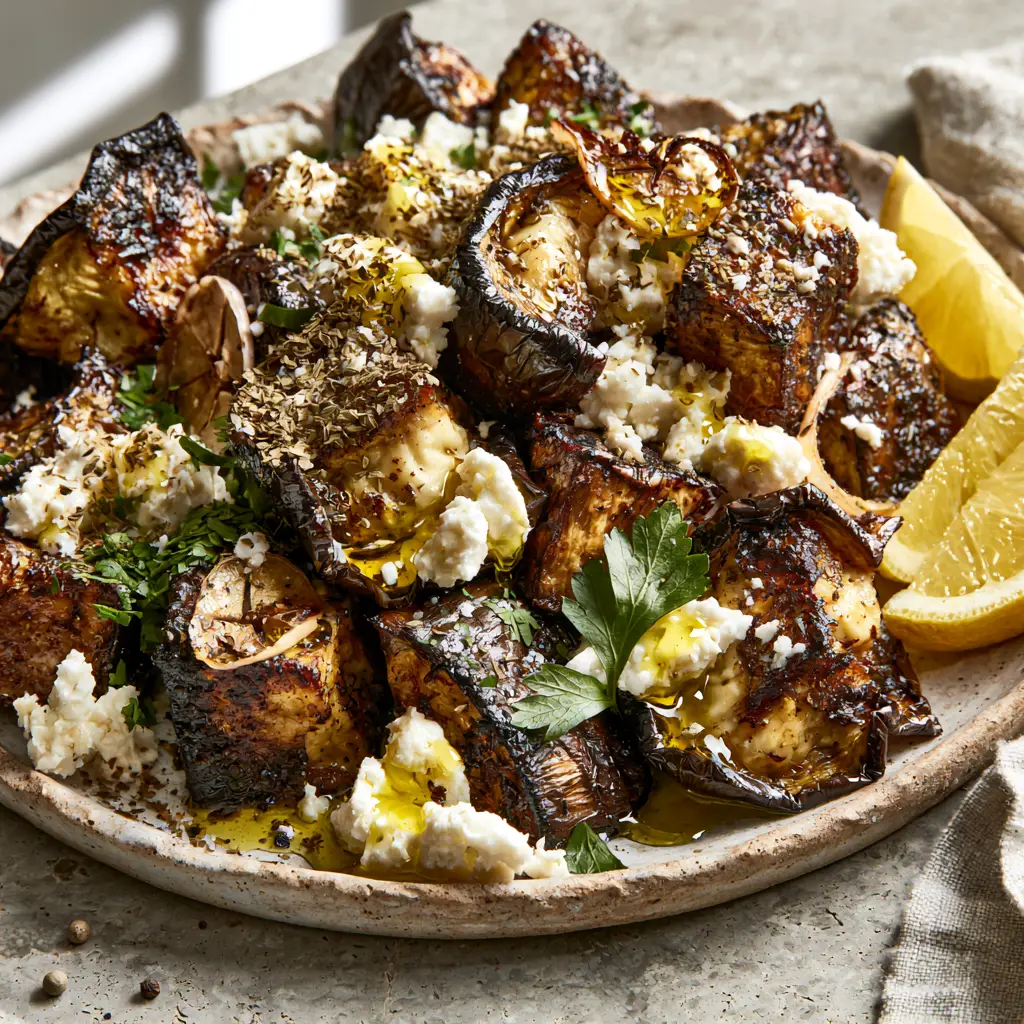
Slide the tray into the center of the oven. Roast for 25-30 minutes. At the 15-minute mark, use a spatula to gently flip the cubes. You are looking for a deep golden-brown caramelization on at least two sides.
The visual cue for “done” is when the skins look slightly blistered and the white flesh has turned a rich, translucent tan. The garlic slices should be golden and crisp, not black. If they are browning too fast, tuck them under an eggplant cube.
Phase 4: The Finishing Garnish
Transfer the hot eggplant to a rustic ceramic platter. While the eggplant is still steaming, sprinkle the crumbled feta over the top so it slightly softens but doesn’t fully melt. Follow with the fresh parsley flakes.
The final touch is the “heavy drizzle.” Take your best extra virgin olive oil and pour it in a steady stream over the entire dish. Tuck two vibrant lemon wedges into the side for serving.
Expert Tips for the Ultimate Mediterranean Side Dish
- Don’t Be Afraid of Oil: Eggplant requires a significant amount of fat to achieve that “buttery” texture. If the cubes look dry halfway through roasting, add another tablespoon of oil.
- The Temperature Matters: Anything lower than 400°F (200°C) will result in mushy eggplant. The high heat is what creates the “fried” exterior texture without the heavy oil of deep frying.
- Salt Management: Since we salt the eggplant early on and add salty feta at the end, be cautious with adding extra salt. Taste a roasted cube before the final assembly.
- Garlic Placement: To prevent the thin garlic slices from burning, toss them in the oil first so they are well-coated, which acts as a heat shield in the oven.
How to Store and Revive Your Leftovers
While this Greek style roasted eggplant is best served warm and fresh, it can be stored in an airtight container in the refrigerator for up to 3 days. Note that the eggplant will lose its crispness as it sits.
To reheat, avoid the microwave at all costs. Place the eggplant on a baking sheet in a 350°F (175°C) oven for 5-7 minutes until heated through. Add a fresh squeeze of lemon and a tiny splash of olive oil to restore the vibrancy.
What to Serve With Greek Roasted Eggplant
This dish is incredibly versatile. For a full Mediterranean spread, serve it alongside Greek Pork Meatballs or a hearty platter of Kabob Koobideh.
If you prefer a seafood pairing, the creamy texture of the eggplant complements the flakey white meat of Baked Honey Garlic Cod beautifully. For dipping, a side of Mast-o-Khiar (Persian Cucumber Dip) provides a cooling contrast to the charred eggplant.
To drink, stay refreshed with a Strawberry Lime Mocktail or a crisp glass of Assyrtiko wine.
Frequently Asked Questions
Absolutely. Simply omit the feta cheese or replace it with a vegan almond-based Greek-style ‘feta’ crumble. The eggplant and roasted garlic provide plenty of savory depth on their own.
Yes. Salting draws out excess moisture, which allows the eggplant to roast and brown instead of steaming. It also seasons the vegetable from the inside out and removes any potential bitterness.
The key is to slice the garlic very thinly and toss it thoroughly in olive oil. The oil coating protects the garlic. You can also tuck the garlic slices under the eggplant cubes to shield them from direct heat.
For this Greek style roasted eggplant, I recommend keeping the skin on. The skin provides structural integrity and becomes beautifully charred and blistered, adding a smoky flavor to the dish.
This usually happens for two reasons: overcrowding the pan or a low oven temperature. Ensure your cubes aren’t touching so air can circulate, and keep your oven at a steady 425°F (220°C).
The Perfect Greek style roasted eggplant Recipe
Greek style roasted eggplant with Feta and Roasted Garlic
Ingredients
Equipment
Method
- Toss eggplant cubes with kosher salt in a colander. Let sit for 30-40 minutes to remove moisture and bitterness.
- Rinse the salt off quickly and pat the cubes very dry with a kitchen towel. This is essential for the charring effect.
- Preheat oven to 425°F (220°C). Toss cubes with 3 tbsp olive oil, oregano, and garlic slices until coated.
- Spread on a parchment-lined sheet pan. Roast for 25-30 minutes, flipping halfway, until edges are charred and golden-brown.
- Place warm eggplant on a platter. Top with crumbled feta, parsley, and a heavy drizzle of remaining olive oil. Serve with lemon wedges.
Notes
Ensure the oven is fully preheated to 425°F before the eggplant goes in.
Join the Mediterranean Kitchen Community
This Greek style roasted eggplant is a staple in my home, bringing the flavors of the islands to my weeknight table. The contrast of the buttery roasted garlic and the salty feta is something you have to experience to believe. I would love to see your results!
Snap a photo of your platter and tag me on Instagram, or pin this recipe to your favorite board on Pinterest so you never lose it. If you enjoyed this, be sure to sign up for our newsletter for more deep-dives into Mediterranean culinary science!