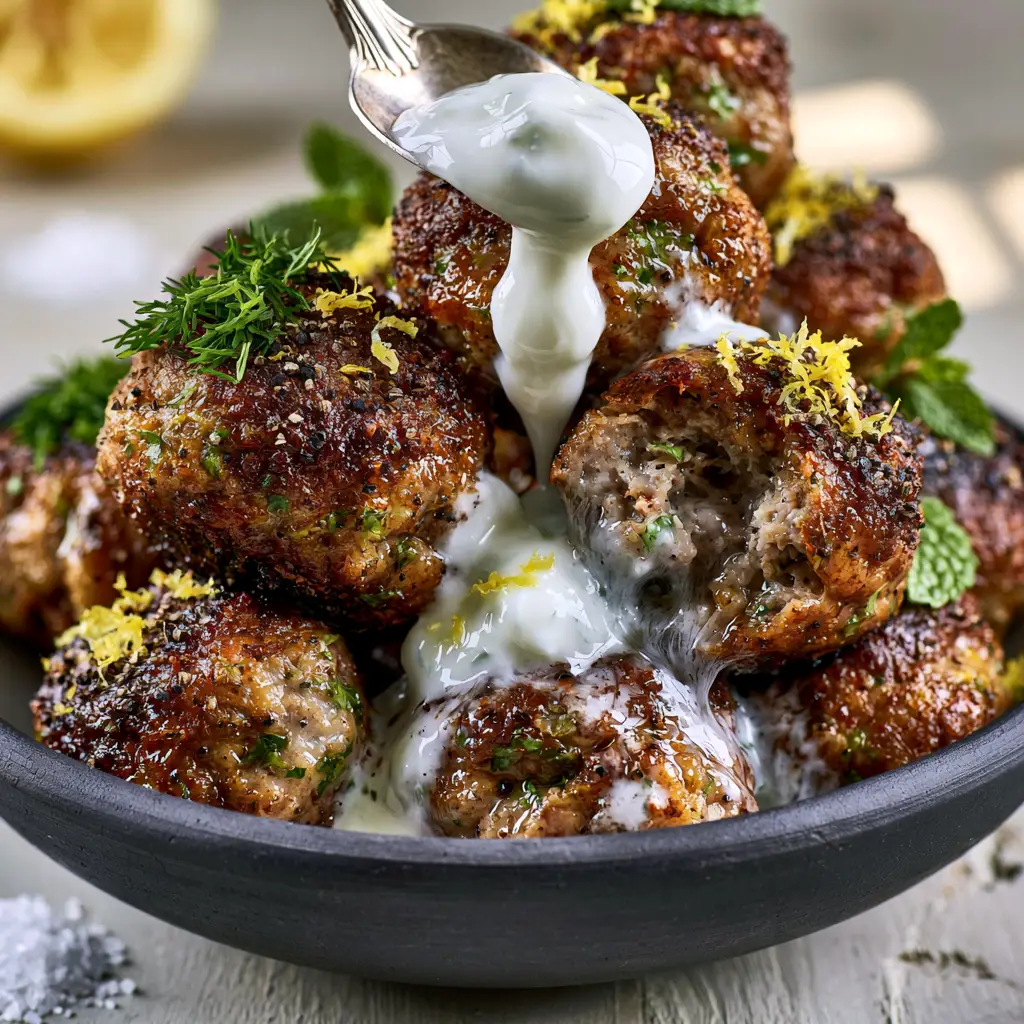
There is nothing quite like the sensory experience of biting into perfectly crafted Greek Pork Meatballs. Imagine a dark clay bowl piled high with spheres of savory pork, each boasting a deeply browned, crispy outer crust that crackles slightly before giving way to a steaming, incredibly moist interior.
The contrast between the hot, pan-seared meat and the thick, velvety white tzatziki sauce creates a Mediterranean masterpiece that satisfies every craving. Garnished with bright green dill, cooling mint, and fine yellow lemon zest, these meatballs are as beautiful to look at as they are delicious to eat.
Whether you are looking for a show-stopping appetizer or a protein-packed dinner, this recipe delivers professional results using simple, high-quality ingredients. Let’s dive into the culinary science of achieving that signature “keftedes” texture at home.
Why You Will Crave These Crispy Mediterranean Meatballs
- The Ultimate Texture Contrast: We use a high-heat pan sear to create a mahogany-brown crust while keeping the inside succulent and steaming.
- Vibrant Herbal Profile: The combination of fresh dill and minced mint leaves provides a cooling lift to the richness of the seared pork.
- Creamy & Zesty Balance: A thick, homemade tzatziki sauce clings to every cranny of the meat, accented by cracked black pepper and sea salt crystals.
- Visually Stunning Presentation: From the glistening extra virgin olive oil to the charred lemon wedges, this dish is designed to impress.
The Essential Pantry Staples for Succulent Keftedes
Ground Pork: Select a blend with at least 15-20% fat content. This ensures the “steaming juicy interior” described in our visual blueprint, as leaner meat tends to dry out during the searing process.
Panko Breadcrumbs: 1/2 cup (60g) of panko acts as a panade when combined with moisture. This prevents the meat proteins from over-tightening, resulting in a tender, light texture.
Fresh Mint and Dill: 3 tbsp (12g) of each herb, finely minced. These are non-negotiable for the authentic Greek flavor profile and provide the “visible flecks of green” seen in the final dish.
Aromatic Garlic and Onion: One small onion, grated, and three cloves of minced garlic. Grating the onion is a secret professional tip; the juices melt into the meat for unparalleled moisture.
Dried Oregano and Cumin: 1 tsp (2g) of each. These earthy spices provide the foundational warmth that defines traditional Greek pork meatballs.
Extra Virgin Olive Oil: Used for both the mix and the searing. A high-quality oil provides that beautiful “glisten” on the finished meat juices.
Must-Have Kitchen Tools for the Perfect Sear
To achieve the “deeply browned, crispy outer crust,” a heavy-bottomed cast iron skillet or stainless steel pan is essential. These materials retain heat efficiently, allowing for a consistent sear without the temperature dropping when the meat hits the surface.
You will also need a box grater for the onion and cucumber, a microplane for the fine lemon zest flakes, and a silver spoon for that iconic tzatziki drizzle seen in our modern dark clay bowl presentation.
The Step-by-Step Path to the Perfect Golden Crust
Crafting the Meatball Mixture
In a large mixing bowl, combine 1 lb (454g) of ground pork with your grated onion, minced garlic, panko, and one lightly beaten egg. Add your 1 tsp (6g) of sea salt and 1/2 tsp (3g) of cracked black pepper.
Gently fold in the minced mint and dill. Be careful not to overwork the meat; over-mixing leads to dense, rubbery meatballs rather than the “incredibly moist and succulent” interior we are aiming for.
Chilling for Structural Integrity
Form the mixture into 1.5-inch (4cm) spheres. Place them on a tray and refrigerate for at least 20 minutes. This helps the fats solidify, ensuring the meatballs hold their shape when they hit the hot oil.
Mastering the Pan-Sear
Heat 2 tbsp (30ml) of extra virgin olive oil in your skillet over medium-high heat. Once the oil shimmers, add the meatballs in batches to avoid crowding the pan.
Sear for 3-4 minutes per side, turning carefully. You are looking for a deep, even mahogany color. The sound should be a consistent, vigorous sizzle—this is the Maillard reaction creating that flavorful crust.
Whisking the Velvety Tzatziki
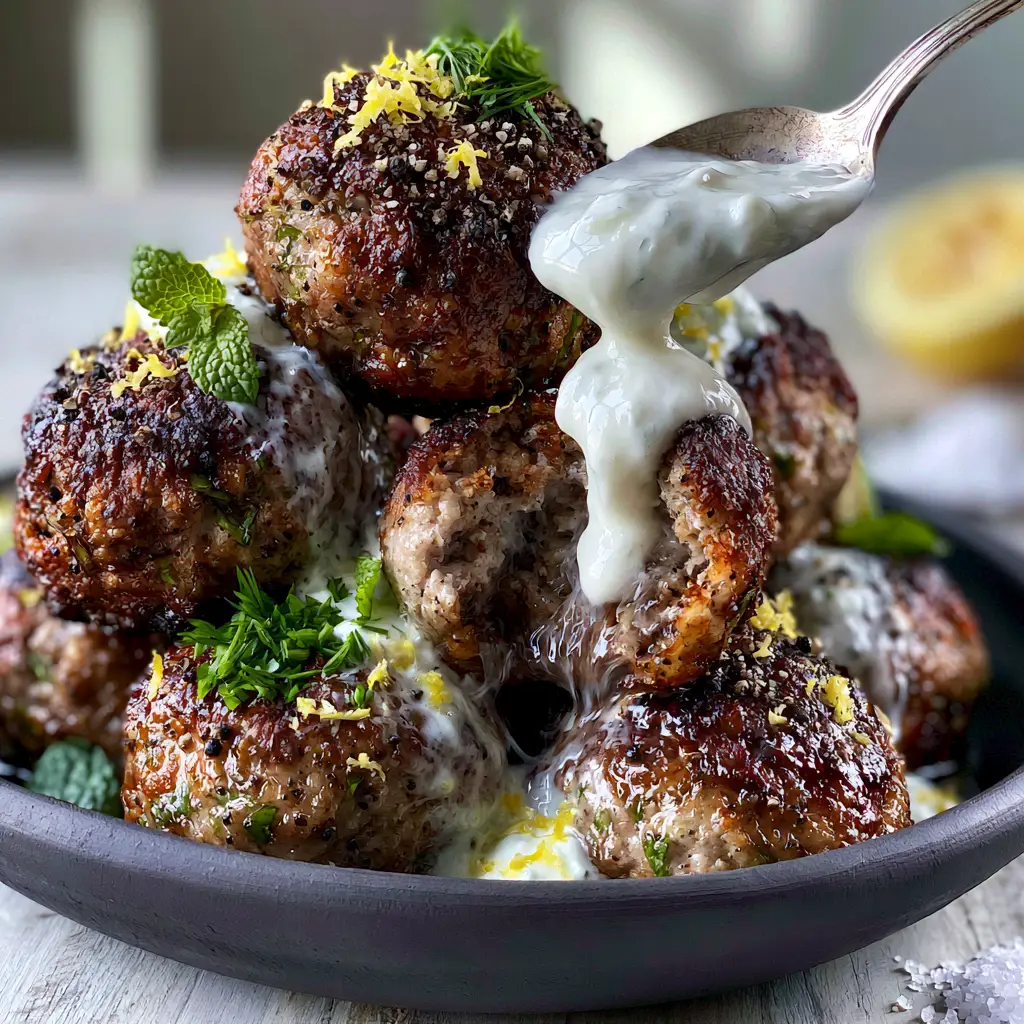
While the meat rests, combine 1 cup (240g) of thick Greek yogurt with grated, squeezed-dry cucumber, a splash of lemon juice, and a pinch of salt. The sauce should be thick enough to “cling to the crannies of the meat” as it is drizzled.
The Final Flourish
Place a lemon wedge directly into the hot skillet for 60 seconds until charred. This caramelizes the sugars and makes the juice extra sweet for squeezing over the finished Greek Pork Meatballs.
Expert Tips for Success
- The Moisture Secret: Always squeeze the liquid out of your grated cucumber and onion. This prevents the meatballs and sauce from becoming watery.
- Searing Temperature: If your meatballs aren’t browning within 3 minutes, turn up the heat. A slow cook will result in a dry interior before the crust forms.
- Internal Cues: To check for doneness, one meatball can be broken open. It should be steaming and opaque throughout, with juices running clear.
- The Garnish Layer: Don’t skip the lemon zest flakes; the citrus oils cut through the richness of the pork and yogurt perfectly.
The Best Ways to Store and Reheat
Leftover Greek Pork Meatballs can be stored in an airtight container in the refrigerator for up to 4 days. To maintain that crispy exterior, avoid the microwave if possible.
For the best results, reheat them in a dry skillet over medium heat or in an air fryer at 350°F (175°C) for 5 minutes. The tzatziki should always be stored separately and served cold to maintain the temperature contrast.
What to Serve With This Mediterranean Feast
These meatballs are incredibly versatile. For a full mezze platter, pair them with a vibrant Greek lemon-oil sauce or serve them alongside a bowl of Persian cucumber yogurt for extra dipping options.
If you’re looking for a vegetable side, the smoky notes of roasted eggplant complement the seared pork beautifully. For a refreshing finish to your meal, a strawberry lime mocktail provides the perfect citrusy zing.
Common Questions About Greek Pork Meatballs
You can bake them at 400°F (200°C) for 15-20 minutes, but you will miss out on the signature crispy, deeply browned crust achieved by pan-searing.
Yes! Ground lamb is a traditional alternative. It has a higher fat content and stronger flavor, which pairs beautifully with the mint and dill in this recipe.
Chilling the formed meatballs for at least 20 minutes before searing helps the binder (egg and breadcrumbs) set, ensuring they stay perfectly round.
Traditional tzatziki uses Greek yogurt (dairy), but you can substitute it with a thick almond or soy-based unsweetened yogurt for a dairy-free version.
The combination of using grated onion (which adds liquid) and panko breadcrumbs (which hold that moisture) creates a steaming, succulent center.
The Ultimate Greek Pork Meatballs Recipe Card
Greek Pork Meatballs with Zesty Tzatziki and Fresh Herbs
Ingredients
Equipment
Method
- In a large bowl, mix ground pork, breadcrumbs, egg, grated onion, garlic, and herbs. Season with salt and pepper.
- Form into 1.5-inch balls and refrigerate for 20 minutes to set the shape.
- Heat olive oil in a skillet over medium-high. Sear meatballs until a deep browned crust forms on all sides (8-10 mins total).
- Add lemon wedges to the pan for the last minute to char.
- Combine yogurt, cucumber, and lemon juice. Whisk until velvety.
- Drizzle sauce over meatballs and garnish with extra dill, mint, and lemon zest.
Notes
Ensure the skillet is piping hot before adding the meat to get that crispy exterior.

Closing & Call to Action
These Greek Pork Meatballs bring the vibrant, sun-drenched flavors of the Mediterranean straight to your kitchen. With their crispy crust and juicy herb-filled centers, they are guaranteed to become a new family favorite. The combination of cooling tzatziki and zesty lemon creates a balance that is simply addictive.
If you enjoyed this recipe, please leave a comment below and let us know how your sear turned out! Don’t forget to sign up for our newsletter for more culinary deep-dives and share this recipe to your favorite boards on Pinterest.