When it comes to Greek appetizer recipes, nothing captures the spirit of Mediterranean hospitality quite like an overflowing, vibrant meze platter. Imagine a rustic wooden board piled high with textures and colors: the velvety smoothness of hummus, the salty bite of feta, and the crunch of garden-fresh vegetables. This isn’t just a snack; it’s a visual and culinary journey that invites everyone to the table.
The beauty of these Greek appetizer recipes lies in their balance of simplicity and sophistication. By focusing on high-quality ingredients and specific preparation techniques, you can transform humble pantry staples into a centerpiece that looks like a professional chef prepared it in a sun-drenched taverna. Whether you are hosting a summer garden party or a cozy indoor gathering, this platter is designed to impress.
In this guide, we will delve into the forensic details of creating the perfect meze spread. We will explore the science of the creamiest hummus, the secret to perfectly charred pita bread, and the art of “abundant plating” to ensure your board looks as good as it tastes. Let’s bring the bright, bold flavors of Greece into your kitchen with these essential Greek appetizer recipes.
Why This Greek Meze Platter is the Ultimate Crowd-Pleaser
- Symphony of Textures: From the oily sheen of stuffed grape leaves to the crisp snap of Persian cucumbers, every bite offers a new sensory experience.
- Visual Masterpiece: Following our visual blueprint ensures a “wow” factor with deep olive oil swirls and bright sprigs of fresh dill that mimic a professional food shoot.
- Nutritionally Balanced: These Greek appetizer recipes are naturally packed with healthy fats, plant-based proteins, and fiber-rich vegetables.
- Customizable and Scalable: Easily adapt the quantities for an intimate date night or a massive holiday celebration without losing the “overflowing” aesthetic.
Essential Elements for a Vibrant Mediterranean Spread
To achieve the specific visual and flavor profile required for elite Greek appetizer recipes, every ingredient serves a dual purpose: aesthetic appeal and culinary function. Here is what you will need for your board.
Cooked Chickpeas (15 oz / 425g): These form the protein-rich base of our hummus; using high-quality canned or home-cooked beans ensures a buttery texture. We recommend peeling the skins for the smoothest possible finish.
Tahini (1/2 cup / 120ml): This sesame paste provides the essential nuttiness and “fatty” mouthfeel that makes hummus addictive. Look for a brand that is pourable and smooth, not thick and chalky.
Extra Virgin Olive Oil (1/4 cup / 60ml + for drizzling): High-quality Greek olive oil provides a peppery finish and creates that iconic golden swirl in the center of the bowl. It also adds a necessary oily sheen to the grape leaves.
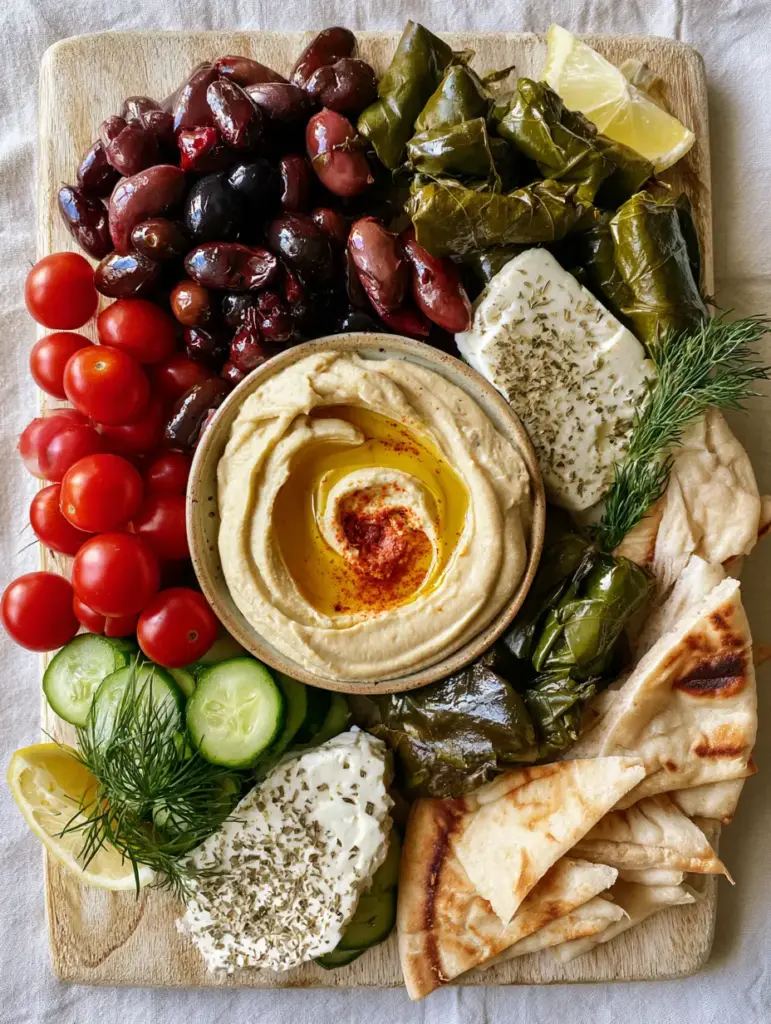
Feta Cheese (7 oz / 200g): For these Greek appetizer recipes, we use large blocks of sheep’s milk feta. Splinkled with dried oregano, these white blocks provide a sharp, salty contrast to the creamy dip.
Persian Cucumbers (3-4 pieces): These are preferred over English cucumbers for their thinner skin and smaller seeds. They provide the “crisp sliced” element that holds its shape on the board.
Cherry Tomatoes (1 cup / 150g): Bright red and juicy, these clusters add a pop of color and acidity to cleanse the palate between bites. They should be served whole or in small clusters for a rustic look.
Kalamata Olives (1/2 cup / 75g): Glossy and dark purple, these olives bring a fermented, briny depth to the platter. Their almond shape is a hallmark of authentic Greek spreads.
Stuffed Grape Leaves (Dolmades) (6-8 pieces): These provide a savory, herbaceous element. Their vibrant green color and slight oily sheen are essential for the “abundant” visual prompt.
Pita Bread (3-4 rounds): Sliced into triangles, these must be toasted until light charred marks appear on the edges. This adds a smoky flavor and a sturdy structure for scooping hummus.
Fresh Dill & Lemon Wedges: These are your “functional garnishes.” Dill adds a feathery texture and herbal aroma, while lemon wedges allow guests to adjust the acidity of their bites.
Foundational Additives: You will also need 2 cloves of garlic for the hummus, a pinch of smoked paprika for the visual garnish, and ice water (3 tbsp / 45ml) to achieve the ultimate creamy texture through emulsification.
Kitchen Tools for a Professional Presentation
Achieving the look of an elite food blog requires a few specific tools. To prepare these Greek appetizer recipes, you will need a high-speed food processor to emulsify the hummus into a cloud-like consistency. A shallow ceramic bowl is essential for showcasing the deep olive oil swirl and paprika dusting.
For the bread, a cast-iron skillet or a grill pan is the best way to achieve those “light charred marks” mentioned in our visual prompt. Finally, use a large, rustic light wood board (approx. 18×12 inches) to assemble the meze. The contrast between the wood and the colorful ingredients creates that “handheld smartphone photo” aesthetic that feels authentic and inviting.
Step-By-Step: Crafting Your Greek Masterpiece
Perfecting the Silky Smooth Hummus
The cornerstone of Greek appetizer recipes is a hummus that is light as air. Start by processing 2 cloves of garlic with 1/4 cup (60ml) of lemon juice and a pinch of salt. Let this mixture sit for 10 minutes to “mellow” the garlic’s bite before straining out the solids if you prefer a perfectly smooth dip.
Add the tahini and pulse until thick and creamy. Slowly drizzle in 3 tbsp (45ml) of ice water while the processor is running; you will see the mixture turn from a beige paste to a pale, fluffy cream. Add your chickpeas and process for at least 3-5 minutes. This extended processing time is the secret to a professional texture. Finish by adding a tablespoon of olive oil for extra richness.
Achieving the Perfect Char on Toasted Pita
Take your pita rounds and slice them into even triangles. Lightly brush both sides with a tiny amount of olive oil and a sprinkle of dried oregano. Heat a dry skillet over medium-high heat until it begins to shimmer with heat.
Place the pita triangles in the pan in a single layer. Toast for 1-2 minutes per side until light charred marks appear on the edges. The bread should be warm and flexible in the center but crisp on the edges. This charred element is a crucial visual cue from our Midjourney prompt and provides a smoky depth to the Greek appetizer recipes.
The Art of Platting for Abundance
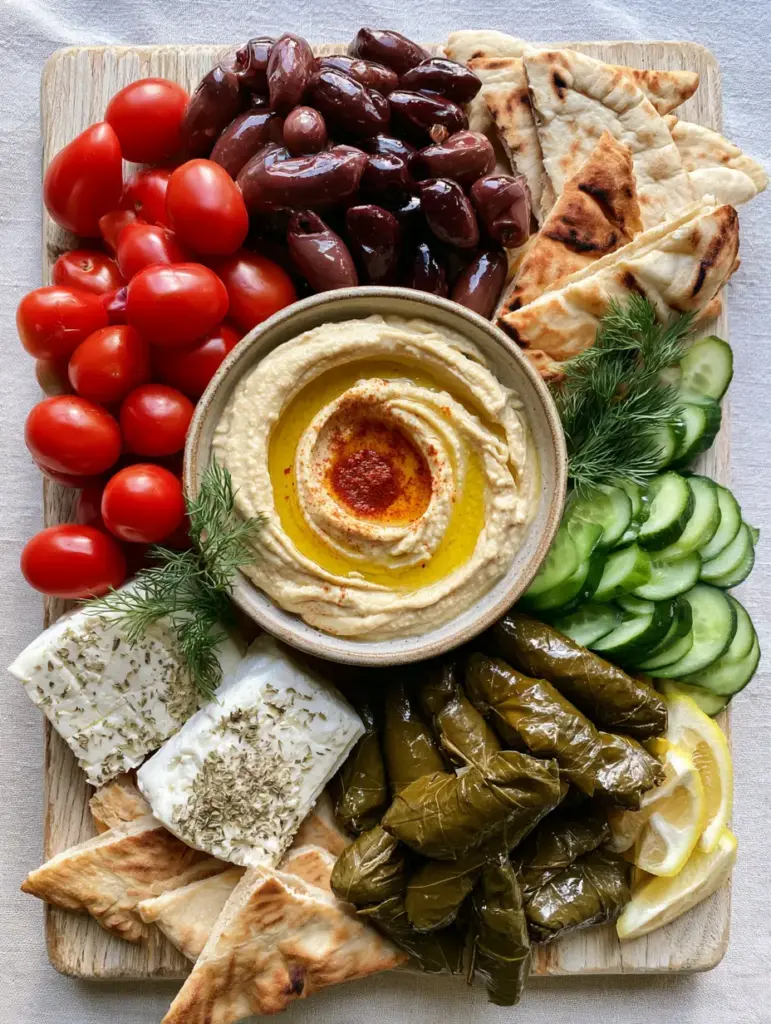
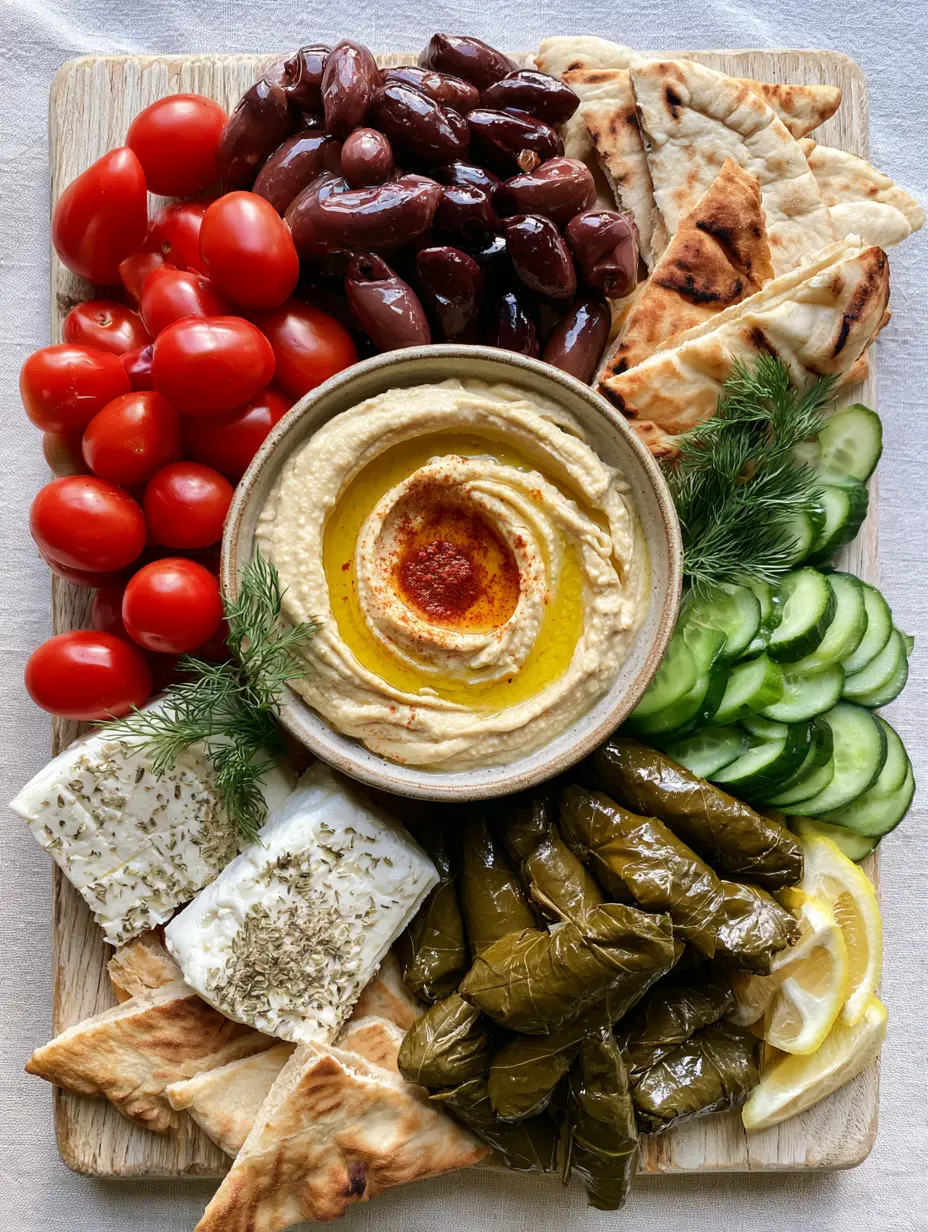
To assemble the board, place the shallow ceramic bowl of hummus slightly off-center. Use the back of a spoon to create a deep, circular swirl in the dip. Fill this channel with golden olive oil and finish with a deliberate pinch of red smoked paprika in the center. This creates the “visual bridge” that draws the eye to the middle of the board.
Surround the bowl with “clusters.” Instead of neatly lining things up, create piles. Place a pile of glossy kalamata olives next to a cluster of bright red cherry tomatoes. Lay the large blocks of white feta nearby, ensuring they are generously sprinkled with dried oregano. Tuck the green stuffed grape leaves into any gaps, and lean the toasted pita triangles against the edges of the board for height.
Expert Tips for Success
- Temperature Control: Serve the hummus at room temperature but the cucumbers and tomatoes chilled. This temperature contrast makes the platter feel fresher and more dynamic.
- The Ice Water Secret: Never skip the ice water in the hummus. It flash-emulsifies the tahini fat, creating a lighter color and a much fluffier mouthfeel than warm water or oil alone.
- Herbaceous Aromatics: Bruise the dill sprigs slightly before placing them on the board to release their essential oils, enhancing the sensory experience for your guests.
- Feta Quality: Always buy feta in brine. Dry-packed feta can be rubbery; brine-soaked blocks are creamier and crumble into beautiful, rustic chunks for your Greek appetizer recipes.
Storage, Reheating & Freezing
While these Greek appetizer recipes are best enjoyed fresh, you can store components separately. The hummus will last in an airtight container in the refrigerator for up to 5 days. If the oil separates, simply give it a vigorous stir before re-plating.
Vegetables should be sliced just before serving to prevent wilting. Stuffed grape leaves can be stored in their oil for up to a week. We do not recommend freezing the hummus, as the emulsion may break, resulting in a grainy texture. To reheat the pita, a quick 30-second zap in a dry pan will restore its soft-yet-charred texture.
What to Serve With This Meze Spread
This platter is a complete experience on its own, but it also serves as a fantastic starter for a larger Mediterranean feast. If you want to add more protein, consider pairing it with Greek pork meatballs or succulent joojeh kebabs for a cross-cultural fusion.
For a vegetarian-focused dinner, serve this alongside Greek-style roasted eggplant or a refreshing bowl of Persian yogurt and cucumber dip. If you’re looking for a bright finish to the meal, a strawberry lime mocktail provides the perfect citrusy counterbalance to the salty feta and rich hummus.
Frequently Asked Questions
Yes! You can prepare the hummus, slice the cheese, and wash the vegetables 24 hours in advance. However, wait to toast the pita and assemble the board until just before serving to maintain freshness and texture.
Use a dry cast-iron skillet or grill pan on medium-high heat. The high residual heat of the cast iron creates those beautiful dark marks quickly without drying out the interior of the bread.
If you can’t find dolmades, substitute with marinated artichoke hearts or roasted red peppers. They provide a similar oily, savory element that complements the other items on the board.
The secret is a combination of two things: peeling the chickpeas and using ice water during the emulsification process. The ice water flash-chills the fat in the tahini, creating a light, aerated texture.
Always look for Greek feta made from sheep’s milk (or a sheep and goat milk blend) sold in brine. It has a much creamier texture and a more complex, tangy flavor than cow’s milk ‘feta-style’ cheeses.
The Ultimate Greek Meze Platter Recipe
Greek Appetizer Recipes: The Ultimate Abundant Meze Platter
Ingredients
Equipment
Method
- In a food processor, combine tahini and lemon juice. Process for 1 minute until whipped and pale. Add garlic, salt, and ice water; process until fluffy.
- Add chickpeas and process for 3-5 minutes until completely smooth and creamy. Adjust salt to taste.
- Heat a skillet over medium-high. Lightly oil pita triangles and toast for 1-2 minutes per side until light charred marks appear on the edges.
- Spread hummus in a shallow bowl with a deep olive oil swirl and paprika. Arrange feta, olives, tomatoes, cucumbers, and grape leaves in abundant piles on a wooden board. Garnish with dill and lemon.
Notes
Brush the pita with a little dried oregano before toasting for extra flavor.
Closing & Call to Action
Creating an abundant meze platter using these Greek appetizer recipes is about more than just food; it’s about creating a moment of connection. The combination of textures, from the charred pita to the silky hummus, ensures that every guest finds something to love. We hope this guide inspires you to build your own masterpiece on a rustic wood board tonight.
If you enjoyed these Greek appetizer recipes, please leave a comment below and let us know your favorite addition to a meze board! Don’t forget to sign up for our newsletter for more culinary forensics and SEO-optimized kitchen secrets. If you’re looking for more inspiration, follow us on Pinterest and save this recipe to your “Mediterranean Favorites” board!