There is something inherently communal and soulful about traditional Arab breakfast recipes. It is not just a meal; it is a vibrant tapestry of colors, textures, and aromas that invite you to linger over the table with family and friends.
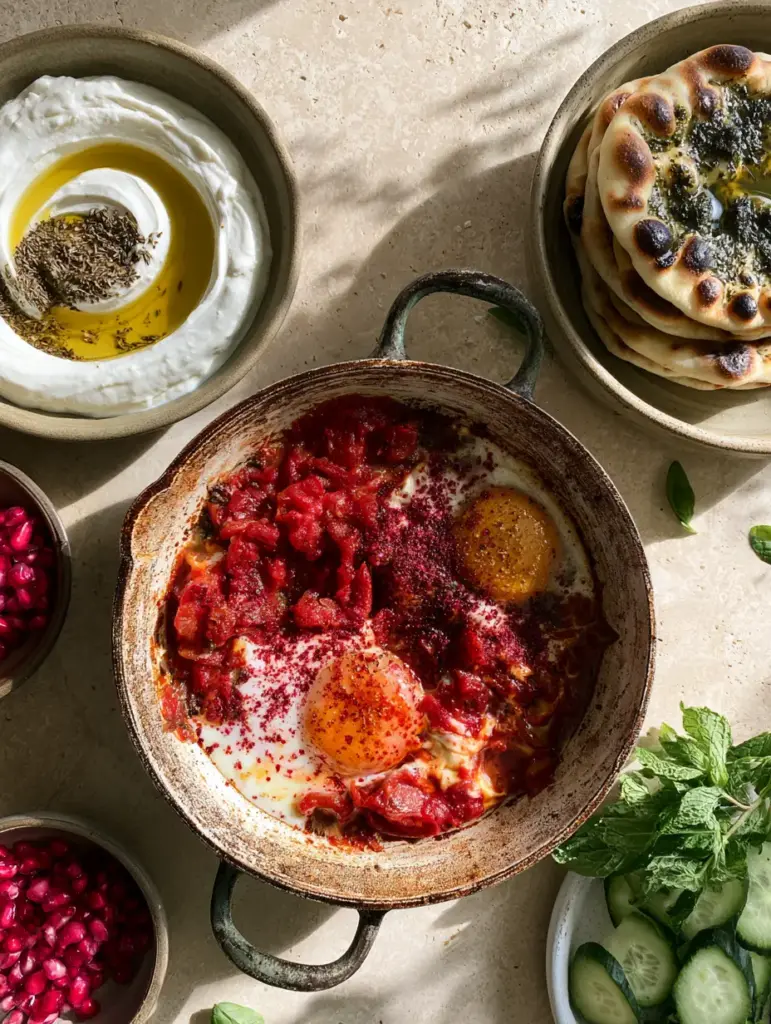
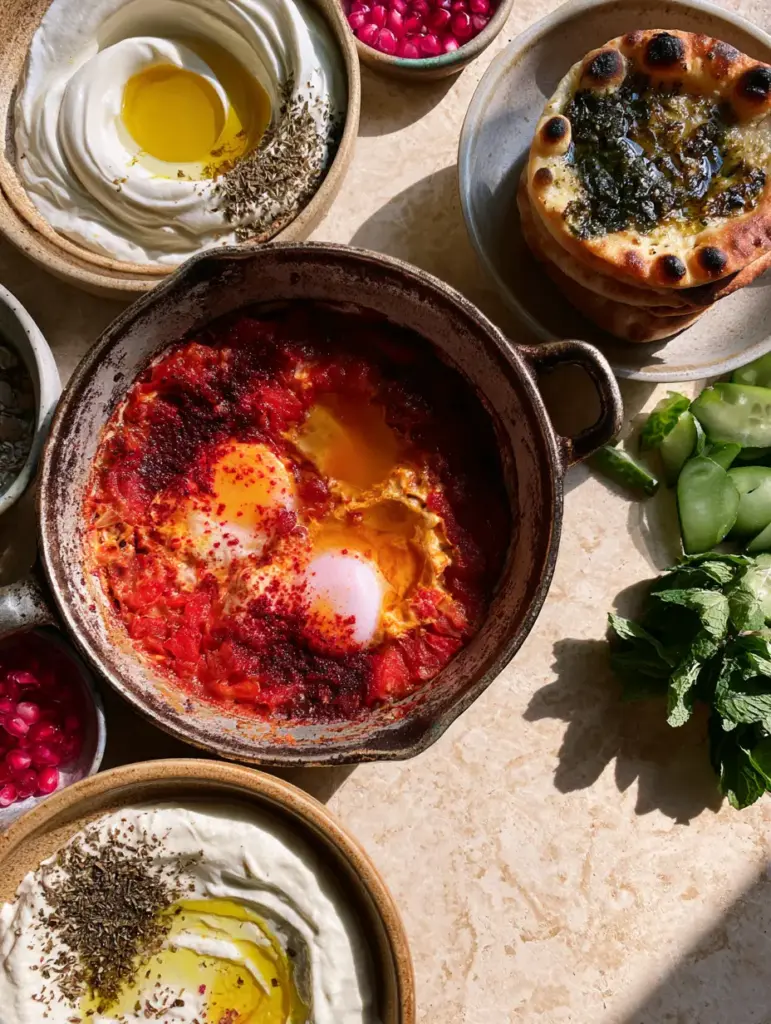
Imagine the soft morning side-light from a nearby window illuminating a weathered cast iron skillet. Inside, a bubbling crimson sauce cradles perfectly poached eggs with shimmering, runny golden yolks, all dusted with a hint of tart sumac.
This guide will show you how to recreate this breathtaking spread, from the thick swirls of labneh to the charred edges of homemade manakish. We are diving deep into the culinary science that makes these dishes world-renowned for their balance and depth.
Why These Arab Breakfast Recipes Are the Ultimate Morning Feast
- Textural Harmony: You get the crunch of toasted pine nuts and sliced Persian cucumbers against the velvet-smooth strained labneh.
- Aromatic Spices: The use of dried zaatar and sumac provides an earthy, citrusy backbone that elevates simple ingredients.
- Visually Stunning: The contrast of magenta pomegranate arils against deep red tomato sauce and bright green mint makes this a centerpiece meal.
- Scientifically Balanced: The healthy fats from extra virgin olive oil help your body absorb the vitamins in the fresh vegetables and herbs.
The Anatomy of an Authentic Levantine Breakfast Table
To achieve the visual and flavorful results seen in our master blueprint, you need specific building blocks. Each ingredient serves a purpose, whether it’s for structural integrity or a punch of acidity.
Strained Greek Yogurt or Labneh: 2 cups (480g) of thick yogurt are essential. This provides the cooling, creamy base that offsets the heat of the shakshuka.
Vine-Ripened Tomatoes and Red Bell Peppers: You will need 4 large tomatoes (approx. 800g) and 2 red peppers. These form the bubbling, chunky base that must be reduced until thick and jammy.
Large Farm-Fresh Eggs: Use 4 to 6 eggs at room temperature. Fresh eggs hold their shape better when poached directly in the sauce, ensuring those glorious runny yolks.
Wheat Manakish Flatbreads: These are the “utensils” of the meal. They should have charred, bubbly edges and a generous coating of zaatar and oil.
Extra Virgin Olive Oil (EVOO): High-quality oil is non-negotiable. It creates that signature “pool” in the labneh and provides the fat needed to blister the vegetables.
Aromatic Accents: Pomegranate arils for sweetness, toasted pine nuts for richness, and sumac for a lemony finish. Fresh mint and sliced cucumbers provide the essential crispness.
Essential Equipment for a Pro-Level Spread
To cook these Arab breakfast recipes like a seasoned chef, your choice of vessel matters. A weathered cast iron skillet is the gold standard for shakshuka because of its heat retention.
You will also need a fine-mesh sieve and cheesecloth if you are straining your own labneh from scratch. Small ceramic bowls are ideal for the side dishes to create that beautiful “spread” aesthetic.
A high-heat oven or a pizza stone is helpful for achieving the charred edges on your manakish. Finally, a sharp chef’s knife is required for the precise slicing of Persian cucumbers and fresh mint.
Mastering the Sizzle: Creating the Shakshuka Base
Step 1: Blistering the Base Vegetables
Heat 3 tbsp (45ml) of extra virgin olive oil in your cast iron skillet over medium-high heat. Add your diced red bell peppers and cook until they begin to soften and develop slight charred spots.
Add the chopped tomatoes and a pinch of kosher salt. Use your wooden spoon to crush the tomatoes as they release their juices, creating a chunky, bubbling texture.
Allow the sauce to simmer for 15-20 minutes. You are looking for a visual cue where the oil starts to separate from the tomato solids, indicating the water has evaporated and the flavor is concentrated.
Step 2: Poaching the Eggs to Perfection
Use the back of a spoon to create small wells in the thick tomato sauce. Carefully crack an egg into each well, ensuring the yolk remains intact.
Cover the skillet with a lid for 3-5 minutes. Watch closely: you want the whites to be opaque and set, but the yolks must remain shimmering and runny to the touch.
As soon as they reach this stage, remove from heat. The residual heat of the cast iron will continue to cook them slightly, so pull them early for that perfect “pour-over” effect.
Assembling the Labneh and Artisanal Sides
Creating the Labneh Swirl
Take your thick, strained labneh and spread it into a shallow ceramic bowl. Use the back of a spoon to create a deep, circular swirl in the center.
Fill this “moat” with a generous pool of extra virgin olive oil. Sprinkle 2 tbsp (12g) of dried zaatar herb mix directly into the oil for a fragrant infusion.
This technique isn’t just for looks; the oil protects the labneh from drying out while the zaatar flavors every bite. Much like a classic lemon-oil dressing, the quality of oil here defines the dish.
The Final Flourish: Garnishes and Textures
Scatter bright magenta pomegranate arils over the entire spread. Their pop of sweetness cuts through the savory richness of the eggs and yogurt.
Add a handful of toasted pine nuts for a buttery crunch. These should be golden-brown and fragrant, having been tossed in a dry pan for just 2 minutes.
Slice your Persian cucumbers into thin rounds and arrange them with fresh mint leaves. These cool elements are the perfect palate cleanser between bites of warm manakish.
Expert Tips for a Visual Masterpiece
- The Sumac Dusting: Always apply sumac at the very end. Its deep crimson color is heat-sensitive and looks most vibrant when fresh.
- Charring the Bread: If using store-bought manakish, toast them directly over a gas flame for 10 seconds to get those authentic charred, bubbly edges.
- Yolk Insurance: Crack your eggs into a small ramekin first before sliding them into the sauce. This prevents shells from ruining your shakshuka.
- Mint Care: Keep your mint sprigs in ice water until the moment of serving to ensure they look “high-definition” fresh on the plate.
Elevating Your Brunch with Vibrant Pairings
While these Arab breakfast recipes are a meal in themselves, they pair beautifully with other Mediterranean staples. For a larger crowd, consider adding a smoky roasted eggplant dish to the table.
If you enjoy the cooling effect of the labneh, you might also love a bowl of traditional Persian cucumber and yogurt dip as an additional side. The herbal notes in both dishes complement each other perfectly.
For those who want to transition this brunch into a heavier lunch, serving these flavors alongside tender saffron chicken kebabs creates a truly royal feast.
Storage, Reheating, and Make-Ahead Magic
The labneh can be made up to 5 days in advance and stored in an airtight container in the fridge. In fact, the flavor often improves after 24 hours.
The shakshuka base (tomatoes and peppers) can be prepared ahead of time, but the eggs must be poached fresh. Reheated poached eggs often become rubbery and lose their runny centers.
Store leftover manakish in a sealed bag at room temperature. To reheat, avoid the microwave; use a toaster oven to maintain the crisp, charred texture of the crust.
Frequently Asked Questions
Cover the skillet with a lid. This traps steam which cooks the tops of the whites quickly while the yolks remain protected by the sauce and stay liquid.
Zaatar is a blend typically consisting of dried wild thyme, hyssop, toasted sesame seeds, sumac, and salt. It provides an earthy, nutty profile essential to the cuisine.
You can use high-quality pita bread or sourdough. Brush them with olive oil and zaatar, then toast them in a hot pan until they develop charred, bubbly edges.
The secret is time and salt. Straining full-fat Greek yogurt through cheesecloth for at least 24 hours with a pinch of salt removes the whey, resulting in a spreadable, thick texture.
Sumac adds a unique, astringent, lemony tartness that cuts through the richness of eggs and olive oil without adding extra liquid like lemon juice would.
The Complete Arab Breakfast Spread: Shakshuka & Labneh

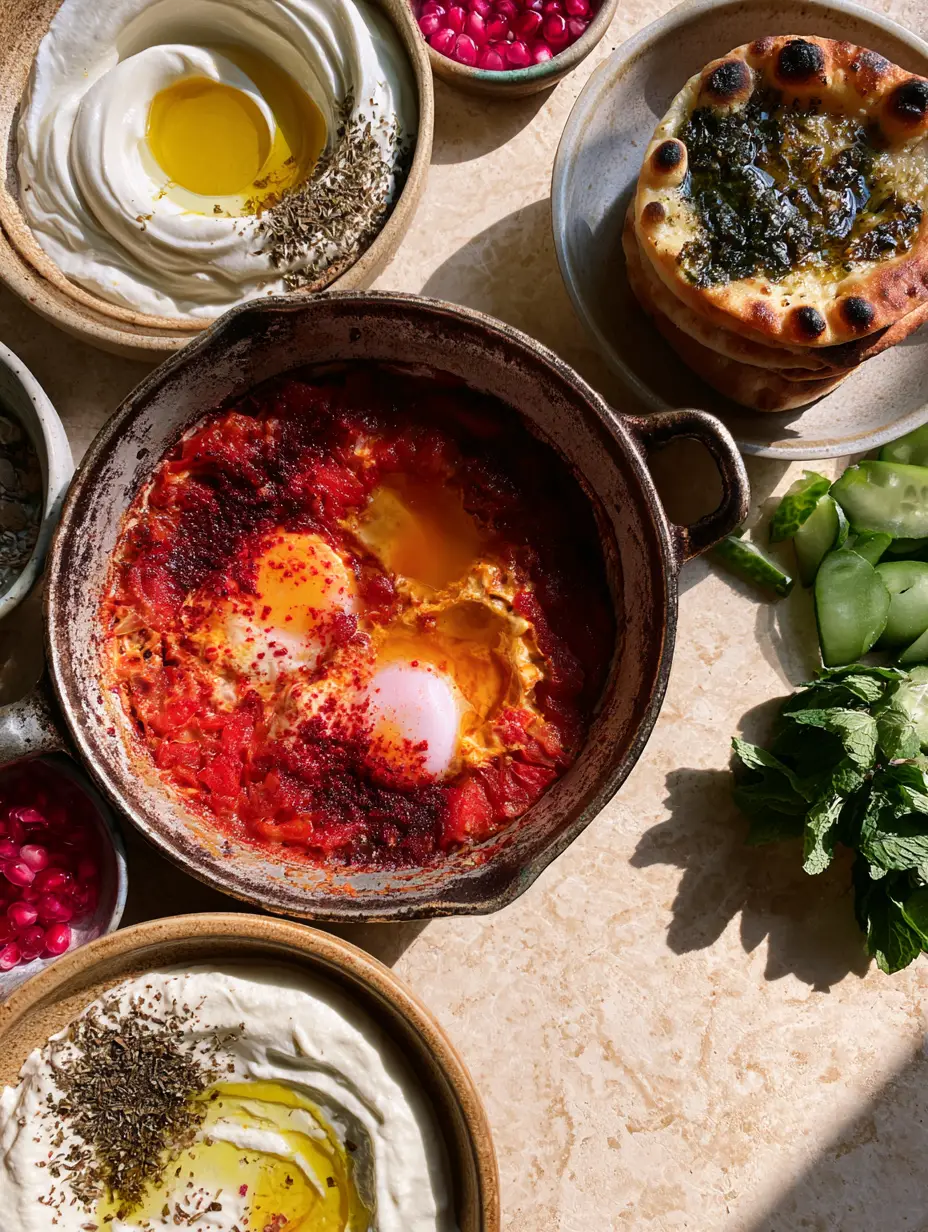
Arab Breakfast Recipes: The Ultimate Spread for a Slow Weekend Brunch
Ingredients
Equipment
Method
- In a cast iron skillet, heat 3 tbsp olive oil. Add diced bell peppers and sauté until blistered. Add tomatoes and salt, simmering until a thick, bubbling sauce forms (about 15-20 mins).
- Make wells in the sauce. Crack eggs into wells. Cover and cook for 3-5 minutes until whites are set but yolks remain runny and golden.
- Spread labneh in a bowl, create a deep swirl, and fill with a pool of olive oil and a dusting of zaatar.
- Dust the shakshuka with sumac. Arrange sliced cucumbers, mint, pomegranate arils, and toasted pine nuts around the table. Serve with warm, charred manakish.
Notes
Toast manakish over an open flame for 10 seconds to get those visual charred bubbles.
Closing & Call to Action
Creating this spread of Arab breakfast recipes is a meditative process that rewards you with a feast for the senses. From the first dip of charred manakish into a golden yolk to the last bite of zesty labneh, it is a culinary journey you won’t soon forget.
If you loved this recipe, please leave a comment below and tell us how your brunch turned out! Don’t forget to follow us on Pinterest for more visual recipe inspiration and share your photos with the community.
Sign up for our newsletter to receive the latest Mediterranean and Persian-inspired recipes delivered straight to your inbox every week!