This Baba Ganoush is the only recipe you will ever need to achieve that restaurant-quality, ultra-thick, and velvety texture right in your own kitchen. If you have been searching for a dip that perfectly balances the deep, charred musk of roasted eggplant with the bright acidity of fresh lemon and the nutty richness of tahini, you have arrived. This isn’t just a side dish; it is a centerpiece of Mediterranean craftsmanship.
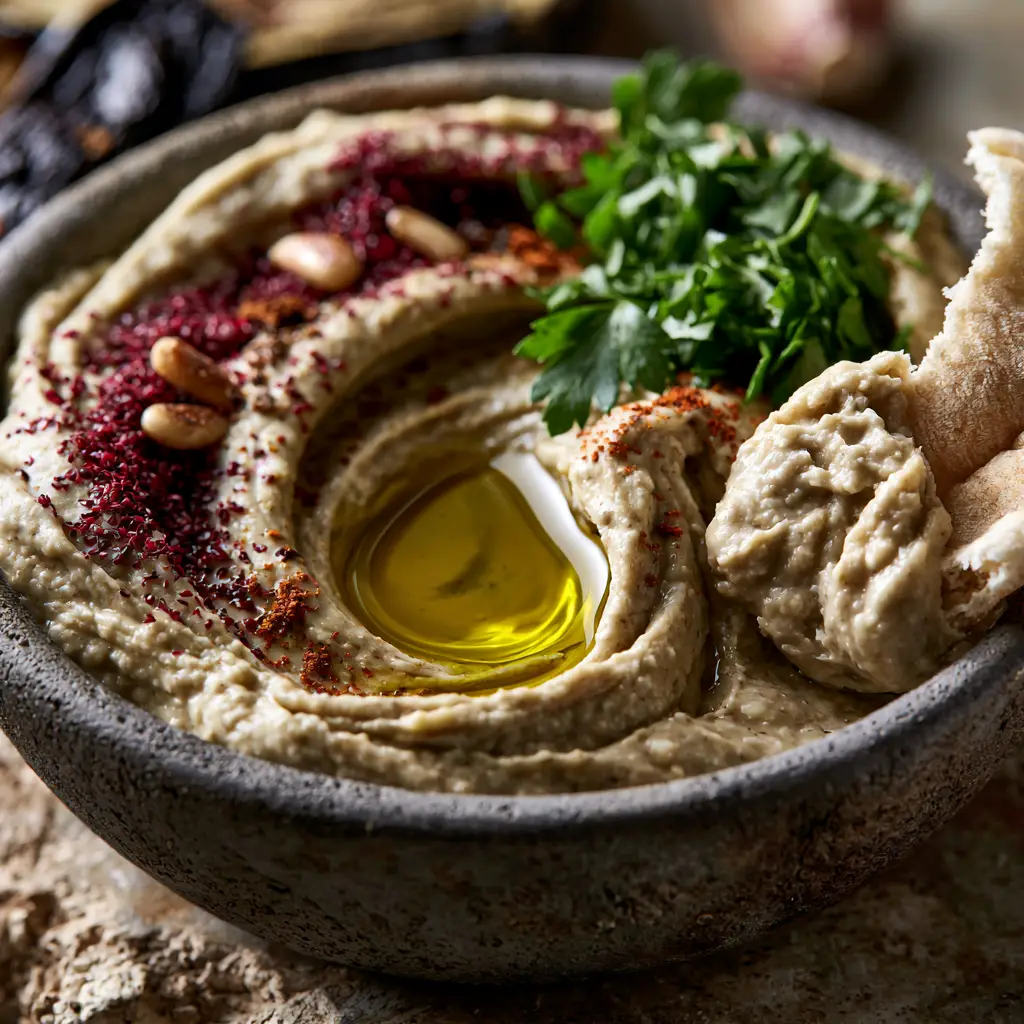
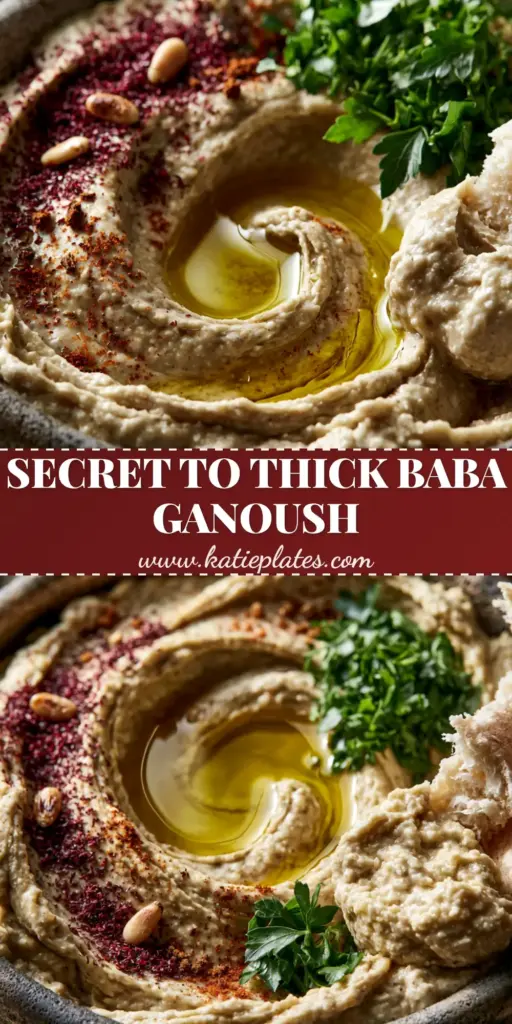
When you look at the Baba Ganoush served in high-end levantine restaurants, it has a specific visual gravity. It isn’t runny or translucent; it is thick enough to hold deep, artisanal swirls that cradle pools of golden olive oil. Our method focuses on strained roasted eggplant pulp to ensure every bite is concentrated in flavor and luxurious in mouthfeel. Whether you are serving this alongside a Veggie-Packed Hawawshi or as part of a grand mezze platter, this recipe delivers.
Why This Authentic Baba Ganoush Stands Out
- Ultra-Thick Texture: By aggressively straining the eggplant, we remove excess water, leaving behind a dense, spreadable pulp that holds its shape.
- Deeply Smoky Profile: We utilize a high-heat charring method to ensure the blistered tomatoes and charred eggplant skins infuse the flesh with an outdoor-grill flavor.
- Perfectly Balanced Garnishes: The contrast of crimson sumac, toasted pine nuts, and bright parsley creates a symphony of textures and colors.
- Global Appeal: This dip pairs beautifully with everything from Grilled Octopus to simple, warm pita bread.
The Anatomy of the Best Baba Ganoush Ingredients
To make the best Baba Ganoush, every ingredient must serve a specific culinary purpose. We aren’t just tossing things in a blender; we are building layers of flavor. Using high-quality fats and fresh aromatics is the difference between a mediocre dip and a viral success.
Roasted Eggplant (2 large / approx. 900g): You want Globe or Italian eggplants. Their high moisture content allows them to steam internally while the skins char, creating that signature smoky strained roasted eggplant pulp.
Thick Tahini Paste (1/3 cup / 80ml): Look for a brand that is smooth and not overly bitter. The thick tahini paste acts as the emulsifier, binding the eggplant fibers into a cohesive, velvety dip.
Fresh Lemon Juice (3 tablespoons / 45ml): Bottled juice will not suffice. The citric acid in fresh lemon brightens the heavy, smoky notes and helps maintain the light color of the dip.
Garlic (2-3 cloves): We use minced garlic to provide a sharp, aromatic backbone. If you prefer a milder flavor, you can roast the garlic cloves along with the eggplant.
Extra Virgin Olive Oil: This is used both in the dip and as an extra virgin olive oil swirl on top. Use a high-quality, peppery oil for the best results.
The Garnish Suite: Toasted pine nuts add a buttery crunch, while ground sumac provides a tart, floral finish. A dusting of smoked paprika enhances the visual depth and reinforces the smoky theme.
The Science of the Perfect Roast
Achieving the Charred Skin Visual
The secret to a great Baba Ganoush starts with the skin. You want the skin to be completely blackened and brittle. If you have a gas stove, you can char the eggplant directly over the flame. If not, a high-heat broiler setting in your oven works wonders. You are looking for the skin to look like charred, blackened eggplant skins which signifies the Maillard reaction is working its magic.
Place your eggplants on a baking sheet and prick them several times with a fork to prevent them from exploding. Roast at 450°F (230°C) for 40-50 minutes, turning occasionally. The eggplant should look deflated and feel incredibly soft when pressed with a spoon.
The Secret Step: Straining the Pulp
Once the eggplants are cool enough to handle, slice them open and scoop out the flesh. Now, here is the step most people skip: strain the pulp. Place the eggplant flesh in a fine-mesh sieve over a bowl for at least 15-20 minutes. You will be shocked at how much bitter, brown liquid drains away. Removing this liquid is what guarantees an ultra-thick and velvety baba ganoush that doesn’t bleed water onto the plate.
Step-by-Step Instructions for Artisanal Results
1. Prepare the Eggplant Base
Scoop the strained roasted eggplant pulp into a large mixing bowl. For an artisanal texture, use a fork or a potato masher to break down the fibers. Avoid using a food processor if you want those beautiful, rustic swirls. The goal is a thick, slightly textured mash that feels substantial.
2. The Emulsification Process
Add the thick tahini paste, fresh lemon juice, and minced garlic to the bowl. Stir vigorously with a wooden spoon. As the tahini interacts with the lemon juice and eggplant moisture, the mixture will thicken and turn a beautiful pale ivory color. Season generously with kosher salt to taste.
3. Mastering the Presentation
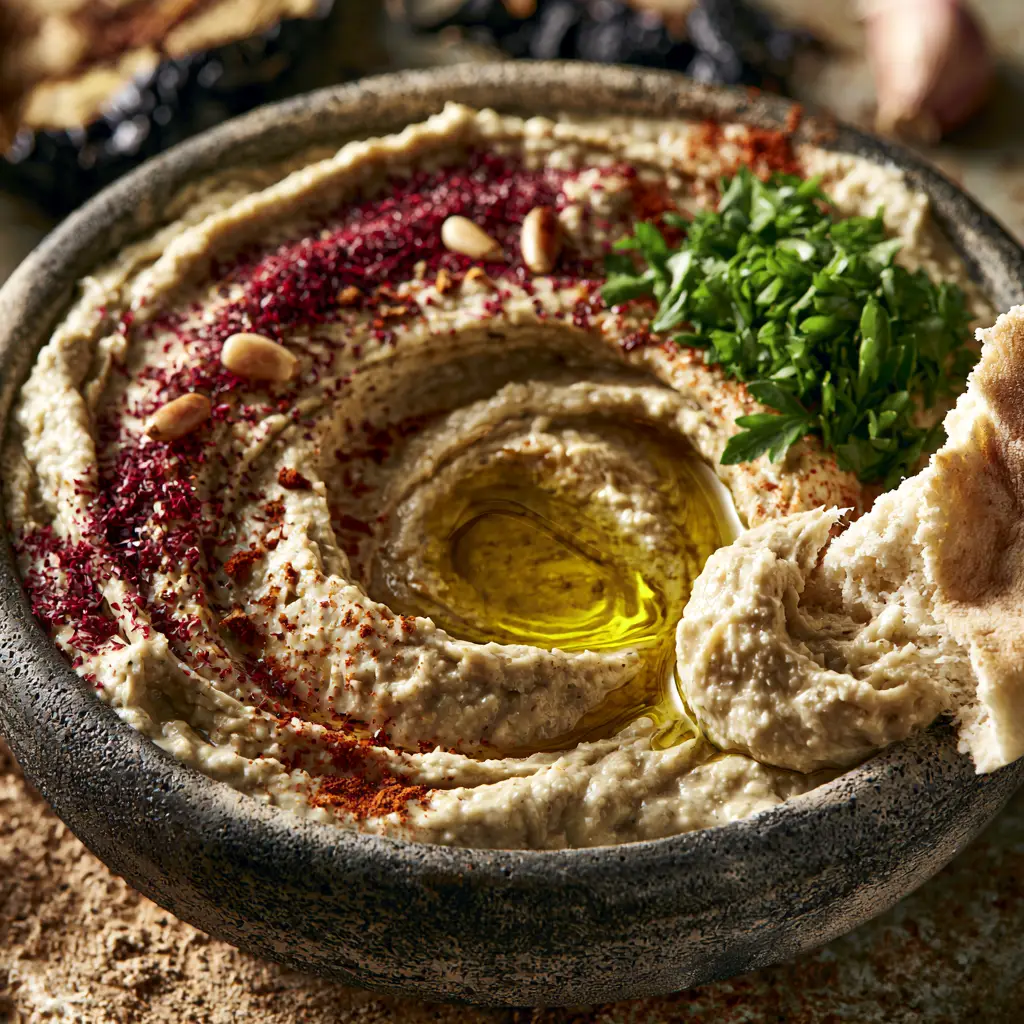
Transfer the dip to a matte-textured charcoal ceramic bowl. Use the back of a large spoon to create deep, artisanal swirls in the surface. This isn’t just for looks; those valleys are designed to hold the extra virgin olive oil swirl. Pour a generous pool of vibrant, translucent golden oil into the center of the swirls.
4. Garnishing for High-Impact Visuals
Meticulously garnish the surface. Start with a dusting of crimson sumac around the edges. Add a few toasted pine nuts for height, followed by tiny sprinkles of smoked paprika. Finally, add a cluster of finely chopped fresh flat-leaf parsley in the center for a pop of bright green. This visual contrast is what makes the baba ganoush recipe a Pinterest favorite.
Expert Tips for Success
- Don’t Scrimp on Tahini: The quality of your tahini determines the silkiness of the dip. If your tahini is separated in the jar, stir it thoroughly before measuring.
- Temperature Matters: Serve the Baba Ganoush at room temperature. Cold temperatures dull the flavor of the olive oil and the smokiness of the eggplant.
- Toast the Nuts: Always toast your toasted pine nuts in a dry pan for 2-3 minutes until golden. This releases the essential oils and makes them infinitely more flavorful.
- Fresh Herbs Only: Never use dried parsley. The chopped fresh flat-leaf parsley provides a necessary freshness that cuts through the rich tahini.
Storage, Reheating, and Freezing
Storage: Store your leftover Baba Ganoush in an airtight container in the refrigerator for up to 4 days. You may notice a little oil separation; simply stir it back in before serving.
Freezing: While you can freeze it, the texture of the thick tahini paste may change slightly. If you must freeze, do so without the garnishes. Thaw in the fridge overnight and whisk vigorously to restore the creamy texture.
Pro Tip: If the dip thickens too much in the fridge, add a teaspoon of warm water or an extra squeeze of lemon juice to loosen it back up before serving with torn warm pita bread.
What to Serve With This Smoky Dip
This dip is incredibly versatile. While torn warm pita bread is the classic choice, you can also serve it with fresh cucumber spears, radishes, or bell peppers. For a full Mediterranean feast, consider pairing it with South African-inspired grilled meats or a plate of Lemon Garlic Butter Mussels.
If you are hosting a summer party, this dip is the perfect sophisticated appetizer alongside Summer Jello Shots for a fun, eclectic vibe. The smoky richness of the eggplant balances beautifully with bright, acidic side dishes.
Frequently Asked Questions
Yes! You can achieve the signature charred, blackened eggplant skins by using the broiler setting in your oven or placing the eggplant directly over a gas stove flame.
For an ultra-thick and velvety texture, we recommend hand-mashing with a fork. A food processor can easily over-process the dip, making it runny rather than artisanal and thick.
No, you must roast the eggplant whole with the skin on. The skin protects the flesh and provides the essential smoky flavor as it chars.
While both use roasted eggplant, Baba Ganoush typically includes more aromatics and pomegranate molasses in some regions, whereas Mutabbal is focused heavily on the thick tahini paste and lemon for a creamier finish. This recipe sits perfectly in the middle.
Bitterness usually comes from the eggplant seeds or the liquid. By using our ‘strained roasted eggplant pulp’ method, you remove the bitter juices that drain out after roasting, resulting in a much smoother flavor.
The Best Authentic Baba Ganoush Recipe
Baba Ganoush: The Ultimate Creamy and Smoky Eggplant Dip
Ingredients
Equipment
Method
- Prick eggplants with a fork and roast at 450°F (230°C) for 40-50 minutes until skins are charred and blackened.
- Let eggplants cool for 10 minutes, then peel away the charred skins and discard.
- Place the roasted eggplant pulp in a fine-mesh sieve for 20 minutes to remove excess liquid.
- Mash the strained pulp with a fork, then stir in tahini, lemon juice, minced garlic, and salt until thick and creamy.
- Spread dip into a bowl, creating deep swirls. Pour olive oil into the center.
- Dust with sumac, paprika, toasted pine nuts, and parsley. Serve with warm pita bread.
Notes
Serve at room temperature to allow the smoky flavors to shine.
Save This Recipe to Pinterest!
Did you love the smoky, velvety texture of this Baba Ganoush? Don’t lose this recipe! Click the Save button to pin it to your “Mediterranean Recipes” or “Healthy Appetizers” board on Pinterest. Follow katieplates for more kitchen-tested, high-impact recipes that actually work.
If you made this at home, we want to see! Share a photo of your artisanal swirls in the comments below and leave us a 5-star rating. Your feedback helps our community of home cooks grow!