Grilled octopus is the ultimate showstopper for any seafood lover, offering a sophisticated blend of deep mahogany char and buttery, melt-in-your-mouth tenderness. If you have ever been intimidated by cooking cephalopods at home, this foolproof guide will transform you into a Mediterranean master. We are focusing on achieving that iconic crispy suction cup texture while ensuring the interior remains succulent and white.
The secret to perfect grilled octopus lies in the two-step cooking process. By gently simmering the tentacles before they ever hit the grates, we break down the tough collagen, ensuring every bite is tender rather than rubbery. This recipe delivers a restaurant-quality experience right in your backyard, complete with a vibrant lemon-olive oil emulsion and a heavy dusting of fresh parsley.
Why You Will Crave This Charred Mediterranean Masterpiece
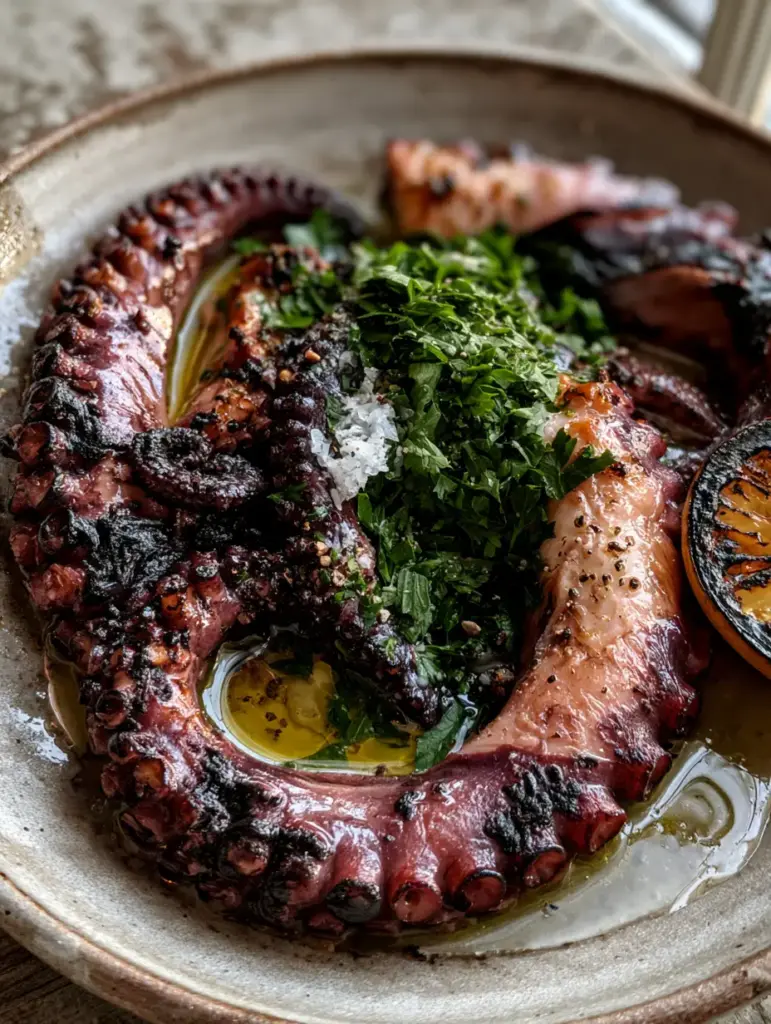
- Textural Perfection: Experience the contrast between the blackened, crispy charred suction cups and the glistening, buttery-soft white meat inside.
- Forensic Flavor Balance: The rich, smoky notes from the grill are perfectly offset by a zesty lemon-olive oil drizzle and flaky sea salt.
- Pinterest-Ready Aesthetic: Coiled mahogany tentacles on a rustic plate make for a stunning visual that looks like it came straight from a seaside taverna.
- High-Protein Elegance: A light yet satisfying meal that pairs beautifully with other seafood favorites.
The Essential Ingredients for Tender Grilled Octopus
Every ingredient in this recipe serves a specific culinary purpose to ensure the grilled octopus reaches its maximum flavor potential.
- 1 Large Octopus (approx. 3-4 lbs / 1.4-1.8 kg): Cleaned, with the head and beak removed. Fresh or high-quality frozen both work well, as freezing actually helps tenderize the meat.
- 1/2 cup (120ml) Extra Virgin Olive Oil: Use a high-quality oil for the emulsion to provide a rich, fruity base.
- 2 Large Lemons: One for the lemon-olive oil emulsion and one to be sliced into grilled lemon wedges for a concentrated citrus punch.
- 4 cloves Garlic: Smashed and used during the simmering phase to infuse the meat with aromatic depth.
- 1 tbsp (15g) Flaky Sea Salt: Provides a clean, briny crunch that enhances the charred octopus tentacles.
- 1 tsp (5g) Cracked Black Pepper: Adds a subtle heat and visual texture to the finished dish.
- 1/2 cup (15g) Fresh Flat-Leaf Parsley: Finely chopped to provide a vibrant green contrast and a fresh, herbaceous finish.
- 2 Bay Leaves: Added to the simmering water to provide a subtle, earthy backbone to the seafood.
If you enjoy the smoky profile of this dish, you might also love our Vietnamese grilled chicken for your next outdoor cookout.
Phase 1: The Secret to Tenderizing the Tentacles
The Gentle Simmer
You cannot simply throw raw octopus on the grill; it will become as tough as a rubber band. To get that tender white meat, we must first simmer it. Fill a large pot with water, add the bay leaves, smashed garlic, and a pinch of salt. Bring to a gentle boil.
Hold the octopus by the head and “scare” it by dipping the tentacles into the boiling water three times for 5 seconds each. You will see the tentacles coil beautifully. Submerge the entire octopus, reduce heat to a low simmer, and cook for 45-60 minutes until a knife slides into the thickest part of the tentacle like butter.
The Cooling & Drying Process
Once tender, remove the octopus and let it cool to room temperature. For the best crispy suction cups, pat the tentacles extremely dry with paper towels. Moisture is the enemy of a good sear! If you have time, let them air-dry in the fridge for an hour to ensure the skin is tacky and ready to crisp up.
Phase 2: Achieving the Perfect Char on the Grill
Setting Up Your Heat Zones
Prepare your grill for high, direct heat. You want the grates to be screaming hot to achieve those blackened, crispy charred suction cups without overcooking the already-tender interior. Clean the grates thoroughly and lightly oil them to prevent sticking.
The Searing Technique
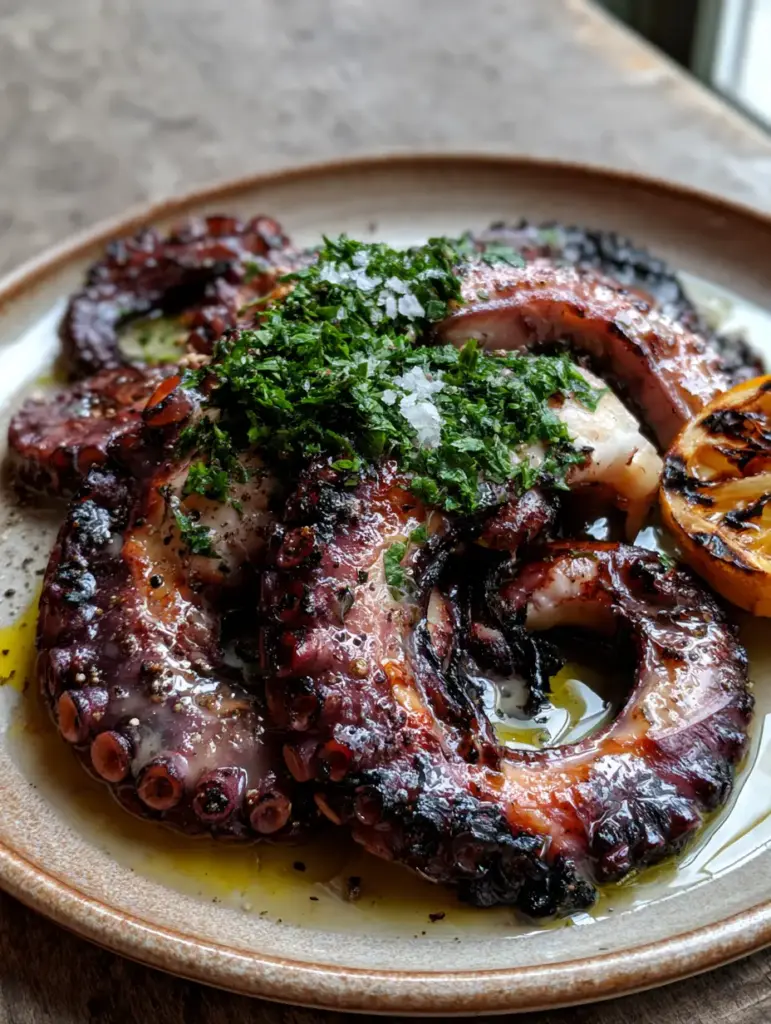
Brush the octopus tentacles generously with olive oil. Place them directly over the hottest part of the grill. Listen for the sizzle—this is the sound of the sugars in the skin caramelizing into that deep purple and mahogany crust. Grill for 3-4 minutes per side, turning only once.
Grilling the Aromatics
While the octopus sears, place your lemon halves cut-side down on the grill. The heat will caramelize the natural sugars, making the juice sweeter and adding a smoky complexity to the lemon-olive oil drizzle. Remove once you see dark, defined grill marks.
Expert Tips for Pinterest-Worthy Results
- The Cork Trick: Mediterranean chefs often add a wine cork to the simmering water. While debated, many swear the enzymes in the cork help break down the tough fibers for tender grilled octopus.
- Don’t Skip the Dry: A wet octopus will steam rather than sear. Ensure the skin is bone-dry before it touches the grill for that maximum “crunch” on the suction cups.
- Avoid Over-simmering: If the skin starts falling off in the pot, you’ve gone too far. You want the skin to remain intact so it can crisp up during the grilling phase.
- Emulsify the Dressing: Whisk the lemon juice and olive oil vigorously until it becomes a thick, translucent emulsion. This clings to the meat much better than plain oil.
Looking for more seafood inspiration? Check out our guide on how to cook clams and mussels for a full Mediterranean spread.
How to Store and Reheat Leftovers
To Store: Place any leftover grilled octopus in an airtight container. It will stay fresh in the refrigerator for up to 3 days. The texture is actually quite pleasant when served cold in a salad the next day!
To Reheat: Avoid the microwave, as it will turn the meat rubbery. Instead, flash-fry the tentacles in a hot pan with a little olive oil for 1-2 minutes per side to regain some of that crispy suction cup texture.
Serving Suggestions and Pairings
This dish is best served family-style on a large rustic platter. Arrange the coiled tentacles and drizzle the emulsion so it pools in the curves of the meat. Garnish heavily with parsley and a pinch of flaky salt.
Serve alongside roasted potatoes, a crisp Greek salad, or even some seared cod fillets for a multi-course fish dinner. For a lighter side, try pairing it with grilled asparagus or a lemon-infused risotto.
Frequently Asked Questions
Yes! In fact, freezing octopus helps break down its muscle fibers, making it naturally more tender than fresh octopus. Just thaw it completely before simmering.
No! The skin is where all the flavor and color live. When grilled correctly, the skin becomes crispy and delicious, especially the suction cups.
The octopus is ready when a sharp knife or skewer can be inserted into the thickest part of the tentacle with no resistance, similar to testing a boiled potato.
The key is to pat the octopus completely dry after simmering and use very high, direct heat on the grill for a short period of time.
Rubbery octopus is usually caused by skipping the simmering step. Octopus must be slow-cooked in liquid first to break down collagen before a quick sear on the grill for texture.
The Ultimate Grilled Octopus Recipe
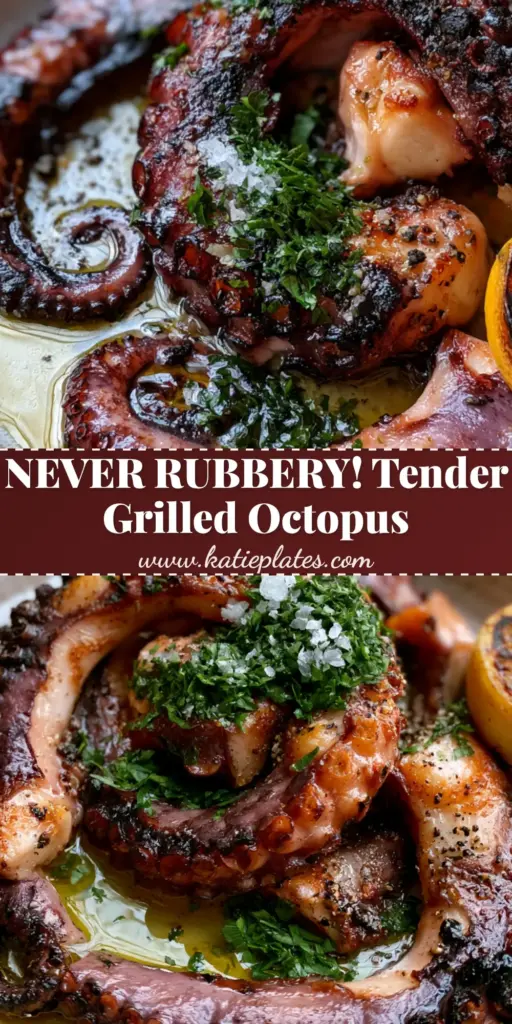
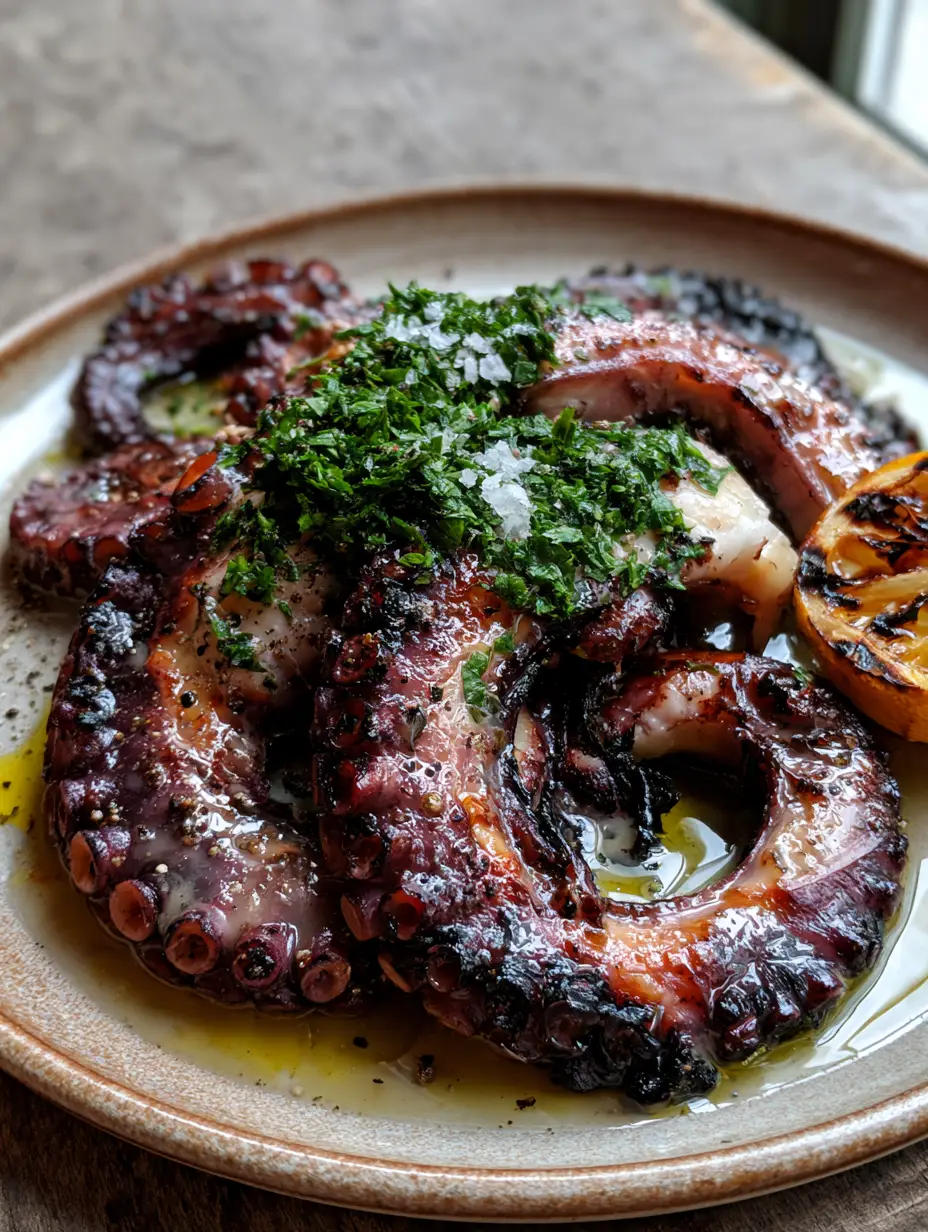
Grilled Octopus with Lemon, Olive Oil, and Crispy Charred Suction Cups
Ingredients
Equipment
Method
- Place octopus in a pot with water, garlic, and bay leaves. Simmer for 45-60 minutes until tender white meat is easily pierced by a knife.
- Drain and pat the tentacles extremely dry with paper towels to ensure crispy suction cups.
- Brush with oil and grill over high direct heat for 3-4 minutes per side until skin is mahogany and suction cups are charred.
- Drizzle with lemon-olive oil emulsion, sprinkle with parsley, sea salt, and pepper. Serve with grilled lemons.
Notes
The simmering time depends on the size of the octopus; start checking at 40 minutes.
Save This Recipe to Pinterest!
If you love the look of these charred octopus tentacles, don’t forget to save this recipe to your “Seafood Dinner” or “Mediterranean Recipes” board on Pinterest! Following katieplates ensures you never miss a vibrant, chef-tested recipe.
Did you make this? We want to see! Upload a photo of your grilled octopus in the comments below and let us know how that lemon-olive oil emulsion turned out. Please leave a 5-star rating if you enjoyed this guide!