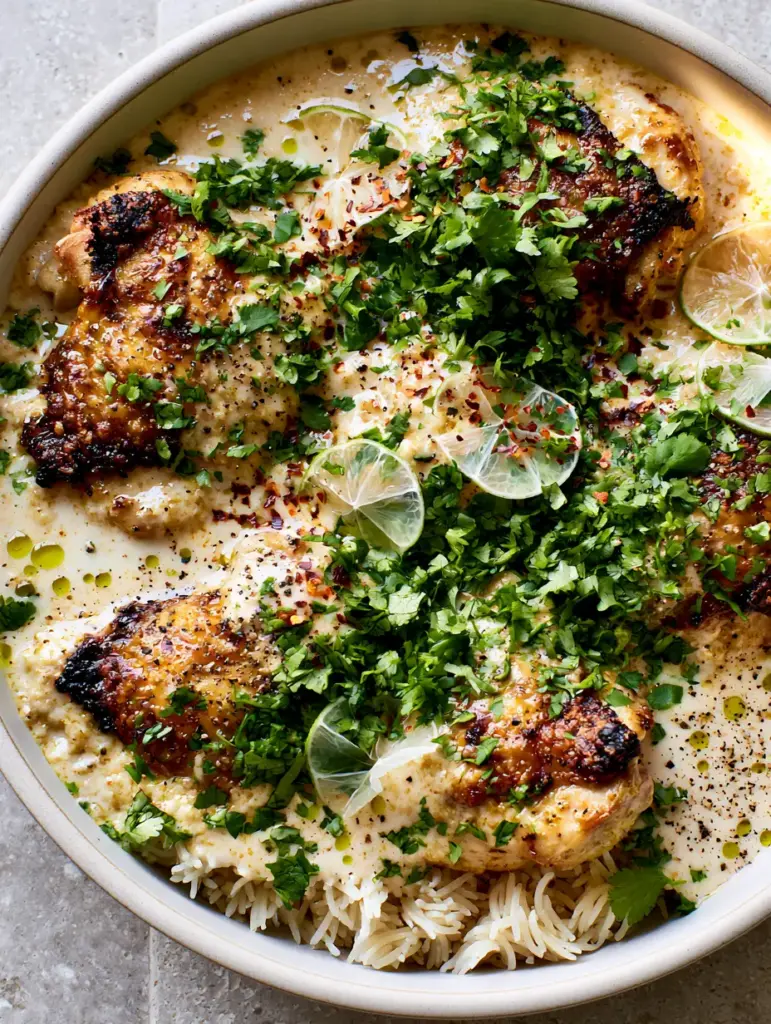
There is something inherently hypnotic about a perfectly executed Coconut Milk Chicken. The way the dark, caramelized edges of a seared chicken thigh rest against a sea of thick, ivory-colored sauce creates a visual contrast that is as appetizing as it is beautiful. This isn’t just a meal; it is a study in textures, from the crunch of the skin to the individual, fluffy grains of basmati rice.
Inspired by the bright, natural daylight of a modern kitchen, this recipe captures the essence of sophisticated home cooking. We are skipping the heavy, muddy colors of traditional stews in favor of a vibrant, glossy finish that sparkles with lime oil droplets and freshly cracked black pepper. If you have been searching for a dish that tastes like a luxury restaurant meal but feels like a warm hug, you have found it.
Whether you are looking for new summer chicken recipes to brighten up your patio dining or need a reliable centerpiece for Ramadan recipes, this one-pan wonder delivers. It is a harmonious balance of rich coconut fats, sharp citrus acidity, and a gentle heat from dried red chili flakes that lingers just long enough on the palate.
Why This Crispy Coconut Chicken Strategy Works
- The Golden-Brown Sear: We utilize high-heat searing techniques to ensure the chicken skin reaches a perfectly crisp, dark caramelized state before it ever touches the sauce.
- Thick Ivory Foundation: By controlling the reduction of full-fat coconut milk, we achieve a thick, glossy, ivory-colored sauce that clings to the meat rather than running off.
- Zesty Flavor Dimensions: The addition of lime oil droplets and paper-thin lime wheels cuts through the richness, providing a refreshing counterpoint to the savory garlic.
- Aromatic Rice Bed: Using steamed basmati rice ensures every grain remains individual and fluffy, acting as the perfect sponge for the creamy coconut base.
Essential Elements for the Perfect Coconut Milk Chicken
To achieve the specific visual and flavor profile of this dish, every ingredient must serve a dual purpose of structural integrity and aesthetic appeal. We are not just making dinner; we are building a masterpiece of culinary forensics.
Skin-On Chicken Thighs: Use 2 lbs (907g) of bone-in, skin-on thighs. The skin provides the fat necessary for the golden-brown sear, while the bone keeps the meat succulent during the simmering process.
Full-Fat Coconut Milk: You will need 1 can (400ml) of premium full-fat coconut milk. This is the source of our “thick ivory” sauce; light versions will not provide the necessary gloss or viscosity.
Basmati Rice: 1.5 cups (300g) of dry rice. Basmati is preferred for its long, individual grains that stay distinct, preventing the dish from becoming a mushy porridge.
Fresh Garlic: 4 large cloves (20g), minced. Garlic provides the foundational aromatic base that balances the sweetness of the coconut.
Lime Duo: You need 2 whole limes. One will be juiced and zested to create the lime oil droplets, while the other is sliced into paper-thin, translucent wheels for garnish.
Invisible Essentials: Do not forget 1 tbsp (15ml) of high-smoke point neutral oil for the initial sear and 1 tsp (6g) of kosher salt to draw out moisture from the skin.
Finishing Garnishes: Freshly chopped cilantro (1/2 cup), dried red chili flakes (1 tsp), and coarsely cracked black pepper are non-negotiable for the final visual “pop.”
Modern Kitchen Tools for Professional Results
To replicate the extreme close-up look of our blueprint, the pan choice is vital. A modern off-white ceramic skillet is ideal, as it reflects light back into the sauce, enhancing that ivory glow.
You will also need a fine-mesh sieve to rinse your basmati rice until the water runs clear. This removes excess starch, ensuring those “individual grains” mentioned in our visual prompt. A sharp mandoline or a very steady hand with a chef’s knife is required to achieve the translucent lime slices that decorate the top of the chicken.
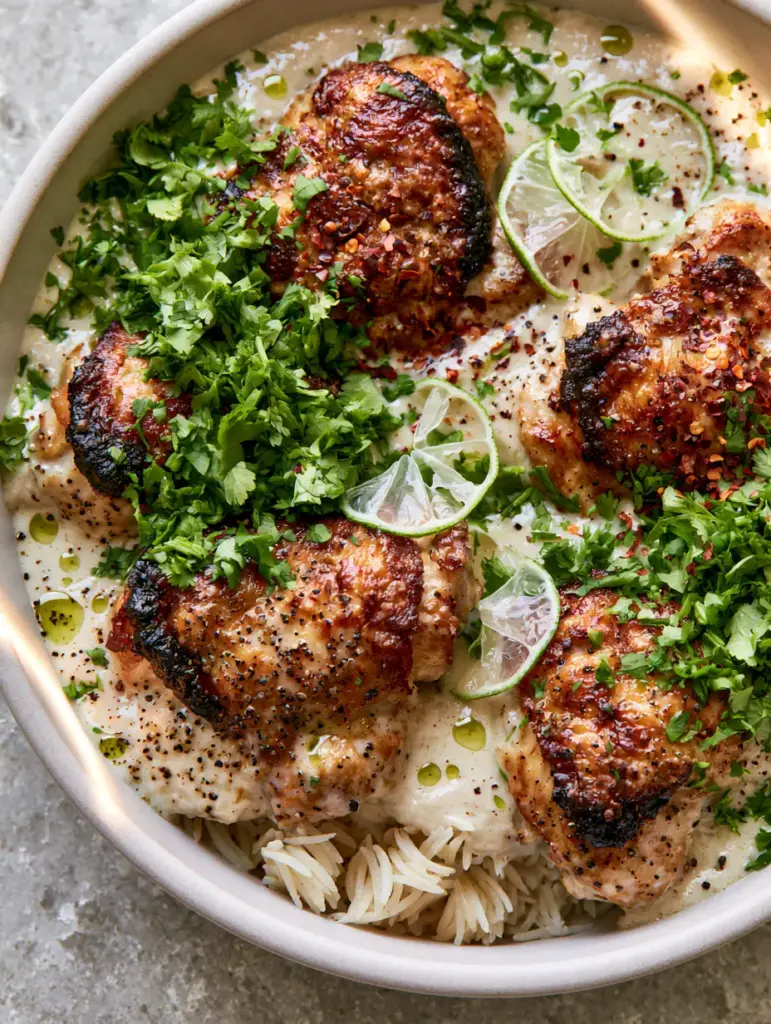
Step-by-Step Evolution of the Coconut Milk Chicken
Mastering the Golden-Brown Sear
Pat the chicken thighs extremely dry with paper towels. Any moisture on the skin will lead to steaming rather than searing. Season generously with salt and cracked black pepper.
Heat your neutral oil in the ceramic skillet over medium-high heat. Place the chicken skin-side down and do not move it for at least 6-8 minutes. You are looking for a deep, golden-brown crust with dark caramelized edges that will hold up even when nestled in the sauce.
Building the Ivory Sauce Base
Remove the chicken and set aside. Drain all but 1 tablespoon of the rendered fat. Add the minced garlic and sauté for only 30-45 seconds until fragrant but not browned.
Pour in the full-fat coconut milk. Use a wooden spoon to scrape the browned bits (the fond) from the bottom of the pan—this adds depth to the ivory sauce. Simmer until the sauce thickens enough to coat the back of a spoon.
Steaming the Perfect Basmati
While the sauce reduces, steam your basmati rice with a 1:1.5 ratio of rice to water. Once cooked, fluff it with a fork gently to keep the grains individual and airy.
The goal is to have the rice ready at the exact moment the chicken is finished, ensuring the “handheld smartphone photo” freshness where the steam is still visible.
The Final Assembly and Garnish
Nestle the chicken thighs back into the skillet, keeping the crispy skin above the sauce line. This preserves the texture we worked so hard to achieve. Spoon a small amount of sauce around the meat, allowing the rice to peep through from the bottom.
Whisk together a teaspoon of lime juice with a drop of oil and zest to create the “lime oil droplets.” Drizzle these over the ivory sauce. Finish with a heavy hand of chopped cilantro, the translucent lime wheels, and a sprinkle of red chili flakes for that vibrant color contrast.
Expert Tips for Success
- Temperature Control: If your sauce begins to break (oil separating), whisk in a teaspoon of water and lower the heat immediately to emulsify it back into a glossy finish.
- The “Skin Up” Rule: Never submerge the crispy skin into the liquid. The “nestled” look in the prompt means the bottom half is in the sauce while the top remains exposed to the air.
- Mandoline Limes: For the most professional look, use a mandoline for the lime slices. They should be thin enough that you can almost see the chicken skin through them.
- Black Pepper Texture: Use a coarse grind for the black pepper. The large specks are a key visual element against the ivory background.
Storage and Reheating Advice
This Coconut Milk Chicken is best served immediately to enjoy the contrast between the hot sauce and the crisp skin. However, leftovers can be stored in an airtight container for up to 3 days in the refrigerator.
When reheating, use a toaster oven or air fryer for the chicken to crisp the skin back up, while warming the sauce and rice separately on the stovetop with a splash of water or extra coconut milk to loosen the consistency.
Creative Pairings and Variations
While this dish is a complete meal on its own, you can expand your menu by pairing it with other vibrant textures. If you have leftover chicken, consider shredding it for a coconut chicken rice bowl the next day.
For those who love a bit of green on the side, this sauce works beautifully when drizzled over garlic chicken zucchini noodles. If you are hosting a larger gathering, serving this alongside shrimp oreganata provides a wonderful surf-and-turf variety that will impress any guest.
Frequently Asked Questions
You can, but breasts dry out faster and lack the skin-on fat needed for the golden-brown sear. If using breasts, reduce the simmering time to ensure the meat stays tender.
For this specific recipe, you must use full-fat canned coconut milk. The carton version is too thin and contains too much water, which will prevent you from achieving that signature ‘thick ivory’ sauce consistency.
The secret is to never fully submerge the chicken. Nestle the thighs into the sauce so the liquid only reaches halfway up the meat, leaving the crispy, seared skin exposed to the air.
Use a mandoline slicer on the thinnest setting. If cutting by hand, use a very sharp chef’s knife and move slowly to create paper-thin wheels that allow light to pass through them.
This happens if the heat is too high. Coconut milk is an emulsion; if it boils too vigorously, the fat separates. Simmer gently on medium-low and whisk in a teaspoon of water to bring it back together.
The Ultimate Coconut Milk Chicken Recipe
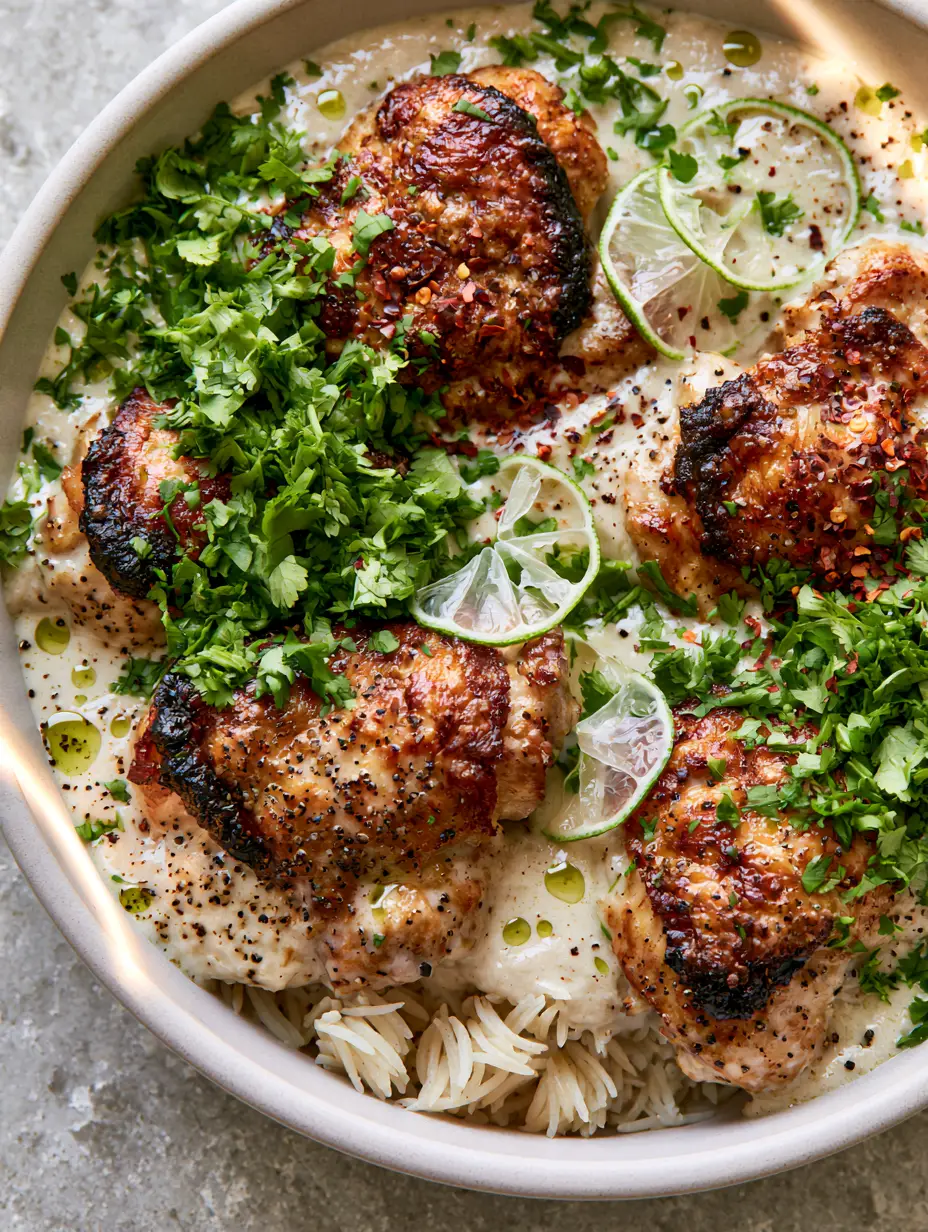
Coconut Milk Chicken with Crispy Skin and Velvety Ivory Sauce
Ingredients
Equipment
Method
- Rinse 1.5 cups (300g) basmati rice in a fine-mesh sieve until the water runs clear. Cook according to package instructions until grains are individual and fluffy.
- Pat the skin-on chicken thighs extremely dry with paper towels. Season both sides with salt and coarse black pepper.
- In a modern ceramic skillet, heat 1 tbsp (15ml) oil over medium-high heat. Place chicken skin-side down and sear for 8 minutes until a deep golden-brown crust with caramelized edges forms. Flip and cook for 2 more minutes, then remove from pan.
- Drain excess fat, leaving 1 tbsp. Sauté minced garlic for 30 seconds. Pour in 1 can (400ml) coconut milk, scraping the bottom of the pan. Simmer until the sauce is thick, glossy, and ivory-colored.
- Nestle chicken back into the sauce. Drizzle with lime oil (mix of lime juice and a drop of oil). Top with translucent lime wheels, fresh cilantro, and red chili flakes.
Notes
Use a mandoline for paper-thin lime slices.
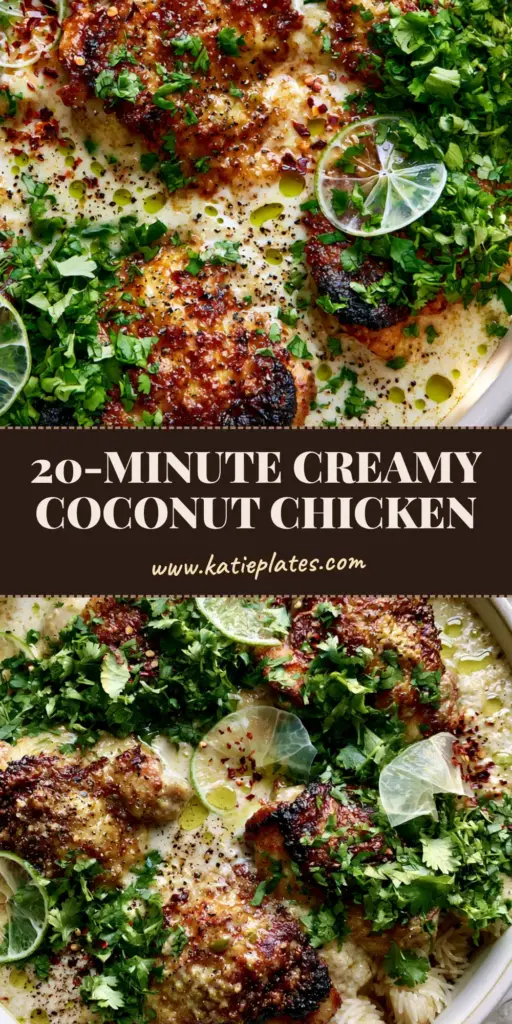
Start Cooking Your New Favorite Meal
There is no reason to wait for a special occasion to enjoy this Coconut Milk Chicken. The combination of the golden-brown sear and the thick ivory sauce is a guaranteed crowd-pleaser that looks just as good as it tastes. I can’t wait to see your recreations in your own kitchens!
If you enjoyed this recipe, please leave a comment below and share your photos with me. Don’t forget to follow me on Pinterest for more culinary inspiration and visual recipe guides. Happy cooking!