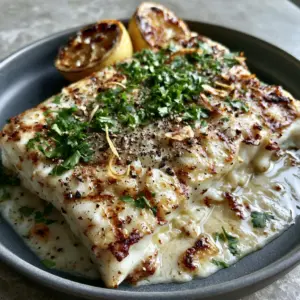
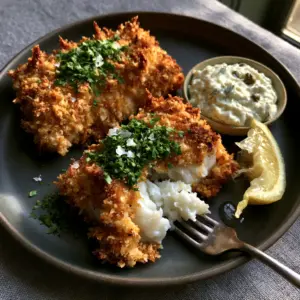
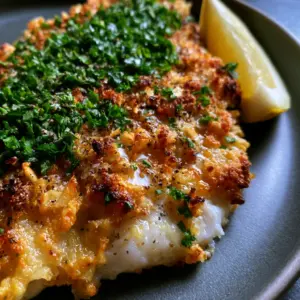
There is a specific culinary magic that happens when a cold, translucent piece of fish hits a screaming-hot cast iron surface. The result we are chasing today is a Crispy Cod with Lemon Butter Sauce that looks like it stepped off a professional photo set and tastes even better.
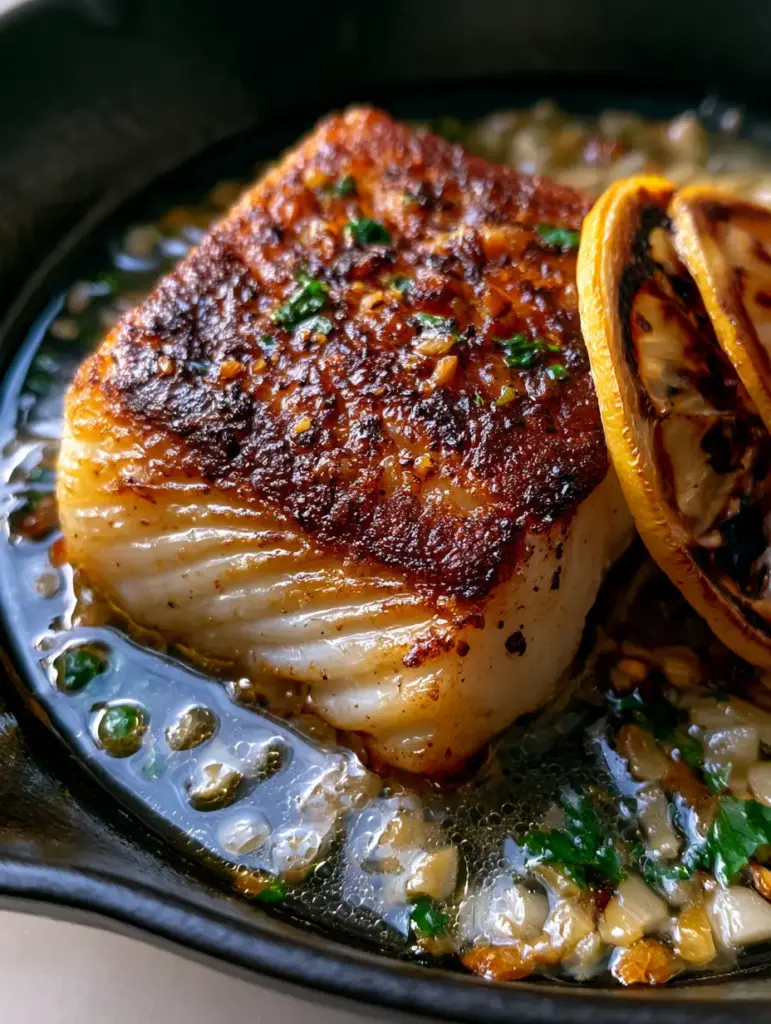
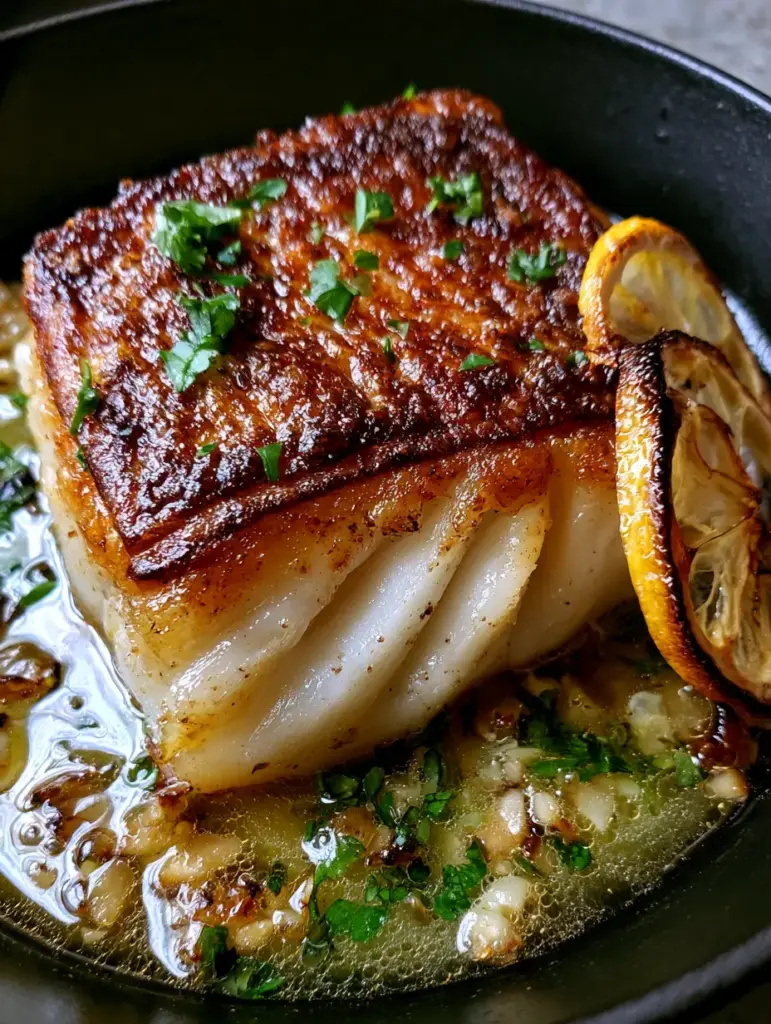
Imagine a thick, center-cut fillet with a crust so deeply golden and resonant it crackles under the fork. Beneath that architectural crunch lies a steaming, flaky white interior that separates into clean, pearlescent petals at the slightest pressure.
We are finishing this masterpiece in a pool of glossy, translucent lemon garlic butter. Every detail matters here, from the tiny bubbles dancing in the pan to the caramelized edges of charred lemon wheels tucked against the fish.
The Anatomy of the Perfect Skillet-Seared Seafood Experience
- Structural Contrast: We achieve a professional-grade, deep golden-brown crust while maintaining a delicate, moist interior.
- Emulsified Flavor: A pan-sauce technique that creates a glossy, translucent finish rather than a greasy, broken mess.
- Visual Sophistication: Using charred lemon wheels and finely minced garlic to provide both aesthetic depth and aromatic complexity.
- Thermal Precision: Leveraging the heat retention of a black cast iron skillet to ensure even cooking and a superior sear.
The Essential Elements for a Restaurant-Grade Crust
To achieve the result seen in our professional photography, we must look beyond the fish itself. Each ingredient serves a specific structural or chemical purpose in the pan.
Thick Center-Cut Cod Fillets: You want fillets at least 1.5 inches (3.8cm) thick. This thickness allows the crust to develop fully without the interior overcooking and becoming rubbery.
High-Heat Neutral Oil: 2 tablespoons (30ml) of avocado or grapeseed oil is essential. These oils have high smoke points, allowing the skillet to reach the temperatures required for the Maillard reaction.
Unsalted European-Style Butter: 4 tablespoons (57g) of high-fat butter provides the base for our glossy sauce. Using unsalted butter allows us to control the seasoning precisely during the reduction phase.
Fresh Lemon Wheels and Juice: 1 large lemon, half sliced into thin rounds and half reserved for juice. The slices will be charred to provide caramelized notes that balance the acidity of the fresh juice.
Mincing Garlic for Texture: 3 cloves (15g) of garlic, minced extremely fine. Small, uniform bits ensure the garlic softens and browns into “garlic gold” rather than burning and turning bitter.
Foundational Seasoning: Fine sea salt and freshly cracked black pepper. Salt is not just for flavor; it draws out surface moisture, which is the enemy of a crispy crust.
Freshly Chopped Parsley: 2 tablespoons (8g) of flat-leaf parsley. This provides the vibrant green flakes that contrast against the deep golden crust and the matte black of the skillet.
The Toolkit for Culinary Success
Achieving this specific visual result requires the right heat conductor. We are utilizing a 12-inch (30cm) black cast iron skillet for its unparalleled heat retention.
You will also need a stainless steel fish spatula. The thin, flexible edge allows you to slide under the delicate crust without tearing the flaky white meat beneath.
Lastly, ensure you have heavy-duty kitchen paper towels. Drying the fish is perhaps the most critical step in the entire process, as steam is the absolute enemy of a “deep golden-brown seared crust.”
A Masterclass in Searing: Step-by-Step Instructions
Phase 1: Preparing the Canvas for the Sear
Begin by removing your cod fillets from the refrigerator 15 minutes before cooking. Bringing the fish closer to room temperature ensures even heat distribution through the thickest part of the meat.
Use paper towels to pat the cod fillets extremely dry on all sides. This is a forensic-level requirement; any residual moisture will create steam, preventing the formation of that incredibly crispy crust.
Season the fillets generously with sea salt and black pepper just before they hit the pan. If you salt too early, the salt will draw out internal moisture, making the surface wet again.
Phase 2: Achieving the Deep Golden-Brown Crust
Place your cast iron skillet over medium-high heat. Add the neutral oil and wait until you see wisps of smoke rising from the surface—this is the visual cue that the pan is ready.
Carefully lay the cod fillets into the skillet, laying them away from you to avoid oil splatter. Press down very gently with your fish spatula for the first 10 seconds to ensure total surface contact.
Do not move the fish for 4 to 5 minutes. You are looking for a visual change: the white meat will begin to look opaque on the sides, and a visible golden rim will appear at the base of the fillet.
Phase 3: The Butter Baste and Lemon Char
Flip the fish carefully. The crust should be a hard, deep golden-brown. Immediately drop the heat to medium and add the butter and the lemon wheels to the empty spaces in the skillet.
As the butter melts and begins to form “tiny bubbles,” toss in the minced garlic. Tilt the skillet slightly and use a large spoon to continuously pour the bubbling lemon-garlic butter over the crust.
Cook for another 3 to 4 minutes. The lemon wheels should develop caramelized, blackened edges, and the garlic bits should turn a pale, toasty brown while the fish flakes easily when tested.
Professional Secrets for Flaky, Succulent Fish
- The Temperature Target: Aim for an internal temperature of 140°F (60°C). The carry-over heat will bring it to the perfect 145°F (63°C) while it rests.
- Avoid Overcrowding: If you crowd the skillet, the temperature drops and the fish will boil in its own juices. Cook in batches if necessary.
- Butter Timing: Never add the butter at the start. Butter has milk solids that burn at high searing temperatures; adding it at the end creates the “glossy, translucent” sauce we desire.
- The Rest: Let the cod rest in the skillet for 2 minutes off the heat before serving. This allows the juices to redistribute through the flaky layers.
Preserving Your Masterpiece: Storage and Reheating
While this recipe is best enjoyed immediately to preserve the crispy crust, leftovers can be stored in an airtight container for up to 2 days. The crust will naturally soften when refrigerated.
To reheat, avoid the microwave at all costs. Instead, place the fish in a cold pan with a teaspoon of water, cover with a lid, and heat over medium-low until warmed through. This “steam-reheat” preserves the moisture of the white fish interior.
Curating the Perfect Plate: What to Serve
This Crispy Cod with Lemon Butter Sauce is a versatile star. To keep the meal light and vibrant, I recommend a side of roasted asparagus or a bright citrus salad.
If you are looking for a more heartier pairing, this fish goes beautifully with a persian jeweled rice or even alongside some cod and potatoes in rosemary cream sauce for a double-dose of seafood excellence.
For those who enjoy a bit of variety in their weekly meal prep, you might also consider trying an air fryer cod recipe or exploring the bold flavors of a ginger soy cod.
Culinary Questions: Frequently Asked Questions
Yes, but you must thaw it completely in the refrigerator and pat it extremely dry. Frozen fish holds more moisture, so the drying step is even more critical for a crispy crust.
The two secrets are drying the fish thoroughly with paper towels and ensuring the oil is shimmering/slightly smoking before adding the fish. Once in the pan, do not move the fish until the crust naturally releases.
Add the butter at the very end over medium heat and stir or spoon it constantly. This creates an emulsion between the lemon juice and the milk solids in the butter, resulting in a translucent, glossy sauce.
Cod is perfectly cooked when it reaches an internal temperature of 145°F (63°C). It should be opaque and flake easily with a fork.
Cast iron provides superior heat retention, which prevents the pan temperature from dropping when the cold fish is added. This ensures a consistent, hard sear and a deep golden-brown crust.
The Definitive Crispy Cod with Lemon Butter Sauce Recipe
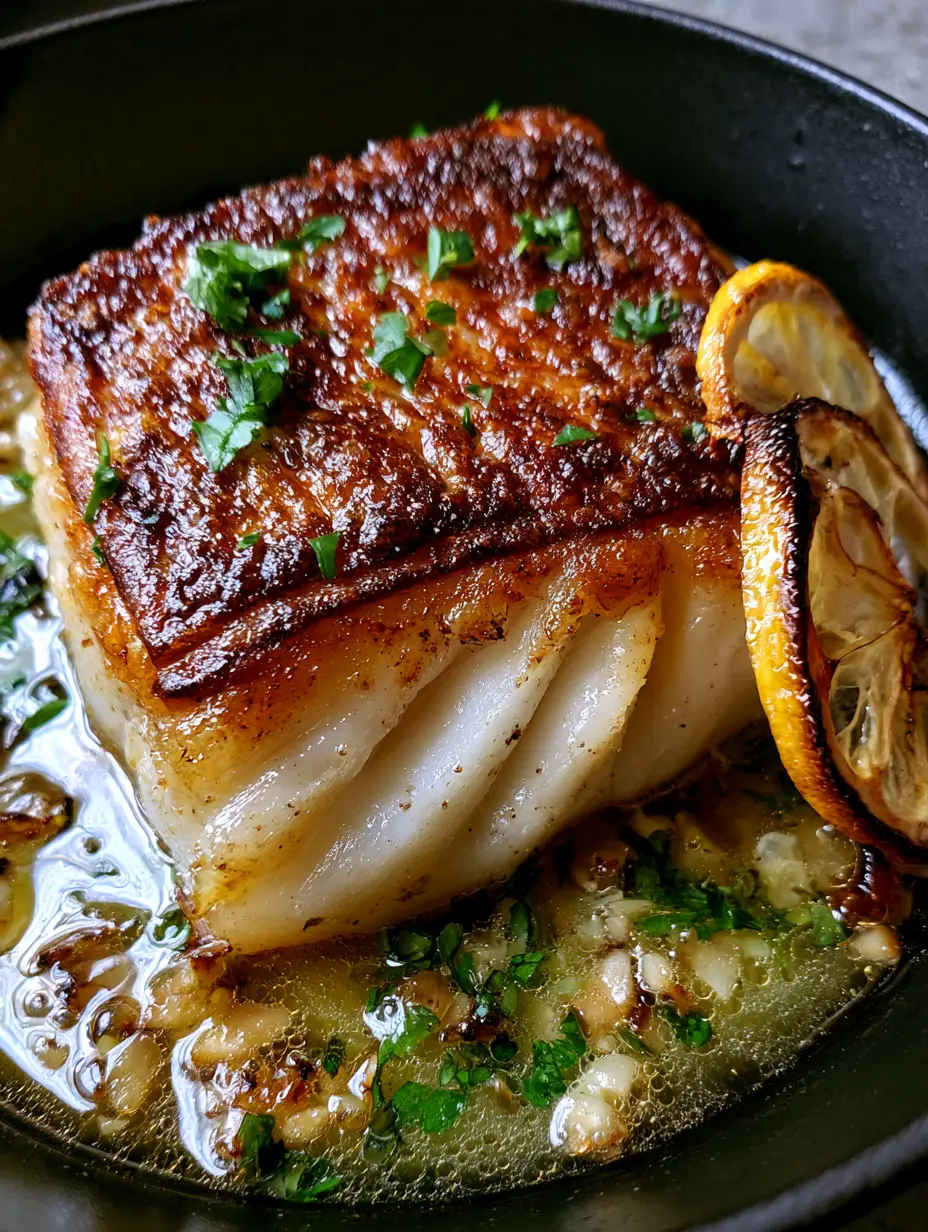
Crispy Cod with Lemon Butter Sauce: The Secret to a Perfect Skillet Sear
Ingredients
Equipment
Method
- Pat the cod fillets extremely dry with paper towels. Let sit at room temperature for 15 minutes.
- Just before cooking, season all sides of the fillets generously with salt and pepper.
- Heat oil in the cast iron skillet over medium-high until smoking. Sear cod for 4-5 minutes without moving until a deep golden crust forms.
- Flip the fish. Add butter, garlic, and lemon wheels to the pan. Baste the fish with the bubbling butter for 3-4 minutes.
- Garnish with fresh parsley and serve immediately once the lemons are charred and the fish is flaky.
Notes
Use a fish spatula to keep the crust intact during the flip.
Join the Culinary Conversation
The secret to a perfect dinner is often found in the small details—the sound of the sear, the smell of the browning garlic, and the visual cue of a bubbling sauce. I hope this recipe brings a touch of restaurant-quality elegance to your home kitchen.
If you enjoyed making this, please leave a comment below and let me know how your crust turned out! Don’t forget to follow me on Pinterest for more visual recipe inspiration and share your skillet photos with the community.