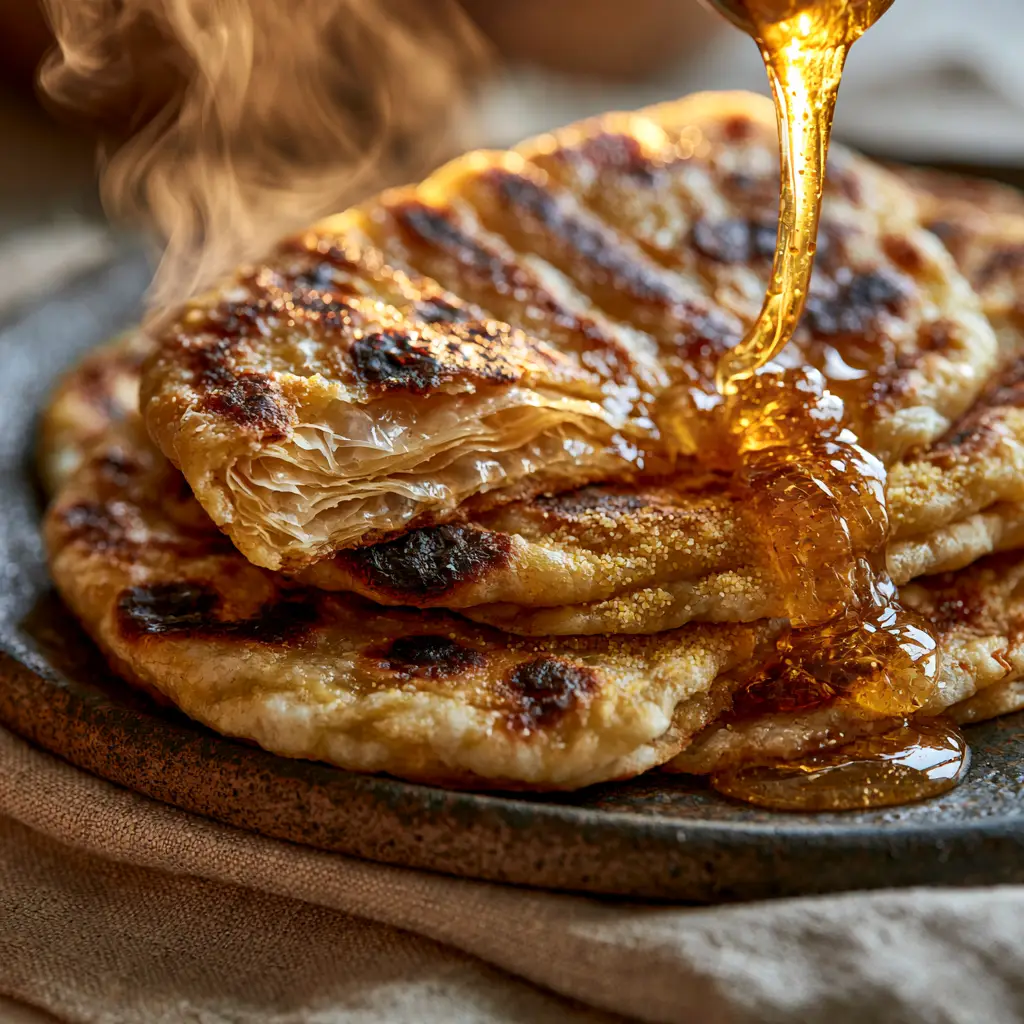
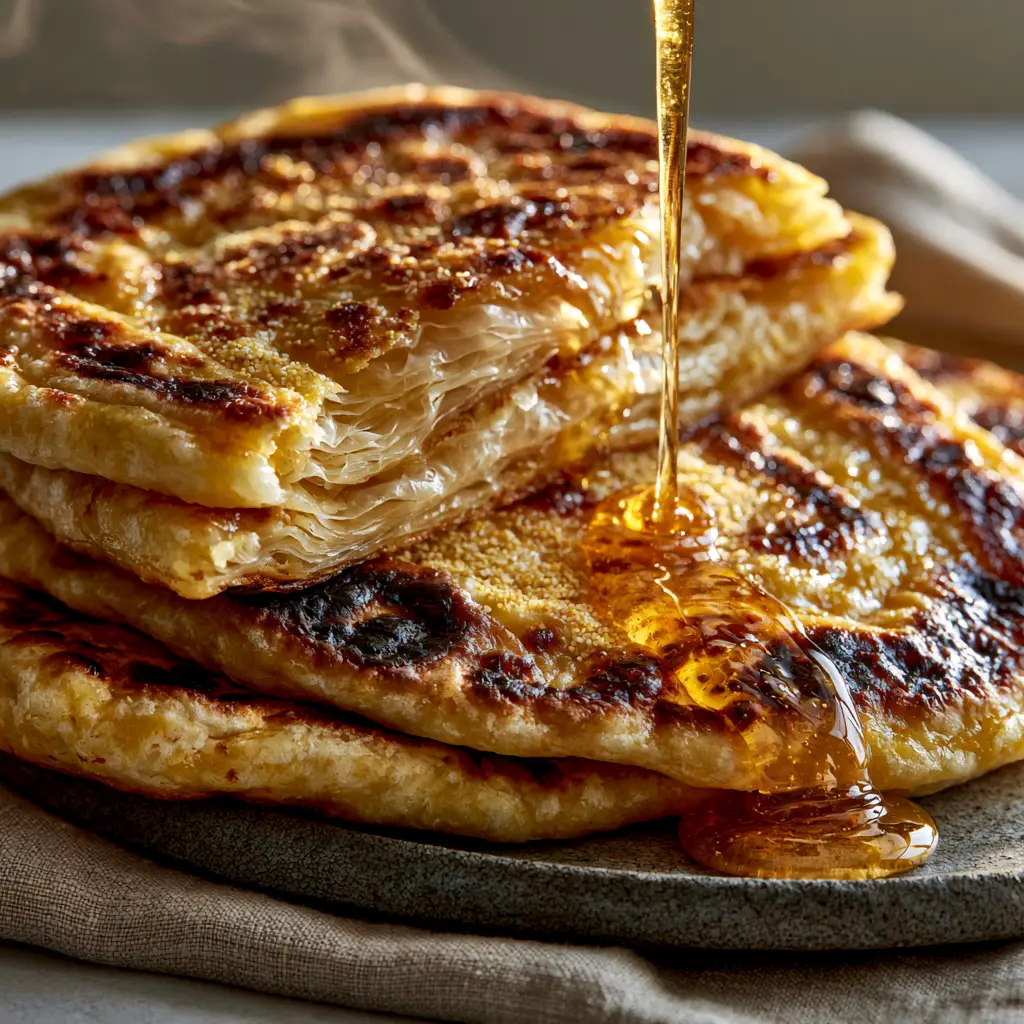
There is nothing quite like the sensory experience of a fresh Moroccan Msemen recipe, especially when the morning sun hits a stack of these golden treasures. As you pull the first square from the pile, you will notice the exterior is a deep golden-yellow, punctuated by those iconic dark-brown toasted blisters that signal a shatteringly crisp texture. Wisps of steam rise from the center as the heat escapes from dozens of paper-thin, translucent interior layers.
This Moroccan Msemen recipe is more than just a bread; it is a culinary masterpiece of lamination. When drizzled with a thick stream of viscous, golden amber honey that pools into the flaky ridges, it becomes the ultimate breakfast indulgence. A light dusting of fine semolina grains adds a subtle crunch that contrasts beautifully with the melted clarified butter sheen.
Whether you are looking to recreate a memory from the streets of Marrakech or seeking the perfect accompaniment for a warm bowl of Harira soup, this guide will show you the forensic details of professional dough stretching. We will move beyond basic mixing to explore the science of gluten relaxation, ensuring your flatbreads are as light as air and structurally perfect.
The Secrets to Achieving Shatteringly Crisp Msemen Layers
- Ultra-Thin Lamination: We use a specific technique of stretching the dough until it is literally translucent to create those signature “paper-thin” interior folds.
- Dual-Texture Contrast: The combination of high-protein flour and fine semolina creates a “shatter-factor” on the outside while remaining tender inside.
- Clarified Butter Sheen: Using clarified butter (ghee) ensures a higher smoke point, allowing for those beautiful toasted blisters without burning.
- Amber Honey Finish: The addition of a thick, viscous honey drizzle provides the classic Moroccan sweet-and-savory profile that defines this dish.
The Essential Pantry Toolkit for Authentic Moroccan Flatbreads
Fine Semolina (Smida): 1.5 cups (250g). This is the “secret” to the texture; it prevents the layers from sticking together while adding a signature golden hue and a fine grain dusting on the surface.
All-Purpose Flour: 3 cups (375g). A high-quality flour provides the necessary gluten structure to allow the dough to be stretched extremely thin without tearing.
Warm Water: 1.25 cups (300ml). Warm water helps relax the gluten instantly, making the dough more pliable for the intense stretching process required for this Moroccan Msemen recipe.
Granulated Sugar: 1 tsp (4g). A small amount of sugar encourages the rapid caramelization needed to achieve those dark-brown toasted blisters during the short searing time.
Salt: 1 tsp (6g). Fine sea salt is crucial for strengthening the gluten network and highlighting the nutty notes of the semolina.
Baking Powder: 0.25 tsp (1g). While often omitted in rustic versions, a tiny pinch creates internal steam pockets, resulting in the rising wisps of steam seen when the bread is torn.
Vegetable Oil: 0.5 cup (120ml). This is used strictly for the stretching process to lubricate the dough and the work surface, ensuring it doesn’t snag or break.
Unsalted Clarified Butter: 0.5 cup (115g), melted. Clarified butter provides the “glistening” finish and a rich, toasted flavor that regular butter cannot match due to its milk solids.
Amber Honey: 0.25 cup (85g). Choose a thick, viscous honey to achieve that “mid-pour” look where the honey sits atop the ridges rather than soaking in immediately.
Professional Culinary Equipment for Msemen Success
To achieve the visual results of a professional Moroccan kitchen, you will need a large, smooth workspace—ideally marble or polished stainless steel. A heavy-bottomed cast iron griddle or a “Farah” (traditional Moroccan clay or metal pan) is essential for even heat distribution. This ensures that the exterior blisters perfectly while the interior layers cook through without becoming tough.
You will also need a small fine-mesh sieve for applying the light dusting of fine semolina grains. A high-quality pastry brush is helpful for applying the melted clarified butter sheen evenly across the surface of the dough during the folding process.
Mastering the Translucent Dough: Step-by-Step Instructions
Step 1: Creating the Elastic Foundation
In a large bowl, whisk together your flour, 1 cup (165g) of the semolina, sugar, salt, and baking powder. Gradually add the warm water, mixing by hand until a shaggy dough forms. You are looking for a dough that is soft but not sticky, with enough strength to hold its shape.
Knead the dough vigorously for 10 minutes by hand or 5 minutes in a stand mixer. You will know it is ready when the surface is smooth and the dough feels like an elastic band when pulled. Divide the dough into 8 equal portions, roll them into smooth balls, and coat them lightly with vegetable oil to prevent a skin from forming.
Step 2: The Art of the Translucent Stretch
Generously oil your work surface with vegetable oil. Take one dough ball and flatten it with the palm of your hand. Use your fingers to spread the dough outward from the center, moving in a circular motion until the dough is paper-thin and translucent.
You should be able to see the color of your countertop through the dough without it tearing. If it resists, let it rest for 5 minutes to allow the gluten to relax further. This transparency is the key to achieving those “dozens of paper-thin interior layers” once folded.
Step 3: Lamination and the Square Fold
Brush the entire surface of the stretched dough with a thin layer of melted clarified butter. Sieve a light dusting of fine semolina grains over the buttered surface. The semolina acts as a physical barrier that keeps the layers separate and flaky.
Fold one side of the circle into the center, then the opposite side to create a long rectangle. Brush again with butter and dust with semolina. Fold the ends of the rectangle into the center to form a perfect square. Set this aside to rest for 10 minutes while you repeat the process with the remaining dough.
Step 4: Searing for the Iconic Blisters
Heat your heavy-bottomed griddle over medium-high heat. Take a rested square and gently flatten it with your fingers until it has doubled in size but remains a square shape. Do not press too hard, or you will fuse the delicate layers you just created.
Place the Msemen on the hot pan. You will hear a distinct sizzle as it hits the surface. Cook for 2-3 minutes per side. Watch for the dough to puff up and develop those deep golden-yellow hues with dark-brown toasted blisters. Flip frequently to ensure even heat penetration and maximum flakiness.
Expert Tips for the Perfect Shatter-Crisp Texture
- Temperature Control: If your pan is too cold, the Msemen will become tough and leathery; if too hot, the outside will burn before the interior layers are cooked. Aim for a steady medium-high heat.
- Resting is Mandatory: Never skip the resting periods. Resting allows the gluten to “relax,” which is the only way to achieve the translucent stretch without the dough snapping back.
- The Oil vs. Butter Rule: Always use vegetable oil for the stretching (it has more “slip”) and clarified butter for the folding (it provides flavor and lamination).
- Semolina Sifting: Use a sieve for the semolina dusting to ensure a fine, even coat. Clumps of semolina will create gritty spots in the finished flatbread.
Storage, Reheating, and Freezing
Fresh Msemen is best served immediately while the wisps of steam are still visible. However, you can store cooled flatbreads in an airtight container at room temperature for up to 2 days. To maintain that shatteringly crisp texture, always reheat them in a dry pan over medium heat rather than using a microwave.
These flatbreads freeze exceptionally well. Place parchment paper between each square to prevent sticking and store them in a freezer bag for up to 3 months. Reheat directly from frozen in a hot pan to restore the melted clarified butter sheen and crisp exterior.
What to Serve with Your Moroccan Msemen
In Morocco, Msemen is often part of a larger spread. For a savory lunch, serve it alongside smoky eggplant zaalouk or use it to scoop up the juices from grilled kefta kebabs. If you are hosting a dinner, these flatbreads are the perfect vessel for soaking up the bold flavors of fresh chermoula sauce.
For a lighter option, pair the honey-drizzled Msemen with a homemade herbal latte or a traditional Moroccan mint tea. The contrast between the salty, buttery bread and the sweet honey makes it a versatile companion for almost any Moroccan dish, from fluffy couscous to crispy chicken briouats.
Frequently Asked Questions about Moroccan Msemen
Yes, you can prepare the dough balls and keep them oiled in the refrigerator for up to 24 hours. Just bring them to room temperature before stretching so the gluten is pliable.
While you can, the fine semolina is what provides the signature ‘sand-dusted’ texture and helps separate the paper-thin layers. Using only flour will result in a more bread-like, less shatter-crisp texture.
The blisters come from a combination of sugar in the dough and high-heat contact with a heavy griddle. The steam inside the layers pushes the dough against the pan, creating those iconic spots.
An amber-colored, viscous honey like wildflower or orange blossom honey is best. It provides a deep flavor profile and a thick consistency that pools beautifully in the ridges of the flatbread.
Toughness is usually caused by under-resting the dough or not stretching it thin enough. Ensure the dough is translucent when stretched and allow it to rest after folding to let the gluten relax.
The Ultimate Moroccan Msemen Recipe
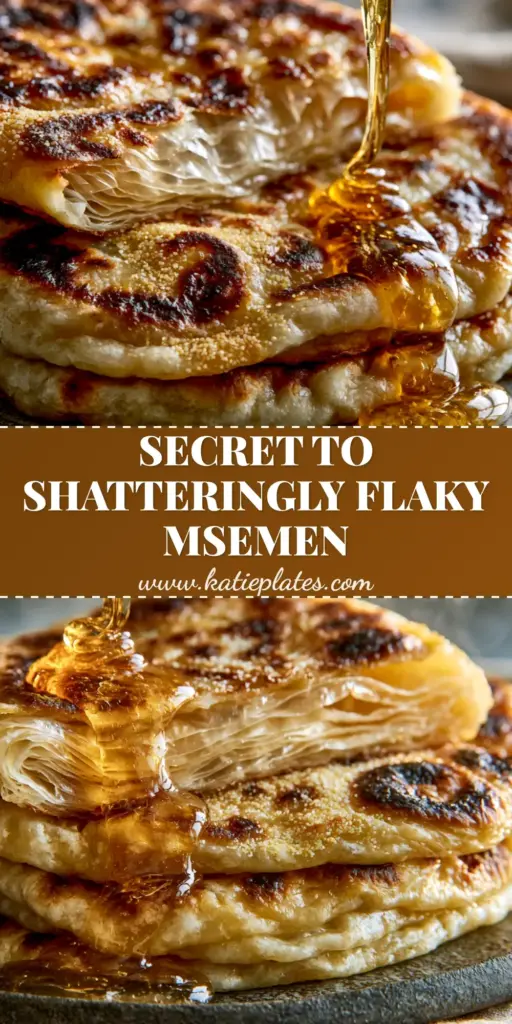
Moroccan Msemen Recipe: Flaky, Layered Square Flatbreads
Ingredients
Equipment
Method
- Combine flour, 1 cup semolina, sugar, salt, and baking powder. Add warm water and mix until a shaggy dough forms.
- Knead for 10 minutes by hand until elastic and smooth. Divide into 8 oiled balls and rest for 15 minutes.
- Oil your surface and stretch one ball until paper-thin and translucent.
- Apply clarified butter and a dusting of semolina. Fold into a square, applying more butter and semolina at each fold.
- Flatten the square slightly and cook on a hot griddle for 2-3 minutes per side until dark-brown blisters appear.
- Stack the Msemen and drizzle with thick amber honey while steam is still rising.
Notes
Use clarified butter to avoid burning the milk solids during the high-heat sear.
Conclusion: Bringing the Flavors of the Maghreb Home
Mastering this Moroccan Msemen recipe is a rite of passage for any home cook interested in the art of pastry and bread making. The combination of simple ingredients and sophisticated technique results in a flatbread that is visually stunning and incredibly delicious. From the golden-yellow crust to the translucent interior layers, every bite is a testament to the beauty of traditional Moroccan cuisine.
If you enjoyed making these flaky squares, please leave a comment below and let us know how your layers turned out! Don’t forget to share your creations on Pinterest and tag us. For more inspired recipes, subscribe to our newsletter for weekly culinary adventures.