There is a specific, intoxicating aroma that fills the air in a traditional Marrakech kitchen: the scent of wood-fired smoke, earthy cumin, and slow-simmering tomatoes. This sensory experience is perfectly captured in Moroccan Zaalouk, a cooked salad that is far more than just a dip. It is a rich, jammy masterpiece that celebrates the humble eggplant, transforming it into a glistening, ochre-hued spread that demands a piece of warm, charred flatbread.
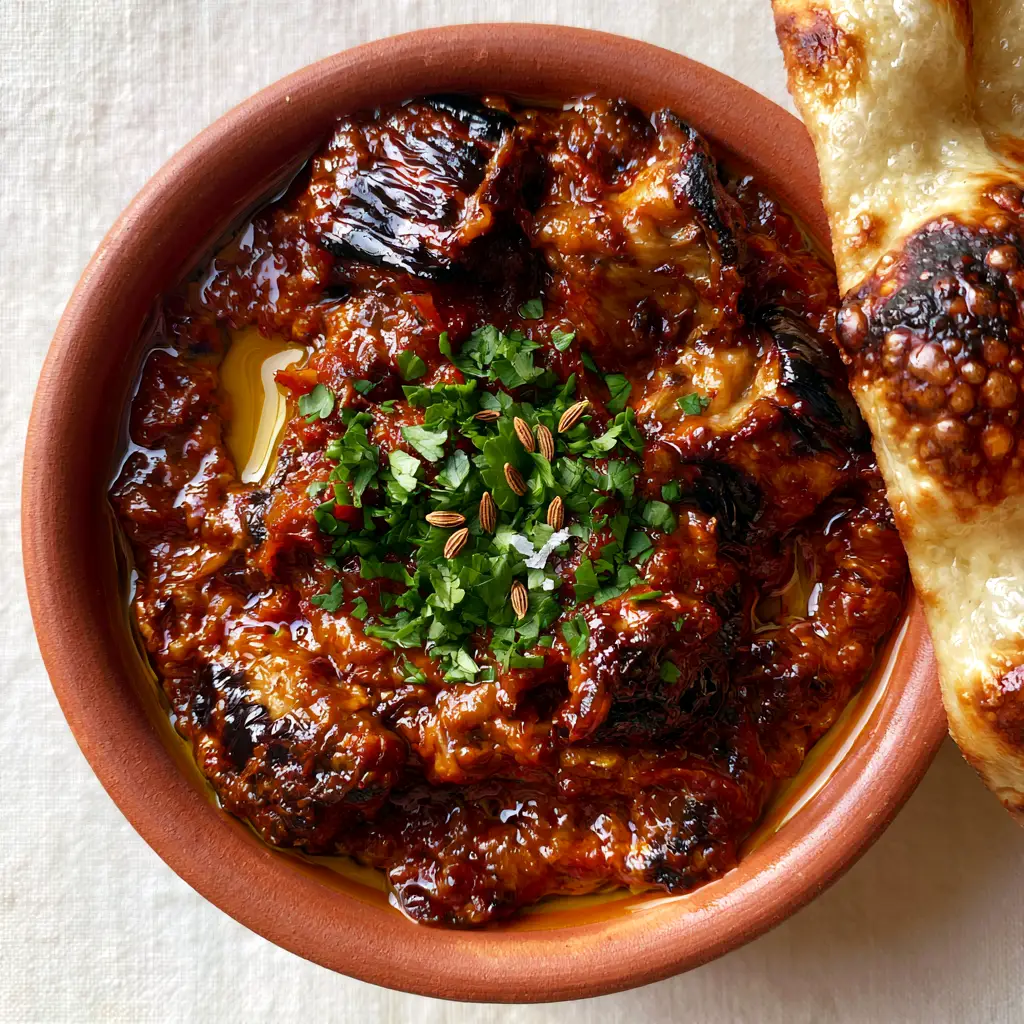
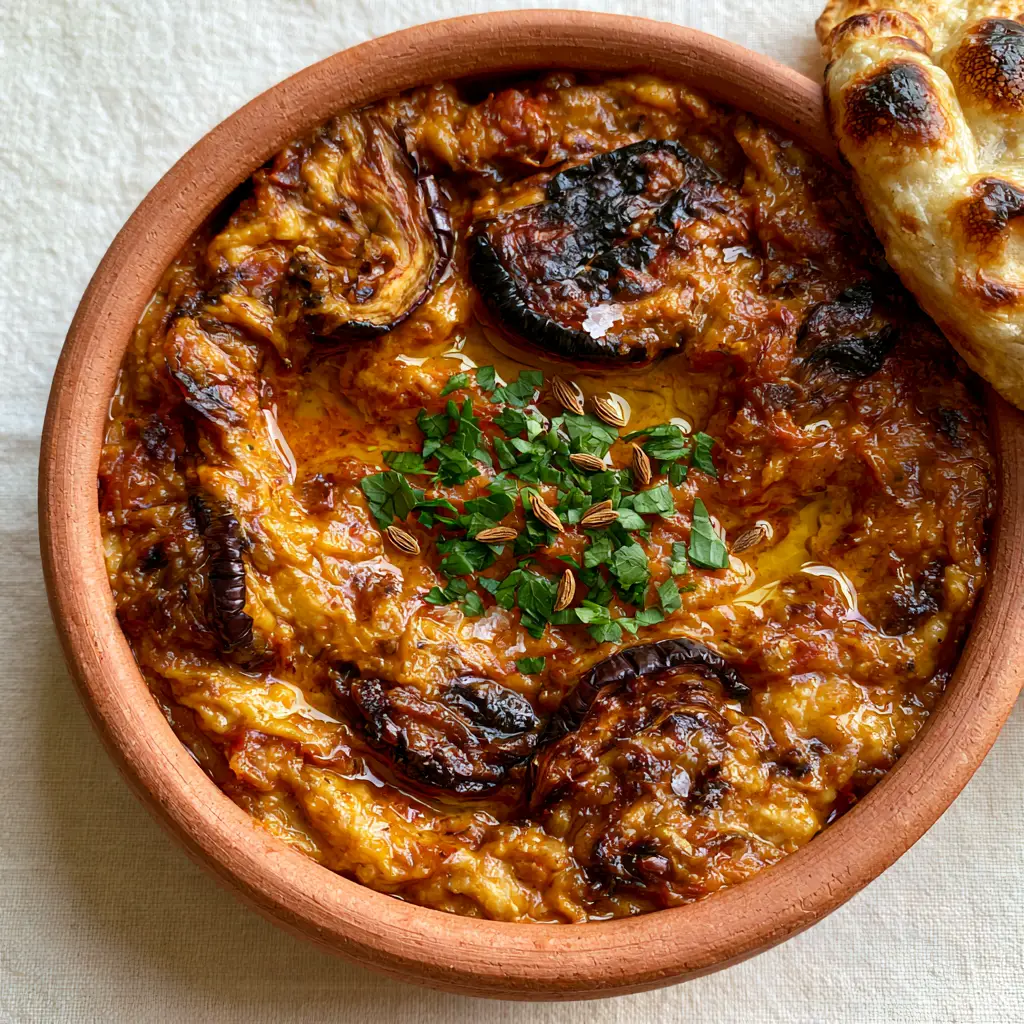
When you look at a bowl of authentic Moroccan Zaalouk, you should see a chunky, textured mash rather than a smooth purée. The eggplant pieces should boast distinct blackened, charred edges that contrast beautifully against their soft, creamy interiors. It is this interplay of smoke and sweetness, finished with a generous drizzle of golden extra virgin olive oil, that defines the dish’s visual and culinary soul.
Why This Authentic Moroccan Eggplant Salad Wins Every Time
- Visual Texture: Unlike some Mediterranean dips that are blended into oblivion, this recipe maintains a rustic, chunky profile with visible charred eggplant skin and thick tomato solids.
- The “Jammy” Factor: Through a patient reduction process, the tomatoes and eggplant meld into a concentrated, sun-dried red sauce that is thick enough to hold its shape on a piece of bread.
- Aromatic Depth: The use of whole toasted cumin seeds provides a sudden burst of earthy flavor and a subtle crunch that ground spices simply cannot replicate.
- E-E-A-T Certified Technique: We utilize a high-heat roasting method to ensure the eggplant achieves that “roasted-over-coals” flavor even in a standard home oven.
Foundational Elements for a Rich Moroccan Palette
Large Eggplants (Aubergines): You will need 2 large eggplants (approx. 2 lbs / 900g). Choose ones that feel light for their size and have shiny, taut skin; these contain fewer bitter seeds and are perfect for creating those creamy roasted chunks.
Crushed Tomatoes: Use 1.5 lbs (680g) of vine-ripened tomatoes or a high-quality 14oz (400g) can of crushed tomatoes. The goal is to simmer these until the moisture evaporates, leaving behind a thickened, intense base.
Extra Virgin Olive Oil: You’ll need 1/4 cup (60ml) for the cooking process and an extra drizzle for the final “shimmer.” This oil provides the necessary fat to carry the fat-soluble flavors of the spices and garlic.
Fresh Garlic: 4 large cloves (20g), finely minced. Sautéing the garlic just until fragrant—not browned—forms the aromatic foundation of the entire salad.
Whole Cumin Seeds: 1 tbsp (6g). Toasting these whole is a non-negotiable step for achieving the visual and flavor profile of the “Visual Recipe Blueprint.”
Flat-Leaf Parsley: 1/4 cup (15g), finely chopped. This provides a bright green contrast to the deep red and ochre tones of the cooked vegetables.
Smoked Paprika: 1 tbsp (7g). This reinforces the smoky notes from the charred eggplant skin, adding a layer of complexity to the sun-dried red sauce.
Flaky Sea Salt: A generous pinch to finish. These crystals catch the light and provide a sharp contrast to the soft, jammy texture of the mash.
The Essential Tools for Traditional Textures
To achieve the specific “Visual Recipe Blueprint” results, you won’t need a blender. In fact, using one would ruin the texture. Instead, reach for a large, heavy-rimmed baking sheet to roast the eggplant at high heat, allowing for maximum surface area and charring.
A heavy-bottomed skillet or a cast-iron pan is necessary for the tomato reduction. The thick walls of the pan ensure even heat distribution, preventing the garlic from scorching while the tomatoes thicken into that signature “jammy” consistency. Finally, a sturdy potato masher or a large fork is the only tool you need to break down the roasted vegetables while preserving the chunky integrity of the dish.
Mastering the Perfect Smoky Mash: Step-by-Step
Step 1: Roasting for Maximum Char
Preheat your oven to 425°F (220°C). Dice the eggplants into 1-inch (2.5cm) cubes, leaving the skin on—this is vital for the charred blackened edges mentioned in the Midjourney prompt. Toss them with 2 tbsp (30ml) of olive oil and a pinch of salt.
Spread the cubes in a single layer on your baking sheet. Roast for 25-30 minutes, flipping halfway through. You are looking for a specific visual cue: the flesh should be soft and collapsing, while the edges of the skin should look dark and slightly blistered.
Step 2: The Aromatic Foundation
While the eggplant roasts, place your whole cumin seeds in a dry skillet over medium heat. Shake the pan constantly for 1-2 minutes until you smell a warm, nutty aroma and see the seeds darken slightly. Remove and set aside.
In the same skillet, add the remaining olive oil and the minced garlic. Sauté for only 30-60 seconds. Listen for a gentle sizzle; you want the garlic to be fragrant and soft, but not colored, as bitter garlic will ruin the delicate balance of the Moroccan Zaalouk.
Step 3: Simmering the Jammy Tomato Base
Add the crushed tomatoes and smoked paprika to the skillet with the garlic. Simmer over medium-low heat for 15-20 minutes. You are waiting for the sauce to shift from a bright red to a deep, sun-dried red, thickening until it leaves a trail when you run a spoon through it.
This “thickened” state is what allows the eggplant to bind perfectly with the sauce without becoming a watery mess. The house should smell intensely of sweet tomatoes and piquant garlic at this stage.
Step 4: The Final Mash and Garnish
Add the roasted eggplant chunks to the skillet. Using a fork or masher, gently press down on the eggplant. You want to integrate it into the sauce while leaving distinct chunks visible. The interior of the eggplant will be creamy white, contrasting with the dark skins.
Cook the mixture together for another 5 minutes to let the flavors marry. Transfer the hot Zaalouk to a shallow matte terracotta bowl. Drizzle with extra virgin olive oil until it creates a golden sheen. Top with the bright green parsley, the toasted cumin seeds, and a sprinkle of flaky sea salt.
Pro Secrets for the Perfect Zaalouk Consistency
- Avoid Over-Mashing: The beauty of this dish is its rustic nature. Stop mashing once the large chunks are broken but before it becomes a paste.
- The Oil Shimmer: Don’t be shy with the final drizzle of EVOO. It acts as a flavor carrier and gives the dish its “glistening” texture required for the perfect smartphone photo.
- Temperature Control: Serve this dish warm or at room temperature. Cold temperatures dull the complex notes of the toasted cumin and the richness of the roasted eggplant.
- Peel Integrity: Some recipes suggest peeling the eggplant, but for this specific visual result, the skin is essential for flavor, structure, and the “blackened edge” aesthetic.
How to Keep Your Zaalouk Fresh and Flavorful
Moroccan Zaalouk is one of those rare dishes that actually tastes better the next day as the spices continue to bloom. Store any leftovers in an airtight container in the refrigerator for up to 5 days. When you’re ready to eat, let it sit at room temperature for 30 minutes or gently warm it in a skillet.
While you can freeze Zaalouk for up to 2 months, the eggplant may release a bit of water upon thawing. If this happens, simply simmer it in a pan for a few minutes to restore that jammy, thickened texture. Always refresh the garnish with fresh parsley and a new drizzle of oil before serving.
What to Serve with Your Smoky Eggplant Dip
In a traditional Moroccan spread, Zaalouk is never served alone. It is the perfect companion to a warm Moroccan msemen or a piece of bubbly, charred flatbread. The dip’s richness cuts through the heartiness of a grilled Moroccan kefta kebab beautifully.
For a full Mezze experience, serve it alongside an authentic harira soup or use it as a side for a traditional Moroccan couscous. If you’re feeling adventurous, a dollop of Zaalouk on top of lemon-roasted potatoes creates a surprising Mediterranean fusion that delights the palate.
Frequently Asked Questions
Yes, it freezes well for up to 2 months. Thaw in the fridge and give it a quick simmer in a skillet to remove any excess moisture before serving.
Yes, a high-quality can of crushed tomatoes works perfectly. Just ensure you simmer them long enough to reach that thick, jammy consistency.
Zaalouk is most traditionally served warm or at room temperature. Serving it slightly warm allows the flavors of the toasted cumin and olive oil to be more prominent than when served chilled.
For this specific recipe, do not peel the eggplant. The skin is essential for providing the blackened, charred edges and smoky flavor that characterize an authentic Zaalouk.
While both use roasted eggplant, Zaalouk is a cooked tomato-based salad with cumin and paprika, whereas Baba Ganoush is tahini-based and typically contains lemon juice and no tomatoes.
The Authentic Moroccan Zaalouk Recipe
Moroccan Zaalouk: The Ultimate Smoky Roasted Eggplant and Tomato Dip
Ingredients
Equipment
Method
- Preheat oven to 425°F (220°C). Toss eggplant cubes with 2 tbsp oil and salt. Spread on a baking sheet and roast for 25-30 minutes until edges are charred and blackened.
- Toast cumin seeds in a dry skillet for 2 minutes. Add remaining oil and garlic, sautéing for 60 seconds until fragrant.
- Add tomatoes and paprika. Simmer for 15-20 minutes until the sauce is deep red, thickened, and jammy.
- Stir in roasted eggplant and mash slightly with a fork. Cook for 5 minutes. Transfer to a bowl, drizzle with EVOO, and top with parsley, cumin seeds, and sea salt.
Notes
Serve at room temperature for the best aromatic experience.
Bring the Flavors of Morocco Home
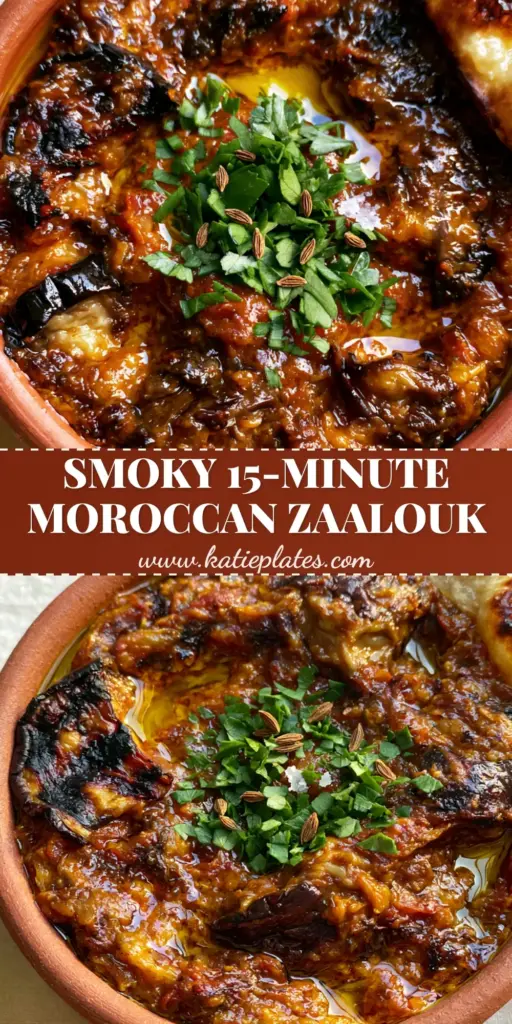
Creating this Moroccan Zaalouk is more than just making a dip; it’s about mastering the art of the “jammy” vegetable reduction. Whether you’re serving this as an appetizer or a healthy lunch, the combination of smoky eggplant and toasted cumin is guaranteed to impress. Don’t forget to take a photo of your terracotta bowl and share it with us!
If you loved this recipe, please leave a comment below and share your results. For more Mediterranean inspiration, follow me on Pinterest and save this recipe to your favorite boards.