Experience the soul-warming depth of a true West African classic with this Senegalese Peanut Stew. Known traditionally as Mafé, this dish is a masterclass in balancing rich, savory fats with vibrant, earthy sweetness.
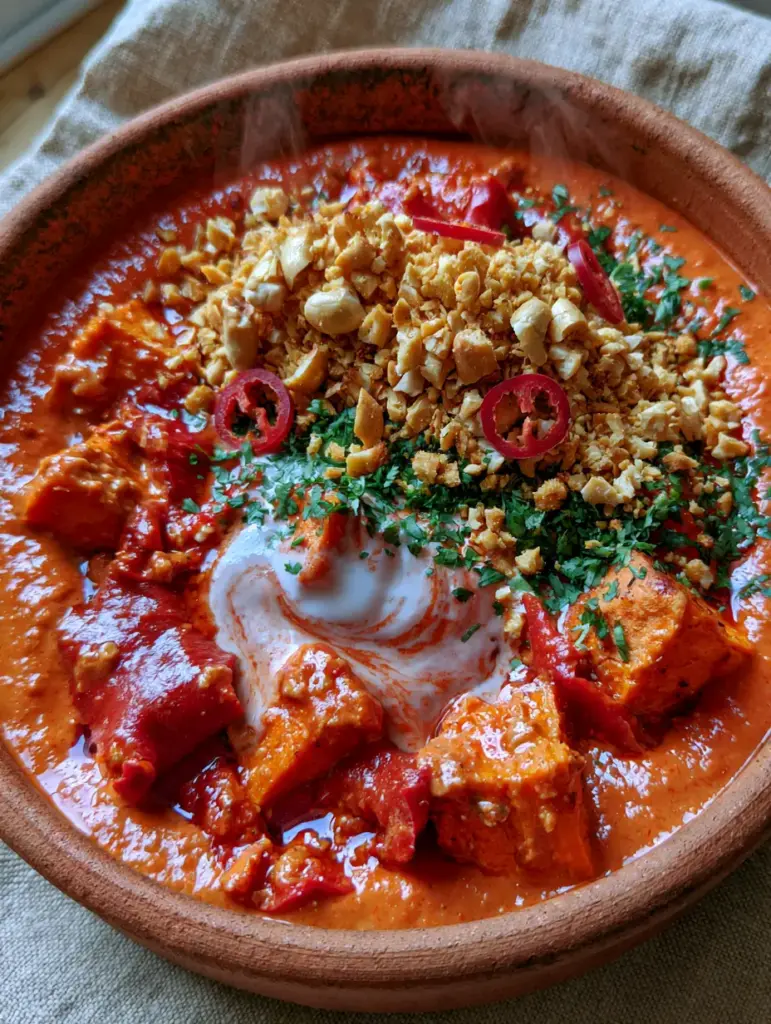
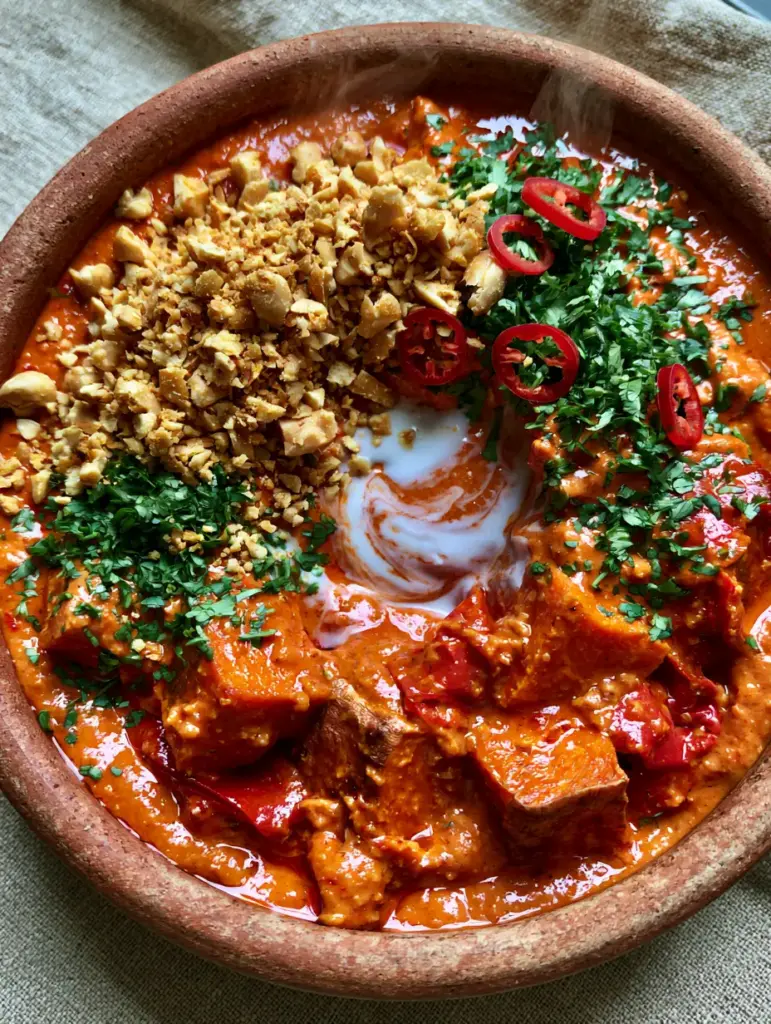
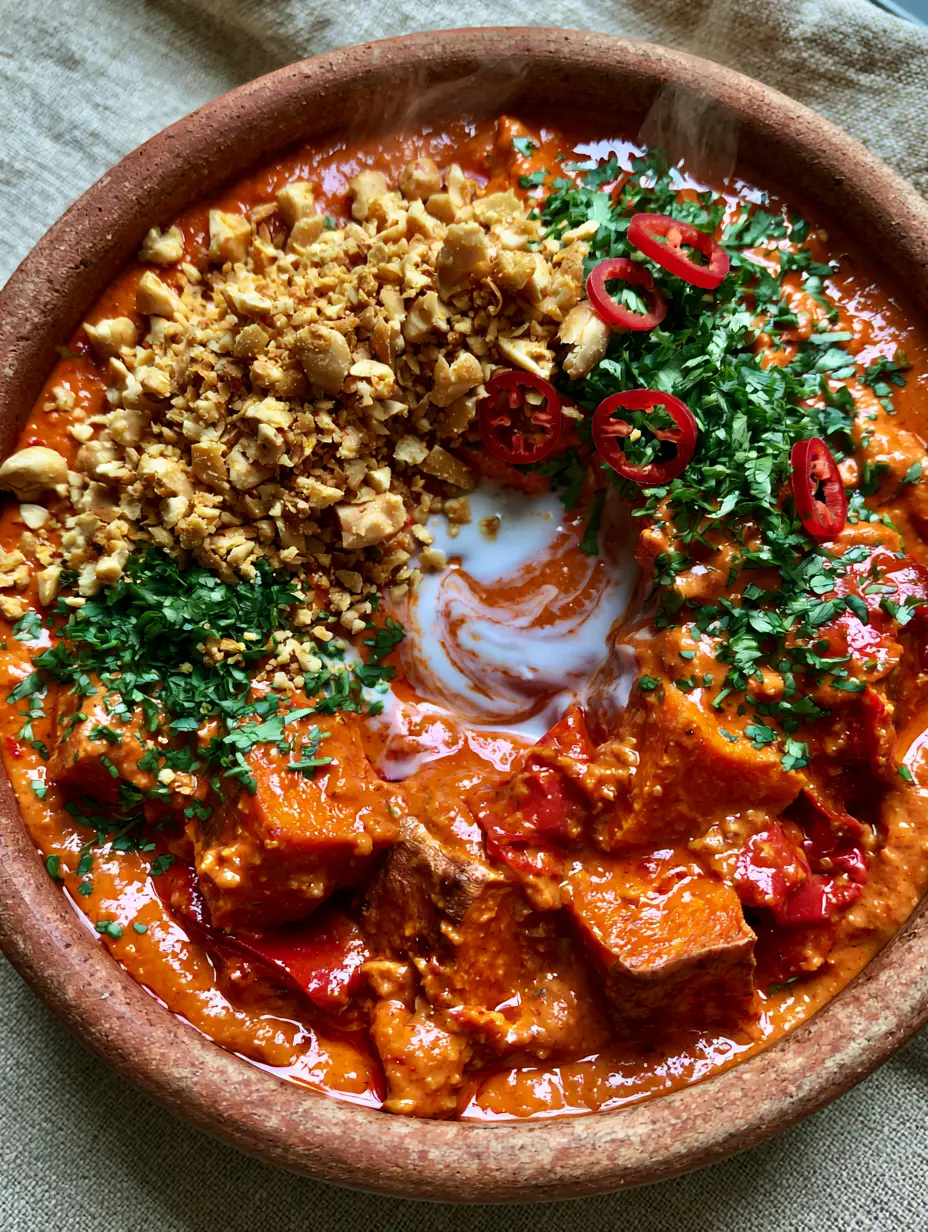
The visual allure of this stew is undeniable. Imagine a thick, velvety, deep orange-red peanut and tomato sauce that carries a glossy sheen under soft natural light.
Every spoonful offers a contrast of textures, from large, tender cubes of roasted sweet potato to the crunch of a mountain of toasted golden peanuts. The rising steam carries the scent of ginger, garlic, and cumin, inviting you to dive into a rustic terracotta bowl of pure comfort.
The Visual and Culinary Soul of Authentic Mafé
This Senegalese Peanut Stew isn’t just a meal; it’s a sensory experience designed to keep you coming back for more. We have meticulously crafted this recipe to ensure it matches the vibrant, high-detail aesthetic of professional culinary photography.
- Vibrant Color Palette: The deep orange-red base provides a stunning backdrop for the bright green cilantro and thin rounds of fresh red chili.
- Textural Contrast: We move beyond mushy vegetables by roasting the sweet potatoes separately to ensure they remain intact and caramelized.
- Creamy Complexity: A marbled swirl of heavy coconut milk cuts through the heat and adds a luxurious mouthfeel to the thick peanut base.
- Aromatic Foundation: By blooming spices in oil, we create a sauce that is as fragrant as it is visually striking.
If you are looking for more comforting bowls, you might also enjoy our coconut milk chicken for another take on creamy, spiced poultry.
Foundational Ingredients for the Perfect Peanut Base
To achieve the “velvety and glossy” texture described in our visual blueprint, each ingredient serves a specific scientific purpose. We don’t just add flavor; we build structure.
Natural Creamy Peanut Butter: 1 cup (250g). This is the heart of the stew; use unsweetened, natural peanut butter to ensure the fats emulsify into a glossy sauce rather than a sugary mess.
Tomato Paste: 6 oz (170g). Concentrated tomato paste provides the “deep orange-red” hue and a necessary acidic backbone to balance the heavy peanut fats.
Sweet Potatoes: 2 lbs (900g). Large cubes are roasted until the exterior is slightly chewy and the interior is buttery, providing the “large, tender cubes” visible in the bowl.
Red Bell Peppers: 2 large (approx. 300g). Sliced into thin strips and softened, these add a gentle sweetness and a different shade of red to the visual profile.
Vegetable Broth: 4 cups (950ml). This acts as the liquid medium, allowing the peanut butter and tomato paste to transform into a cohesive, pourable sauce.
Full-Fat Coconut Milk: 1/2 cup (120ml). Specifically reserved for that iconic “swirl,” providing a bright white contrast against the dark stew.
Aromatic Trio: 1 large yellow onion (200g), 4 cloves of garlic, and 2 tbsp (28g) of fresh ginger. These are the “invisible” ingredients that provide the deep, lingering flavor profile.
Garnish Kit: 1/2 cup (60g) crushed toasted peanuts, 1 bunch fresh cilantro, and 2 fresh red chilies. These are non-negotiable for achieving the “mountain of garnishes” required for the final presentation.
Essential Tools for a Professional Stew Finish
While the ingredients are the stars, the equipment ensures the “extreme detail” and “glossy sheen” are captured perfectly in the final dish.
Heavy-Bottomed Dutch Oven: This provides even heat distribution, preventing the peanut butter from scorching at the bottom of the pot. A rustic matte terracotta pot is beautiful for serving, but a Dutch oven is better for the actual cooking.
Large Rimmed Baking Sheet: You need enough surface area to roast the sweet potatoes without crowding them. If they crowd, they steam; if they have space, they caramelize.
High-Speed Whisk: Essential for incorporating the peanut butter into the broth to create that “velvety” texture without lumps.
Sharp Chef’s Knife: To achieve the “thin rounds of fresh red chili” and perfectly “chopped fresh cilantro” seen in the visual prompt.
Step 1: Caramelizing the Sweet Potato Cubes
To get the look of “tender cubes of roasted sweet potato,” we cannot simply boil them in the sauce. Boiling rounds off the edges and makes them look muddy.
Preheat your oven to 400°F (200°C). Peel and cut your sweet potatoes into uniform 1-inch (2.5cm) cubes. Uniformity is key for both cooking time and visual appeal.
Toss the cubes with 2 tbsp (30ml) of neutral oil and a pinch of salt. Spread them on a baking sheet and roast for 20-25 minutes. Look for the “visual cue” of browned, slightly shrunken edges—this indicates the sugars have caramelized.
This technique is similar to how we prepare the base for our potatoes Dauphinoise, where texture and structural integrity are paramount.
Step 2: Building the Deep Orange-Red Base
While the potatoes roast, place your Dutch oven over medium heat with 1 tbsp (15ml) of oil. Add the finely diced onion and sliced red bell peppers.
Sauté for 6-8 minutes until the peppers are “softened” as per the blueprint. Add the minced garlic and grated ginger, stirring for 60 seconds until the aroma fills your kitchen.
Now, add the tomato paste. This is a critical culinary step. Cook the paste for 3-4 minutes, stirring constantly, until it turns from a bright red to a dark, rusty brick color. This “fry” removes the raw metallic taste and develops the “deep orange-red” visual foundation.
Step 3: Emulsifying the Peanut Sauce
Lower the heat. Slowly whisk in the 1 cup (250g) of peanut butter. It will look chunky at first, but keep stirring as you gradually pour in the vegetable broth.
The science of emulsification happens here. The fats in the peanut butter will bind with the liquid. Bring the mixture to a gentle simmer.
Season with 1 tsp (5g) of ground cumin and a pinch of cayenne pepper if you want a subtle background heat. The sauce should be thick enough to coat the back of a spoon, creating that “velvety” appearance.
Step 4: The Final Simmer and Assembly
Once the sauce is thick and glossy, fold in the roasted sweet potato cubes. Be gentle; you don’t want to break the edges of the potatoes.
Simmer for an additional 5-10 minutes. This allows the potatoes to absorb some of the savory peanut flavor while they contribute their sweetness to the sauce. You should see “rising steam” and a “glossy sheen” developing on the surface of the stew.
If you find this process relaxing, you might find the slow-cook nature of many Ramadan recipes equally rewarding during the colder months.
Expert Tips for a Picture-Perfect Peanut Stew
- Control the Gloss: If the sauce looks too matte, stir in a teaspoon of peanut oil at the very end to enhance the shine.
- Toast the Garnish: Always toast your peanuts in a dry pan for 2-3 minutes before crushing. This intensifies the “golden” color and provides a much better crunch.
- The Swirl Technique: Use a spoon to drizzle the coconut milk in a circular motion, then use a toothpick to lightly drag through the white lines to create the “marbled” effect.
- Freshness Matters: Only add the cilantro and chili rounds at the very last second. The residual heat will wilt the cilantro quickly, losing that “bright green” contrast.
The Best Pairings for Senegalese Peanut Stew
This stew is incredibly hearty on its own, but it pairs beautifully with starches that can soak up the thick sauce. A simple bowl of jasmine rice or even crusty bread works wonders.
For a complete West African-inspired feast, consider serving this alongside a light salad or even a refreshing fruit-based side. If you’re hosting a gathering during the warmer transition months, something unique like watermelon fries can provide a shocking but welcome palate cleanser between bites of rich peanut sauce.
If you are decorating your space for a seasonal dinner, don’t forget to check out our guide on autumn home decor to match the warm tones of this dish.
Storage and Reheating Advice
Senegalese Peanut Stew is one of those rare dishes that tastes even better the next day. As it sits, the flavors of the ginger, garlic, and peanut butter meld together more deeply.
Refrigeration: Store in an airtight container for up to 4 days. The sauce will thicken significantly when cold; simply add a splash of water or broth when reheating to loosen it back to its velvety state.
Freezing: This stew freezes remarkably well for up to 3 months. Avoid freezing the coconut milk swirl and garnishes. Add those fresh when you thaw and reheat the base.
Frequently Asked Questions
Yes, this recipe is naturally vegan! We use vegetable broth and coconut milk, making it a hearty, plant-based meal full of protein.
While you can use chunky peanut butter, a smooth, natural variety is preferred to achieve the velvety, glossy sauce texture seen in the photos. The ‘crunch’ is better provided by adding fresh toasted peanuts as a garnish.
The secret is roasting the sweet potato cubes separately until they have a caramelized exterior. Only fold them into the stew at the very end to maintain their structural integrity.
The recipe as written has a mild, warm heat from ginger and a pinch of cayenne. You can control the spice level by adding more or fewer fresh red chili rounds at the end.
The gloss comes from the natural oils in the peanut butter and tomato paste emulsifying with the vegetable broth. If it looks matte, a small drizzle of peanut oil will restore the shine.
Senegalese Peanut Stew Recipe Card
Senegalese Peanut Stew: A Velvety West African Mafé Recipe
Ingredients
Equipment
Method
- Toss cubed sweet potatoes with oil and salt, then spread on a baking sheet.
- Roast at 400°F (200°C) for 20-25 minutes until edges are caramelized and tender.
- Sauté onion and red bell peppers until softened. Add garlic and ginger.
- Stir in tomato paste and cook for 3-4 minutes until it turns a deep brick red.
- Whisk in peanut butter and broth until a smooth, velvety sauce forms.
- Fold in roasted sweet potatoes and simmer for 10 minutes.
- Serve in bowls, swirl in coconut milk, and top with peanuts, cilantro, and chilies.
Notes
Use natural, unsweetened peanut butter for the best glossy finish.
Closing & Call to Action
This Senegalese Peanut Stew is a testament to the beauty of West African cuisine—bold, nutritious, and visually stunning. Whether you are cooking for a weeknight family dinner or a special gathering, this velvety bowl is guaranteed to impress.
If you enjoyed this recipe, please leave a comment below and let us know how your sweet potatoes turned out! Don’t forget to share your creations on Pinterest and tag us so we can see your beautiful marbled coconut swirls.
“`