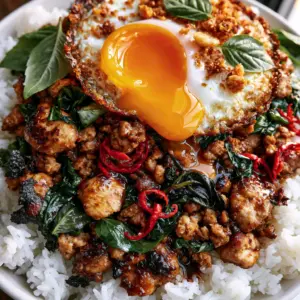
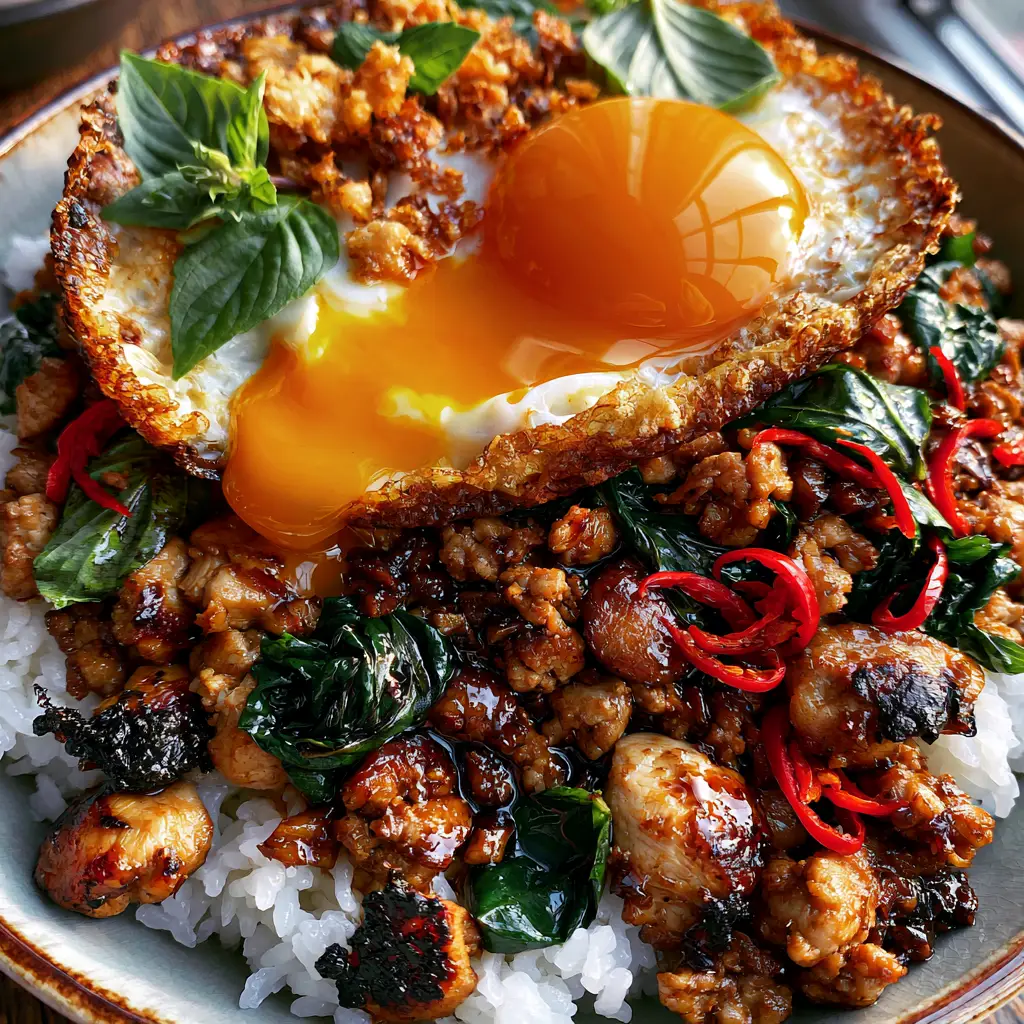
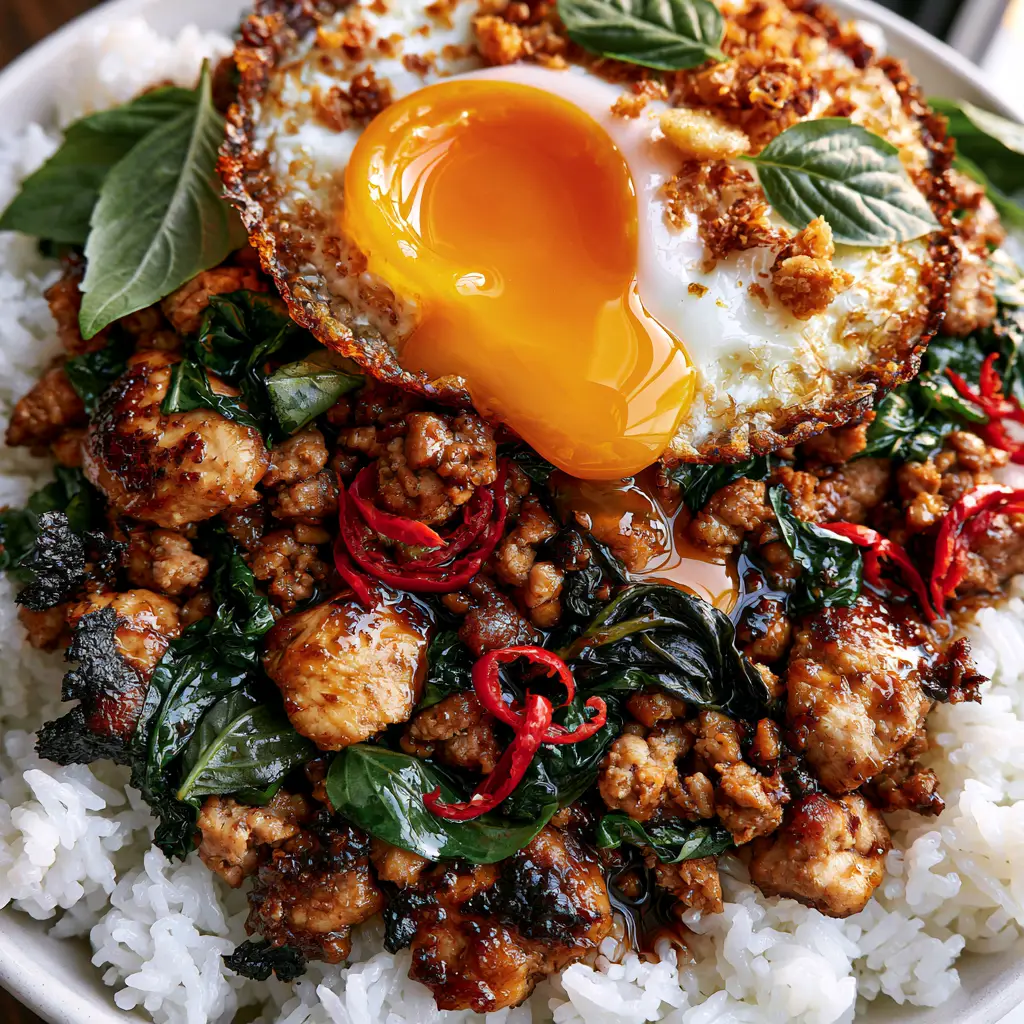
Thai basil chicken is the quintessential Thai street food dish that perfectly balances spicy, savory, and sweet flavors in every bite. If you have ever wandered the bustling streets of Bangkok, the intoxicating aroma of garlic, bird eye chilis, and aromatic basil hitting a searing hot wok is unmistakable. This recipe recreates that authentic experience, featuring caramelized ground chicken coated in a dark glossy soy glaze, served over steaming jasmine rice and topped with a signature crispy-edged fried egg.
What makes this Thai basil chicken stand out is the contrast of textures. You have the soft, fragrant rice, the tender yet seared chicken bits, and that incredible “Kai Dao” (Thai-style fried egg) with its lacy, golden-brown edges and a runny golden yolk that acts as a natural sauce. Whether you are looking for a quick weeknight chicken dinner or a way to spice up your meal prep, this 15-minute masterpiece is the answer.
Why This Authentic Thai Basil Chicken Works
- Extreme Caramelization: By searing the ground chicken until it develops charred edges, we lock in deep umami flavor that mimics a high-heat commercial wok.
- The “Lacy” Egg: We use a specific shallow-frying technique to ensure the egg has crispy edges while maintaining a perfectly liquid center.
- Aromatic Depth: The combination of fresh Thai basil and toasted garlic bits provides a sensory explosion that simple stir-fries lack.
- Glossy Finish: Our specific ratio of dark and light soy sauces creates a dark glossy soy glaze that clings to every morsel of meat.
The Secret Ingredients for Pad Krapow Gai
To achieve that restaurant-quality Thai basil chicken, the quality and type of your ingredients matter significantly. Here is what you will need and why each component is vital for the final dish.
The Protein and Aromatics
Ground Chicken: While you can use sliced breast, ground chicken (454g / 1 lb) provides more surface area for the dark glossy soy glaze to adhere to. Look for a mix of white and dark meat for the best moisture.
Thai Bird Eye Chilis: These small but mighty peppers provide the signature heat. For a medium spice, use 3-5 chilis. Slice them thinly to release their oils into the hot oil.
Garlic: You will need at least 5-6 cloves. We will mince them finely so they transform into toasted garlic bits during the high-heat stir-fry process.
Thai Basil vs. Holy Basil: Traditionally, “Pad Krapow” uses Holy Basil (Krapow). However, Thai Basil (Bai Horapha) is a fantastic, more accessible substitute that offers a wonderful anise-like aroma. We will use 1 cup (30g) of wilted Thai basil inside the dish and fresh Thai basil leaves for garnish.
The Ultimate Stir-Fry Sauce
Dark Soy Sauce: This is primarily for color and a hint of molasses-like sweetness. It gives the chicken that dark glossy soy glaze look. You will need 1 tablespoon (15ml).
Oyster Sauce: This provides the savory “oomph” and thickens the sauce slightly so it coats the meat without being watery. Use 2 tablespoons (30ml).
Fish Sauce: Essential for that funky, salty backbone of Thai cuisine. 1 teaspoon (5ml) is usually enough to balance the sweetness.
Step-by-Step: Mastering the Sear and the Sizzle
Preparing the Crispy-Edged Fried Egg
In Thailand, the egg is not just a garnish; it is a component. Heat 3 tablespoons (45ml) of neutral oil in your wok or skillet over medium-high heat. Once the oil is shimmering and slightly smoking, crack the egg directly into the center.
Do not move it! Let the edges bubble and turn golden brown and “lacy.” Use a spoon to splash a little hot oil over the whites to set them, but keep the runny golden yolk untouched. Remove and set aside on a paper towel.
Searing the Chicken and Chilis
Wipe out excess oil but leave about 1 tablespoon (15ml). Increase heat to high. Add your minced garlic and sliced red bird eye chilis. Stir-fry for 30 seconds until the toasted garlic bits are fragrant and golden.
Add the ground chicken, spreading it out into a thin layer. Let it sit undisturbed for 60-90 seconds. This is the secret to getting those visible seared bits and charred edges that define a great Thai basil chicken. Break the meat apart and continue to toss until fully cooked.
The Glaze and the Basil Finish
Pour in your pre-mixed sauce (soy sauces, oyster sauce, and a pinch of sugar). Toss rapidly on high heat. The liquid will reduce quickly, creating a dark glossy soy glaze that coats the chicken perfectly. If you like more variety in your stir-fry, this technique is similar to what we use in our Chinese chicken and broccoli.
Turn off the heat. This is crucial! Add the wilted Thai basil and toss just until the leaves collapse. Overcooking the basil will lose its bright flavor and color.
Expert Tips for Success
- Dry the Chicken: If your ground chicken is too wet, it will steam instead of sear. Pat it dry with paper towels before adding it to the wok.
- The Wok Breath (Wok Hei): Use the highest heat your stove allows. The goal is to cook the Thai basil chicken fast to keep the meat juicy while charring the outside.
- Balance the Heat: If bird eye chilis are too hot for you, remove the seeds or substitute with Fresno chilis. If you love heat, try this alongside our Korean spicy chicken noodles.
- Prep Everything First: Stir-frying happens in minutes. Have your sauce mixed and your basil picked before the heat goes on.
Storage, Reheating & Freezing
Storage: Store leftovers in an airtight container in the refrigerator for up to 3 days. The flavors of the Thai basil chicken often deepen the next day.
Reheating: For best results, reheat in a skillet over medium heat with a splash of water to loosen the dark glossy soy glaze. Avoid microwaving the fried egg; it is best enjoyed fresh.
Freezing: You can freeze the chicken mixture (without the egg or rice) for up to 2 months. Thaw overnight in the fridge before reheating.
What to Serve With This Dish
Traditionally, this is a one-bowl meal served over jasmine rice. However, if you want a full Thai feast, consider starting with a refreshing Thai chicken salad or a side of steamed bok choy. The richness of the runny golden yolk also pairs beautifully with a crisp cucumber salad to cut through the saltiness.
Frequently Asked Questions
Yes, you can use Italian sweet basil if Thai basil is unavailable, though the flavor will be less peppery and lack the distinct anise notes. Add a pinch of black pepper to compensate.
The secret is using more oil than usual (shallow frying) and ensuring the oil is shimmering hot before adding the egg. The high heat crisps the bottom instantly while the top stays soft.
Traditionally, yes. Bird eye chilis are quite hot. For a milder version, remove the seeds from the chilis or use only one chili for flavor without the intense heat.
This happens if the pan isn’t hot enough or if the chicken wasn’t patted dry. High heat evaporates excess moisture, allowing the sauce to reduce into a dark glossy glaze.
The Ultimate Thai Basil Chicken Recipe Card
Thai basil chicken (Pad Krapow Gai) with Crispy Fried Egg
Ingredients
Equipment
Method
- Heat oil in a wok until shimmering. Fry the eggs one at a time until the edges are brown and crispy-edged, but the yolk remains a runny golden yolk. Remove and set aside.
- In the same wok, stir-fry garlic and chilis until fragrant. Add ground chicken and sear without moving for 1 minute to get charred edges.
- Pour in the soy sauce mixture and toss until a dark glossy soy glaze forms and coats the chicken completely.
- Remove from heat and fold in the Thai basil leaves until just wilted. Serve immediately over jasmine rice with the fried egg on top.
Notes
Use Holy Basil if you can find it for a more peppery, authentic 'Krapow' flavor.
Join the Community & Save!
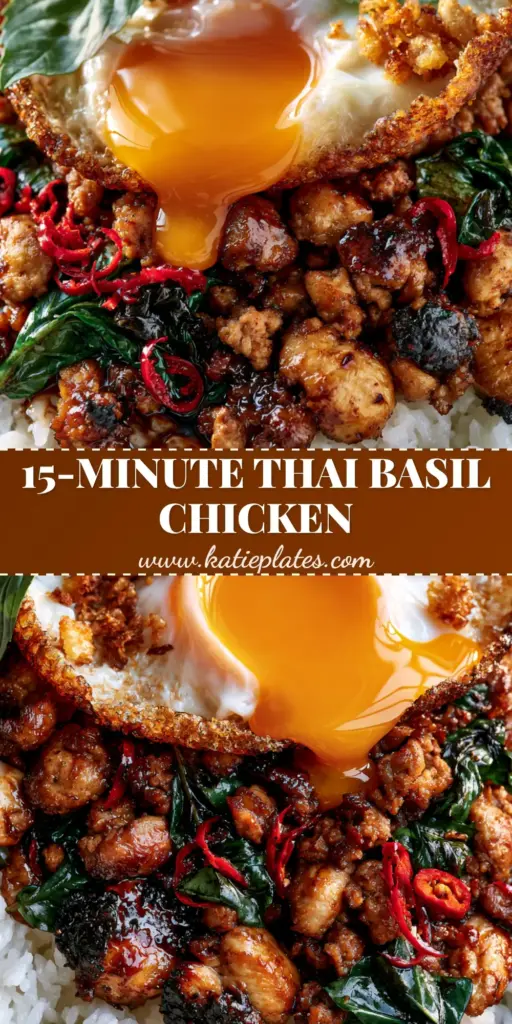
If you loved this Thai basil chicken, please leave a 5-star rating in the recipe card above! It helps other home cooks find this recipe. Don’t forget to save this to your Pinterest Dinner Board so you never lose the link. If you made this, snap a photo and share it in the comments below or tag @katieplates on social media—I love seeing your crispy-edged fried eggs and runny golden yolks!