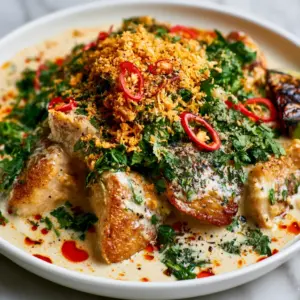
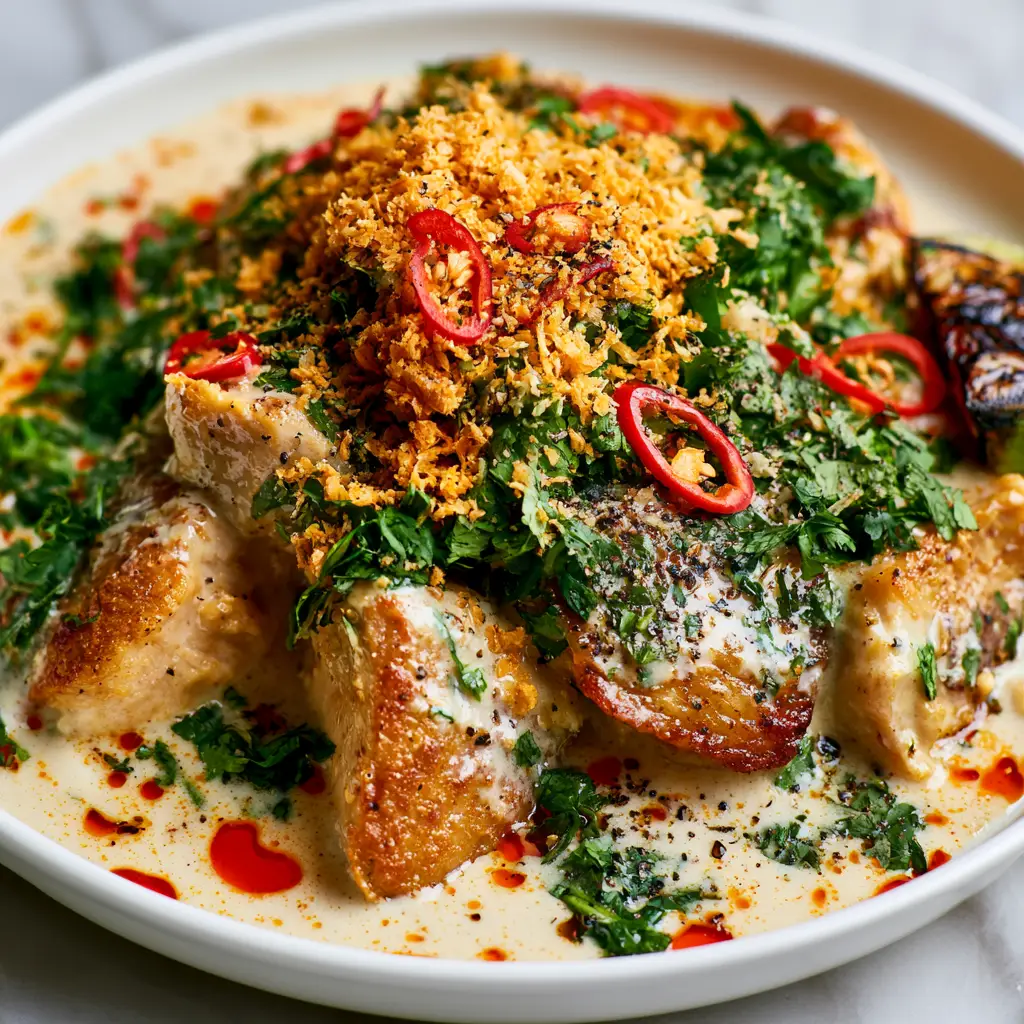
Thai chicken is the ultimate comfort food for anyone who craves the vibrant, aromatic flavors of Southeast Asia combined with the soul-soothing richness of a velvety coconut base. This specific preparation focuses on the contrast between succulent, golden-seared chicken breast and a thick, ivory-hued sauce that carries just the right amount of heat. If you have been searching for a recipe that looks like it walked off the set of a high-end food photography shoot but tastes like a multi-generational family secret, you have arrived. Every bite offers a symphony of textures: the crunch of toasted shredded coconut, the snap of fresh bird’s eye chilies, and the bright acidity of charred lime. This isn’t just another dinner; it’s a sensory experience designed to dominate your Pinterest feed and your weekly rotation.
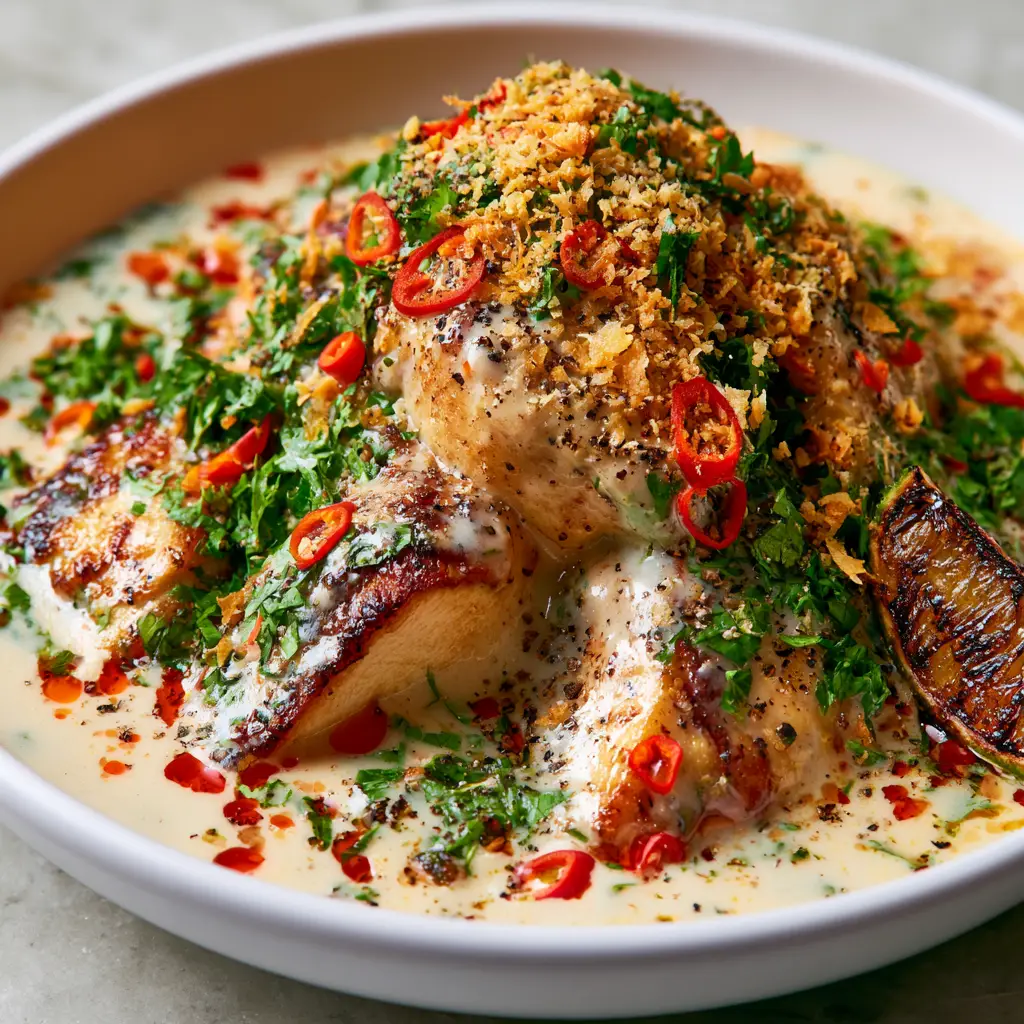
Why This Creamy Coconut Thai Chicken Works Every Time
- Textural Masterclass: We combine tender, seared protein with a thick ivory coconut milk sauce and a garnish of toasted coconut for maximum mouthfeel.
- Visual Contrast: The stark white sauce acts as a canvas for red chili oil droplets and vibrant emerald cilantro, making it a high-conversion dish for social media.
- Balanced Heat Profile: By using sliced red bird’s eye chilies, you get controlled bursts of spice rather than an overwhelming burn.
- Weeknight Friendly: Despite the gourmet appearance, this dish fits perfectly into your weeknight chicken dinner schedule without requiring hours of prep.
When we talk about Thai chicken, we often think of a liquid curry. However, this recipe elevates the concept by reducing the coconut milk into a thick, concentrated glaze that clings to the meat. It bridges the gap between a traditional curry and a modern bistro-style plate. If you enjoy the flavor profile of a Thai chicken salad, you will find these same aromatic notes here but served in a warm, decadent format.
Pantry Staples for the Ultimate Thai Coconut Chicken
To achieve the specific Visual Recipe Blueprint we are targeting, each ingredient must be selected with intention. Substitutions are possible, but for the most authentic “ivory and gold” aesthetic, stick to the following:
The Protein Foundation
Chicken Breasts: We use 1.5 lbs (680g) of boneless, skinless breasts. Cutting them into large, succulent chunks ensures they stay juicy while providing enough surface area for a golden seared chicken breast finish. If you prefer dark meat, you could adapt this using the techniques found in our Thai basil chicken guide, but breasts provide the cleanest visual for the ivory sauce.
The Aromatic Ivory Base
Full-Fat Coconut Milk: You need 1 can (400ml) of high-quality, full-fat coconut milk. Avoid “light” versions, as they won’t emulsify into the thick, velvety ivory sauce required for this dish. The fat content is crucial for the mouthfeel and for carrying the fat-soluble flavors of the spices.
Red Chili Oil: This is the secret to those beautiful red chili oil droplets. You can use store-bought or a quick homemade infusion. It provides a visual pop against the white sauce and a lingering warmth.
The Texture and Garnish Layer
Toasted Shredded Coconut: Use 1/4 cup (25g) of unsweetened shredded coconut. Toasting it until golden brown adds a nutty aroma and a necessary crunch that mimics the complexity of indonesian chicken dishes.
Bird’s Eye Chilies: These small but mighty red chilies provide the “thin rings of bright red” garnish. They are significantly spicier than jalapeños, so use them sparingly if you are sensitive to heat.
Fresh Cilantro and Charred Lime: Emerald cilantro provides the color contrast, while charred lime wedges offer a smoky acidity that cuts through the rich coconut fat.
Step-by-Step Instructions for Gold-Seared Perfection
1. Achieving the Golden Sear
Pat your chicken chunks completely dry with paper towels. Season generously with 1 tsp (5g) salt and 1/2 tsp (2g) cracked black pepper. Heat 2 tbsp (30ml) of high-smoke-point oil in a wide skillet over medium-high heat. Add the chicken in a single layer, ensuring they aren’t crowded. Searing the chicken is about patience; leave them undisturbed for 3-4 minutes until a deep golden crust forms. Flip and sear for another 2 minutes. Remove the chicken from the pan and set aside; it doesn’t need to be cooked through yet.
2. Toasting the Coconut Garnish
In a small, dry pan over medium heat, add your shredded coconut. Stir constantly for 2-3 minutes. Watch it closely! It goes from white to burnt very quickly. You are looking for a toasted golden coconut hue. Immediately remove from the heat and transfer to a bowl to stop the cooking process.
3. Reducing the Ivory Sauce
In the same skillet used for the chicken, reduce the heat to medium. Add 1 tbsp (15g) of grated ginger and 2 cloves of minced garlic. Sauté for 30 seconds until fragrant. Pour in the 400ml of full-fat coconut milk. Use a wooden spoon to scrape up the brown bits (fond) from the chicken—this adds incredible depth to your Thai chicken sauce. Simmer for 5-7 minutes until the sauce reduces and thickens into a thick, velvety ivory coconut sauce.
4. Charring the Lime Wedges
While the sauce simmers, place your lime wedges flesh-side down in a hot cast-iron pan or directly over a gas flame for 1-2 minutes. You want the edges to look blackened and caramelized. This process sweetens the juice and adds a professional “handheld smartphone photo” aesthetic to the final plating.
5. The Final Assembly
Add the chicken and any accumulated juices back into the ivory sauce. Simmer for 2-3 minutes until the chicken is cooked through. Taste and adjust seasoning with a splash of fish sauce or a pinch more salt. The sauce should be thick enough to coat the back of a spoon.
Expert Tips for Pinterest-Worthy Results
- The Droplet Technique: Do not stir the chili oil into the sauce. Instead, use a spoon to carefully place red chili oil droplets across the surface just before serving. This creates the “macro close-up” look that stops the scroll.
- Pepper Texture: Use coarse cracked black pepper rather than fine table pepper. The larger specks provide a beautiful visual contrast against the ivory sauce.
- Bird’s Eye Safety: When slicing the red bird’s eye chilies, wear gloves or wash your hands immediately after. The capsaicin in these peppers is potent!
- Sauce Consistency: If your sauce becomes too thick, add a tablespoon of water or chicken broth. If it’s too thin, keep simmering; the fat in the coconut milk will eventually create that velvety texture.
If you love the bold spices used here, you might also enjoy exploring the aromatics in tandoori chicken or the savory depth of Chinese chicken and broccoli.
Best Practices for Storage and Reheating
Storing: Place leftovers in an airtight container for up to 3 days in the refrigerator. The coconut sauce will thicken significantly when cold; this is normal due to the high fat content.
Reheating: For the best results, reheat on the stovetop over low heat. Add a splash of coconut milk or water to loosen the sauce back to its ivory coconut milk sauce glory. Avoid the microwave if possible, as it can cause the coconut oil to separate from the solids.
Freezing: We do not recommend freezing this dish, as the coconut milk texture can become grainy upon thawing.
Perfect Pairings for Thai Chicken
To keep the focus on the Thai chicken, serve this over a bed of jasmine rice or coconut rice. The grains will soak up the extra sauce and chili oil. For a lower-carb option, cauliflower rice works exceptionally well. A side of smashed cucumber salad or steamed bok choy provides a fresh, crunchy contrast to the creamy sauce. If you’re looking for a noodle-based alternative, try serving the chicken alongside Korean spicy chicken noodles for a fusion feast.
Frequently Asked Questions
Absolutely! Chicken thighs are more forgiving and remain juicy even if simmered longer. Just ensure you sear them skin-side down first to get that golden color.
Use full-fat canned coconut milk and simmer it over medium heat. Avoid a rolling boil, as high heat can cause the fat to separate and the sauce to look broken.
The spice level is adjustable. The heat comes primarily from the bird’s eye chilies and chili oil. For a milder version, remove the seeds from the chilies or omit the oil droplets.
We avoid using yellow curry powder or turmeric. The color comes strictly from the concentrated white coconut milk mixed with the clear juices of the seared chicken.
The Ultimate Thai Coconut Chicken Recipe
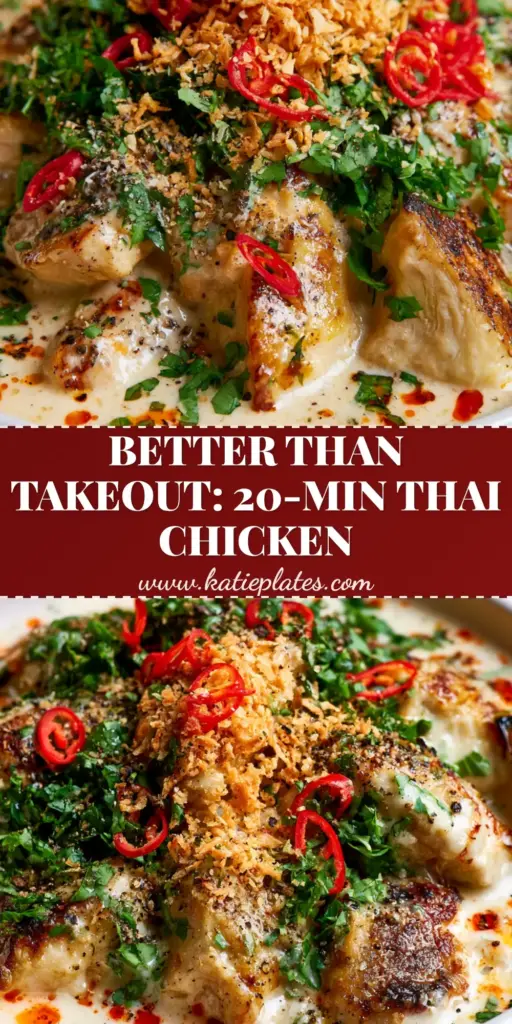
Thai chicken in Creamy Coconut Sauce with Red Chili Oil
Ingredients
Equipment
Method
- Season chicken chunks with salt and pepper. Sear in a hot skillet until golden brown on all sides. Remove and set aside.
- Toast shredded coconut in a dry pan until golden brown and fragrant. Set aside.
- Simmer coconut milk, garlic, and ginger in the skillet until thickened into an ivory sauce. Return chicken to the pan.
- Plate the chicken and sauce. Top with chili oil droplets, toasted coconut, chilies, cilantro, and charred lime.
Notes
Char the lime wedges flesh-side down for maximum flavor impact.
Join the Community!
Did this Thai chicken recipe make it to your dinner table tonight? We want to see your results! Save this recipe to your Pinterest boards so you never lose it, and follow @katieplates for more high-flavor, high-style recipes. If you made this, please drop a comment below and share a photo of your ivory sauce and chili oil droplets. Don’t forget to leave a 5-star rating—it helps other home cooks find this deliciousness!