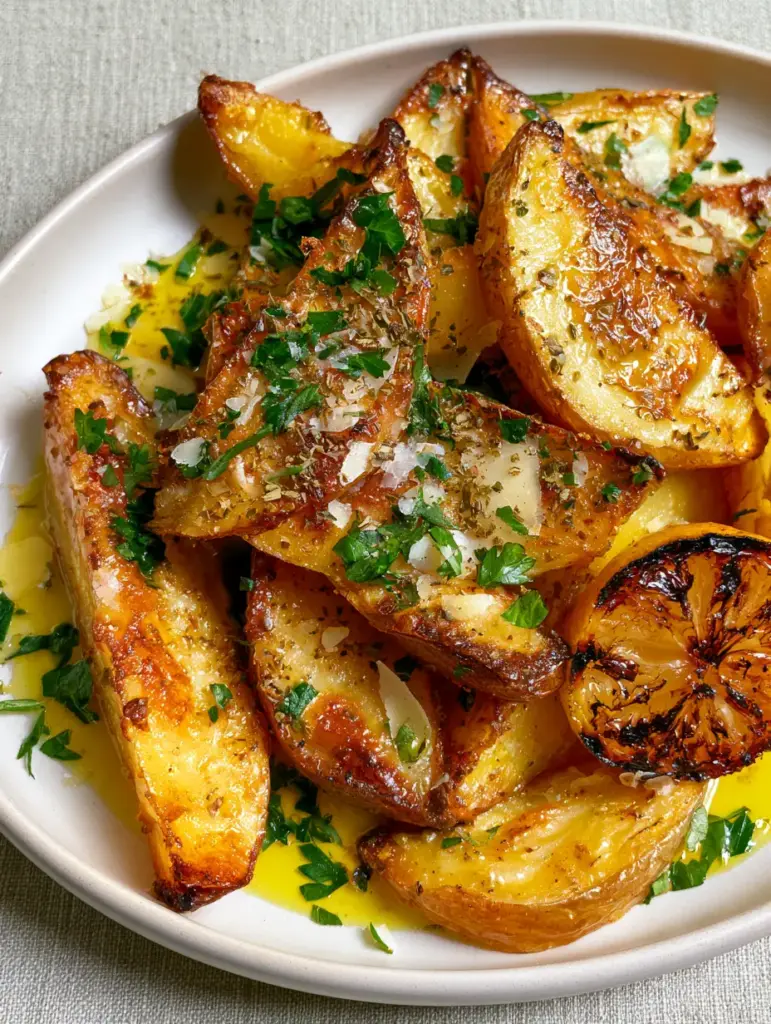
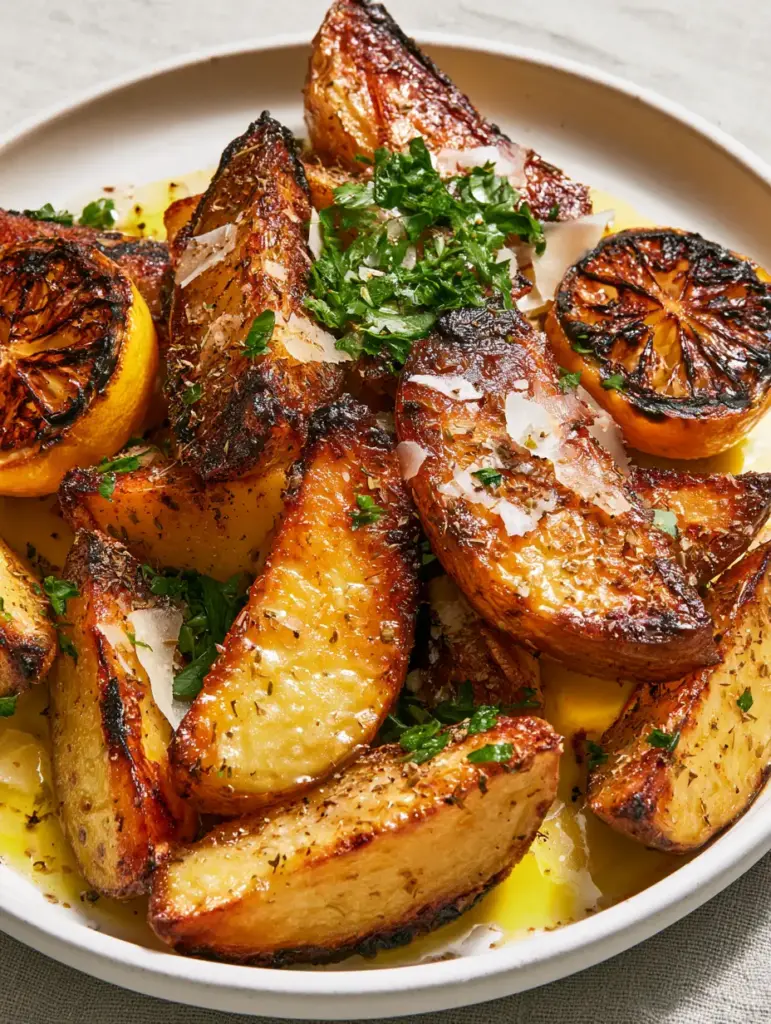
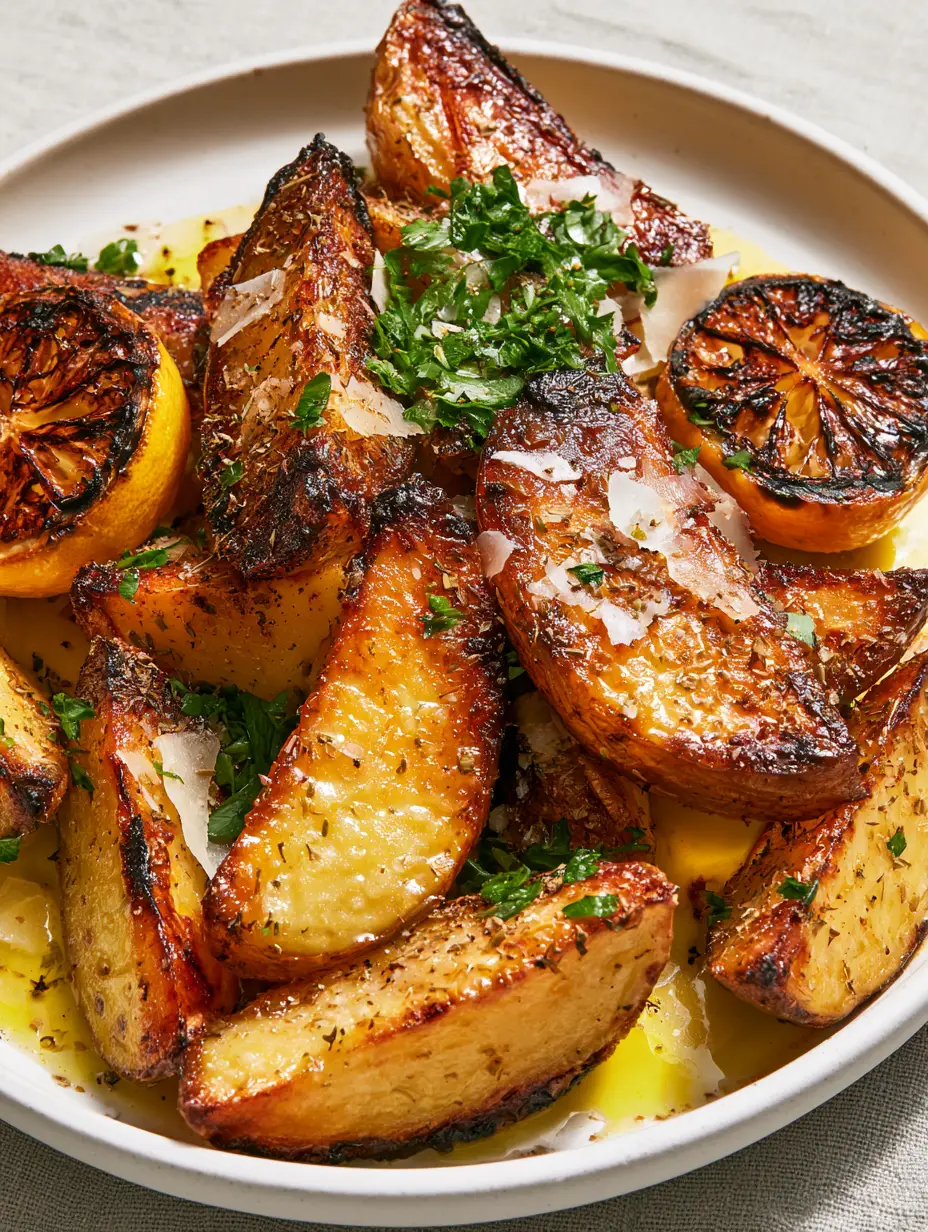
When you imagine the perfect side dish, these lemon roasted Greek potatoes are likely exactly what you see. We aren’t talking about standard roasted spuds; we are talking about Yukon Gold wedges that possess a glass-like, golden-brown exterior and deep charred corners that shatter upon impact. Inside, they reveal a steaming, creamy, pale yellow interior that has been infused with a vibrant lemon-garlic-broth emulsion.
This recipe captures the authentic “taverna” style that home cooks often struggle to replicate. By using a specific braising-to-roasting technique, the potatoes absorb the bright acidity of the lemon and the savory depth of the chicken broth before the liquid evaporates, leaving behind a concentrated glaze and healthy fats to fry the edges to a crisp. The final result is a heap of extra crispy wedges glistening under a canopy of fresh parsley and oversized flakes of Maldon sea salt.
Whether you are hosting a festive dinner or looking for a reliable weeknight staple, these potatoes offer a sensory experience that standard roasting methods simply cannot match. From the sizzle of the pan as it leaves the oven to the aromatic scent of dried Greek oregano hitting the hot oil, every element is designed for maximum culinary impact.
Why These Are the Ultimate Greek Potato Wedges
- Textural Contrast: The high starch content of Yukon Golds creates a velvety, mash-like center while the outside develops a thick, jagged crust.
- The Braise-and-Blast Method: We start the potatoes in liquid to cook them through and infuse flavor, then blast them at high heat to achieve those signature charred edges.
- Vibrant Emulsion: A combination of extra virgin olive oil, fresh lemon juice, and chicken broth creates a glistening yellow glaze that clings to every wedge.
- Aromatic Finishing: We use both dried Greek oregano for earthy depth and fresh flat-leaf parsley for a bright, herbal top note.
- Visual Garnish: Charred lemon halves nestled among the potatoes provide a smoky acidity that balances the richness of the oil.
The Anatomy of a Perfect Greek Potato Wedge
To achieve the result seen in professional culinary photography, you must start with the right ingredients. Not all potatoes are created equal, and for this specific Greek roast potatoes style, the Yukon Gold is king. Unlike Russets, which can become grainy, Yukon Golds hold their shape while maintaining a buttery consistency.
Yukon Gold Potatoes: You will need 3 lbs (1.36kg) of medium-sized potatoes. Their naturally yellow flesh provides that beautiful “pale yellow” interior mentioned in our visual blueprint.
Extra Virgin Olive Oil: Use 1/2 cup (120ml) of high-quality Greek olive oil. This acts as the fat source for the “frying” phase of the roast, ensuring the edges get extra crispy.
Chicken Broth or Stock: 1 cup (240ml) of low-sodium chicken broth is essential. The potatoes absorb the liquid, pulling the salt and collagen into the center of the wedge for a savory finish.
Fresh Lemon Juice: 1/3 cup (80ml) of freshly squeezed lemon juice (about 2 large lemons). The acid helps break down the surface starch, contributing to that “glass-like” texture.
Garlic: 6 cloves of garlic, smashed and minced. Garlic is a foundational element that mellows out during the long roast, becoming sweet and sticky.
Dried Greek Oregano: 1 tbsp (5g) of dried oregano. In Greek cooking, dried oregano is often preferred over fresh as it stands up better to high heat and provides a more concentrated flavor.
Kosher Salt and Black Pepper: Used for the initial seasoning. These fine grains penetrate the potato flesh during the braising stage.
Maldon Sea Salt: These oversized flakes are for the final garnish. They provide a clean, salty crunch that highlights the lemon roasted Greek potatoes’ acidity.
Fresh Flat-Leaf Parsley: 1/4 cup (15g) finely chopped. This adds a “bright green” contrast to the deep golden-brown tones of the roasted potatoes.
Essential Equipment for High-Heat Roasting
To achieve the “deep charred corners” and “jagged edges” described in the Midjourney prompt, you need a heavy-duty roasting pan or a large rimmed baking sheet. A thin pan will warp at the 400°F (200°C) temperatures required and won’t distribute heat evenly, leading to uneven browning.
A handheld citrus juicer is also recommended to extract the maximum 1/3 cup (80ml) of juice while keeping seeds out of your emulsion. Finally, ensure you have a sharp chef’s knife to cut the potatoes into uniform wedges; consistency in size ensures that every piece finishes with the same level of crispness.
Mastering the Braise-to-Roast Technique
Step 1: Preparing the Yukon Gold Wedges
Preheat your oven to 400°F (200°C). Scrub 3 lbs (1.36kg) of Yukon Gold potatoes thoroughly but leave the skins on for extra texture. Cut each potato in half lengthwise, then cut each half into 3 or 4 uniform wedges depending on size.
Place the wedges into a large roasting pan. They should be crowded but in a mostly single layer. This “heap” helps retain moisture in the center while the exposed tips catch the circulating hot air to char.
Step 2: Creating the Vibrant Yellow Emulsion
In a medium bowl or large measuring cup, whisk together the 1/2 cup (120ml) olive oil, 1 cup (240ml) chicken broth, 1/3 cup (80ml) lemon juice, minced garlic, and dried oregano. Pour this mixture directly over the potatoes in the pan.
Season generously with kosher salt and cracked black pepper. Toss the potatoes with your hands or tongs to ensure every surface is coated in the oil and broth mixture. The liquid should come about halfway up the sides of the potatoes.
Step 3: The Infusion Phase (Braising)
Cover the roasting pan tightly with aluminum foil. This step is crucial for the “creamy soft centers.” Slide the pan into the oven and roast for 20 minutes. The steam trapped under the foil par-cooks the potatoes and allows them to absorb the lemon-garlic-broth mixture.
During this time, the starch on the surface of the potatoes begins to gelatinize. This creates the foundation for the “glass-like” crust that will form once the foil is removed and the moisture evaporates.
Step 4: The Crisping Phase (Roasting)
Remove the foil and toss the potatoes gently. Add two lemon halves, cut side down, into the pan. Return the pan to the oven uncovered for another 40-50 minutes.
As the broth evaporates, you will hear the sound change from a soft simmer to a vigorous sizzle. This is the olive oil taking over. Turn the potatoes every 15-20 minutes. Look for the visual cue: the edges should turn a deep mahogany brown, and the liquid should be reduced to a thick, shimmering glaze.
Step 5: Achieving the Charred Finish
For the final 5 minutes, you can turn on the broiler if the corners aren’t sufficiently blackened. Watch closely; you want “deep charred corners,” not burnt centers. The lemon halves should now have blackened grill marks and caramelized surfaces.
Remove from the oven when the potatoes are glistening with a thin, vibrant yellow emulsion. The interior should be steaming and tender enough to smash with a fork, while the exterior remains rigid and crunchy.
Expert Tips for Success with Lemon Roasted Greek Potatoes
- Don’t Skimp on Oil: The olive oil is what transforms these from “boiled” potatoes to “roasted” masterpieces. It is the heat conductor that creates the jagged, crispy edges.
- The Broth Secret: Using chicken broth instead of just water adds a layer of umami that makes these crispy wedges taste like they came from a professional kitchen.
- Freshness Matters: Always use fresh lemon juice. Bottled juice lacks the enzymatic activity needed to properly break down the potato starch for that specific texture.
- Crowd the Pan: Unlike most roasting recipes that tell you to give space, Greek potatoes benefit from being slightly crowded. This creates the contrast between the soft sides and the charred tips.
Storage, Reheating, and Make-Ahead Advice
These lemon roasted Greek potatoes are best served immediately while the edges are at their peak “glass-like” crunch. However, if you have leftovers, they can be stored in an airtight container in the refrigerator for up to 4 days.
To reheat and restore the crispness, avoid the microwave. Instead, place the wedges in a single layer on a baking sheet and heat in a 400°F (200°C) oven or air fryer for 8-10 minutes. This will re-activate the oils and crisp up the skin without drying out the creamy interior.
What to Serve With This Iconic Greek Side
These potatoes are incredibly versatile. They are the traditional partner for souvlaki bowls or roasted lamb. The acidity of the lemon cuts through the richness of grilled meats perfectly.
If you are keeping things meat-free, they are a highlight among vegetarian Greek side dishes. Try serving them alongside a bowl of lemon whipped ricotta for dipping, or as part of a Mediterranean spread with zaalouk for a cross-cultural feast.
Frequently Asked Questions
While you can, Yukon Golds are preferred for their creamy, waxy texture. Russets tend to fall apart and become floury during the braising stage, missing that signature ‘pale yellow’ buttery interior.
No! Keeping the skins on Yukon Golds adds to the ‘jagged’ texture and helps hold the wedge together during the long roasting process.
Place the lemons cut-side down in the roasting pan for the final 45 minutes. The natural sugars will caramelize against the hot pan, creating those beautiful blackened grill marks.
The vibrant yellow comes from the combination of Yukon Gold flesh, high-quality extra virgin olive oil, and a concentrated lemon-garlic emulsion that glazes the potatoes as they roast.
Soggy potatoes usually result from too much liquid left in the pan or not enough fat. Ensure the broth has completely evaporated and the potatoes are ‘frying’ in the residual olive oil at the end of the roast.
The Best Lemon Roasted Greek Potatoes Recipe
Lemon Roasted Greek Potatoes with Glass-Like Crispy Edges
Ingredients
Equipment
Method
- Preheat oven to 400°F (200°C). Cut Yukon Gold potatoes into thick, uniform wedges and place in a large roasting pan.
- Whisk olive oil, chicken broth, lemon juice, garlic, and oregano. Pour over potatoes and toss to coat.
- Cover the pan tightly with foil and roast for 20 minutes to tenderize the centers.
- Remove foil, add lemon halves, and roast uncovered for 45-50 minutes, tossing occasionally, until the liquid evaporates and the edges are dark golden and charred.
Notes
Ensure the pan is not too large; slight crowding helps the braising process.
Closing and Call to Action
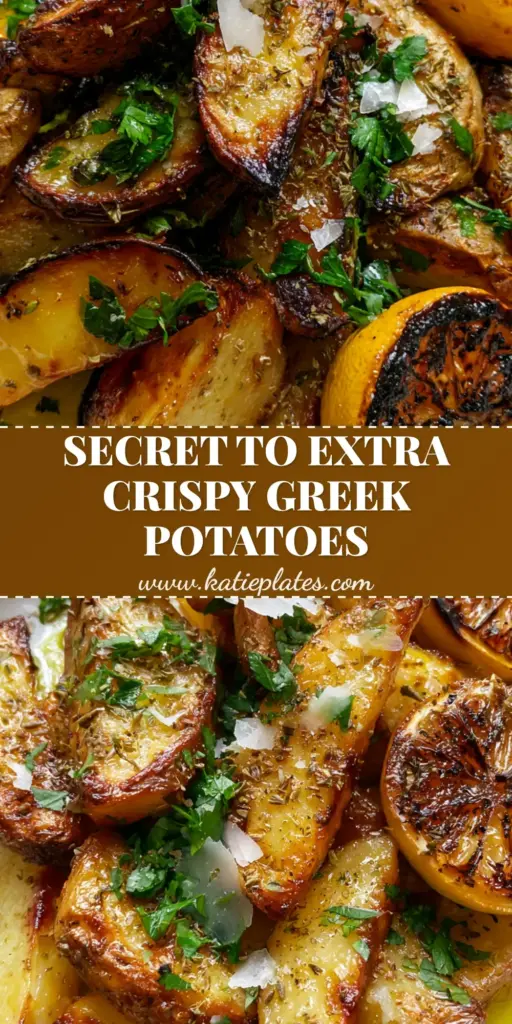
There is a reason lemon roasted Greek potatoes remain one of the most beloved dishes in Mediterranean cuisine. The combination of high-impact citrus, savory broth, and the incredible textural contrast of the Yukon Gold potato creates a side dish that often outshines the main course. The deep charred corners and glistening emulsion make for a stunning presentation on any minimalist platter.
If you enjoyed this deep dive into Greek culinary techniques, please leave a comment below and let us know how your charred edges turned out! Don’t forget to follow us on Pinterest and share your recreations by tagging @katieplates.