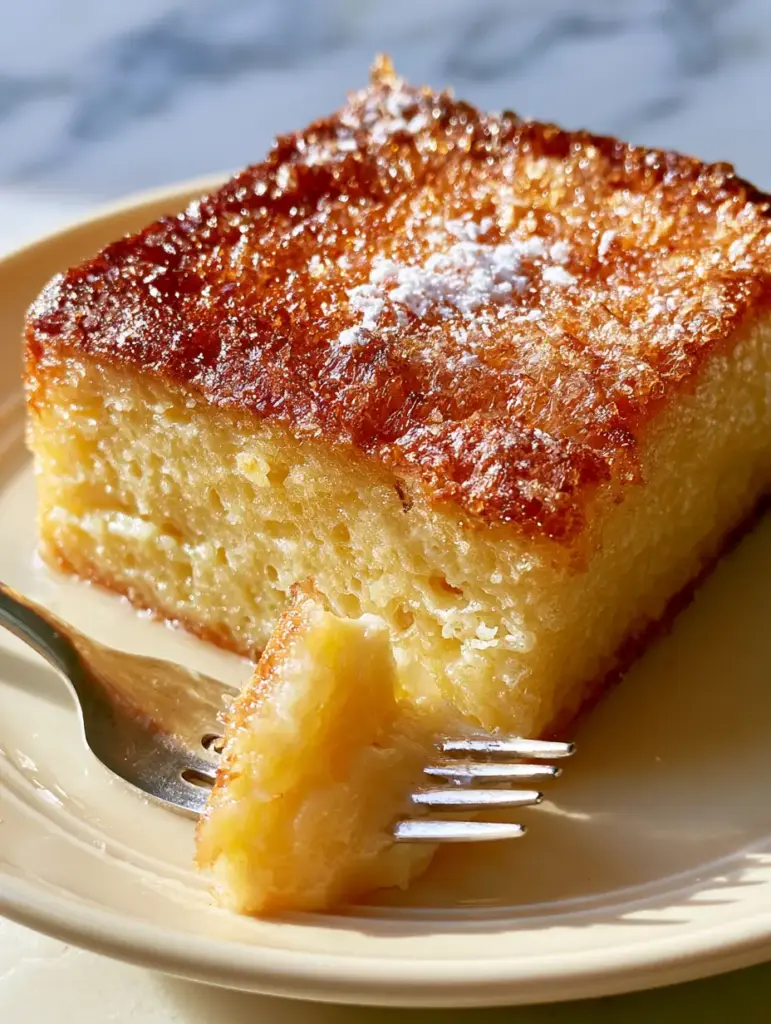
There is something fundamentally transformative about the first bite of a true French Butter Cake. As the morning sun streams through the window, hitting the crystalline surface of a freshly sliced square, you realize this isn’t just another sponge cake. It is a masterclass in texture and rich, buttery indulgence.
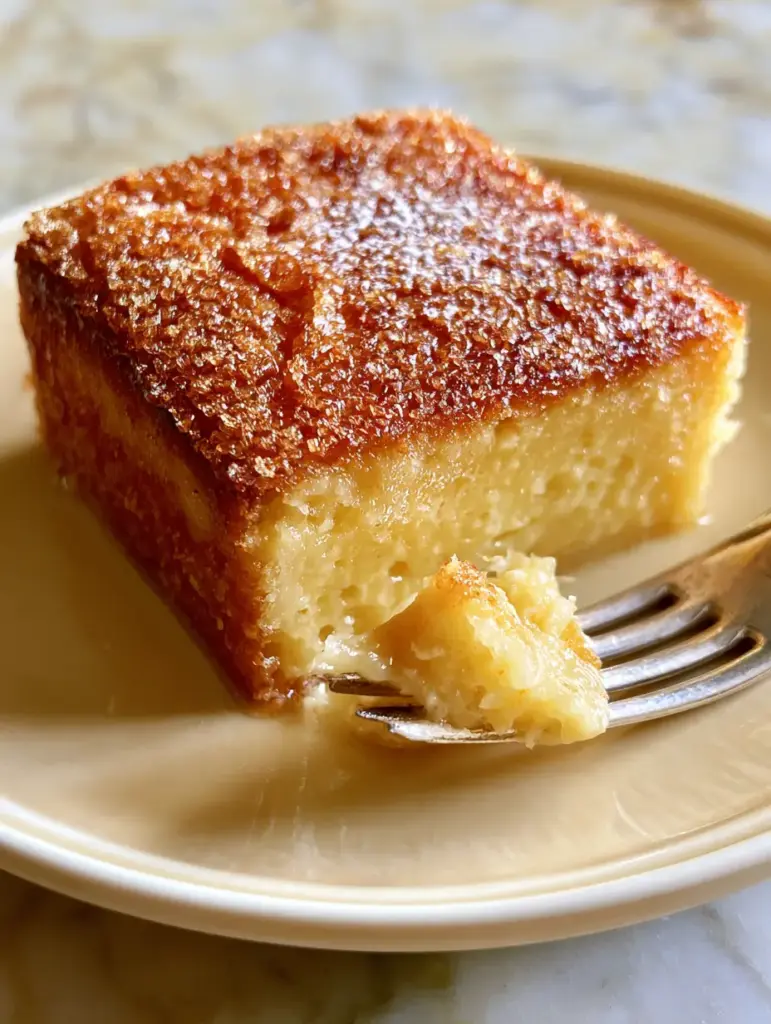
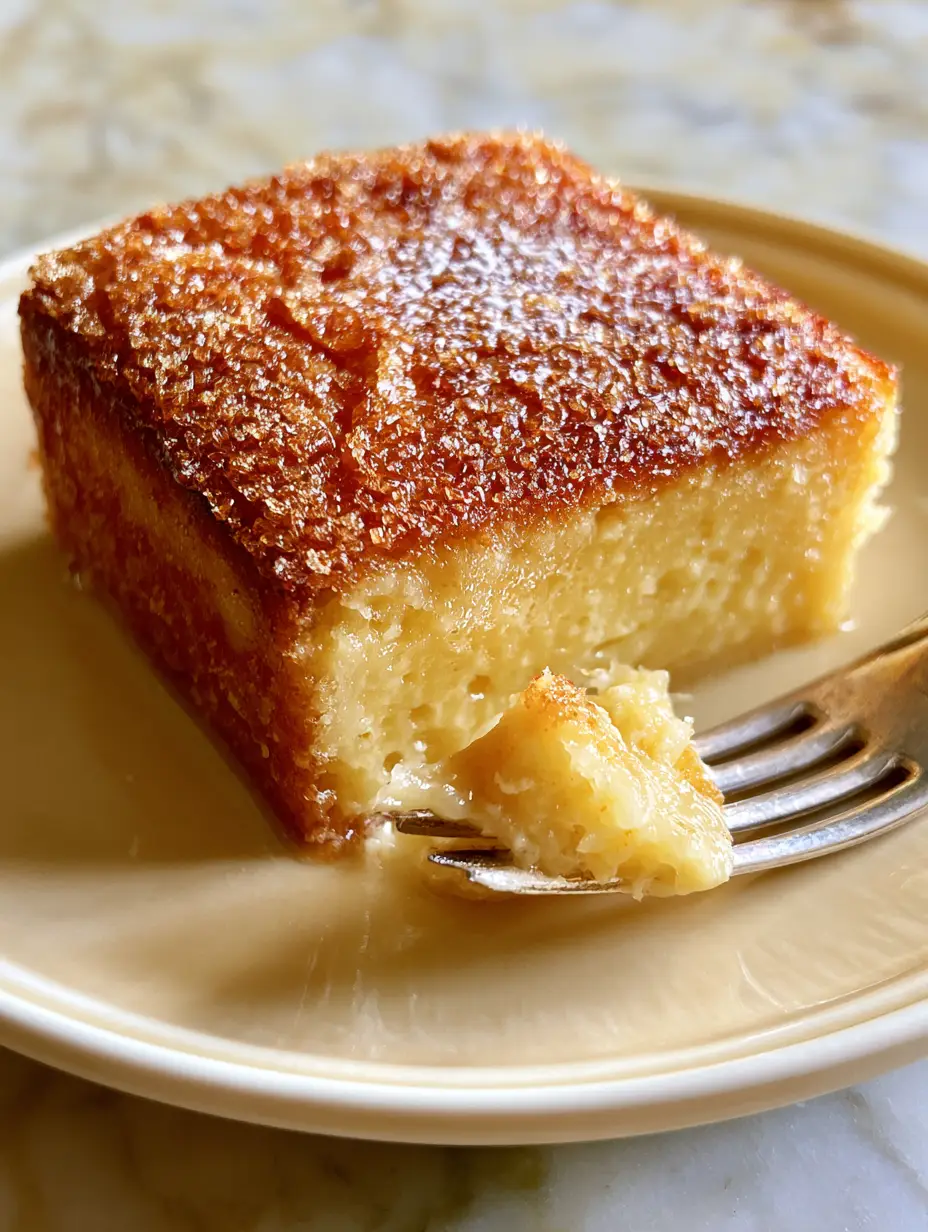
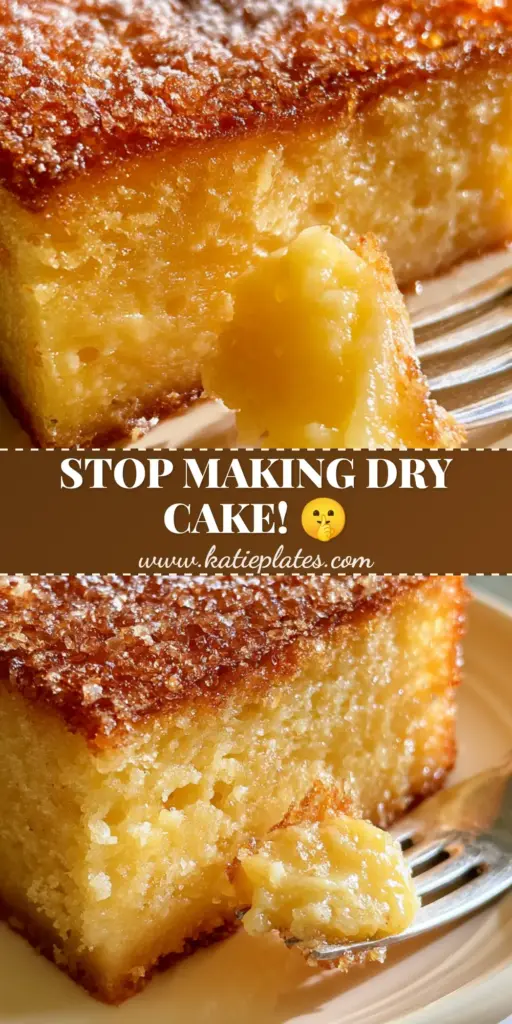
This French Butter Cake is defined by its dual personality: a shatteringly crisp, golden-brown crackly sugar crust that gives way to an impossibly dense, rich buttery yellow interior. The crumb is so moist it almost feels like a custard, yet it retains the structural integrity of a classic pound cake.
When you press a silver dessert fork into the corner of a thick slice, the crust should resist for a fraction of a second before yielding to the tender, velvet-like center. Finished with a delicate snowfall of powdered sugar, this is the ultimate accompaniment to a strong cup of coffee or a glass of dessert wine.
Why You Will Fall in Love With This Dense French Butter Cake
- The Signature Crackle: A thick layer of granulated sugar baked into the surface creates a highly textured, crispy topping that contrasts beautifully with the soft crumb.
- Deep Buttery Crumb: By using high-fat European butter and extra egg yolks, we achieve a deep yellow hue and a flavor profile that is sophisticated and nostalgic.
- Moist Custard-Like Texture: The specific ratio of fats to flour ensures the interior remains exceptionally moist and tender, with tiny air pockets that melt on the tongue.
- Elegant Presentation: Dusted with powdered sugar and served on a cream ceramic plate, it embodies the understated luxury of classic French desserts.
The Anatomy of Ingredients for the Perfect Yellow Crumb
Creating a cake this dense and flavorful requires understanding the role of every component. We aren’t just mixing batter; we are building an emulsion that will hold its shape while remaining tender.
European-Style Unsalted Butter: You need 1 cup (226g) of high-quality butter with at least 82% butterfat. This higher fat content is what provides the signature rich yellow color and the “melt-in-your-mouth” quality.
Granulated White Sugar: We use 1 ½ cups (300g) in the batter for sweetness and structure, plus an additional 3 tablespoons (36g) specifically for creating that golden-brown crackly sugar crust on top.
Extra Large Egg Yolks: While the recipe uses whole eggs, adding two extra yolks provides the lecithin needed for that dense, custard-like texture and enhances the vibrant yellow interior.
All-Purpose Flour: 2 cups (250g) of flour provides the necessary structure without making the cake “bready.” The fine crumb relies on the careful balance of protein in the flour.
Whole Milk: ½ cup (120ml) of room-temperature milk adds the final touch of moisture. For an even richer result, you can substitute this with heavy cream.
Vanilla Bean Paste: 1 tablespoon (15ml) offers those beautiful black flecks and a deep, aromatic flavor that complements the butter perfectly.
Baking Powder and Salt: 1 teaspoon (5g) of baking powder provides just enough lift to create tiny air pockets, while ½ teaspoon (3g) of fine sea salt balances the intense sweetness of the sugar crust.
Powdered Sugar: A final 1 tablespoon (8g) is reserved for the elegant dusting over the cooled cake, providing a soft visual contrast to the dark crust.
Essential Tools for an Artisanal Bake
To achieve the macro-worthy textures described in our visual blueprint, you need the right equipment. The heat conductivity of your pan determines how that sugar crust forms.
A heavy-duty 8-inch (20cm) square aluminum baking pan is ideal for this recipe. Aluminum distributes heat evenly, preventing the edges from burning before the custard-like center is set.
A stand mixer or high-powered hand mixer is essential for the creaming process. You need to aerate the butter and sugar for at least 5 minutes to achieve the proper volume before the dense ingredients are added.
Finally, a fine-mesh sieve is required for that elegant dusting of powdered sugar. A light, even scatter is much more visually appealing than large clumps of sugar.
The Science of the Golden-Brown Crackly Sugar Crust
The hallmark of a French Butter Cake is the crust. Unlike a standard cake where the sugar is fully dissolved into the batter, we intentionally manipulate the surface tension and heat.
As the cake bakes, the moisture from the batter interacts with the heavy layer of granulated sugar sprinkled on top. This creates a concentrated syrup that undergoes caramelization and recrystallization simultaneously.
The result is a highly textured, crystalline layer that looks like shattered glass. When the morning side-lighting hits these sugar crystals, it creates beautiful highlights that signal “crispy” to the brain before you even take a bite.
Mastering the Creaming Method
Start by ensuring your butter is at a cool room temperature—about 65°F (18°C). It should be pliable but not greasy to the touch.
Beat the butter and granulated sugar together on medium-high speed. Watch for the color to change from a deep yellow to a pale ivory; this indicates that enough air has been incorporated to give the cake its “tiny air pockets.”
Scrape the bowl frequently. Ensuring no streaks of unmixed butter remain is the secret to preventing a greasy bottom layer in your French Butter Cake.
Achieving the Dense and Moist Interior
Add the eggs and extra yolks one at a time, allowing each to fully emulsify before adding the next. If the batter looks curdled, add a tablespoon of your weighed flour to bring it back together.
Alternate adding the dry ingredients and the milk. Start with one-third of the flour, then half the milk, and repeat. This prevents the gluten from over-developing, which would make the cake tough instead of tender.
The final batter should be thick, glossy, and a rich, buttery yellow. It should smell intensely of vanilla and high-quality cream.
The Final Crystalline Topping
Spread the batter into your prepared pan, smoothing the top with an offset spatula. Now comes the most important step for the visual recipe blueprint.
Evenly sprinkle the reserved 3 tablespoons of granulated sugar over the entire surface. Do not stir it in. This layer will become the crackly sugar crust during the 45-minute bake time.
Bake at 350°F (175°C) until the top is a deep golden brown and a skewer inserted into the center comes out with just a few moist crumbs. The center should feel firm but have a slight “give,” indicating the soft center is preserved.
Expert Tips for a Macro-Perfect Slice
- Temperature Control: Ensure your eggs and milk are at room temperature. Cold liquids will seize the high-fat butter, ruining the emulsion.
- Don’t Over-dust: When applying the powdered sugar, use a light hand. You want to see the golden-brown crust through the sugar, not bury it.
- The Clean Cut: For those perfect square slices, let the cake cool completely in the pan. Use a sharp, thin-bladed knife dipped in hot water and wiped dry between every cut.
- Visual Cues: Look for the edges of the cake to pull away slightly from the pan. This indicates the internal structure is set, even if the center remains exceptionally moist.
Pairing and Serving Suggestions
This cake is rich enough to stand alone, but it also pairs beautifully with other textures. If you enjoy a bit of fruit, consider serving a slice alongside the components of strawberry crunch desserts for a berry-forward twist.
Because of its high butter content, this cake also acts as a wonderful palate cleanser after a savory, herb-heavy meal like cod with tomato and herb butter. The sweetness cuts through the acidity of the tomatoes and the richness of the fish.
For a truly French afternoon, serve a square on a cream ceramic plate with a small silver fork. The contrast of the silver against the buttery yellow crumb is visually stunning.
Storage and Reheating for Longevity
This French Butter Cake actually improves in flavor the next day as the moisture redistributes. Store it in an airtight container at room temperature for up to 3 days.
If you prefer a warm slice, a quick 10-second zap in the microwave will soften the butter and make the center feel even more like a custard. However, be aware that the crackly sugar crust may soften slightly over time.
To freeze, wrap individual square slices tightly in plastic wrap and then foil. They will stay fresh for up to 2 months. Thaw at room temperature before dusting with fresh powdered sugar.
Frequently Asked Questions
It is best to use unsalted butter so you can control the salt levels. If you must use salted, omit the extra sea salt listed in the recipe.
Wait until the cake is completely cool, then use a fine-mesh sieve to lightly dust the top. This ensures a delicate snowfall effect rather than clumps.
The crackly crust is achieved by sprinkling a generous layer of granulated sugar over the batter before baking. The heat caramelizes the sugar into a crisp, crystalline layer.
The deep yellow color comes from using high-fat European-style butter and additional egg yolks, which provide a richer color and a more custard-like flavor.
Unlike airy sponges, this cake relies on a high fat-to-flour ratio and minimal aeration during the final mixing stages to create a moist, tender, and dense crumb.
The Ultimate French Butter Cake Recipe
French Butter Cake with a Golden Crackly Sugar Crust
Ingredients
Equipment
Method
- Preheat your oven to 350°F (175°C). Grease an 8-inch square pan and line with parchment paper, leaving an overhang for easy removal.
- In a stand mixer, cream the butter and 1.5 cups (300g) granulated sugar for 5 minutes until pale ivory and fluffy. Scrape the sides of the bowl midway.
- Add the whole eggs and extra yolks one at a time, beating well after each addition. Mix in the vanilla bean paste.
- Whisk flour, baking powder, and salt together. Alternate adding the flour mixture and milk to the butter, starting and ending with flour. Mix until just combined.
- Spread the buttery yellow batter into the pan. Sprinkle the 3 tbsp (36g) of granulated sugar evenly across the top to create the crackly crust.
- Bake for 40-45 minutes until the top is golden-brown and crackly. The center should be set but exceptionally moist.
- Allow the cake to cool in the pan for 20 minutes. Lift out using parchment, and once completely cool, dust with powdered sugar using a fine-mesh sieve.
Notes
Do not overbake, or you will lose the custard-like center texture.
Conclusion: The Art of the Perfect Bite
Making a French Butter Cake is a rewarding exercise in culinary precision. By focusing on the quality of your butter and the specific technique of the sugar crust, you create a dessert that is both rustic and deeply sophisticated.
We would love to see your results! If you make this recipe, please leave a comment below and tell us how your crackly crust turned out. Don’t forget to share your photos and pin this recipe to your favorite boards on Pinterest so you can find it for your next brunch or tea party.