The authentic Lebanese tabbouleh recipe is a vibrant, herb-centric masterpiece that looks more like a dense forest of greens than a grain-heavy salad. Unlike westernized versions that rely heavily on cracked wheat, a true Lebanese preparation celebrates the bright, peppery notes of flat-leaf parsley and the cool, refreshing lift of garden-fresh mint.
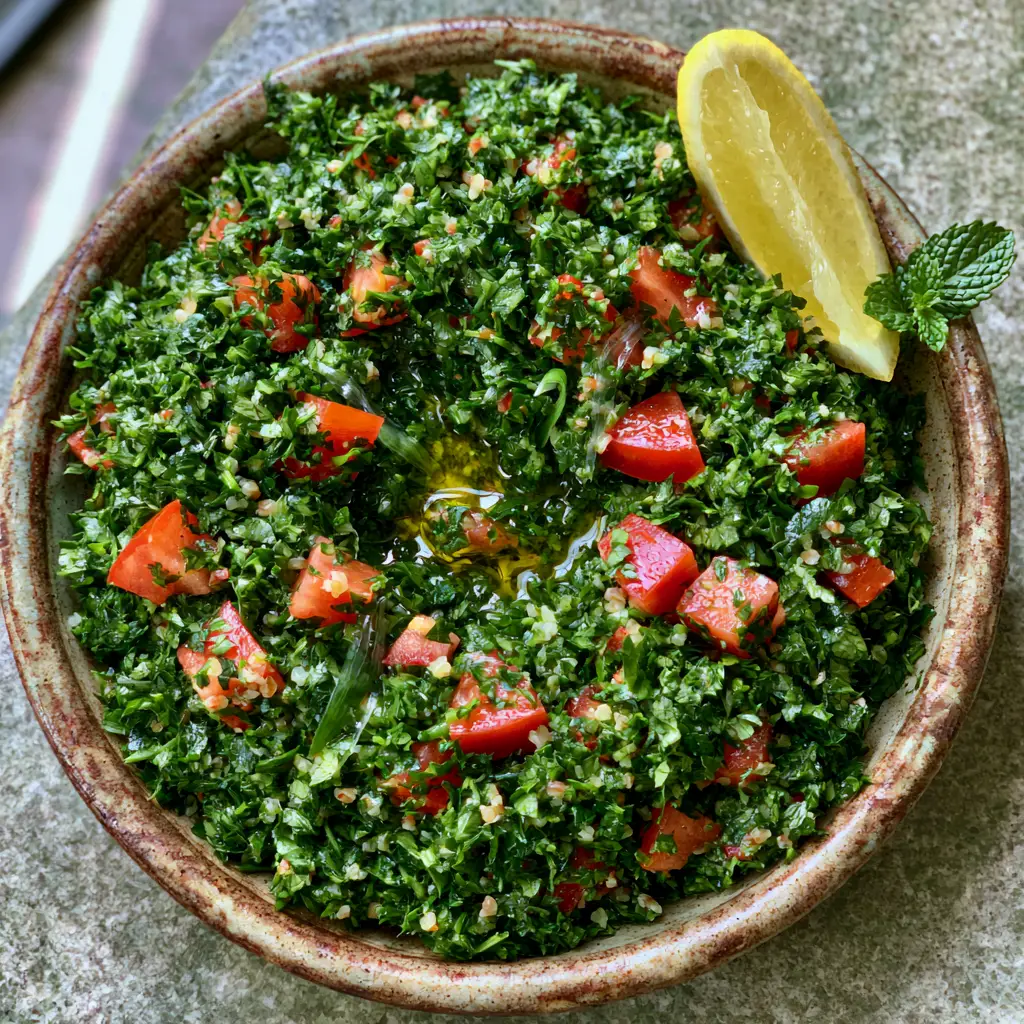
Imagine a rustic, handmade ceramic bowl filled with a mountain-like mound of emerald greens, glistening under a thin glaze of golden extra virgin olive oil. Every bite offers a precise crunch from 2mm cubes of ruby-red roma tomatoes and the sharp, translucent bite of minced green onions, balanced by just a whisper of tender, soaked bulgur wheat.
This dish is the soul of a traditional mezze spread, providing a zesty, acidic counterpoint to rich meats or savory pastries. Whether you are hosting a summer gathering or looking for a nutrient-dense lunch, mastering this technique will elevate your culinary repertoire to professional heights.
Why You Will Love This Vibrant Herb Medley
- Visual Masterpiece: The striking “forest green” appearance creates a stunning center-piece for any Mediterranean table.
- Textural Contrast: You get a unique combination of fluffy, finely minced herbs, firm tomato cubes, and soft, citrus-soaked grains.
- Pure Ingredients: This recipe uses zero fillers, focusing on high-quality olive oil and fresh-squeezed lemon juice for a clean, bright finish.
- Authentic Ratios: We prioritize the herbs over the grain, ensuring the salad remains light, airy, and authentically Lebanese.
The Essential Components for an Herb-Heavy Lebanese Tabbouleh Recipe
To achieve the precise texture described in our visual blueprint, each ingredient must be selected and prepared with forensic detail. Here is what you will need for this culinary construction.
Flat-Leaf Parsley (3 large bunches): The undisputed star of the show; it must be Italian flat-leaf for the best texture and flavor, never the curly variety. Ensure it is bone-dry before mincing to prevent it from turning into a soggy paste.
Fresh Mint (1 large bunch): This provides the cooling aromatic profile that balances the earthy parsley. Use only the leaves, discarding the woody stems for a delicate mouthfeel.
Roma Tomatoes (2-3 medium): Choose firm, bright red tomatoes to ensure they hold their shape. You will be dicing these into tiny 2mm cubes, so their firmness is structurally critical.
Fine Bulgur Wheat (#1 Grade) (3 tbsp / 45g): This is the “subservient” grain; it should be fine-grind to soften quickly and blend into the herbs without dominating the dish. It acts as a sponge for the lemon juice and tomato water.
Green Onions (3-4 stalks): These provide a mild, sharp bite. Only the white and light green parts should be used, minced into translucent slivers.
Golden Extra Virgin Olive Oil (1/4 cup / 60ml): Use the highest quality oil you can find. It should provide a silky glaze and a peppery finish that ties the acidity of the lemon to the bitterness of the herbs.
Fresh Lemon Juice (3 tbsp / 45ml): This provides the essential acid profile. Never use bottled juice; the fresh citrus enzymes are necessary to “cook” the bulgur wheat and brighten the greens.
Fine Sea Salt (to taste): Salt draws out the moisture from the tomatoes, which in turn helps hydrate the bulgur wheat. Add it just before serving to maintain the herb’s crispness.
Professional Tools for Culinary Precision
Achieving a 2mm dice and a “fluffy” green texture requires more than just a sharp knife. Here is the kit you need for a successful Lebanese tabbouleh recipe.
- Professional Chef’s Knife: Must be razor-sharp to slice through delicate herb cell walls without bruising them.
- Large Salad Spinner: Absolutely essential for ensuring the parsley is 100% dry before chopping.
- Fine Mesh Sieve: For rinsing the bulgur wheat and draining excess liquid from the tomatoes.
- Large Mixing Bowl: A wide bowl allows you to toss the ingredients gently without crushing the delicate minced leaves.
Step-by-Step Construction of the Perfect Herb Mountain
Preparing the Bulgur “Sponge”
Start by rinsing 3 tbsp (45g) of fine bulgur wheat in a sieve. Place it in a small bowl and add 1 tbsp (15ml) of your lemon juice. Let it sit for 15-20 minutes; the grains should become pale and tender, acting as a subtle textural element rather than a heavy filler.
The Art of the Herb Mince
Wash your parsley and mint thoroughly, then spin them until completely dry. Bunch the leaves tightly together on a cutting board and use a rhythmic rocking motion to mince them extremely finely. You are looking for a “fluffy” texture, not a wet puree. This step is what defines a truly authentic Lebanese tabbouleh recipe.
Precision Tomato Dicing
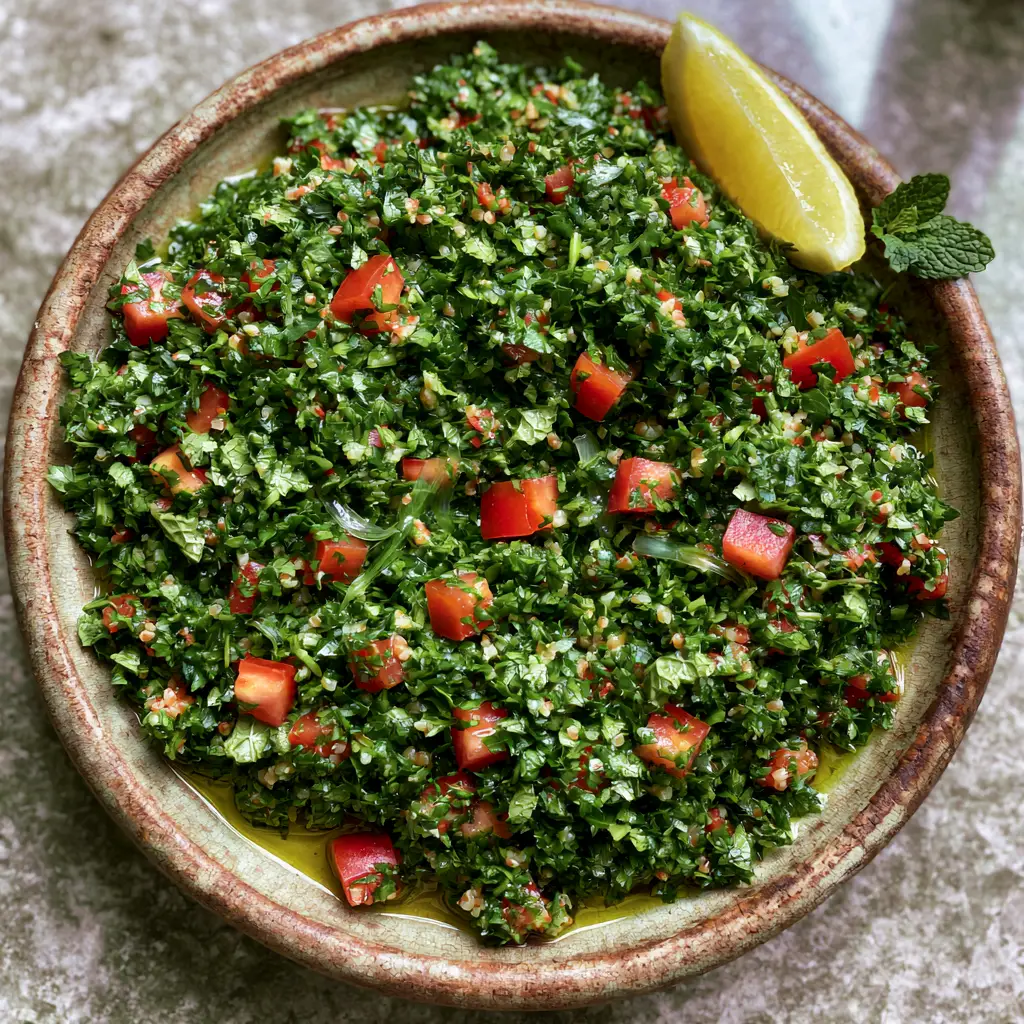
Slice your roma tomatoes into thin planks, then into matchsticks, and finally into tiny 2mm cubes. Place them in a separate bowl and sprinkle with a pinch of salt. This allows the juices to release, which you can later pour over the bulgur for extra flavor depth. This tiny dice ensures every forkful has a burst of red acidity nestled within the green forest.
Assembling the Glaze
In the large mixing bowl, combine the minced green onions, the soaked bulgur, and the tiny tomato cubes. Fold in the mountain of minced parsley and mint. Drizzle the remaining lemon juice and the 1/4 cup (60ml) of golden extra virgin olive oil over the top. Toss gently with two large spoons until the leaves are lightly glistening with a thin, golden glaze.
Expert Tips for Success
- The Drying Rule: If your parsley is even slightly damp, it will clump together. Dry it with paper towels after spinning to ensure maximum fluffiness.
- Knife Technique: Never use a food processor. The high-speed blades tear the herbs and release too much chlorophyll, leading to a bitter, swampy result.
- Serve Immediately: While some salads benefit from sitting, tabbouleh is best served within an hour. The salt and acid will eventually wilt the delicate minced herbs.
- Garnish for Impact: Always finish with a single bright lemon wedge and a tiny sprig of fresh mint on the rim to signal the fresh flavors inside.
What to Serve With This Traditional Salad
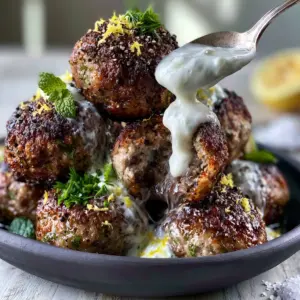
This Lebanese tabbouleh recipe is a versatile side dish that pairs beautifully with a variety of Middle Eastern and Mediterranean proteins. For a full mezze experience, serve it alongside a crispy arayes recipe or some smoky joojeh-kebabs.
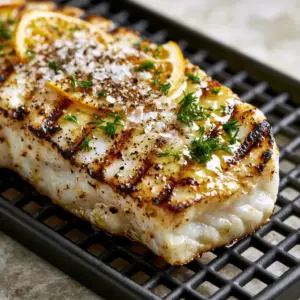
If you prefer seafood, the bright acidity of the salad cuts through the richness of a grilled halibut recipe or a simple air fryer cod recipe. For a vegetarian spread, it is the perfect companion to a creamy mast-o-khiar dip and warm pita bread. It even works as a refreshing side for a traditional Arab breakfast recipes spread.
Storage and Freshness
Tabbouleh is best enjoyed fresh. However, if you have leftovers, store them in an airtight container in the refrigerator for up to 24 hours. The herbs will lose their “fluffy” texture as they marinate in the dressing, but the flavors will remain vibrant. Do not freeze this dish, as the cellular structure of the minced herbs will collapse upon thawing.
Frequently Asked Questions
No, a food processor will crush the delicate cell walls of the parsley, making it soggy and bitter. For an authentic texture, you must use a sharp knife and hand-mince the herbs.
Ensure your herbs are completely dry after washing and salt your tomatoes separately to drain excess liquid before adding them to the greens.
You must use fine bulgur, also known as #1 grade. Coarse bulgur will remain too hard and won’t blend seamlessly into the finely minced herbs.
Authentic Lebanese tabbouleh is a parsley salad, not a grain salad. The bulgur should be a minor textural element that absorbs the dressing, rather than the base of the dish.
The Ultimate Lebanese Tabbouleh Recipe
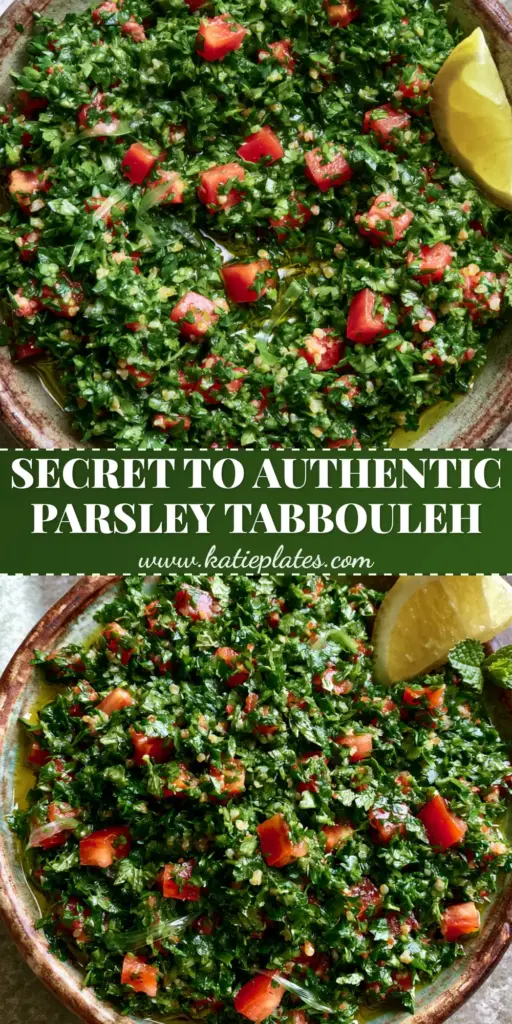
Lebanese Tabbouleh Recipe: The Authentic Parsley-Forward Salad
Ingredients
Equipment
Method
- Rinse the fine bulgur wheat and place in a bowl with 1 tbsp of lemon juice. Set aside for 20 minutes until tender.
- Thoroughly wash and dry parsley and mint. Hand-chop with a sharp knife until extremely fine and fluffy. Do not use a food processor.
- Dice tomatoes into precise 2mm cubes and mince the green onions into translucent slivers.
- Combine all ingredients in a large bowl. Drizzle with olive oil and remaining lemon juice. Toss gently and garnish with a lemon wedge and mint sprig.
Notes
Always use fine #1 bulgur, as larger grains will remain too crunchy.
Bring the Mediterranean Home
Mastering the Lebanese tabbouleh recipe is about patience and precision. By hand-mincing your herbs and focusing on the 2mm tomato dice, you create a dish that is as much a work of art as it is a healthy meal. The combination of golden oil, tart lemon, and a forest of fresh greens is a culinary experience like no other.
If you enjoyed this deep dive into authentic Mediterranean flavors, please leave a comment below and let us know how your herb mountain turned out! Don’t forget to share your creations and follow us on Pinterest for more visually stunning recipe inspiration.