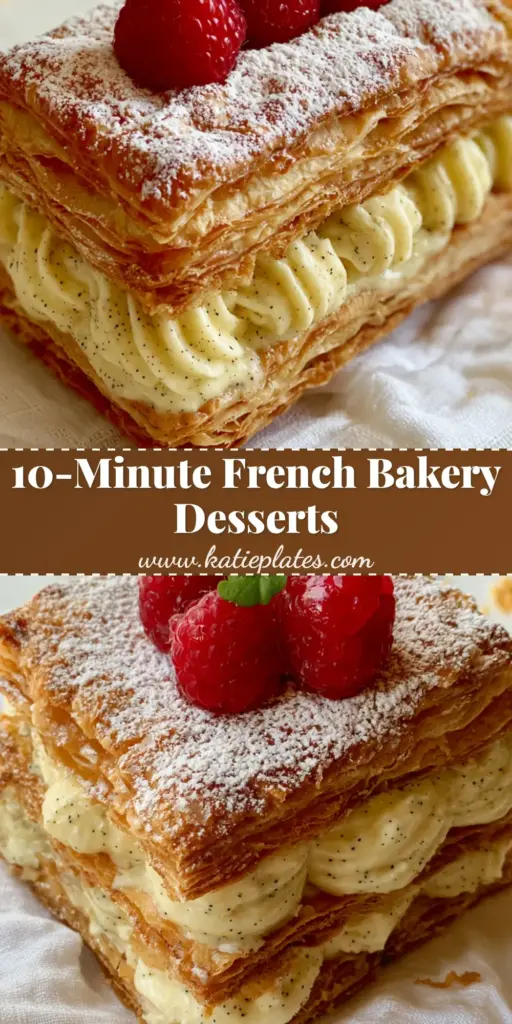
When you think of the most iconic French desserts, the Mille-feuille—often referred to as the Napoleon—undoubtedly sits at the pinnacle of pastry perfection. There is something deeply evocative about the sound of a sharp knife shattering through three layers of ultra-flaky, caramelized puff pastry. This recipe captures that exact moment of indulgence, bringing the professional Parisian pâtisserie experience into your own kitchen with scientific precision and artistic flair.
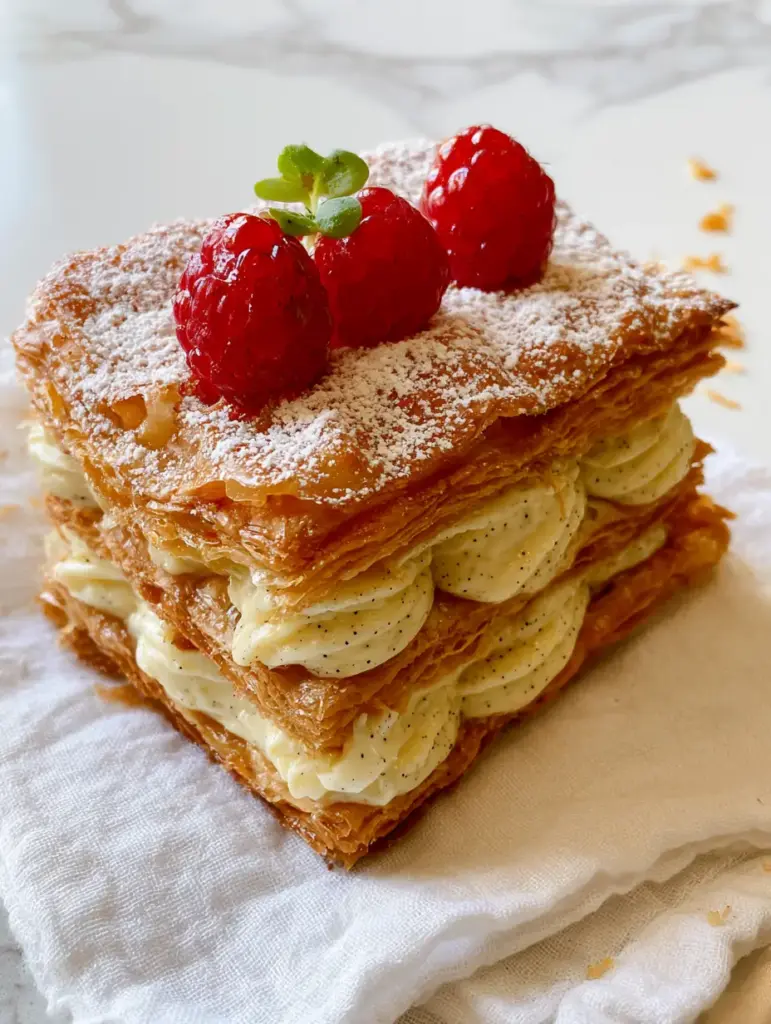
Imagine a crisp morning where soft natural side-light hits a white marble countertop, illuminating the fine mesh of powdered sugar and the vibrant, glossy red of fresh raspberries. This isn’t just a recipe; it’s a sensory journey. We are going to master the delicate balance between the deep, smoky sweetness of caramelized pastry and the silky, cold embrace of vanilla bean-flecked crème pâtissière.
Whether you are looking to impress at a dinner party or simply want to elevate your weekend baking, mastering this pillar of French desserts is a rite of passage. By following these professional techniques, you will achieve that coveted “iPhone-ready” aesthetic: thick, stable dollops of cream, perfectly level pastry sheets, and a garnish of micro-mint that screams high-end culinary art.
Why This Caramelized Mille-feuille is the Crown Jewel of French Desserts
- The Texture Paradox: You will achieve a shatteringly crisp pastry that holds its structural integrity against a lush, velvety custard.
- Visual Precision: This recipe is designed to produce those iconic, thick piped dollops with visible black vanilla bean specks that signify true quality.
- Flavor Complexity: By caramelizing the pastry with powdered sugar during the final minutes of baking, we introduce a toasted, nutty note that balances the sweetness.
- Professional Garnish: We use fresh red raspberries and micro-mint to provide a bright acidity and color contrast that makes the dish pop against a white linen backdrop.
Essential Ingredients for the Ultimate Flaky Pastry and Custard
High-Quality All-Butter Puff Pastry: 14 oz (400g). Use a store-bought inverted puff pastry or a high-quality block; the high butter content is what creates those distinct, ultra-flaky layers seen in professional French desserts.
Whole Milk: 2 cups (480ml). Full-fat milk is non-negotiable for the crème pâtissière, providing the necessary fat molecules to carry the delicate vanilla flavor and create a stable emulsion.
Egg Yolks: 4 large (approx. 72g). The yolks provide the lecithin required to thicken the custard into those firm, pipeable dollops that won’t sag under the weight of the pastry.
Granulated Sugar: 1/2 cup (100g). This sweetens the custard while also aiding in the coagulation temperature of the egg proteins, ensuring a smooth rather than curdled texture.
Cornstarch (Maizena): 1/4 cup (32g). This is our structural anchor; it allows the custard to be thick enough to pipe into the “thick dollops” described in our visual blueprint.
Vanilla Bean: 1 whole pod. Scraping the seeds directly into the milk ensures those beautiful “visible black vanilla specks” that distinguish authentic French desserts from imitation versions.
Unsalted Butter (for custard): 2 tbsp (30g). Whisked in at the end, this adds a professional gloss and a rich mouthfeel to the pastry cream.
Powdered Sugar (Icing Sugar): 1/2 cup (60g). This is used both for dusting the top and for the critical caramelization step on the pastry sheets.
Fresh Red Raspberries: 12-15 berries. Look for vibrant, glossy fruit; these provide the “vibrant red” pop mentioned in the Midjourney prompt.
Micro-Mint: A few leaves. This tiny green accent provides the final color contrast against the golden-brown pastry.
Critical Equipment for Pastry Success
To achieve the “three layers of ultra-flaky, golden-brown caramelized puff pastry,” you cannot simply bake the dough loose. You need two heavy-duty rimmed baking sheets and a sheet of parchment paper. The second baking sheet is placed on top of the pastry during the initial bake to “stress” the rise, ensuring the layers are compressed, even, and incredibly crisp rather than puffy and uneven.
Additionally, a piping bag fitted with a large plain round tip (approx. 12mm) is essential for those uniform dollops. A fine-mesh sieve is required for the “fine mesh of powdered sugar” dusting that finishes the dish. If you enjoy this level of precision, you might also enjoy the textural contrast in our strawberry crunch dessert cups.
The Secret to Perfectly Caramelized Pastry Layers
Preparing the Puff Pastry Base
Start by preheating your oven to 400°F (200°C). Roll out your cold puff pastry on a sheet of parchment paper to a rectangle roughly 12×16 inches (30x40cm). Prick the entire surface with a fork; this “docking” prevents large air bubbles from distorting your flat layers.
Place another sheet of parchment on top, followed by the second heavy baking tray. Bake for 20 minutes. This compression is the secret to the dense, shatter-proof layers found in elite French desserts. Unlike a French butter cake which thrives on a soft crumb, the Mille-feuille demands structural rigidity.
The Caramelization Phase
Remove the top tray and the top layer of parchment. Dust the pastry generously with a fine layer of powdered sugar. Increase the oven heat to 450°F (230°C) and slide the tray back in for 5-7 minutes. Watch closely! You are looking for the sugar to melt and turn a deep, glassy golden-brown. This creates a moisture barrier that keeps the pastry crisp even after it is filled with cream.
Trimming and Crumb Collection
While the pastry is still warm, use a serrated knife to trim the edges into three perfectly equal rectangles. Save those “stray golden pastry crumbs” mentioned in our visual prompt! They will be used to garnish the marble surface later for that authentic, rustic-yet-refined look.
Mastering the Vanilla Bean Crème Pâtissière
Infusing the Vanilla
In a medium saucepan, combine the 2 cups (480ml) of milk with the scraped seeds and the pod of the vanilla bean. Bring to a gentle simmer—not a rolling boil. You want to see the “visible black vanilla specks” dancing in the liquid. This infusion is the soul of many French desserts.
Tempering the Eggs
Whisk the egg yolks, granulated sugar, and cornstarch in a heat-proof bowl until pale. Slowly pour about half of the hot milk into the egg mixture, whisking constantly to prevent scrambling. Pour the entire mixture back into the saucepan and cook over medium heat, whisking vigorously.
Achieving the Thick Pipeable Consistency
The custard will suddenly thicken. Continue to cook for 1-2 minutes after the first bubble pops; this deactivates the amylase enzyme in the egg yolks and ensures your cream stays thick. Whisk in the butter for a glossy finish. Transfer to a bowl, cover with plastic wrap (touching the surface), and chill until completely cold. If you like the richness of this custard, you’ll love the creamy base of our cod in rosemary cream sauce.
Assembling Your Mille-feuille for the Camera
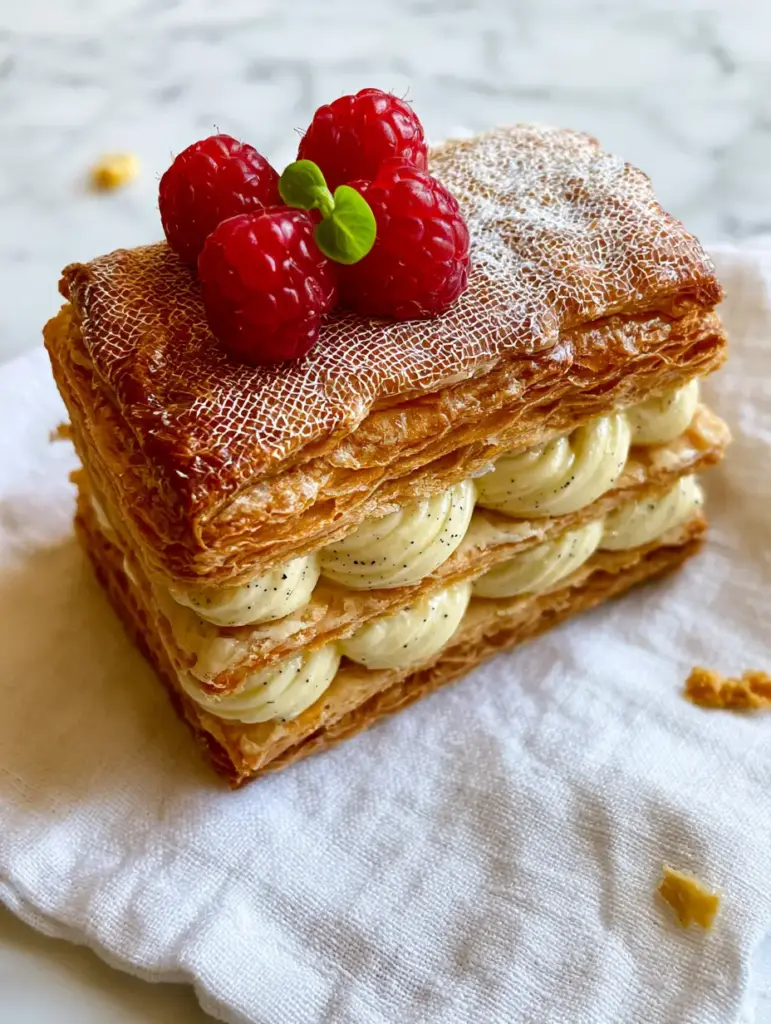
Place your first layer of caramelized pastry on a clean surface. Using the piping bag, pipe three rows of “thick, pale yellow dollops.” Ensure they are uniform in height. Place the second layer of pastry on top, pressing very gently so the cream peeks out the sides but doesn’t overflow.
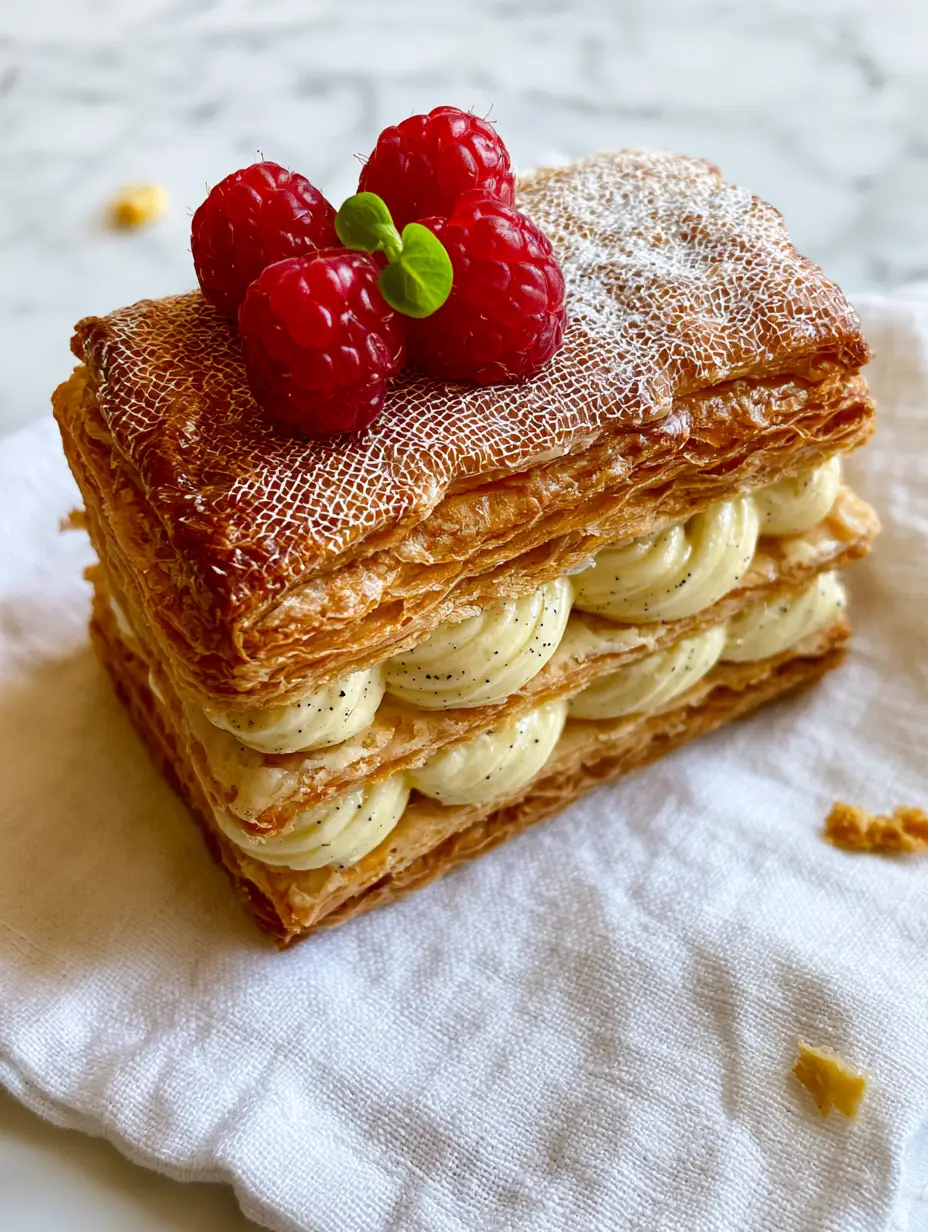
Repeat with more dollops of cream and the final layer of pastry. This creates the “three layers” specified in our culinary blueprint. The side-view should reveal the beautiful contrast between the dark golden pastry and the light-colored cream. This architectural assembly is common in both sweet and savory applications, much like the layered presentation of persian yogurt rice with lamb.
The Final Flourish: Garnishing with Precision
Now, for the “visual recipe blueprint” finishing touches. Use a fine-mesh sieve to apply a light, even dusting of powdered sugar over the top layer. Carefully place three vibrant, glossy red raspberries in a cluster on one side of the pastry. Nestled among them, add one tiny, bright green micro-mint leaf.
To set the scene, place the pastry on a crumpled white linen napkin over a marble surface. Scatter a few of those reserved golden pastry crumbs around the base. This “unedited, realistic texture” is what makes French desserts look so appetizing in lifestyle photography.
Expert Tips for Success
- Keep it Cold: If the pastry cream is too warm, the dollops will sag. Ensure it has chilled for at least 4 hours.
- Serrated Knife Only: When cutting the assembled pastry, use a sawing motion with a very sharp serrated knife to avoid crushing the layers.
- The Anti-Sog Rule: Only assemble the Mille-feuille 1-2 hours before serving to maintain that “ultra-flaky” texture.
- Caramelization Watch: Sugar goes from caramelized to burnt in seconds. Stay by the oven during the final 5 minutes!
What to Serve With French Desserts
A classic Mille-feuille pairs beautifully with a sharp, acidic beverage to cut through the richness of the butter and cream. Consider a strawberry lime mocktail for a refreshing fruit-forward pairing. If you are serving this as part of a larger French-inspired menu, it follows perfectly after a savory main like French apple cider chicken.
For those who prefer a more global spread, the creamy texture of the custard provides a wonderful contrast to the bold spices found in persian saffron chicken or the citrusy notes of ladolemono roasted vegetables.
Frequently Asked Questions
Yes, but ensure it is ‘all-butter’ puff pastry. Vegetable fat versions lack the flavor and the distinct, fine layers required for an authentic Mille-feuille.
You must use a real vanilla bean pod. Slice it lengthwise and scrape the seeds directly into the milk while it simmers to release the concentrated flavor and iconic specks.
Use a very sharp serrated knife. Use a gentle sawing motion rather than pressing down, which will allow the knife to cut the crisp layers without squishing the cream.
While often used interchangeably, a Mille-feuille traditionally uses jam and cream layers, while a Napoleon is specifically puff pastry and almond paste or custard. The name ‘Mille-feuille’ means ‘a thousand leaves’.
Sogginess usually occurs if the pastry wasn’t caramelized with powdered sugar or if it was assembled too far in advance. The sugar layer acts as a moisture barrier against the cream.
The Authentic Raspberry & Vanilla Mille-feuille Recipe
French Desserts: The Ultimate Caramelized Raspberry Mille-feuille
Ingredients
Equipment
Method
- Preheat oven to 400°F (200°C). Roll puff pastry to 12x16 inches. Place on parchment, dock with a fork, cover with another parchment and a second tray. Bake for 20 mins.
- Remove top tray/parchment. Dust with powdered sugar. Increase heat to 450°F (230°C). Bake for 5-7 mins until glassy and golden-brown. Trim into three equal rectangles and save crumbs.
- Simmer milk with vanilla seeds and pod. In a bowl, whisk yolks, sugar, and cornstarch.
- Temper eggs with hot milk, return to heat, and whisk until thick and bubbly. Whisk in butter. Chill completely with plastic wrap on the surface.
- Pipe thick dollops of cream onto the first pastry layer. Stack the second, repeat piping, and finish with the third layer.
- Dust with powdered sugar. Top with raspberries and micro-mint. Scatter pastry crumbs on the serving surface.
Notes
Use a serrated knife to cut the layers without crushing them.
Closing & Call to Action
Mastering the art of French desserts is a rewarding challenge that brings the elegance of a French bistro into your home. This Mille-feuille, with its shattered layers of caramelized pastry and bourbon-vanilla speckled cream, is a testament to the beauty of simple, high-quality ingredients treated with respect.
We would love to see your creations! Did your pastry achieve that perfect golden-brown shatter? Tag us on Instagram or leave a comment below with your results. For more visual inspiration and recipe saves, be sure to follow katieplates on Pinterest. Happy baking!