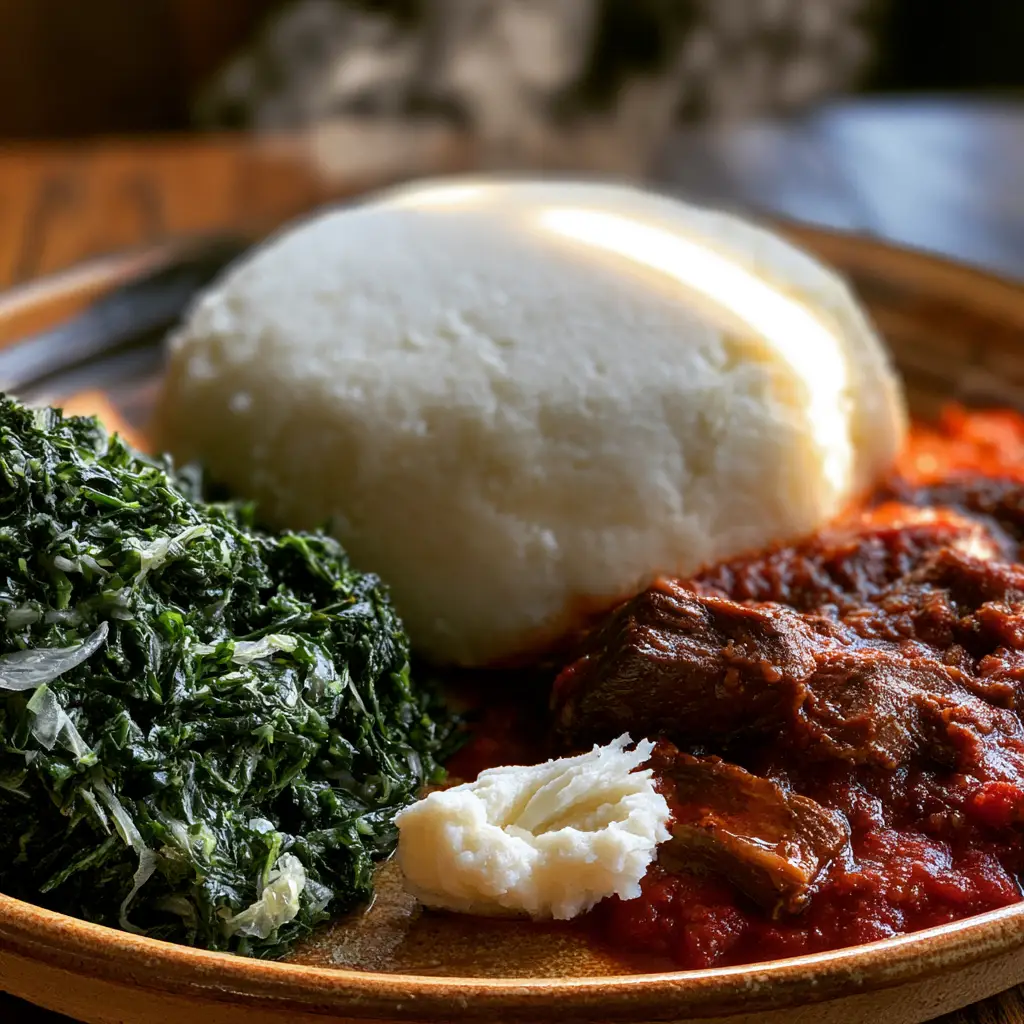
African food ugali is more than just a dish; it is the beating heart of East African culinary tradition. When you look at a perfectly prepared plate, you see a smooth, steaming mound of white maize meal centered on a rustic ceramic plate. It stands firm yet remains soft to the touch, representing the ultimate comfort for millions.
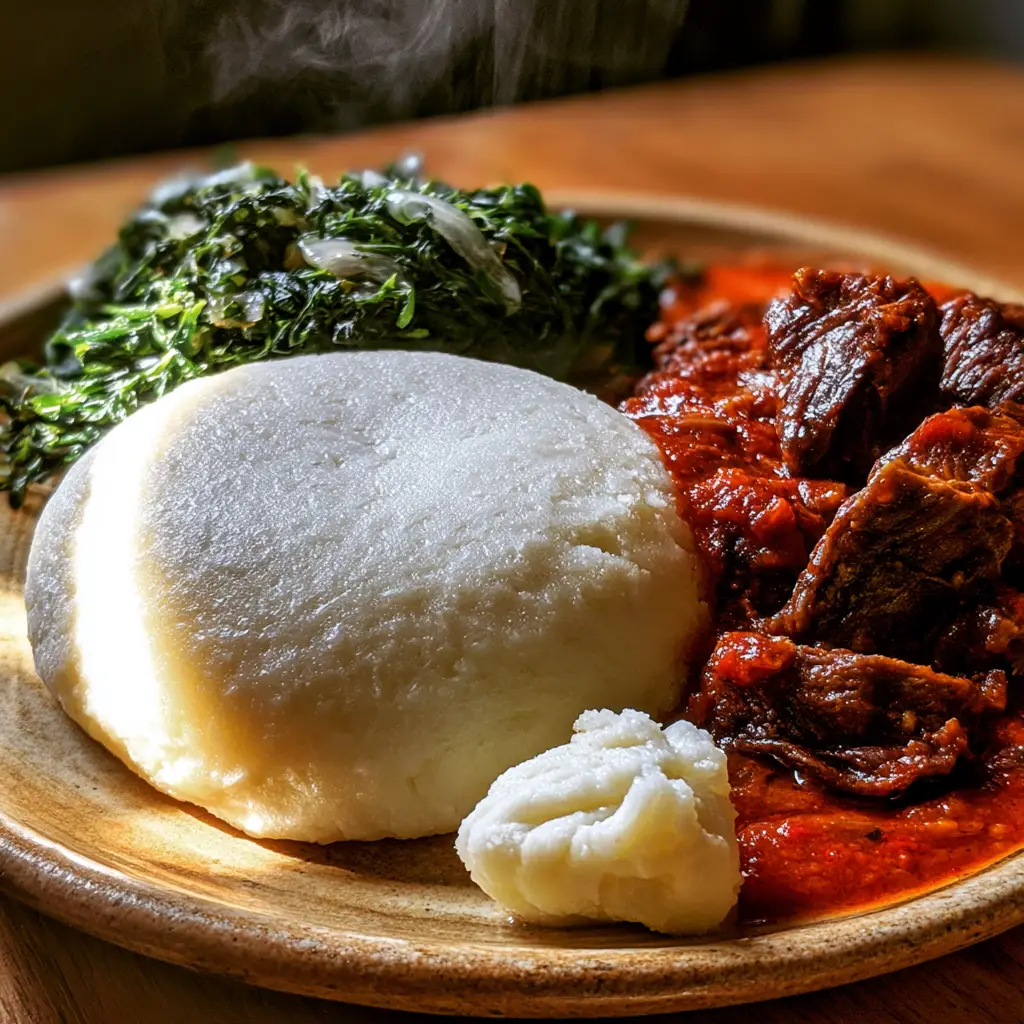
The beauty of this meal lies in its humble simplicity and the way it bridges the gap between texture and flavor. Beside the starch, you find vibrant, finely shredded sautéed sukuma wiki (collard greens) with visible translucent onions and a rich, thick beef stew. The deep red tomato-based gravy clings to tender chunks of braised meat, creating a visual and sensory masterpiece.
In this guide, we will master the art of the “pinch”—the traditional way of eating ugali by hand. We will explore the culinary science of cornmeal gelatinization and the slow-braising techniques required to achieve that melt-in-your-mouth beef texture. Whether you are revisiting your roots or exploring authentic African flavors for the first time, this recipe is your definitive blueprint.
Why This Authentic African Platter Works
- The Matte Perfection: A well-cooked ugali has a soft, matte texture that creates a gentle steam when broken open, perfect for soaking up rich sauces.
- Symphony of Textures: The contrast between the firm, dough-like maize mound, the slight crunch of sautéed greens, and the succulent, braised beef provides a complete mouthfeel.
- Nutritional Balance: This is a powerhouse meal, combining complex carbohydrates for energy, lean protein for repair, and iron-rich greens for vitality.
- Visual Authenticity: From the translucent diced onions to the thick, glossy gravy, every element is designed to look as stunning as it tastes on a rustic clay plate.
The Essential Components for a Kenyan Feast
To recreate this iconic meal, you need specific ingredients that fulfill both structural and flavor roles. While the list is short, the quality of your maize and the cut of your beef will determine the final result.
White Cornmeal (Fine Ground): 2 cups (360g). This is the structural foundation of the ugali. Ensure it is finely ground to achieve that signature smooth, non-gritty mound.
Beef Chuck or Brisket: 1.5 lbs (680g). These cuts are high in connective tissue, which breaks down during the braising process into gelatin, thickening the deep red gravy naturally.
Collard Greens (Sukuma Wiki): 1 large bunch (approx. 400g). These must be shredded very finely to allow for quick sautéing while retaining their vibrant green hue.
Red Onions: 2 medium (220g). One onion will be diced finely for the greens to become translucent, while the other creates the base for the stew’s thick gravy.
Fresh Roma Tomatoes: 4 large (400g). These provide the acidity and the “deep red” color required for the braised beef sauce.
Vegetable Oil: 3 tbsp (45ml). A foundational invisible ingredient used for searing the beef to create a Maillard reaction and for softening the onions.
Water: 4 cups (960ml). Essential for hydrating the cornmeal. The ratio of water to flour is critical for a “firm yet steamed” result.
Sea Salt: 1.5 tsp (9g). Used to season every layer, ensuring the cornmeal isn’t bland and the beef’s natural savory notes are amplified.
Kitchen Tools for Culinary Mastery
You don’t need fancy gadgets, but a few specific tools will help you achieve the visual recipe blueprint results. A heavy-bottomed pot (like a Dutch oven) is best for the beef stew to maintain constant heat during the braise.
For the ugali, a sturdy wooden spoon—often called a “mwiko” in Swahili—is non-negotiable. You need the leverage of wood to “knead” the maize meal against the sides of the pot to remove lumps. Finally, a sharp chef’s knife is required to shred the collard greens into the fine ribbons seen in hearty African dinner ideas.
Mastering the Braised Beef and Thick Gravy
The Sear and Aromatics
Start by patting your beef chunks dry with a paper towel. Heat 2 tablespoons (30ml) of oil in your pot until it shimmering. Sear the beef in batches until a deep, dark brown crust forms on all sides; this is the key to a rich gravy.
Remove the beef and add your sliced onions to the remaining fat. Cook until they are soft and beginning to caramelize, picking up the browned bits from the bottom of the pot. Stir in minced garlic and ginger for one minute until fragrant.
The Braising Process
Add your chopped tomatoes and a tablespoon of tomato paste for color intensity. Return the beef to the pot and add just enough water or beef stock to partially submerge the meat. Cover and simmer on low for 60-90 minutes.
You are looking for the “tender chunks” mentioned in the visual prompt. The liquid should reduce into a rich, thick tomato-based gravy that coats the back of a spoon. If it’s too thin, simmer uncovered for the last 15 minutes.
Sautéing the Perfect Sukuma Wiki
Achieving Translucent Onions
In a separate wide skillet, heat the remaining tablespoon of oil. Add the finely diced onions and sauté over medium heat. You want them to become translucent and soft, not browned, as they should provide a sweet contrast to the earthy greens.
The Quick Sauté
Toss in the shredded collard greens. Season with a pinch of salt and a dash of lemon juice if you prefer a bit of tang. Sauté for only 5-7 minutes; the greens should be tender but still vibrant green, matching the “vibrant pile” described in the Midjourney prompt.
The Science of the Perfect Ugali Mound
Hydration and Initial Thickening
Bring 4 cups (960ml) of water to a rolling boil in a heavy pot. Slowly whisk in about half a cup of the maize meal to create a thin porridge. This “pre-gelatinization” helps prevent lumps later on.
The Kneading Technique
Gradually add the remaining maize meal while stirring vigorously with your wooden spoon. As the mixture thickens, it will become difficult to stir. This is where the work begins! Use the spoon to press the dough against the sides of the pot.
Continue this “kneading” motion for about 10 minutes over low heat. The ugali is ready when it pulls away from the sides of the pot and forms a smooth, firm mound. It should have a soft, matte texture and release a nutty, toasted aroma.
Expert Tips for Success
- Avoid the Lumps: Always add your flour gradually. If lumps form, use the back of your wooden spoon to smash them against the side of the pot immediately.
- The Water Ratio: Depending on the brand of cornmeal, you may need slightly more or less water. Aim for a consistency similar to very stiff mashed potatoes that can hold its shape.
- The Steam Factor: To get those “wisps of steam” in your presentation, keep the ugali covered with a lid until the very moment of serving.
- Meat Selection: For the most authentic experience, similar to West African staples, use meat with some bone-in pieces to add depth and body to the gravy.
Storage, Reheating, and Freezing
Ugali is best enjoyed fresh and hot. However, if you have leftovers, wrap the mound tightly in plastic wrap to prevent it from drying out and forming a hard crust. It will stay fresh in the fridge for up to 2 days.
To reheat, sprinkle the ugali with a little water, wrap it in a damp paper towel, and microwave for 1-2 minutes. The beef stew and greens actually improve in flavor the next day and can be frozen for up to 3 months in airtight containers.
What to Serve With African Food Ugali
While the beef stew and sukuma wiki are the classic trio, you can expand your African culinary journey with other pairings. For a West African twist, try serving the ugali with a Ghanaian spinach stew or perhaps some Nigerian akara on the side for added protein.
If you enjoy fish, this maize mound pairs beautifully with grilled tilapia or a rich tomato-based fish stew. The neutral flavor of the ugali makes it the perfect vessel for any spicy or saucy dish in the African repertoire.
Frequently Asked Questions
Yes! The ugali and sukuma wiki are naturally vegetarian. Simply replace the beef stew with a rich bean stew (maharagwe) or a spicy lentil braise to keep the dish authentic and plant-based.
Ugali is traditionally eaten with your hands. You pinch off a small piece, roll it into a ball, create an indentation with your thumb to form a small scoop, and use it to pick up meat and greens.
While both are ‘swallows’ used to scoop up stews, ugali is made from cornmeal and has a firmer, dough-like texture, whereas fufu is often made from cassava or yams and is more elastic and fermented.
Finely ground white cornmeal (maize meal) is the standard. Avoid coarse grits or yellow cornmeal if you want the authentic soft, matte texture and clean white appearance.
Lumps usually form if the flour is added too quickly or not stirred vigorously enough at the start. Using a sturdy wooden spoon to mash the paste against the pot sides is essential to smooth it out.
The Ultimate Authentic Ugali and Beef Stew Recipe
African Food Ugali: The Ultimate Guide to Perfect Maize Meal and Beef Stew
Ingredients
Equipment
Method
- Heat oil in a pot and sear beef chunks until a deep brown crust forms. Remove and set aside.
- Sauté onions and tomatoes, return beef to pot with water, and simmer for 90 minutes until gravy is thick and red.
- Bring water to a boil, slowly add cornmeal while stirring to prevent lumps.
- Knead the mixture against the pot sides with a wooden spoon for 10 minutes until a firm, smooth mound forms.
Notes
Ensure the beef is simmered long enough to become fork-tender.

Conclusion: Bringing the Taste of Africa Home
Mastering African food ugali is a rite of passage for any adventurous home cook. It’s a dish that teaches patience, technique, and the beauty of simple ingredients. From the “pinched” texture of the maize to the rich, deep red gravy of the braised beef, every bite is a journey into a vibrant culture.
We hope this recipe helps you create a clean, authentic plating that looks as good as it tastes. If you enjoyed this guide, please leave a comment below and share your results! Don’t forget to follow us on Pinterest for more culinary inspiration and global recipes.