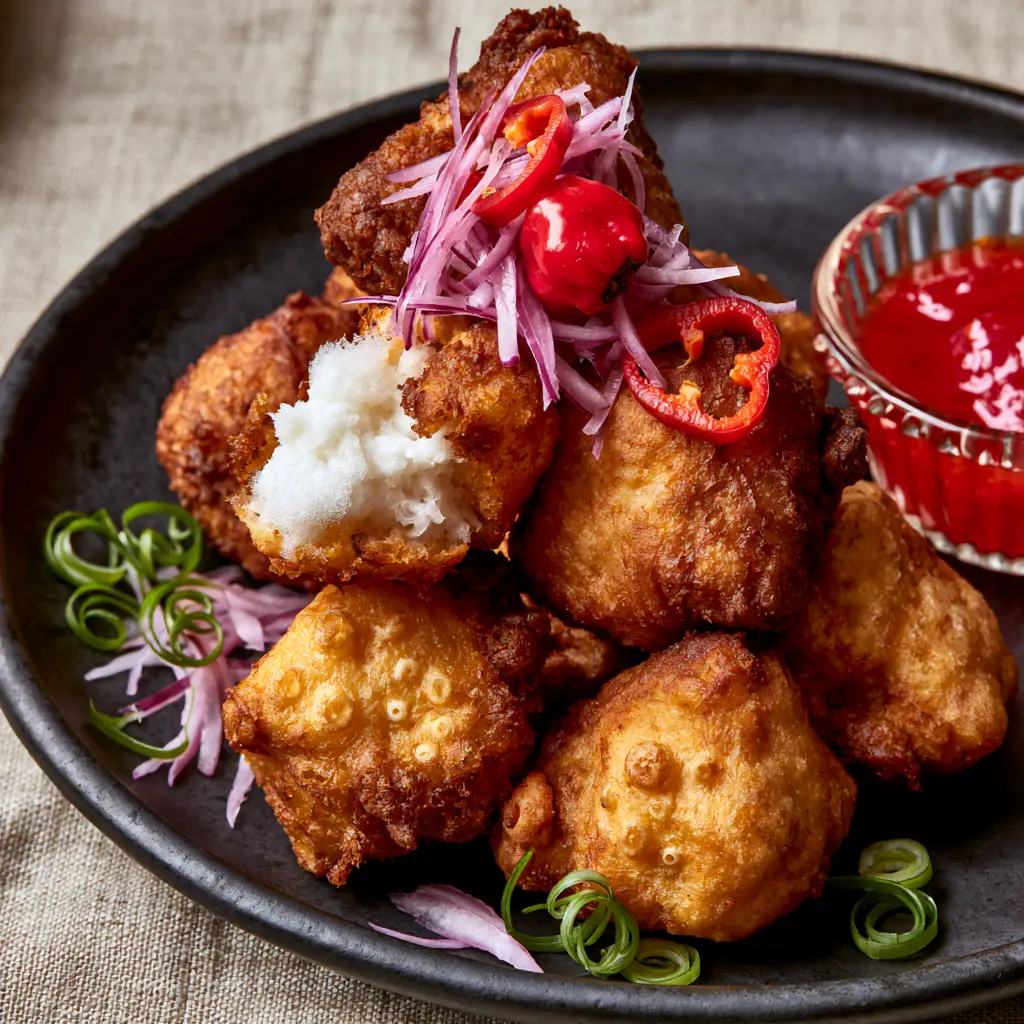
Nigerian Akara is more than just a breakfast staple; it is a masterclass in texture and a cornerstone of West African street food culture. Imagine biting through an ultra-crispy, craggy golden-brown crust to find a steaming, white, cloud-like interior that melts in your mouth.
This recipe delivers that exact sensory experience, capturing the essence of traditional techniques while ensuring modern home cooks can achieve professional results. Whether you are a fan of savory fritters or looking to explore authentic flavors, these bean cakes are a nutritional powerhouse packed with protein.
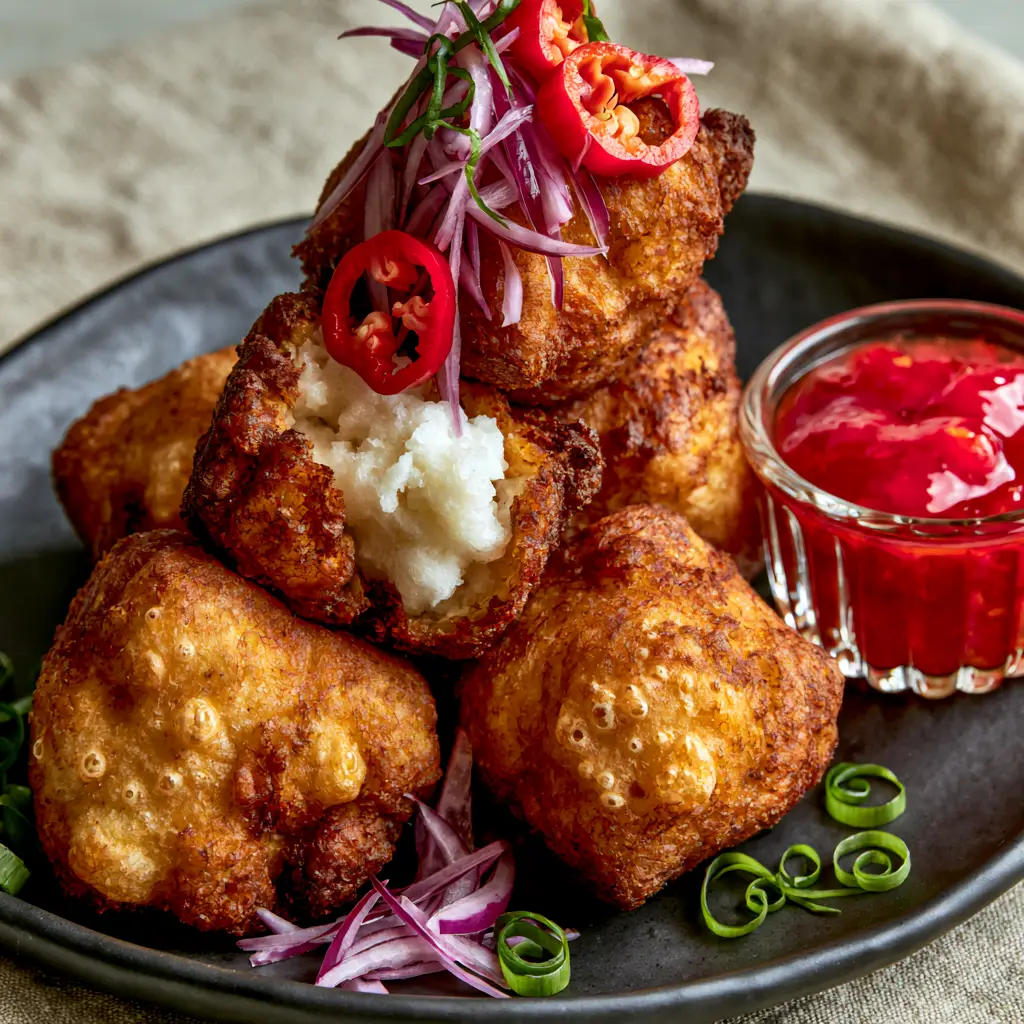
Every bite of these fritters offers a symphony of flavors, especially when topped with sharp slivered red onions and fiery habanero rings. The contrast between the hot, airy bean paste and the fresh, crunchy garnishes makes Nigerian Akara a dish that demands a permanent spot in your rotation.
Why You Will Fall in Love With This Nigerian Akara
- The Perfect Crunch: A visually craggy, deep golden-brown exterior that shatters upon impact.
- Airy Interior: A whipped, white, and fluffy center that feels like a savory marshmallow.
- Vibrant Aromatics: Infused with the sharp heat of fresh habaneros and the sweetness of red onions.
- Authentic Garnishes: Finished with curled green scallions and a glossy, spicy red pepper dipping sauce for a restaurant-quality presentation.
Essential Components for the Fluffiest Bean Fritters
To achieve the iconic texture of authentic Nigerian Akara, you must start with the right foundation. Every ingredient serves a specific structural or flavor-profile purpose in this recipe.
Honey Beans or Brown Beans: 2 cups (400g). These are the star of the show; when peeled and blended, they provide the creamy, pale base necessary for that signature white interior.
Red Onion: 1 medium (150g), divided. Half is blended into the batter for a deep savory base, while the other half is slivered raw for a sharp, crunchy topping.
Fresh Habanero Peppers (Atarodo): 2 to 3 peppers. These provide the characteristic “heat” that defines West African cuisine; some are blended for flavor, while others are sliced into rings for a bright visual garnish.
Vegetable Oil: 3 cups (720ml) for frying. A neutral oil with a high smoke point is critical to achieving that craggy, golden crust without imparting a greasy flavor.
Salt: 1 tsp (6g). This foundational seasoning enhances the natural nuttiness of the beans and balances the heat from the peppers.
Bouillon Powder: 1/2 tsp (2g). This adds a layer of umami that elevates the fritters from simple to spectacular.
Green Scallions: 3 stalks. These are sliced thin and placed in ice water to create elegant curls that add height and freshness to your final plate.
Glossy Red Pepper Sauce: 1/2 cup (120ml). A blend of roasted red bell peppers, scotch bonnets, and oil that provides a sweet and spicy dip for the hot fritters.
Must-Have Tools for Culinary Success
A high-powered blender is your best friend for this recipe, as it ensures the bean paste is smooth enough to trap air bubbles. You will also need a traditional mortar and pestle or a hand mixer to vigorously whisk the batter before frying.
A deep frying pan or a heavy-bottomed Dutch oven is essential for maintaining consistent oil temperatures. Finally, a wire slotted spoon (spider) allows you to drain the fritters efficiently, keeping that “ultra-crispy” exterior intact.
The Secret to Prepping Your Beans for Success
Mastering the Peeling Process
Start by soaking your beans in plenty of water for about 10 to 15 minutes. You want the skins to become loose and wrinkled, but you don’t want the beans to become mushy yet.
Rub the beans between your palms or use a blender on the “pulse” setting for 1-2 seconds with plenty of water to agitate the skins off. Rinse repeatedly, allowing the skins to float to the top and pour them away until you are left with clean, white beans.
Blending for the Perfect Consistency
Place your peeled beans in the blender with the smallest amount of water possible—usually about 1/2 cup (120ml). Add half of the onion and one habanero pepper into the blender at this stage.
Blend until you achieve a thick, smooth paste; it should be thick enough to hold its shape on a spoon. If the batter is too watery, the Akara will absorb too much oil and become heavy rather than airy.
How to Achieve the Iconic Airy Akara Texture
The Aeration Technique
This is the most critical step for achieving the “steaming white fluffy interior” mentioned in our visual blueprint. Pour the bean paste into a large bowl and use a wooden spoon or a hand mixer to whisk it vigorously for 5-10 minutes.
You are looking for a visible change: the batter should become paler, increase in volume, and look almost like a thick whipped cream. This incorporated air is what makes the fritters light enough to float in the oil.
Frying for a Craggy, Golden-Brown Crust
Heat your oil to 350°F (175°C). Test the oil by dropping a tiny bit of batter; it should sizzle and rise to the surface immediately without browning too quickly.
Use a deep tablespoon to scoop the batter and gently drop it into the oil. Do not overcrowd the pan, as this will drop the oil temperature and lead to greasy fritters.
Fry for about 3-4 minutes per side. Watch for the transformation from pale paste to a deep, craggy golden-brown exterior. The “tiny air bubbles” should be visible on the surface of the crust.
Expert Tips for High-End Results
- Salt at the End: Only add your salt and bouillon right before frying. Adding salt too early can break down the air bubbles you worked so hard to whisk in.
- The Scallion Curl: To get those professional green scallion curls, slice the greens very thinly lengthwise and submerge them in a bowl of ice water for 10 minutes.
- Water Control: Use lukewarm water when blending. This helps the beans soften just enough to create a smoother emulsion.
- Drain Properly: Always drain your Akara on a wire rack rather than a paper towel to ensure air circulates around the craggy crust, keeping it ultra-crispy.
Preserving the Crunch: Storage and Reheating
Akara is best enjoyed immediately while the steam vapors are still rising from the center. However, if you have leftovers, store them in an airtight container in the refrigerator for up to 3 days.
To reheat and restore the crunch, avoid the microwave at all costs. Instead, place them in an air fryer at 350°F (175°C) for 3-5 minutes, or in a toaster oven until the exterior sizzles again.
You can also freeze the fried fritters for up to a month. Reheat directly from frozen in the oven for a quick, protein-rich breakfast.
What to Serve With Nigerian Akara
In West Africa, Akara is traditionally served with Ogi (a fermented corn pap) or inside a soft loaf of Agege bread. For a modern brunch spread, it pairs beautifully with other West African recipes like a spicy stew.
If you are looking for a complete dinner menu, consider serving these fritters as an appetizer before a hearty Ghanaian spinach stew or alongside a bowl of African food Ugali.
The glossy red pepper sauce provided in this recipe is a must, but for those who enjoy a variety of flavors, these fritters also complement African recipes that feature bold, spicy tomato bases.
Frequently Asked Questions
Yes, but the texture will be slightly different. You must still whisk the bean flour paste vigorously to achieve the signature airy interior characteristic of authentic Akara.
Yes, peeling is essential. The skins prevent the batter from becoming smooth and airy, and they will result in a dark, gritty fritter rather than the classic white-centered Akara.
Naturally, yes! Akara is made from beans and peppers, making it an excellent plant-based, gluten-free protein option for breakfast or dinner.
If the oil temperature is too low (below 350°F), the batter will absorb oil before the crust can set. Also, adding too much water to the batter makes it prone to oil absorption.
This usually happens if the batter wasn’t whisked enough to incorporate air or if too much water was used during blending. Ensure the paste is thick and whipped until it changes to a lighter color.
Authentic Nigerian Akara Recipe
Nigerian Akara: The Ultimate Crispy and Airy Bean Fritters Recipe
Ingredients
Equipment
Method
- Soak beans for 15 minutes, then agitate to remove skins. Rinse until only white beans remain.
- Process peeled beans, half the onion, and one habanero with minimal water (1/2 cup) until a thick, smooth paste forms.
- Vigorously whisk the batter for 5-10 minutes until it becomes pale, airy, and doubled in volume.
- Gently fold in the salt and bouillon powder just before frying to maintain the air bubbles.
- Heat oil to 350°F (175°C) in a deep pan.
- Drop spoonfuls of batter into the oil. Fry for 3-4 minutes per side until a craggy, golden-brown crust forms and the interior is cooked through.
Notes
Always whisk by hand or mixer to ensure the 'white fluffy interior'.

The Final Word on This Crispy Classic
Mastering Nigerian Akara is a rite of passage for any lover of African dinner recipes. The contrast between the crispy shell and the fluffy heart is a culinary feat that never fails to impress guests.
We would love to see how your golden-brown fritters turned out! Did you manage to get those perfect scallion curls? Leave a comment below and share your results.
Don’t forget to save this recipe to your favorite boards on Pinterest so you can find it whenever the craving for authentic West African street food hits!