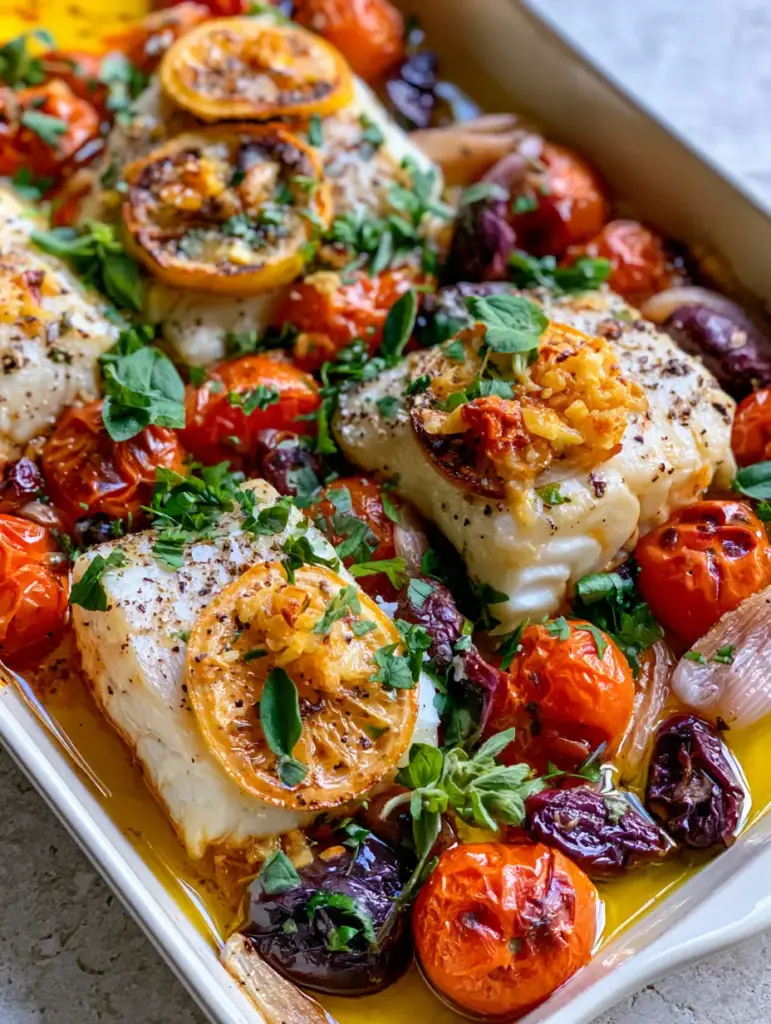
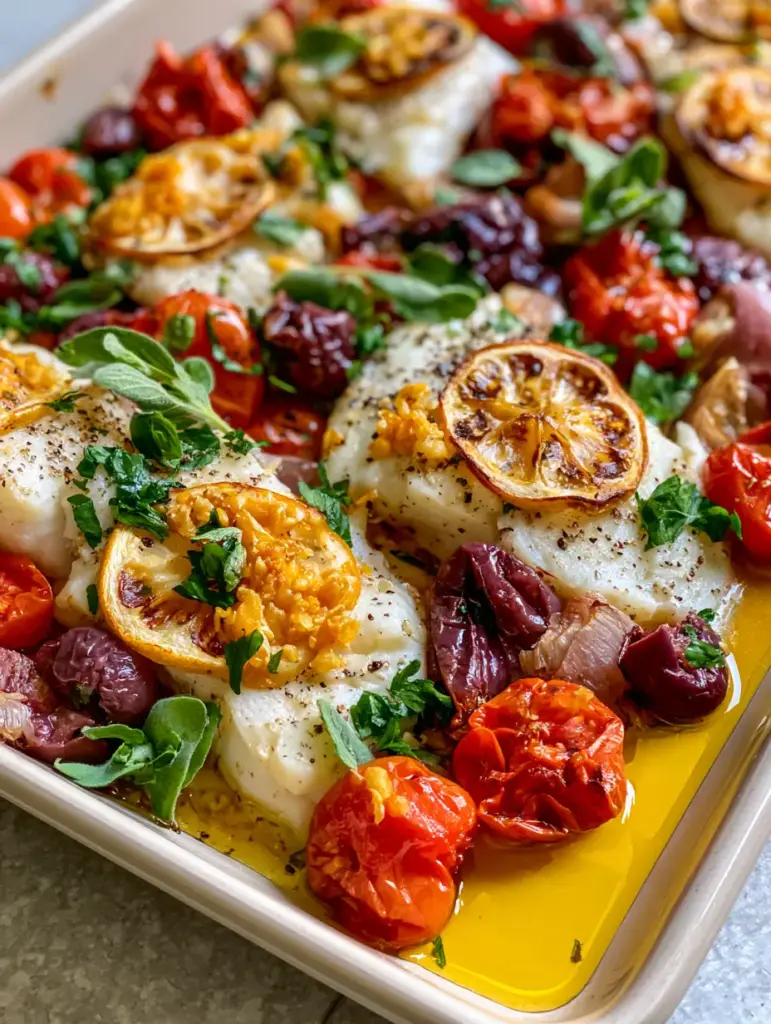
This Mediterranean Baked Fish is the ultimate intersection of vibrant color, heart-healthy fats, and effortless preparation. Imagine buttery, flaky white fish fillets nestled amongst blistered cherry tomatoes, wrinkled Kalamata olives, and charred lemon wheels that release their caramelized juices into a pool of golden olive oil. It is a visual masterpiece that validates the Mediterranean diet as the world’s most delicious way to eat.
If you have been searching for a foolproof weeknight dinner that looks like it came from a coastal Greek taverna, this Mediterranean Baked Fish is your answer. The secret lies in the high-heat roasting method, which transforms simple aromatics like shallots and roasted garlic into sweet, savory gems that perfectly complement the delicate protein. It’s a complete meal that respects your time and your health.
Whether you are a seasoned home cook or just starting your culinary journey, this recipe provides the “wow factor” without the stress. We have designed this guide to help you master the sheet pan technique, ensuring your fish remains succulent while the vegetables reach peak caramelization. Let’s dive into why this dish is a viral sensation on Pinterest and a staple in healthy kitchens worldwide.
Why You’ll Crave This Easy Mediterranean Baked Fish
- Textural Perfection: The contrast between the flaky white fish fillets and the split skins of the blistered cherry tomatoes creates a satisfying mouthfeel in every bite.
- Explosive Aromatics: The combination of minced golden roasted garlic and softened shallot wedges infuses the entire pan with a sweet, savory depth.
- Briny & Bright: The wrinkled Kalamata olives provide a salty punch that is perfectly balanced by the acidity of charred lemon wheels.
- Herb-Forward Finish: A generous scattering of fresh oregano leaves and chopped flat-leaf parsley adds a layer of garden-fresh brightness that cuts through the rich olive oil.
The Essential Ingredients for Restaurant-Quality Baked Fish
White Fish Fillets: You want a firm, flaky white fish like Cod, Halibut, or Snapper. These varieties hold up well to roasting and absorb the flavors of the Mediterranean aromatics beautifully. If you love variety, you might also enjoy our pan-seared cod for a different texture.
Extra Virgin Olive Oil: Use 1/2 cup (120ml) of the highest quality oil you have. A golden olive oil drizzle is not just for cooking; it forms the base of the “pan sauce” that you will want to soak up with crusty bread.
Cherry Tomatoes: Use 2 cups (300g) of red cherry tomatoes. Roasting them until they are blistered with split skins releases their natural sugars, creating a jammy consistency.
Kalamata Olives: 1/2 cup (75g) of pitted, wrinkled Kalamata olives. Their fermented, briny profile is a hallmark of authentic Mediterranean cooking.
Aromatics: You will need 2 large shallots cut into softened shallot wedges and 4 cloves of minced golden roasted garlic. These provide the foundational flavor profile.
Lemons: 1 large lemon, sliced into paper-thin wheels. Slicing them thin allows them to char quickly, removing the bitterness of the pith and leaving behind a concentrated citrus essence.
Fresh Herbs: 2 tablespoons (30g) each of fresh oregano and flat-leaf parsley. Do not use dried herbs here; the visual and flavor impact of fresh greenery is non-negotiable for this dish.
Step-by-Step: How to Master This Sheet Pan Masterpiece
1. Prep the Aromatics and Oven
Preheat your oven to 400°F (200°C). While the oven heats, prepare a rimmed sheet pan. Drizzle 2 tablespoons (30ml) of golden olive oil onto the pan. Toss your softened shallot wedges and minced garlic directly on the pan to coat them. This ensures they begin to caramelize the moment they hit the heat.
2. The Vegetable Perimeter
Scatter the 2 cups (300g) of cherry tomatoes and 1/2 cup (75g) of wrinkled Kalamata olives around the edges of the pan. The goal is to create a “nest” for the fish. Sprinkle the vegetables with a pinch of coarse sea salt and cracked pepper to draw out moisture for that blistered effect.
3. Seasoning the Flaky White Fish
Pat your flaky white fish fillets (approx. 1.5 lbs / 680g) dry with a paper towel. This is a crucial step for achieving a buttery texture rather than a steamed one. Season both sides generously with coarse sea salt and cracked black pepper. Place the fillets in the center of the sheet pan, slightly overlapping the tomatoes and shallots.
4. The Layering of Flavors
Top each fillet with the paper-thin lemon wheels. The lemons act as a protective shield for the fish, keeping it moist while they become charred and beautiful. Drizzle the remaining golden olive oil over the entire pan, ensuring the lemon slices are well-coated.
5. The High-Heat Roast
Slide the pan into the center rack of the oven. Bake for 12–15 minutes. You are looking for specific visual and sensory cues: the fish should be opaque and flake easily with a fork, the cherry tomatoes should have split skins, and the shallots should be translucent and soft. For an extra touch of color, turn on the broiler for the final 2 minutes to ensure those lemon wheels are perfectly charred.
6. The Finishing Touches
Remove the pan from the oven. You will notice the golden olive oil pools slightly in the corners, mingled with tomato juices and lemon zest. Immediately scatter the fresh bright green oregano leaves and chopped flat-leaf parsley over the hot fish. The residual heat will wake up the oils in the herbs, releasing an incredible aroma.
Expert Tips for Success
- Room Temperature Fish: Take your fish out of the fridge 15 minutes before cooking. This ensures even cooking so the outside doesn’t overcook before the center is flaky.
- Dry the Skin: If your fillets have skin, use a sharp knife to score it slightly. This prevents the fish from curling up as the proteins tighten in the heat.
- Don’t Crowd the Pan: If the tomatoes are too crowded, they will steam instead of blistering. Use a large enough sheet pan to allow air circulation.
- Variety is Key: While we love cod, this technique works beautifully with oven-baked trout or even snapper. Adjust the time based on the thickness of the fillet.
Storage, Reheating & Freezing
To Store: Place leftovers in an airtight container for up to 2 days in the refrigerator. The flavors of the olives and garlic actually deepen overnight.
To Reheat: Avoid the microwave, which can make the flaky white fish rubbery. Instead, place the fish and vegetables back on a sheet pan and warm in a 300°F (150°C) oven for 8–10 minutes until just heated through.
To Freeze: We do not recommend freezing the cooked dish, as the blistered tomatoes and delicate fish texture will degrade upon thawing. Fresh is always best for this Mediterranean Baked Fish.
What to Serve With This
To keep this meal light and Mediterranean-focused, serve it alongside a bowl of crispy baked feta potatoes. The saltiness of the feta mirrors the olives in the fish dish perfectly.
For a grain-based side, a simple mushroom rice or a bed of fluffy quinoa works wonders to soak up the golden olive oil drizzle and tomato juices. If you want a double-seafood feast, consider starting the meal with garlicky baked mussels.
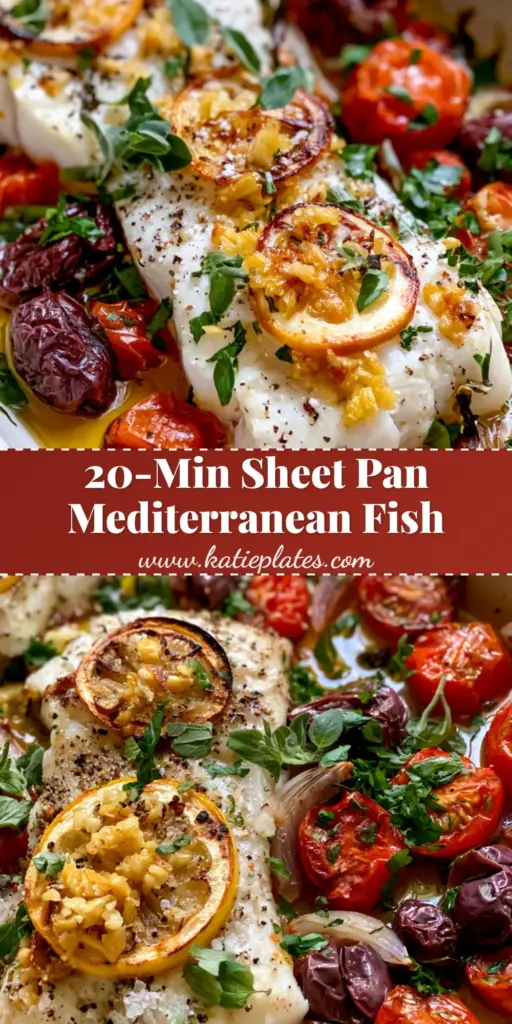
Mediterranean Baked Fish: The Ultimate Healthy Dinner
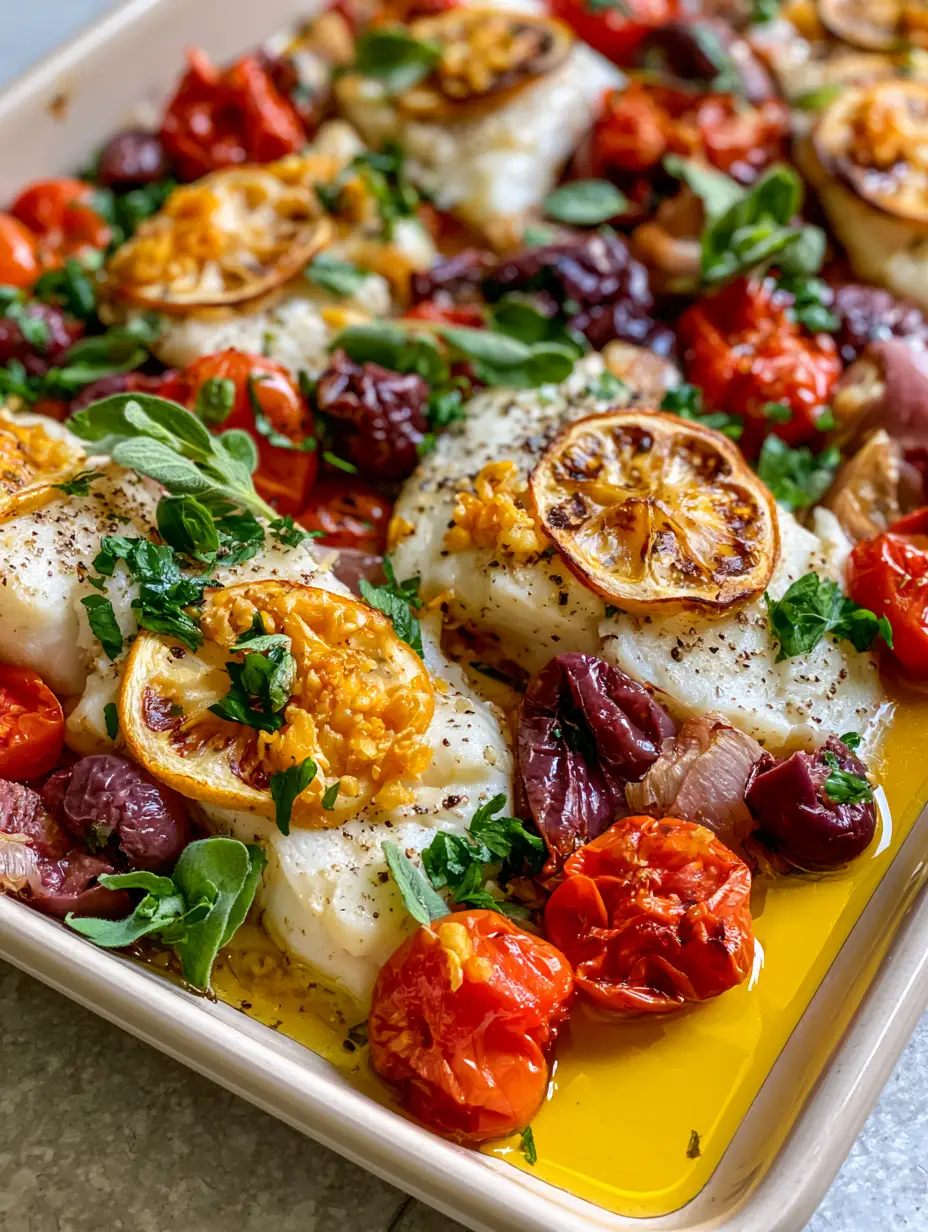
Mediterranean Baked Fish with Blistered Tomatoes and Charred Lemon
Ingredients
Equipment
Method
- Preheat your oven to 400°F (200°C). Drizzle a large rimmed sheet pan with a portion of the olive oil.
- Place shallot wedges, minced garlic, cherry tomatoes, and Kalamata olives on the pan. Toss to coat with oil and season with salt and pepper.
- Pat fish fillets dry and season with sea salt and black pepper. Nestle them among the vegetables.
- Top fish with lemon wheels and drizzle the remaining golden olive oil over everything.
- Bake for 12-15 minutes until fish is flaky and tomatoes are blistered. Optional: Broil for 2 minutes to char lemons.
- Scatter fresh oregano and parsley over the hot pan before serving.
Notes
Ensure the fish is patted completely dry for the best texture.
Save This Recipe to Pinterest!
Did you love the vibrant colors and blistered cherry tomatoes of this Mediterranean Baked Fish? Make sure to save this recipe to your “Healthy Dinners” or “Mediterranean Recipes” board on Pinterest so you never lose it!
We love seeing your kitchen creations. Follow @katieplates for more daily recipe inspiration. If you made this dish, please snap a photo and share it in the comments below! Don’t forget to leave a 5-star rating in the recipe card above—it helps our community grow and allows us to keep sharing free recipes with you!
Frequently Asked Questions
While you can eat them, they are primarily there to infuse the fish with citrus oils and provide a beautiful charred aesthetic. The thin-sliced rinds become much milder once roasted.
Absolutely! Zucchini rounds or asparagus spears work well, but ensure you don’t overcrowd the pan, or the tomatoes won’t get that signature blistered skin.
Yes, but ensure the fish is completely thawed and patted extremely dry with paper towels before seasoning. Excess moisture will prevent the vegetables from blistering correctly.
The fish is done when it reaches an internal temperature of 145°F (63°C) or when it easily flakes with a fork and the color has changed from translucent to opaque.
Firm, flaky white fish fillets like Cod, Halibut, Bass, or Snapper are best. They hold their shape during roasting and absorb the aromatics without becoming mushy.