Mastering the art of Sauces for Salmon is the single most effective way to transform a simple weeknight protein into a five-star dining experience. Whether you crave a bright acidity, a deep umami sweetness, or a luxurious herbal creaminess, these three distinct finishes are designed to complement the rich, buttery fat of premium salmon fillets.
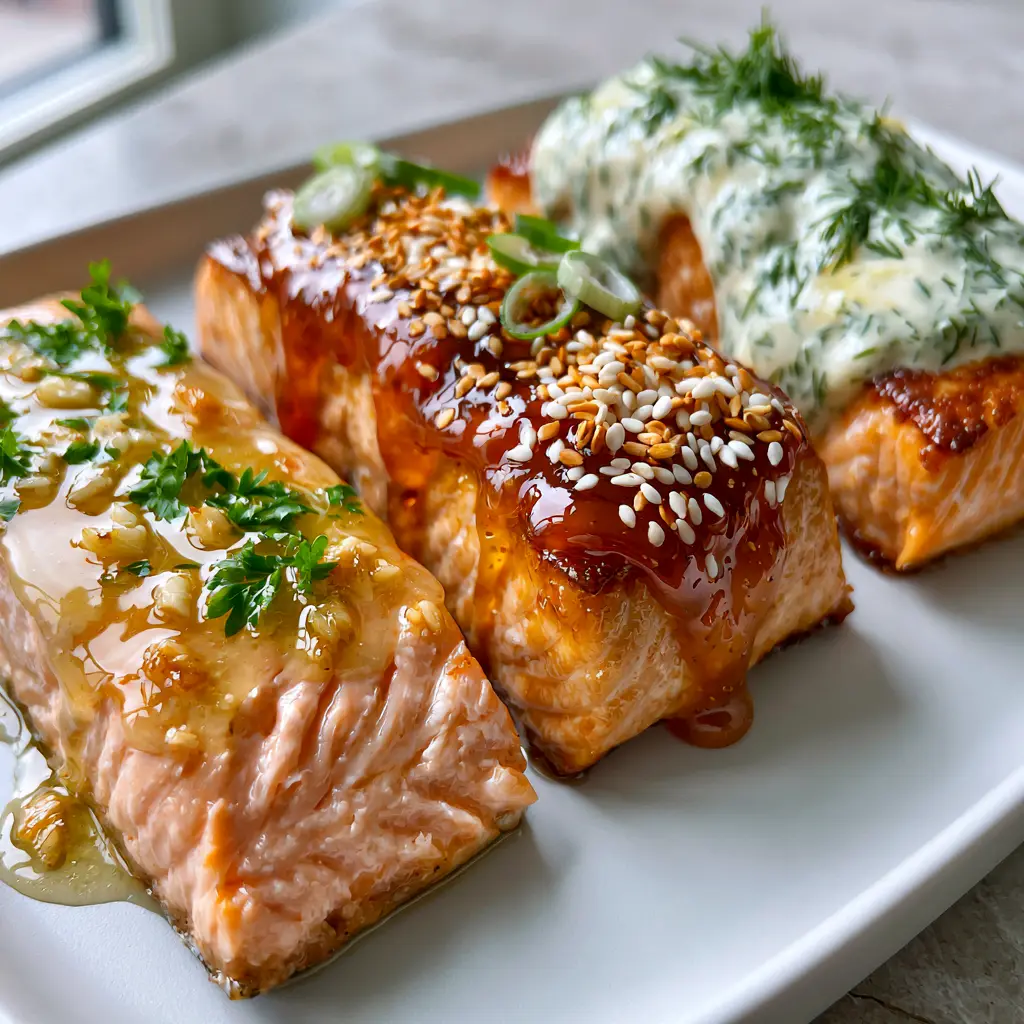
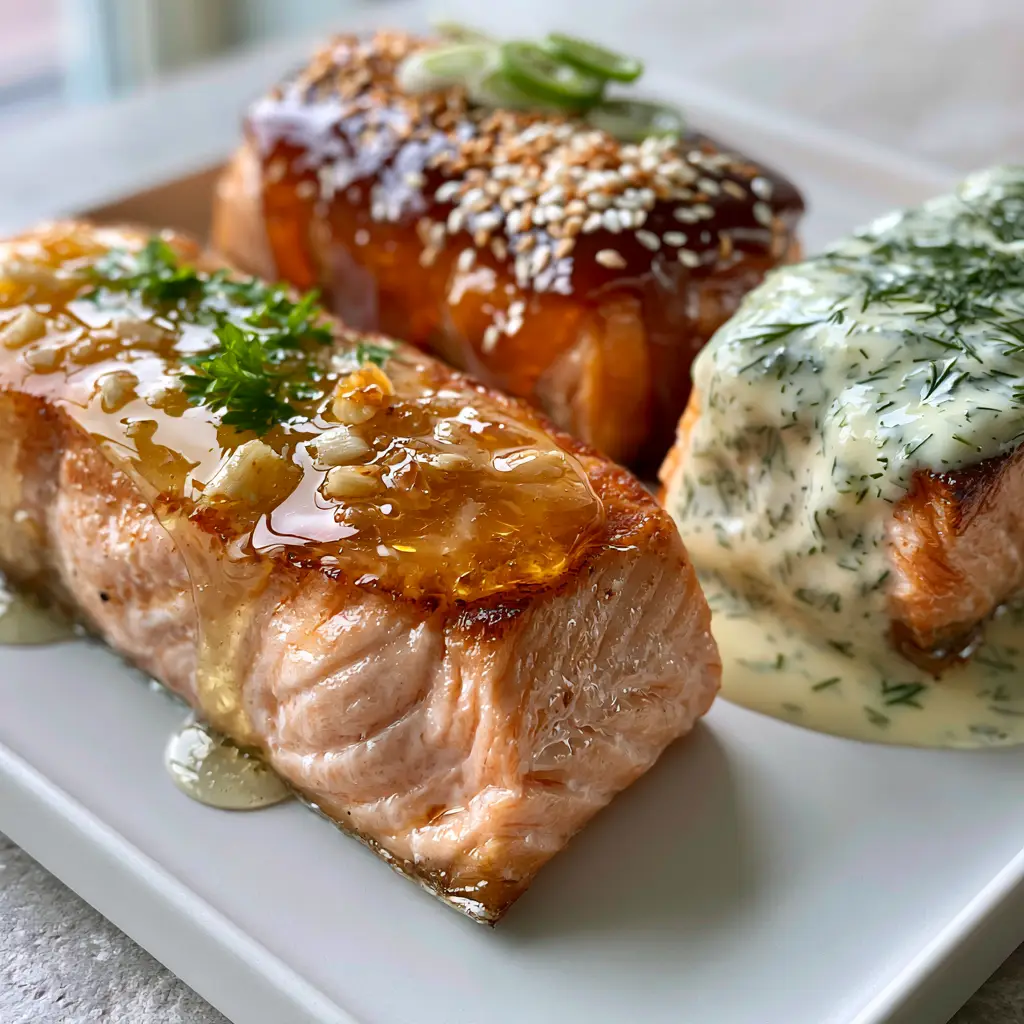
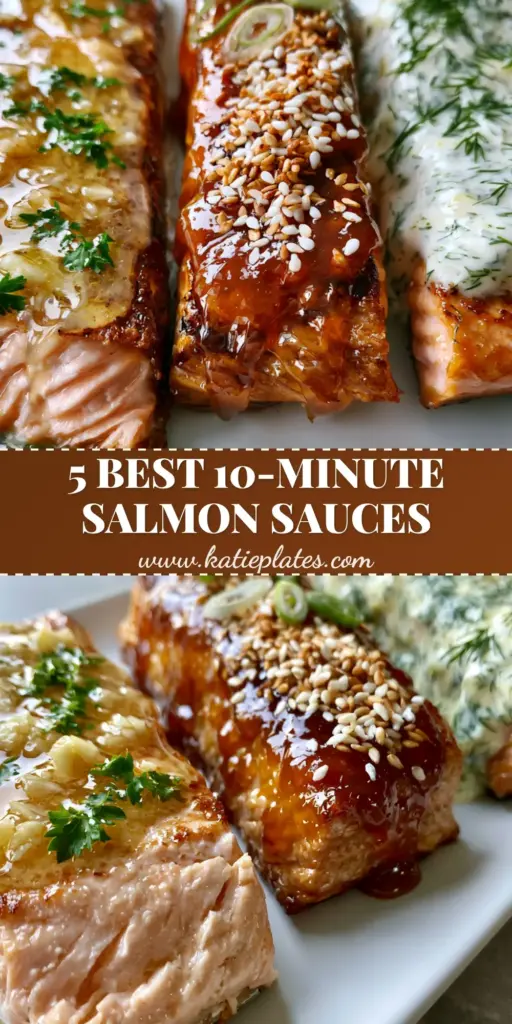
Visualizing the perfect plate is the first step in culinary excellence. Imagine three thick, succulent fillets resting on a clean white plate, each boasting a light golden sear on the edges while remaining perfectly moist and tender in the center.
The morning light catches the delicate sheen of a glossy garlic butter, the thick amber glow of a honey glaze, and the velvet texture of a dill-flecked cream. These Sauces for Salmon are not just toppings; they are the structural flavor profiles that elevate the natural sweetness of the fish.
Why These Sauces for Salmon Will Revolutionize Your Kitchen
- Textural Contrast: From the crunch of toasted white sesame seeds to the silky emulsion of a lemon-dill base, these recipes provide a multi-sensory eating experience.
- Visually Stunning Presentation: The vibrant green of fresh parsley and scallions against the amber and golden hues creates a professional “smartphone-ready” aesthetic.
- Culinary Versatility: These sauces utilize foundational techniques like emulsification and reduction that you can apply to dozens of other proteins.
- Perfect Moisture Retention: By pairing a high-heat pan sear with these specific glazes, you ensure the salmon flakes easily without ever becoming dry.
Essential Ingredients for the Ultimate Pan-Seared Salmon
To achieve the results seen in our Sauces for Salmon blueprint, we must start with high-quality ingredients and a few scientific essentials. We prioritize fresh herbs and high-smoke-point fats to ensure the flavors remain clean and the textures remain precise.
Fresh Salmon Fillets: Look for center-cut fillets that are approximately 1.5 inches (3.8cm) thick. Thick fillets allow for a beautiful exterior sear while maintaining a medium-rare, succulent interior.
Avocado Oil or Ghee: You need 2 tbsp (30ml) of a high-smoke-point fat for the initial sear. This allows the Maillard reaction to occur without the oil breaking down and becoming bitter.
Flaky Sea Salt and Cracked Black Pepper: Use 1 tsp (5g) of each to season the raw fillets. The coarse texture of sea salt helps create a crust, while freshly cracked pepper provides a floral heat that pre-ground pepper lacks.
Unsalted Butter: For the garlic butter sauce, 4 tbsp (60g) of high-quality butter is required. Using unsalted butter allows you to control the sodium levels perfectly as the sauce reduces.
Minced Garlic and Fresh Parsley: You will need 3 cloves (15g) of garlic and 2 tbsp (8g) of chopped parsley. The garlic must be minced finely to suspend beautifully in the translucent golden butter.
Amber Honey and Soy Sauce: For the sticky glaze, 1/4 cup (60ml) of honey and 1 tbsp (15ml) of soy sauce create that signature amber color. The sugars in the honey caramelize quickly, so watch your heat levels.
Creamy Base: The lemon dill sauce requires 1/2 cup (120ml) of Greek yogurt or sour cream. This provides the “creamy white” visual specified in our blueprint while offering a tangy counterpoint to the fish.
Fresh Dill and Lemon: 2 tbsp (4g) of fresh dill sprigs and 1 whole lemon (zested and juiced) are non-negotiable. The dill must be heavy-flecked throughout the sauce for maximum visual impact.
Garnish Elements: 1 tsp (3g) of toasted white sesame seeds and 2 thinly sliced green scallions add the final layer of professional flair. These provide the “crown” for the honey-glazed fillet.
Must-Have Kitchen Tools for a Perfect Sear
Achieving a restaurant-grade finish on your Sauces for Salmon requires the right equipment. A heavy-bottomed 12-inch (30cm) stainless steel or cast-iron skillet is essential for heat retention and even browning.
You will also need a flexible fish spatula to flip the fillets without breaking the delicate flakes. A small whisk is required to emulsify the creamy lemon dill sauce, ensuring no separation occurs when it hits the warm fish.
Finally, a microplane or fine grater is vital for zesting the lemon and mincing the garlic into a paste-like consistency. This ensures the aromatics integrate into the sauces without leaving large, pungent chunks.
Mastering the Perfect Pan-Seared Salmon Fillet
Preparing the Protein
Start by patting your salmon fillets completely dry with paper towels. Any moisture on the surface of the fish will create steam, preventing the formation of that beautiful light sear on the edges described in our visual blueprint.
Season generously with flaky sea salt and cracked black pepper. Allow the fish to sit at room temperature for about 10 minutes; this prevents the muscle fibers from seizing up when they hit the hot pan.
The Searing Process
Heat your 2 tbsp (30ml) of oil in the skillet over medium-high heat until it begins to shimmer. Carefully place the fillets in the pan, skin-side down (if applicable), and press gently with your spatula for 10 seconds.
Cook undisturbed for 4-5 minutes until the salmon is opaque halfway up the sides. Flip the fillets and cook for another 2-3 minutes. Look for a deep golden-brown crust and visible tender flakes before removing them to a warm matte white plate.
Crafting the Translucent Golden Garlic Butter
Infusing the Aromatics
In a small saucepan over medium heat, melt 4 tbsp (60g) of unsalted butter. Once the butter begins to foam, add your 3 cloves (15g) of finely minced garlic. The goal is to soften the garlic until it is fragrant but not browned.
Add a squeeze of lemon juice to brighten the fats. The sauce should remain translucent and glossy, with the garlic bits suspended evenly throughout the liquid.
The Final Herbal Touch
Stir in 2 tbsp (8g) of fresh chopped parsley right before serving. This ensures the herb stays bright green and doesn’t wilt into a dark, muddy color. Drench the first fillet in this golden liquid, ensuring the garlic and parsley are visible on top.
Building the Sticky Amber Honey Sesame Glaze
Reducing for Viscosity
Combine 1/4 cup (60ml) of amber honey, 1 tbsp (15ml) of soy sauce, and 1 tsp (5ml) of rice vinegar in a small pan. Simmer over medium heat for 3-4 minutes until the mixture thickens into a “sticky” consistency that coats the back of a spoon.
You are looking for a deep, translucent amber color. If the glaze is too thin, it will run off the salmon; if it’s too thick, it will become tacky and hard to eat. Aim for a glossy, pourable syrup.
Adding the Garnish Crown
Coat the second salmon fillet generously with the warm glaze. Immediately sprinkle with 1 tsp (3g) of toasted white sesame seeds and a handful of thinly sliced green scallions. The heat from the glaze will slightly soften the scallions, releasing their mild onion aroma.
Whisking the Velvety Creamy Lemon Dill Sauce
Achieving the Perfect Emulsion
In a small bowl, whisk together 1/2 cup (120ml) of Greek yogurt, 1 tbsp (15g) of mayonnaise, and the juice of half a lemon. The mayonnaise provides a structural stability that prevents the yogurt from breaking when it touches the hot salmon.
Add a pinch of flaky sea salt and more cracked black pepper to taste. The sauce should be a rich, opaque white with a smooth, velvety texture.
Folding in the Fresh Dill
Finely chop a generous amount of fresh dill sprigs and fold them into the cream. You want heavy flecks of green throughout the white sauce. Spoon a thick layer over the third fillet and garnish with an extra sprig of dill and a fresh lemon wedge on the side.
Professional Secrets for Flawless Fish Textures
One of the most common mistakes when making Sauces for Salmon is overcooking the fish while waiting for the sauce to finish. Always prepare your sauces first, or at least have the ingredients prepped and ready to go (mise en place).
Remember the concept of “carry-over cooking.” Salmon will continue to cook for a few minutes after being removed from the pan. Pull the fillets when they are just slightly underdone in the thickest part to ensure they remain moist and flaky.
If your garlic butter sauce separates, simply add a teaspoon of warm water and whisk vigorously. This helps re-emulsify the fat and liquids into a smooth, glossy coating.
Side Dish Inspirations for a Complete Meal
To turn these three-way salmon fillets into a full feast, consider pairing them with starch-heavy sides that can soak up the extra glazes. A pile of crispy Greek roast potatoes provides a wonderful textural contrast to the soft fish.
If you prefer something more herb-forward, these lemon roasted Greek potatoes echo the citrus notes found in the creamy dill sauce. For a unique twist, a side of smoky Moroccan zaalouk offers an earthy depth that pairs beautifully with the honey sesame glaze.
You can even serve the salmon alongside Greek feta roast potatoes for a salty, tangy addition that elevates the garlic butter profile to new heights.
Frequently Asked Questions About Salmon Preparation
The honey glaze and creamy lemon dill sauce can be made 24 hours in advance. However, the garlic butter sauce is best made fresh to prevent the butter from solidifying or the parsley from losing its color.
Salmon is done when it reaches an internal temperature of 125°F (52°C) for medium-rare. Visually, the fish should flake easily with a fork and change from translucent to opaque pink.
Always start skin-side down in a hot, oiled pan. This protects the delicate flesh from the direct heat and allows the skin to become crispy and edible, acting as a natural insulator.
Reheat salmon in a 275°F (135°C) oven for about 15 minutes. Add a splash of water or extra sauce to the dish and cover it with foil to trap moisture and prevent the flakes from becoming tough.
Honey has a high sugar content and burns quickly. Ensure you reduce the sauce in a separate pan or add it to the salmon only during the last 60 seconds of cooking to prevent bitterness.
The Ultimate 3-Way Sauces for Salmon Recipe
Sauces for Salmon: 3 Easy Recipes for Restaurant-Quality Fillets
Ingredients
Equipment
Method
- Pat salmon dry with paper towels and season with salt and pepper. Heat oil in a skillet over medium-high heat until shimmering.
- Place fillets in the pan and sear for 4-5 minutes per side until a golden crust forms and edges are crisp. Remove to a plate.
- Melt butter in a pan, add minced garlic until fragrant, then stir in fresh parsley. Pour over the first fillet.
- Simmer honey and soy sauce until thickened and amber. Coat the second fillet and top with sesame seeds and scallions.
- Whisk yogurt, lemon juice, and plenty of fresh dill. Spoon a thick layer over the third fillet and serve with lemon wedges.
Notes
Don't overcook the garlic; it should be translucent and golden, not brown.
Closing & Call to Action
Whether you choose the golden shimmer of garlic butter, the amber glow of honey sesame, or the cool refreshing touch of lemon dill, these Sauces for Salmon are guaranteed to impress. The beauty of this recipe lies in the variety—perfect for a family dinner where everyone has different preferences.
If you enjoyed these culinary techniques, please leave a comment below and tell us which sauce was your favorite! Don’t forget to sign up for our newsletter for more elite recipe blueprints and professional kitchen tips. Please share this post to your favorite boards on Pinterest to help other home cooks master the perfect sear!