There is a specific, intoxicating aroma that fills a Thai street food market—the scent of high-heat caramelization, pungent garlic, and the spicy punch of bruised chilies. Thai Drunken Noodles, or Pad Kee Mao, are the crown jewel of this sensory experience, offering a complex balance of salty, sweet, and fiery flavors.
If you have ever wondered how professional chefs achieve those signature charred edges on translucent rice noodles, you are in the right place. This recipe focuses on the “wok hei” or “breath of the wok” technique, ensuring every bite of your chicken and noodle stir-fry is infused with deep, smoky undertones.
By following this guide, you will transform simple pantry staples into a glossy, umami-rich masterpiece that looks exactly like it came from a high-end bistro. Get ready to master the art of the perfect sear and the most vibrant Thai basil infusion you have ever tasted.
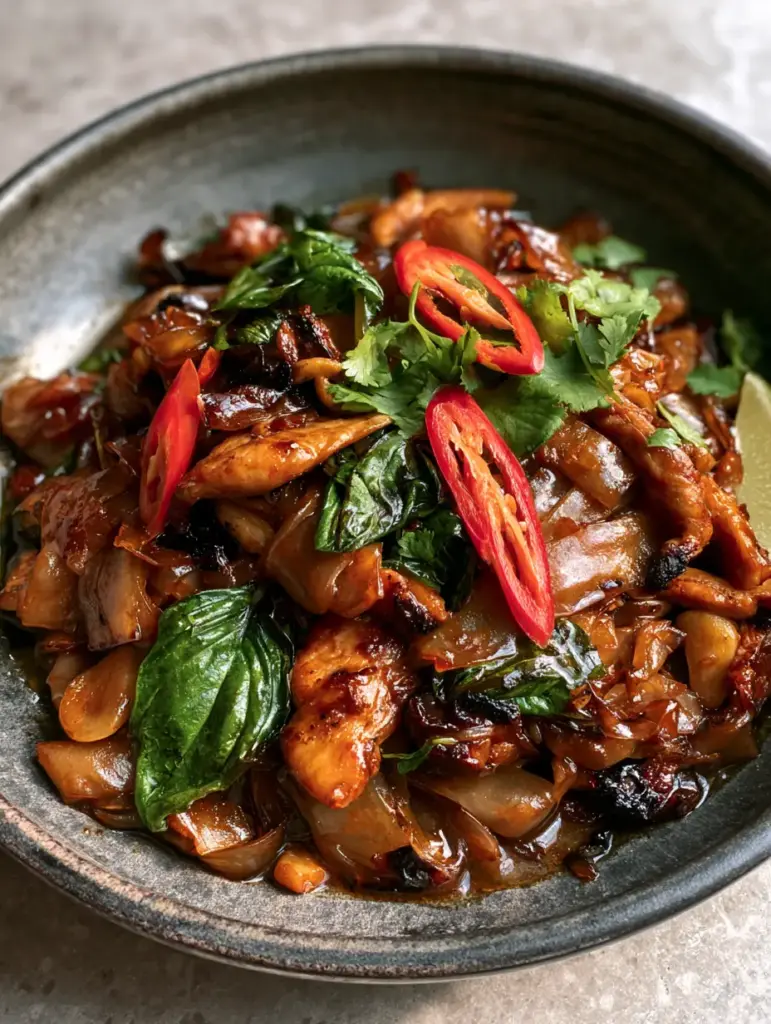
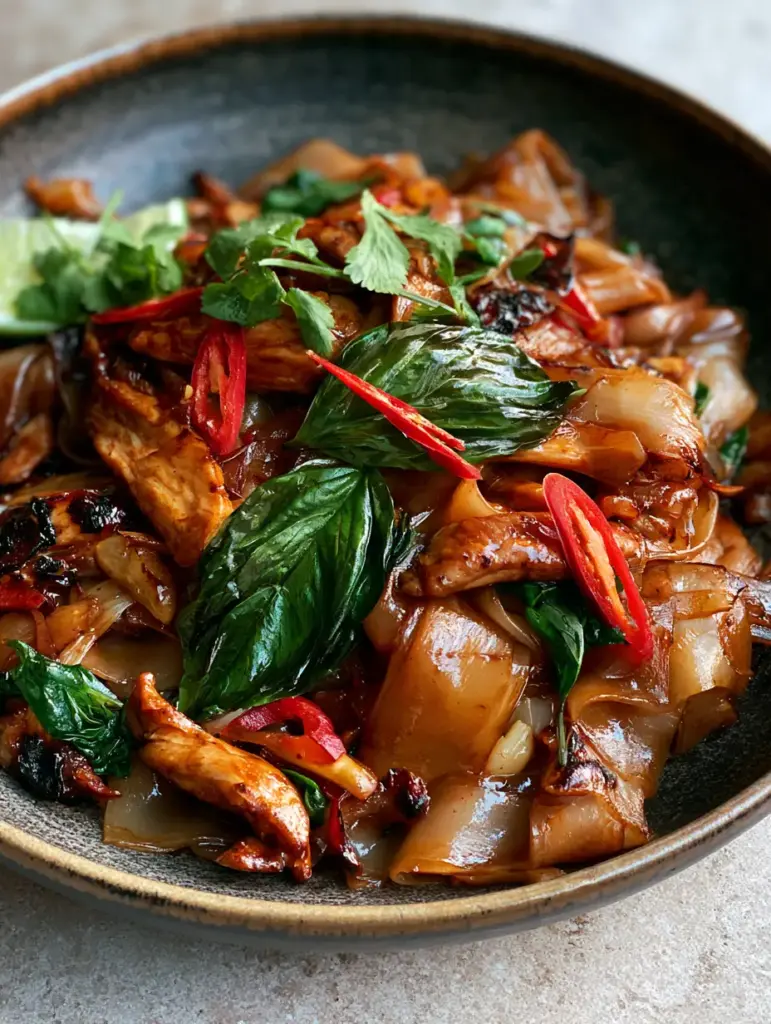
The Visual Anatomy of a Perfect Plate of Pad Kee Mao
- The Charred Noodle Foundation: Wide, flat rice noodles must be seared until they develop dark, caramelized “leopard spots” for maximum flavor.
- Glossy Umami Glaze: A deep-amber sauce that clings to every surface, providing a mouthwatering shimmer under natural light.
- Sizzling Aromatics: Softened garlic slivers and vibrant red bird’s eye chilies that provide both heat and visual contrast.
- Wilted Herbal Freshness: Whole Thai basil leaves, added at the very last second to maintain their emerald green hue while softening into the sauce.
- Professional Garnishes: A bright pop of fresh cilantro and a tart lime wedge to cut through the rich, savory profile of the dish.
Essential Ingredients for Authentic Thai Drunken Noodles
Wide Flat Rice Noodles: You will need 12oz (340g) of dried wide rice noodles or 1lb (450g) of fresh ones. These act as the canvas for our sauce, absorbing the dark soy flavors while maintaining a chewy, translucent texture.
Chicken Breast Strips: 1lb (450g) of boneless, skinless chicken breast, sliced into thin, bite-sized strips. Chicken provides a lean, protein-packed contrast to the soft noodles when seared to a golden brown.
Thai Bird’s Eye Chilies: 3-5 chilies, sliced diagonally. These tiny powerhouses provide the signature “drunk” heat of the dish; leave the seeds in for extra fire or remove them for a milder experience.
Fresh Thai Basil: 1 cup (30g) of firmly packed whole leaves. Unlike Italian basil, Thai basil has a sturdy leaf and a licorice-like aroma that stands up to intense stir-frying heat.
The Dark Umami Sauce Base: A blend of 2 tbsp (30ml) oyster sauce, 1 tbsp (15ml) dark soy sauce, and 1 tbsp (15ml) fish sauce. This combination creates the deep amber color and the foundational salty-funk essential to Southeast Asian cuisine.
Red Bell Peppers: 1 medium pepper (150g), julienned into thin strips. These add a necessary crunch and a boost of vitamin C, complementing the spicy chilies with a hint of natural sweetness.
Foundational Aromatics: 4 cloves of garlic, thinly slivered, and 2 tbsp (30ml) of neutral high-smoke point oil. Garlic is the aromatic backbone, while the oil is the conductor of heat that allows the noodles to blister without sticking.
Must-Have Tools for High-Heat Stir-Frying
To achieve the specific visual results of our Thai Drunken Noodles, a carbon steel wok is the gold standard. The thin walls allow for rapid temperature changes, which is crucial for searing the chicken and charring the noodles simultaneously.
If you don’t have a wok, a large 12-inch (30cm) cast-iron skillet is a fantastic alternative. Its superior heat retention mimics the “hot spot” of a commercial burner, helping you achieve those dark, caramelized edges on the rice noodles.
Finally, ensure you have a sturdy metal spatula or wok turner. You will need to move the ingredients quickly and aggressively to prevent the sugars in the dark soy sauce from burning while the noodles achieve their smoky finish.
Step-by-Step: Mastering the Art of the Char
1. Prepping the Noodle Foundation
If using dried noodles, soak them in hot (not boiling) water for 20-30 minutes until they are pliable but still have a firm “bite” in the center. Drain them thoroughly and toss with 1 tsp (5ml) of oil to prevent clumping; wet noodles will steam rather than sear, ruining our quest for charred edges.
2. Creating the Glossy Umami Sauce
In a small bowl, whisk together the oyster sauce, dark soy sauce, light soy sauce, fish sauce, and 1 tbsp (12g) of brown sugar or palm sugar. This creates a concentrated flavor bomb that will glaze the noodles instantly once it hits the hot metal of the wok.
3. Searing the Protein and Aromatics
Heat your wok over high heat until a drop of water flicked onto the surface dances and evaporates instantly. Add 1 tbsp (15ml) of oil, then the chicken strips, spreading them in a single layer; let them sit undisturbed for 60 seconds to develop a deep golden-brown crust before tossing with the garlic slivers and sliced chilies.
4. The High-Heat Noodle Char
Push the chicken to the sides of the wok and add the remaining oil to the center. Drop in your rice noodles and julienned bell peppers, spreading them out to maximize surface contact; wait until you see the edges of the noodles turning opaque and slightly dark before adding the sauce.
5. The Final Basil Infusion
Pour the sauce over the noodles and toss vigorously for 1-2 minutes until the liquid reduces into a thick, glossy lacquer. Shut off the heat and throw in the whole Thai basil leaves, folding them in just until they wilt from the residual heat, preserving their vibrant green color.
Expert Tips for the Perfect Pad Kee Mao
- Room Temperature Ingredients: Take your chicken and vegetables out of the fridge 15 minutes before cooking. Cold ingredients drop the pan temperature, which prevents the noodles from charring properly.
- Don’t Overcrowd: If your pan isn’t large enough, cook the noodles in two batches. Overcrowding leads to “boiled” noodles rather than seared ones.
- Balance the Heat: If the bird’s eye chilies are too intense, balance the dish by serving it alongside some refreshing cucumber yogurt or a cool strawberry lime mocktail.
- Freshness Matters: Always use fresh lime juice squeezed over the dish right before eating; the acidity brightens the heavy umami notes of the oyster sauce.
Pairing and Serving Suggestions
These Thai Drunken Noodles are a robust, stand-alone meal, but they also pair beautifully within a larger Asian-inspired spread. For a light starter, consider serving these alongside some quick Asian appetizers to round out the meal.
If you are hosting a multi-course dinner, the spicy profile of Pad Kee Mao acts as a wonderful counterpoint to milder seafood dishes like lemon butter cod. For dessert, cleanse the palate with something light and fruity from our collection of classic fruit-based treats.
Storing and Reheating Your Leftovers
Store any remaining Thai Drunken Noodles in an airtight container in the refrigerator for up to 3 days. Note that rice noodles tend to firm up and absorb the sauce when cold, so the texture will change slightly over time.
To reheat, add a splash of water or chicken broth to a skillet over medium heat. Toss the noodles gently until they are heated through and the sauce loosens back into its original glossy state; avoid the microwave if possible, as it can make the noodles rubbery.
Frequently Asked Questions
Yes! Substitute the chicken with extra-firm tofu or mushrooms, and replace the oyster and fish sauces with vegetarian stir-fry sauce and vegan ‘no-fish’ sauce (or extra light soy sauce).
High heat and patience are key. Let the noodles sit undisturbed in the hot oil for about 45-60 seconds before tossing. This allows the exterior to caramelize and ‘sear’ rather than just steam.
Noodles stick when they are too wet or the pan isn’t hot enough. Ensure they are well-drained after soaking and tossed in a tiny bit of oil before hitting a screaming-hot wok.
Holy basil is the most authentic substitute. If unavailable, use Italian basil with a few mint leaves, though the flavor profile will lack the signature anise-like spice of Thai basil.
There are many theories, but the most popular is that the dish is so spicy that the person eating it needs to drink a lot of alcohol to cool down, or that it’s the perfect late-night meal after a night out.
The Ultimate Thai Drunken Noodles (Pad Kee Mao) Recipe
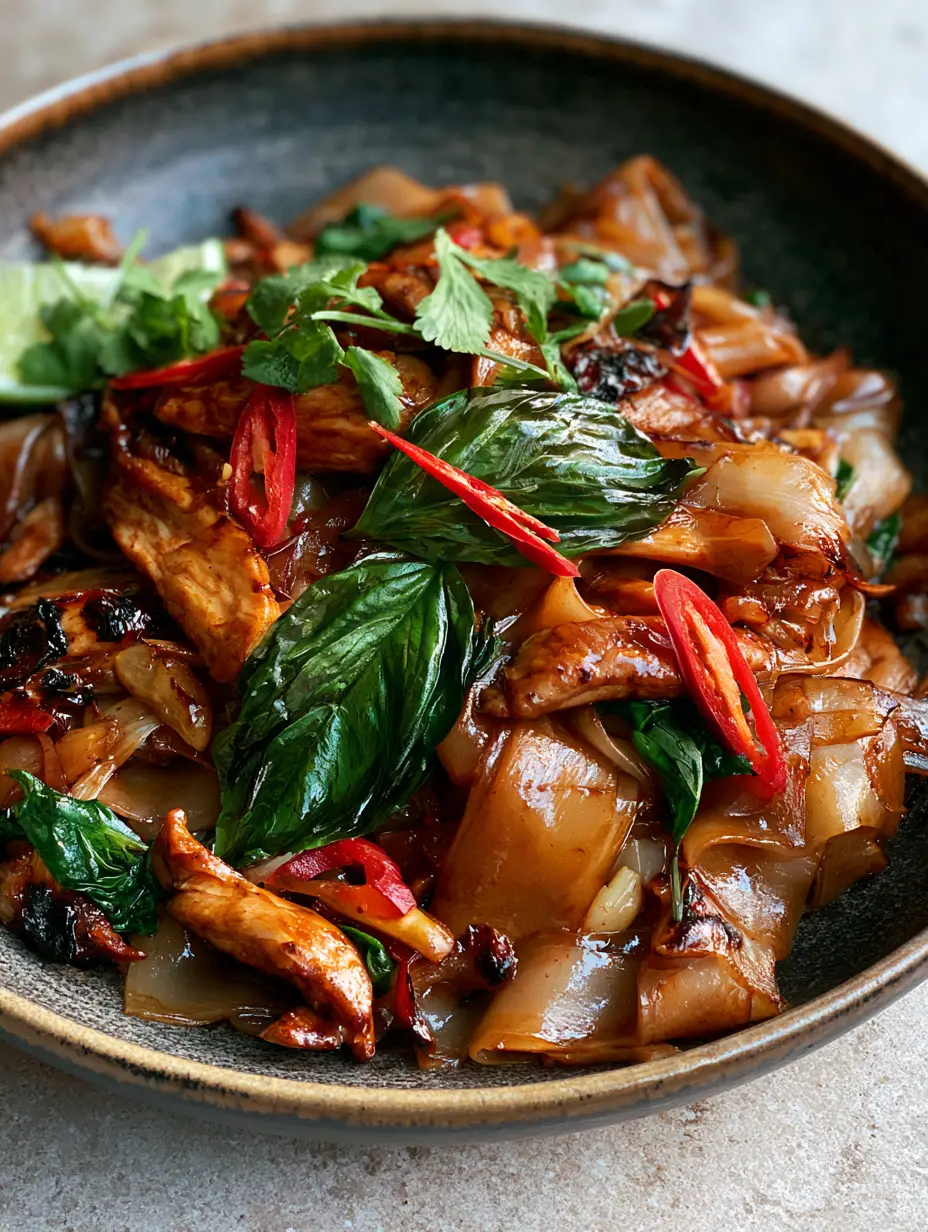
Thai Drunken Noodles: The Ultimate Guide to Achieving Smokey Restaurant-Style Pad Kee Mao at Home
Ingredients
Equipment
Method
- Soak dried rice noodles in hot water for 20 minutes until pliable but al dente. Drain and set aside.
- Whisk oyster sauce, soy sauces, fish sauce, and sugar in a small bowl until sugar dissolves.
- Heat oil in wok over high heat. Add chicken in a single layer and sear for 1-2 minutes until a golden crust forms.
- Toss in garlic slivers and sliced chilies. Stir for 30 seconds until fragrant but not burnt.
- Add noodles and bell peppers. Spread them out to touch the hot surface for 1 minute to achieve charred edges.
- Pour in sauce and toss until noodles are coated and glossy. Turn off heat, stir in Thai basil leaves until wilted.
Notes
If you cannot find Thai basil, holy basil is the best substitute; avoid regular sweet basil if possible.
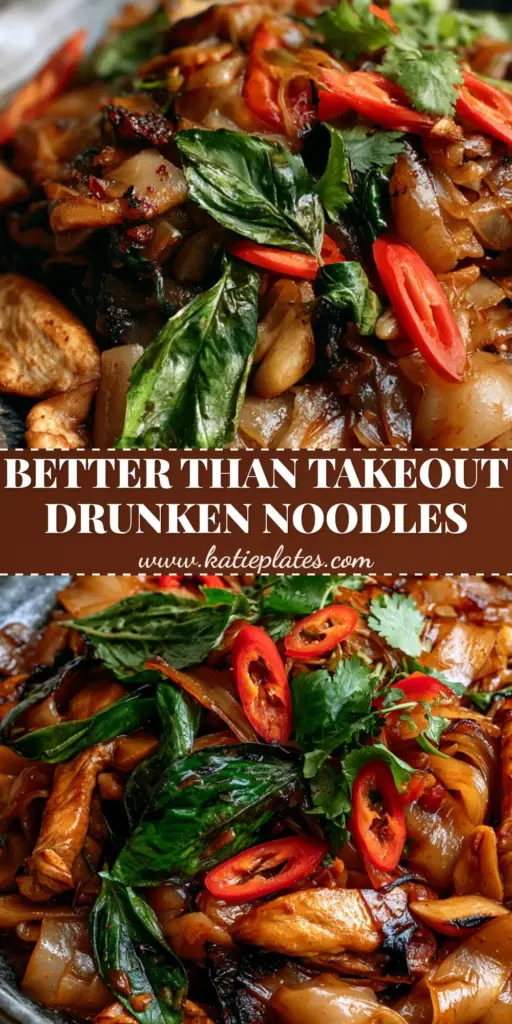
Bring the Flavors of Bangkok to Your Kitchen
Mastering Thai Drunken Noodles is a rite of passage for any home cook who loves bold, spicy flavors and the satisfying chew of a perfectly seared rice noodle. The combination of smoky “wok hei,” succulent chicken, and the aromatic punch of Thai basil makes this a dish you will return to time and time again.
I would love to hear how your version turned out! Did you manage to get those perfect charred edges? Leave a comment below and share your photos with the community. For more visual inspiration and recipe ideas, be sure to follow me on Pinterest and save this recipe to your “Dinner Goals” board!