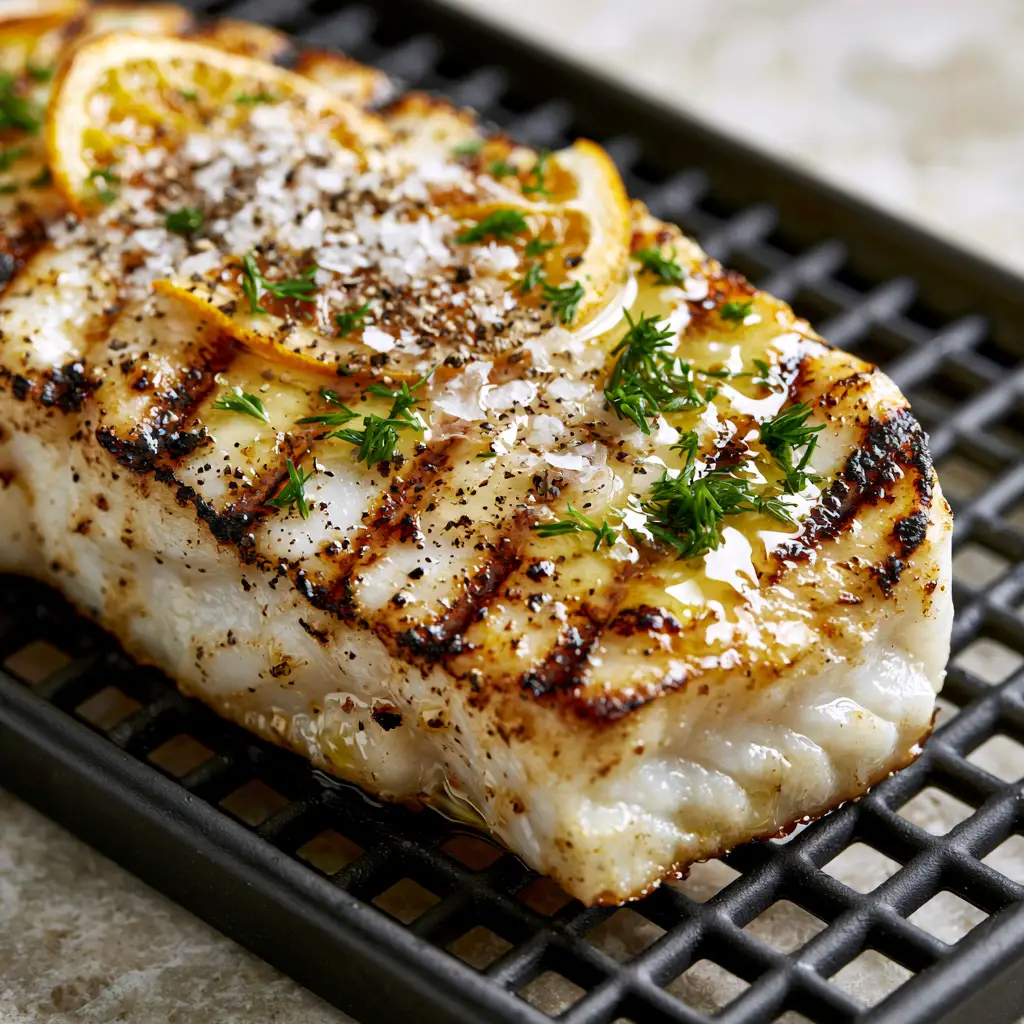
Grilled Halibut is the undisputed crown jewel of summer seafood, offering a firm, meaty texture that handles the heat of the flame with grace. When prepared correctly, this lean white fish transforms into a succulent masterpiece, boasting deep golden-brown sear marks that contrast beautifully against its pearlescent, flaky interior.
This recipe focuses on the forensic details that elevate a simple fillet into a restaurant-quality experience. We are leaning into the bright, citrusy notes of charred Meyer lemons and the aromatic lift of fresh dill to complement the buttery richness of our signature glaze.
Whether you are hosting a sophisticated backyard gathering or looking for a high-protein weeknight luxury, this method ensures your fish stays juicy and flavorful every single time. Get ready to master the art of the perfect sear and the most decadent lemon butter finish.
Why You Will Crave This Perfectly Seared Seafood
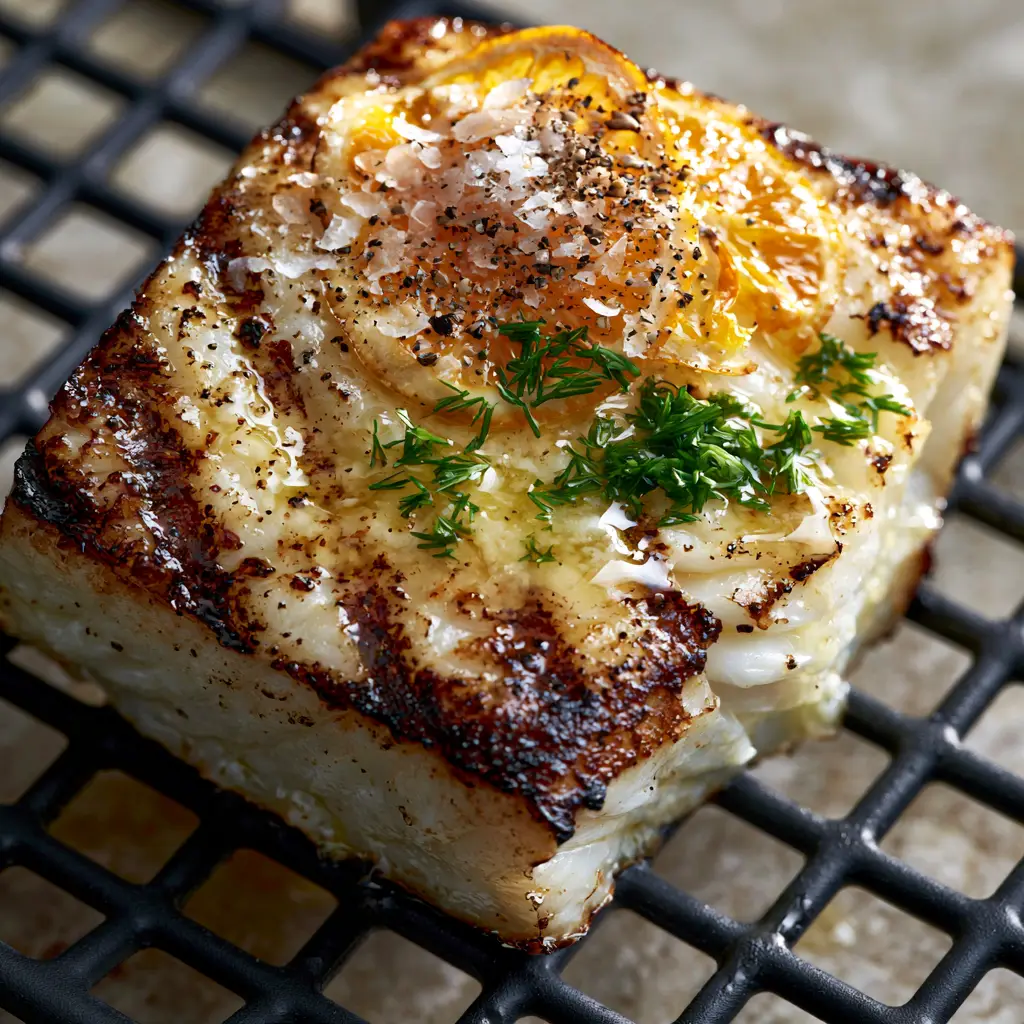
- Iconic Visual Contrast: Achieve those professional, dark diagonal sear marks that look as if they came straight from a gourmet steakhouse kitchen.
- Superior Texture: Learn the temperature secrets to keeping the meat pearlescent white and moist, avoiding the common pitfall of dry, chalky fish.
- Layered Citrus Profile: We use both fresh lemon juice in the glaze and charred lemon wheels to provide a complex, smoky acidity.
- The Finishing Touch: A combination of coarse sea salt flakes and cracked black pepper provides a satisfying crunch that cuts through the melted golden butter.
The Essential Grocery List for Gourmet White Fish
Halibut Fillets: You want thick-cut steaks, ideally 1.5 to 2 inches (4-5cm) thick. This thickness allows you to achieve a hard sear on the outside without overcooking the delicate center.
Unsalted Butter: High-quality butter (8 sticks or 115g) serves as the base for our shimmering glaze. Using unsalted allows you to control the seasoning precisely with your finishing salt.
Meyer Lemons: These are sweeter and more aromatic than standard Eureka lemons. You will need some for juice and others sliced into paper-thin wheels for charring on the grill.
Fresh Dill: Vibrant green dill provides a feathery texture and a grassy, anise-like finish that is traditional yet essential for this flavor profile.
Avocado Oil: With its high smoke point, this is the “invisible” hero that prevents sticking and encourages those dark, caramelized grill marks.
Coarse Sea Salt Flakes: Unlike table salt, these large flakes provide a visual sparkle and a concentrated burst of salinity upon impact.
Cracked Black Pepper: Freshly cracked peppercorns offer a floral heat that pre-ground pepper simply cannot match.
Pro Tools for Achieving Iconic Grill Marks
To replicate the high-resolution results of a professional kitchen, you need the right environment. A clean, minimalist matte black grill grate is ideal for heat retention and producing those distinct diagonal lines.
A high-quality fish spatula is non-negotiable; its long, flexible blade allows you to slide under the fillet without breaking the delicate flakes. Additionally, an instant-read digital thermometer is your best insurance policy against overcooking.
Lastly, ensure you have a small stainless steel saucepan for the lemon butter glaze. This allows you to keep the sauce warm and shimmering on the edge of the grill while the fish finishes cooking.
Mastering the Flame: A Step-by-Step Guide to Success
Preparing the Fish for the Heat
Start by removing your halibut fillets from the refrigerator about 15 minutes before grilling. Cold fish hitting a hot grate causes the muscle fibers to tenses up, leading to uneven cooking.
Pat the fillets bone-dry using paper towels. Moisture is the enemy of the sear; any surface water will create steam, preventing the Maillard reaction that creates those dark golden-brown marks.
Brush both sides of the fish generously with avocado oil and season only with a light dusting of fine salt at this stage. Save the coarse flakes for the final presentation.
Achieving the Perfect Sear
Preheat your grill to medium-high heat, approximately 400°F (200°C). Clean the grates thoroughly with a wire brush and lightly oil them using a rolled-up paper towel dipped in avocado oil.
Place the halibut fillets on the grate at a 45-degree angle to the bars. Press down very lightly with your spatula for the first 10 seconds to ensure maximum contact.
Leave the fish undisturbed for 4-5 minutes. You will know it is ready to flip when the fish releases naturally from the grate; if it sticks, it needs another minute to develop its crust.
The Lemon Butter Shimmer
While the fish sears, place your sliced Meyer lemon wheels directly onto the grill. Char them for about 1-2 minutes per side until they are softened and show distinct grill patterns.
In your small saucepan, melt the butter over low heat. Whisk in the fresh Meyer lemon juice until the mixture is emulsified and shimmering under the light.
Once the fish is flipped, begin basting the seared top with the lemon butter glaze. This allows the fat to seep into the cracks of the flaking fish as it finishes.
Secret Techniques for Flawless Fish Every Time
One of the most important cues for Grilled Halibut is the internal color. Aim for an internal temperature of 130°F (54°C) for a result that is pearlescent and moist.
If you find your fillets are sticking, ensure your grill grates are “seasoned” much like a cast-iron skillet. A well-maintained grate is the difference between a whole fillet and a shredded mess.
Don’t skip the resting period. Let the halibut sit for 3 minutes after removing it from the grill. This allows the juices to redistribute, ensuring every bite is succulent.
Maximizing Freshness: Storage and Reheating Tips
Leftover halibut can be stored in an airtight container in the refrigerator for up to two days. However, seafood is always best enjoyed immediately after grilling to maintain that specific flaky texture.
To reheat, avoid the microwave at all costs, as it will turn the fish rubbery. Instead, place the fillet in a covered pan with a splash of water or extra lemon butter over low heat until just warmed through.
You can also flake cold leftover halibut over a fresh salad or use it as a premium protein for a seafood-inspired grain bowl.
What to Serve Alongside Your Seafood Masterpiece
This dish pairs exquisitely with light, bright Mediterranean flavors. For a cohesive citrus theme, consider drizzling a bit of extra Ladolemono sauce over the entire plate.
For a heartier meal, the buttery halibut acts as a perfect companion to aromatic rice. We highly recommend serving it with Persian Jeweled Rice for a stunning color contrast on the table.
If you are looking for a cooling side dish to balance the charred notes of the grill, a bowl of Persian yogurt and cucumber dip provides a refreshing creamy element.
To drink, stay within the citrus family. A crisp, chilled white wine like Sauvignon Blanc is traditional, or for a non-alcoholic option, try a strawberry lime mocktail to lean into the summer vibes.
Deep Dive: Frequently Asked Questions
Yes, but ensure it is completely thawed in the refrigerator overnight and patted dry. Previously frozen fish often contains more moisture, so drying it is even more critical for a good sear.
Ensure the fish is patted completely dry and brushed with a high-smoke point oil. Most importantly, do not try to flip the fish until it naturally releases from the grate after about 4-5 minutes.
For a moist, pearlescent texture, remove the halibut from the grill when it reaches an internal temperature of 130°F to 135°F (54°C to 57°C).
Meyer lemons have a thinner skin and higher sugar content than standard lemons, which allows them to caramelize and char more beautifully on the grill without becoming overly bitter.
Avocado oil has a much higher smoke point (520°F) than extra virgin olive oil, allowing you to get those dark, charred marks without the oil burning and tasting acrid.
The Ultimate Grilled Halibut Recipe
Grilled Halibut with Shimmering Lemon Butter and Charred Meyer Lemons
Ingredients
Equipment
Method
- Pat halibut fillets extremely dry with paper towels. Brush both sides with avocado oil and season lightly with fine salt.
- Preheat grill to medium-high (400°F/200°C) and clean grates thoroughly.
- Place fish on the grill at a 45-degree angle. Cook for 4-5 minutes until dark golden-brown sear marks form and the fish releases easily.
- Flip the fillets. Place Meyer lemon wheels on the grill to char. Whisk melted butter and lemon juice in a small pan on the grill edge.
- Baste the fish with the lemon butter glaze. Cook for another 3-4 minutes until the interior is pearlescent white and reaches 130°F (54°C).
- Remove to a platter. Drizzle with remaining shimmering butter. Top with charred lemon wheels, fresh chopped dill, coarse sea salt flakes, and cracked pepper.
Notes
Use a high-smoke point oil like avocado or grapeseed oil for the best sear marks.
Bring the Steakhouse Seafood Experience Home
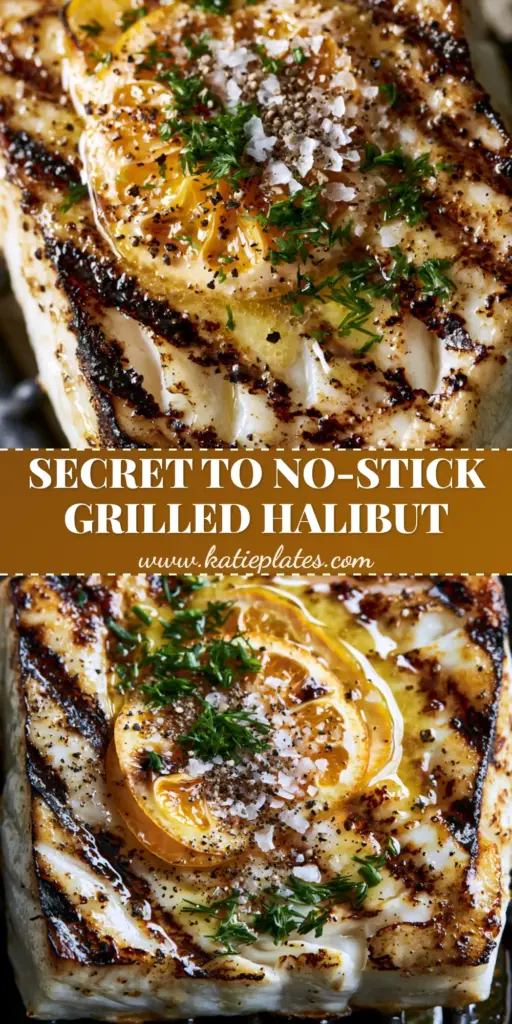
Mastering Grilled Halibut is a transformative skill for any home cook. By focusing on the temperature, the dryness of the fish, and the quality of your finishing ingredients, you create a dish that is visually stunning and culinarily superior.
The combination of the dark sear, the shimmering butter, and the vibrant dill creates a sensory experience that defines summer dining. We invite you to share your results and tag us in your beautiful creations!
If you enjoyed this recipe, please leave a comment below and share this post to Pinterest to save it for your next garden party. Don’t forget to sign up for our newsletter for more elite culinary blueprints delivered straight to your inbox.