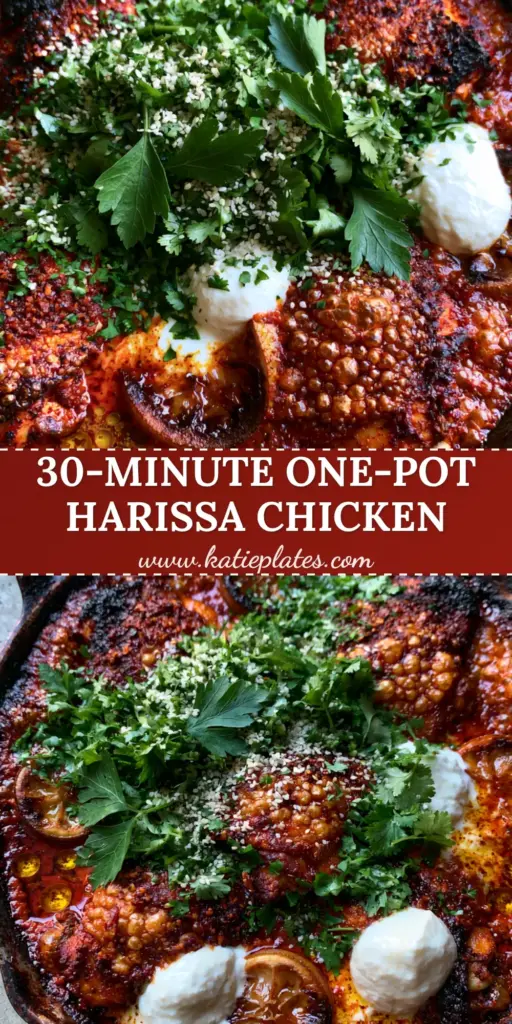
Bringing the bold, sun-drenched flavors of the Maghreb into your kitchen starts with mastering North African recipes that prioritize texture and heat. This Spicy Harissa Chicken Skillet is a masterclass in culinary contrast: featuring intensely crispy, bubbled chicken skin and a deep-crimson, bubbling sauce that carries the soul of Tunisian spice. It is a dish designed for the center of the table, served straight from the cast iron to preserve every drop of that shimmering orange spice oil.
Whether you are a seasoned explorer of North African recipes or just beginning your journey into spice-forward cooking, this dish offers a sensory explosion. The handheld, rustic nature of this meal—meant to be scooped up with crusty bread—captures the authentic essence of communal dining. We are combining the smoky punch of harissa with the cooling, velvety texture of thick labneh to create a balanced, professional-grade dinner.
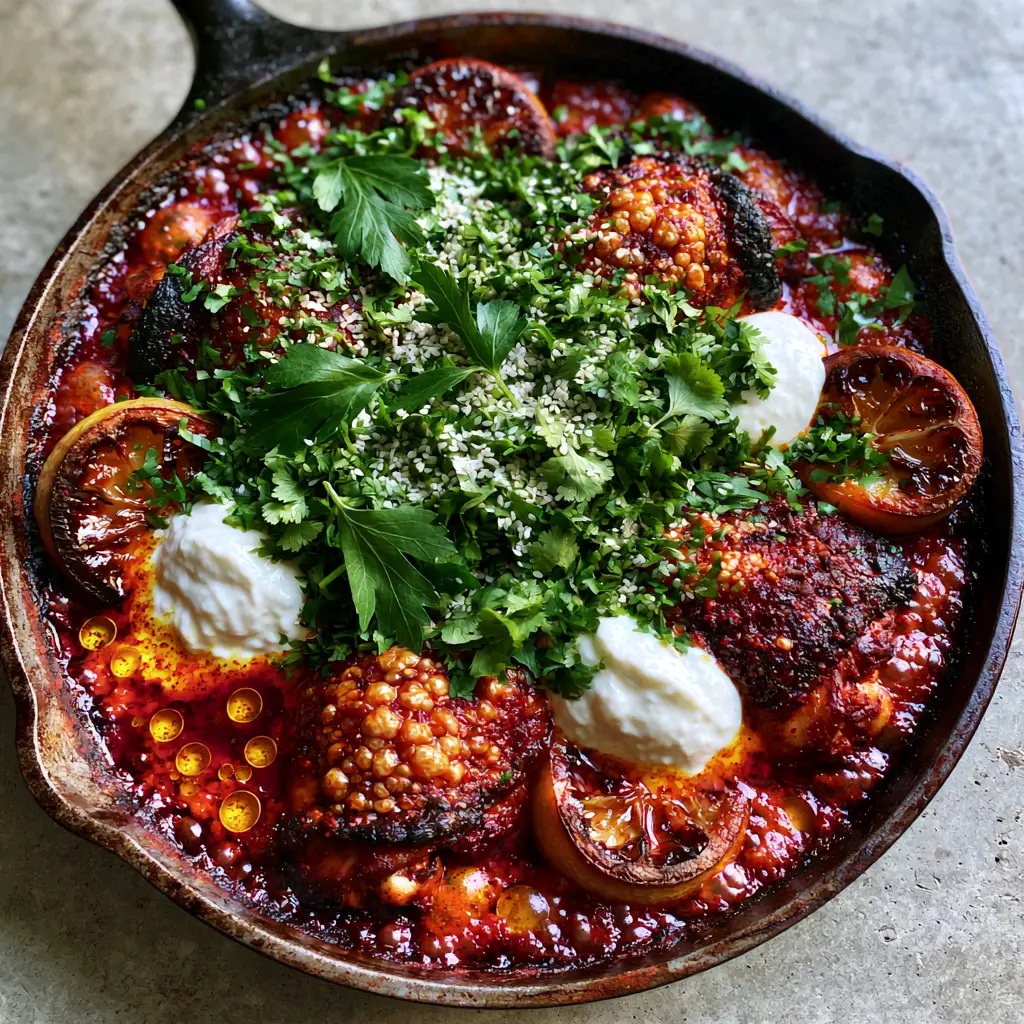
The Secrets to Achieving Intensely Crispy Charred Chicken Skin
- Bone-In, Skin-On Thighs: The bone acts as a thermal conductor, keeping the meat succulent while the skin undergoes a transformation into a golden, bubbled crust.
- High-Heat Cast Iron Searing: Using a rustic black cast iron skillet ensures even heat distribution, allowing the chicken skin to render and char without burning the meat.
- The Harissa Glaze: A thick, bubbling, deep-red harissa sauce creates a glistening spicy glaze that clings to the ridges of the crispy skin.
- Caramelized Lemon Accents: Searing lemon half-moons alongside the chicken provides a charred, browned edge that releases essential oils into the sauce.
- The Cooling Contrast: Three distinct dollops of stark-white labneh provide a visual and textural relief, just beginning to melt into the red sauce.
Sourcing Essential Ingredients for Authentic North African Flavor
Bone-in, Skin-on Chicken Thighs (about 2 lbs / 900g): This cut is non-negotiable for achieving the “intensely crispy, bubbled skin” required for this specific visual result. The fat renders down to create the base of our shimmering orange spice oil.
Rose Harissa Paste (1/2 cup / 120ml): Look for a high-quality brand with a deep-crimson hue; this provides the thick, bubbling base of the sauce and the signature heat. It is the backbone of many African dinner recipes and offers a complex, smoky profile.
Full-Fat Labneh (1/2 cup / 120ml): This thick, strained yogurt provides the “stark-white cooling dollops” that balance the harissa’s fire. If you cannot find labneh, Greek yogurt strained through cheesecloth for 4 hours is a suitable substitute.
Fresh Lemons (2 large): One lemon is sliced into thin half-moons for caramelizing in the pan, while the other is used for fresh juice to deglaze the skillet. The caramelized rinds become soft and edible, adding a concentrated citrus punch.
Fresh Cilantro and Flat-Leaf Parsley (1 cup / 30g): A heavy scatter of these vibrant greens provides the “fresh, vibrant” top layer that cuts through the richness of the chicken and spice oil.
White Sesame Seeds (1 tbsp / 9g): A final dusting provides a subtle crunch and a professional visual finish against the deep red sauce.
Neutral High-Smoke Point Oil (2 tbsp / 30ml): Essential for the initial sear; it helps achieve that “dark charred edge” without the oil breaking down and smoking out your kitchen.
Essential Equipment for This Rustic Skillet Masterpiece
To recreate the authentic food photography style seen in the visual blueprint, you must use a 12-inch (30cm) rustic black cast iron skillet. This heavy-bottomed pan is the only tool capable of holding the high heat necessary for those dark charred edges. You will also need a pair of professional kitchen tongs for precise chicken flipping and a sharp chef’s knife for creating the clean lemon half-moons and finely torn cilantro.
Mastering the Sear: A Step-by-Step Culinary Guide
Preparing the Chicken and Skillet
Pat the chicken thighs extremely dry with paper towels; moisture is the enemy of crispy skin. Season liberally with 1 tsp (6g) of kosher salt. Heat your cast iron skillet over medium-high heat with 2 tbsp (30ml) of neutral oil until it begins to shimmer. This ensures the chicken won’t stick and the Maillard reaction begins immediately upon contact.
Achieving the Perfect Charred Skin
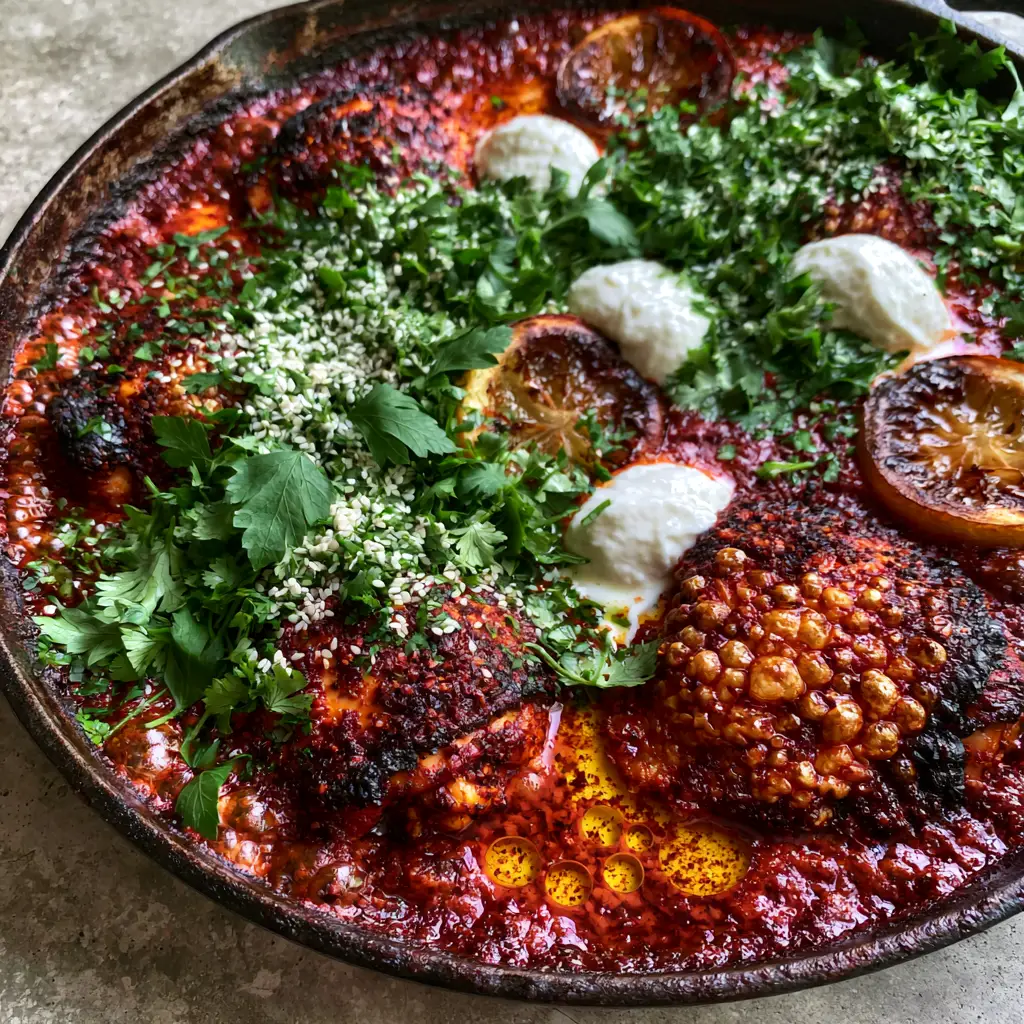
Place the chicken thighs skin-side down in the hot skillet. Do not move them for at least 6-8 minutes. You are looking for a sensory cue: the sound of a steady sizzle and the visual of the skin turning a deep golden-brown with bubbled, charred edges. Once the skin is intensely crispy, flip the thighs and sear the underside for 3-4 minutes.
Building the Bubbling Harissa Sauce
Push the chicken to the sides of the skillet and add the lemon half-moons to the center. Sear until the lemon edges are browned and caramelized. Stir in 1/2 cup (120ml) of harissa paste and 1/4 cup (60ml) of chicken broth or water. Scrape the bottom of the pan to release the fond, creating a thick, bubbling, deep-crimson sauce that coats the lemons and the base of the chicken.
The Final Finish and Garnish
Allow the sauce to reduce until you see droplets of golden spiced oil shimmering on the surface. Remove from heat. While the pan is still hot, add three distinct, large dollops of thick labneh. Watch as they just begin to melt into the red sauce. Scatter the fresh cilantro, flat-leaf parsley, and white sesame seeds over the top for a vibrant contrast.
Expert Tips for Success in North African Cooking
- Control the Heat: If the harissa begins to smell acrid or darkens too quickly, immediately add a splash of water or broth to lower the pan temperature.
- The Labneh Secret: Do not stir the labneh into the sauce; the visual appeal relies on the stark white contrast against the crimson harissa.
- Lemon Selection: Use thin-skinned Meyer lemons if available, as their rinds caramelize faster and offer a sweeter profile than standard Eureka lemons.
- Spice Oil Harvest: If the sauce feels too thick, add an extra tablespoon of olive oil at the end to achieve that “shimmering orange spice oil” look.
Safe Storage and Reheating Recommendations
Store leftovers in an airtight container for up to 3 days in the refrigerator. To maintain the crispy skin, avoid reheating in the microwave. Instead, place the chicken and sauce in a small skillet over medium heat, covering briefly to warm the meat through, then uncovering to let the skin crisp back up. Note that the labneh will fully melt into the sauce upon reheating, creating a creamy rose-colored gravy that is equally delicious, if less visually distinct.
What to Serve With Spicy Harissa Chicken
To soak up the shimmering spice oil and bubbling sauce, serve this dish with a side of maize porridge or a light, fluffy couscous. If you are exploring other regional variations, this chicken pairs beautifully with the side dishes often found in West African cooking. For those who enjoy a variety of textures, consider serving it alongside a batch of savory bean cakes to round out a full continental feast.
Frequently Asked Questions Regarding North African Recipes
While possible, chicken breasts lack the fat content and skin surface to achieve the ‘intensely crispy, bubbled skin’ shown in the recipe images. Thighs are highly recommended.
Harissa varies by brand, but it typically offers a medium-high heat. You can temper the spiciness by adding a teaspoon of honey or increasing the amount of labneh dollops.
Yes, this Harissa Chicken Skillet is naturally gluten-free. Just ensure your harissa paste does not contain any thickening agents with gluten.
The shimmering orange oil is a result of the chicken fat rendering and mixing with the oil-based harissa paste and natural spices like paprika and cumin.
You can easily substitute labneh by straining full-fat Greek yogurt through cheesecloth for at least 4 hours to achieve the same thick, spreadable consistency.
The Ultimate North African Harissa Chicken Recipe
North African recipes: Spicy Harissa Chicken Skillet with Labneh
Ingredients
Equipment
Method
- Pat chicken dry and season with salt. Heat oil in a cast iron skillet over medium-high heat. Place chicken skin-side down and sear for 8 minutes until skin is intensely crispy and bubbled with charred edges.
- Flip the chicken. Add lemon half-moons to the skillet spaces. Cook for 4 minutes until lemons are caramelized and browned.
- Add harissa paste and chicken broth to the pan. Stir around the chicken to create a bubbling, deep-red sauce. Simmer for 3-5 minutes until shimmering orange spice oil appears.
- Remove from heat. Add three distinct dollops of labneh. Scatter with fresh herbs and sesame seeds.
Notes
Ensure the pan is not overcrowded to allow for proper searing and charring.
Join the North African Culinary Adventure
This Spicy Harissa Chicken is more than just a meal; it is a gateway to the complex world of North African recipes. The combination of heat, acidity, and cooling dairy creates a professional flavor profile that is surprisingly easy to achieve at home. If you enjoyed this recipe, please leave a comment below and share your results on Pinterest. Happy cooking!