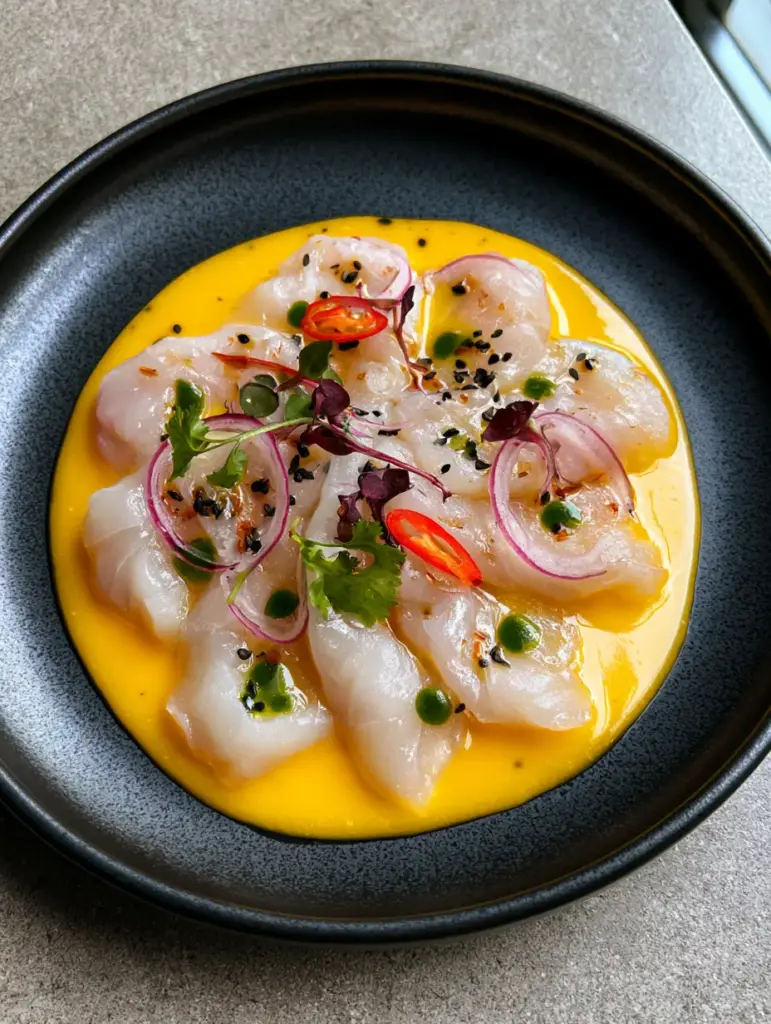
Tiradito is the crown jewel of Peruvian-Nikkei fusion, a dish that celebrates the delicate purity of raw fish paired with the vibrant, spicy kick of the Andes. If you have ever marveled at the glistening, translucent slices of fish at a high-end sushi bar, this recipe is your gateway to recreating that gourmet experience at home. This specific version features fluke bathed in a silky, saffron-yellow sauce that looks as stunning as it tastes.
Unlike traditional ceviche where the fish is cubed and marinated, tiradito celebrates the “sashimi style” cut. The fish is sliced into elegant ribbons and dressed immediately before serving to maintain its tender, buttery texture. This recipe is designed to be a showstopper, featuring vibrant colors that pop against a matte black ceramic plate, making it the perfect visual centerpiece for your next dinner party.
Why This Gourmet Fluke Tiradito Works
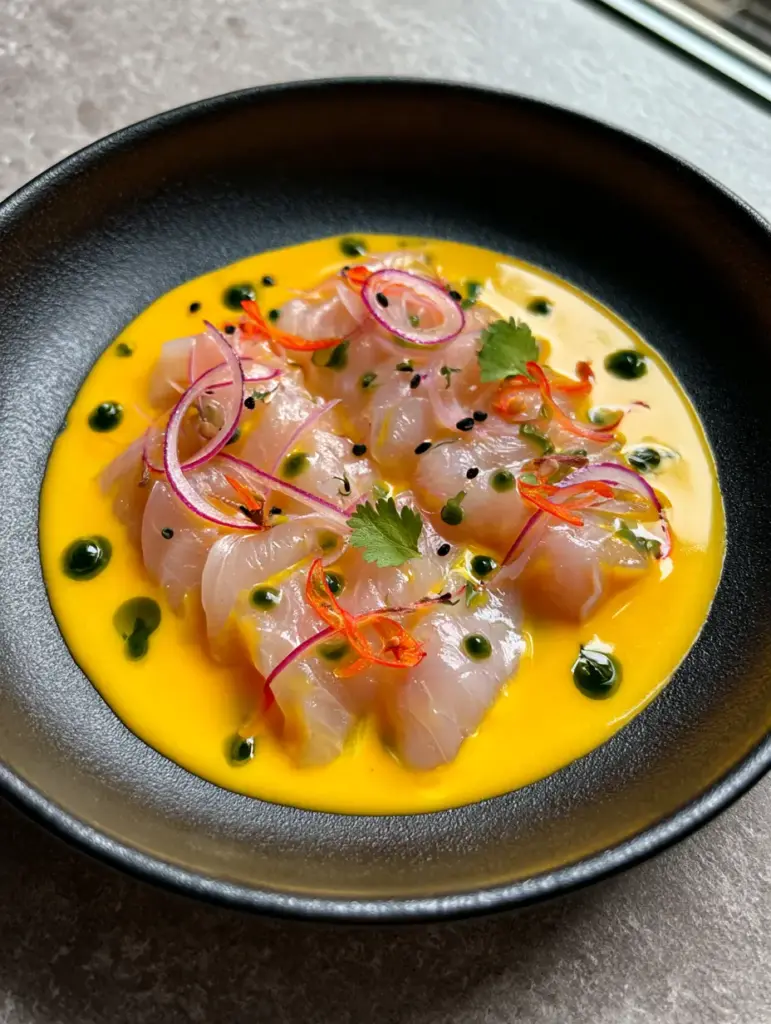
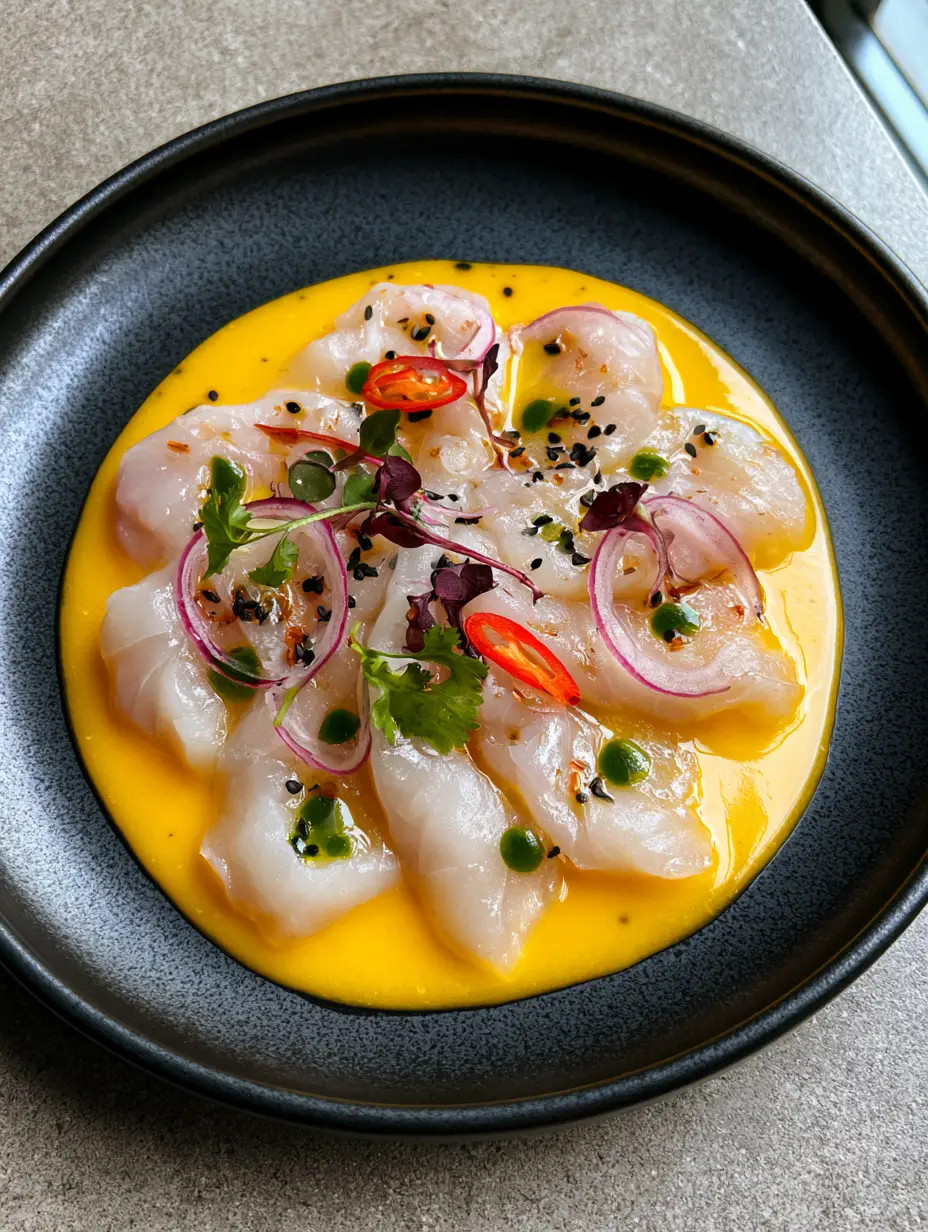
- Visual Contrast: The combination of vibrant yellow aji amarillo sauce against a matte black ceramic plate creates an instant “wow” factor for guests.
- Textural Harmony: You get the melt-in-your-mouth fluke, the crunch of black sesame seeds, and the crisp bite of paper-thin red onion slivers.
- Pure Flavor: By using the best fresh white fish techniques for selection, we ensure a clean, ocean-fresh taste that isn’t masked by heavy marination.
- Sashimi Precision: The thin slicing method allows the spicy, citrusy Leche de Tigre to coat every millimeter of the fish without “cooking” it through.
Essential Ingredients for Peruvian Tiradito
To achieve the forensic visual accuracy of this dish, each ingredient plays a specific role in both flavor and aesthetics. Do not skip the garnishes, as they provide the essential emerald and red highlights seen in professional food photography.
The Foundation: Fresh Seafood
1 lb (450g) Fresh Fluke Fillet: Fluke is the ideal choice for its mild flavor and translucent appearance. You can also substitute this with sushi-grade cod or halibut if fluke is unavailable.
The Signature Yellow Leche de Tigre
1/2 cup (120ml) Aji Amarillo Paste: This provides the iconic saffron-yellow color and a fruity, medium heat. It is the soul of the tiradito sauce.
1/2 cup (120ml) Fresh Lime Juice: Use freshly squeezed lime only; the bottled version is too acidic and lacks the bright floral notes needed to balance the chili.
1 tsp (5g) Fresh Ginger: Grated finely to add a hidden aromatic warmth to the sauce.
1 clove Garlic: Smashed into a paste to provide a savory backbone without overpowering the delicate fluke.
Visual Garnishes & Finishing Touches
1/4 Red Onion: These must be cut into paper-thin red onion slivers and soaked in ice water to keep them crisp and mild.
1 Red Fresno Chili: Sliced into whisper-thin rounds to add a bright red pop of color and a secondary layer of heat.
Emerald Cilantro Oil: A few droplets of this vibrant green oil create a beautiful contrast against the yellow sauce. Much like a restaurant-style scallop dish, the oil adds luxury and mouthfeel.
Micro-cilantro Sprigs & Black Sesame Seeds: These provide the final artistic touches, adding height and earthy notes to the presentation.
How to Make the Perfect Tiradito
Creating a restaurant-quality tiradito requires patience during the prep phase and speed during the plating phase. Follow these steps to ensure your fish remains chilled and fresh.
Step 1: Prep the Aromatics and Garnishes
Start by slicing your red onion into paper-thin curls. Boldly place them in a bowl of ice water for at least 10 minutes to remove the harsh sulfur bite and enhance their “curl.”
Slice the red fresno chili into translucent rounds, discarding the seeds if you prefer a milder experience. Set aside your micro-cilantro and black sesame seeds for the final assembly.
Step 2: Create the Silky Aji Amarillo Sauce
In a high-speed blender, combine the aji amarillo paste, lime juice, ginger, garlic, and a pinch of salt. Blend until the sauce is completely smooth and has a “silky, cream-like thickness.”
Strain the sauce through a fine-mesh sieve to ensure there are no fibrous bits left from the ginger or garlic. Refrigerate this sauce until the exact moment you are ready to plate.
Step 3: Slice the Fluke (The Sashimi Technique)
Use a very sharp sushi knife or a long carving knife. Slice the fluke against the grain into thinly sliced raw fluke pieces, roughly 1/8 inch (3mm) thick.
Keep the fish as cold as possible; if your kitchen is warm, place the cutting board over a bed of ice. The fish should look glistening and fresh with a distinct sheen.
Step 4: The Art of Plating
Take your matte black ceramic plate and arrange the fluke slices in an elegant fan pattern. They should slightly overlap but cover the center of the plate.
Pour the chilled yellow sauce around the fish, creating a shallow pool of vibrant saffron-yellow Aji Amarillo Leche de Tigre. The fish should be partially submerged but not drowning.
Step 5: Final Garnishing
Carefully place the paper-thin red onion slivers and red fresno chili rounds atop the fish. Use a dropper or a small spoon to dot the surface with emerald cilantro oil droplets.
Finish with a scatter of black sesame seeds and micro-cilantro sprigs. The final result should match the tiradito visual blueprint perfectly.
Expert Tips for Success
- Chill Everything: Put your serving plates in the freezer for 15 minutes before plating to keep the raw fish at the optimal temperature.
- Acid Balance: If your lime juice is exceptionally tart, add a teaspoon of dashi or water to the sauce to mellow it out without losing the zest.
- Fish Quality: Since this is a raw dish, only buy “sushi-grade” or “sashimi-grade” seafood from a trusted purveyor.
- Knife Skills: If you struggle to slice the fish thinly, put the fluke in the freezer for 15-20 minutes to firm it up before cutting.
How to Store and Serve Tiradito
Storage: Tiradito must be eaten immediately. Because the sauce contains lime juice, the acid will begin to “cook” the fish (turning it opaque and firm) if it sits for more than 10-15 minutes.
Make Ahead: You can prepare the aji amarillo sauce and the cilantro oil up to 24 hours in advance. Store them in airtight containers in the refrigerator.
Leftovers: We do not recommend storing leftovers. If you have extra raw fish, it is better to sear it like pan-seared fish the following day rather than eating it raw after it has sat.
What to Serve With This Dish
This tiradito is a light, acidic, and spicy dish. It pairs beautifully with starchy sides that can soak up the extra Leche de Tigre sauce. Consider serving it alongside savory mushroom rice or traditional Peruvian boiled sweet potatoes.
For a complete themed dinner, you might explore other international flavors like Turkish appetizers or a refreshing watermelon mint sorbet to cleanse the palate after the spicy aji amarillo heat.
Frequently Asked Questions
Yes, as long as it is labeled ‘sushi-grade’ or ‘sashimi-grade.’ In fact, commercially frozen sushi-grade fish is often safer as the deep-freeze process kills parasites.
Aji Amarillo has a medium heat level, similar to a serrano pepper but with a fruitier, berry-like flavor. You can control the heat by removing all seeds and membranes from the peppers before making the paste.
Ceviche is typically cubed and marinated in citrus for several minutes, ‘cooking’ the fish. Tiradito is sliced thinly like sashimi and sauced immediately before serving so the fish remains raw and tender.
Mild, firm white fish are best. Fluke, flounder, sea bass, and halibut are traditional choices. Scallops and tuna are also popular modern variations.
Authentic Peruvian Fluke Tiradito Recipe
Tiradito: The Ultimate Peruvian Fluke with Aji Amarillo Sauce
Ingredients
Equipment
Method
- Slice red onions into paper-thin slivers and soak in ice water for 10 minutes.
- Blend aji amarillo paste, lime juice, ginger, and garlic until a silky, cream-like yellow sauce forms. Strain through a fine sieve.
- Thinly slice the raw fluke into translucent ribbons and fan them out on a matte black plate.
- Pour the yellow sauce around the fish. Garnish with onion curls, fresno chili, cilantro oil droplets, sesame seeds, and micro-cilantro.
Notes
Serve immediately after adding the lime-based sauce to prevent the fish from over-curing.
Save This Recipe to Pinterest!
If you love this tiradito recipe, don’t forget to save it to your Pinterest seafood or appetizer boards! Following katieplates helps us bring you more gourmet, visually stunning recipes every week.
Did you make this dish? We want to see your plating skills! Share a photo in the comments below and let us know how the aji amarillo sauce turned out. Don’t forget to leave a 5-star rating if you enjoyed this Peruvian classic!