When you dive into the vibrant world of Ivorian recipes, one dish stands out as the undisputed king of street food: Alloco. This isn’t just a side dish; it is a cultural icon found on nearly every street corner from Abidjan to Yamoussoukro. The magic lies in the contrast between the naturally sweet, caramelized plantain cubes and the savory, fiery depth of a well-simmered tomato sauce.
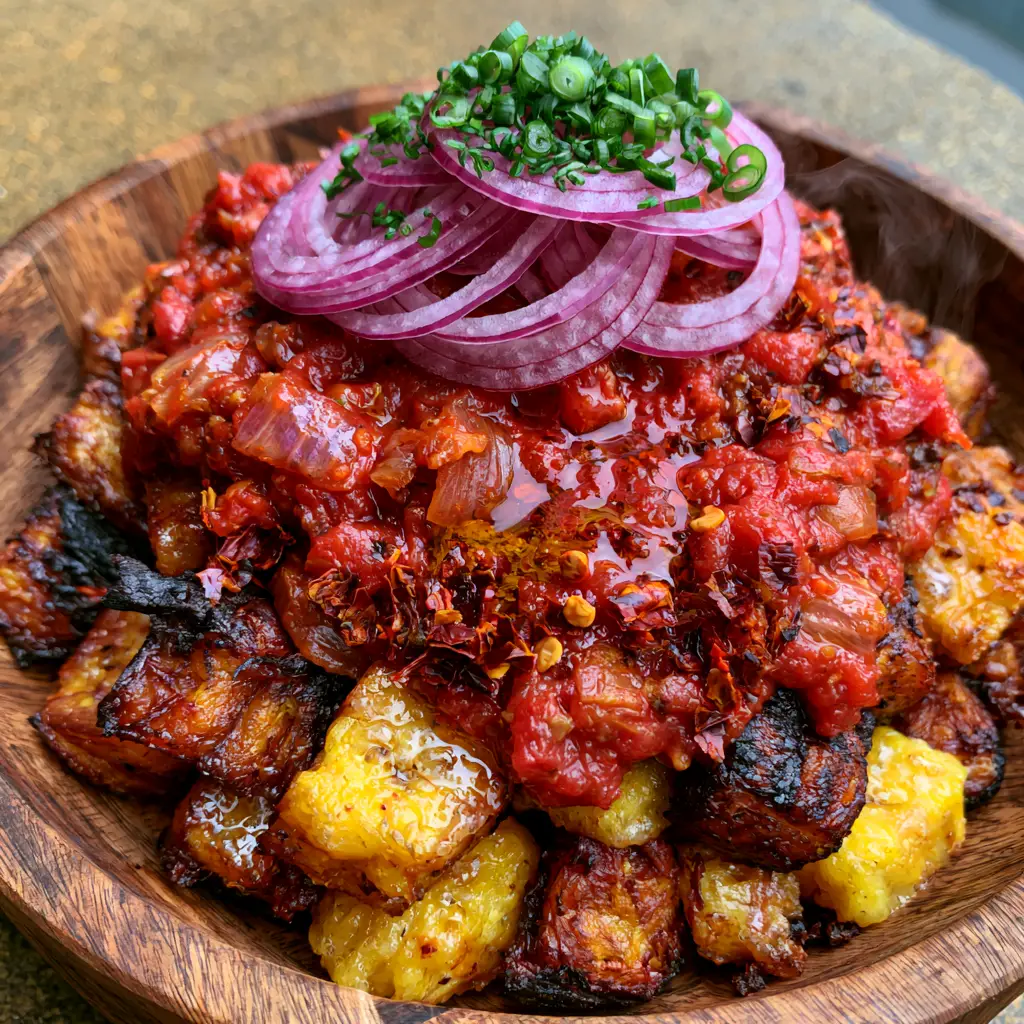
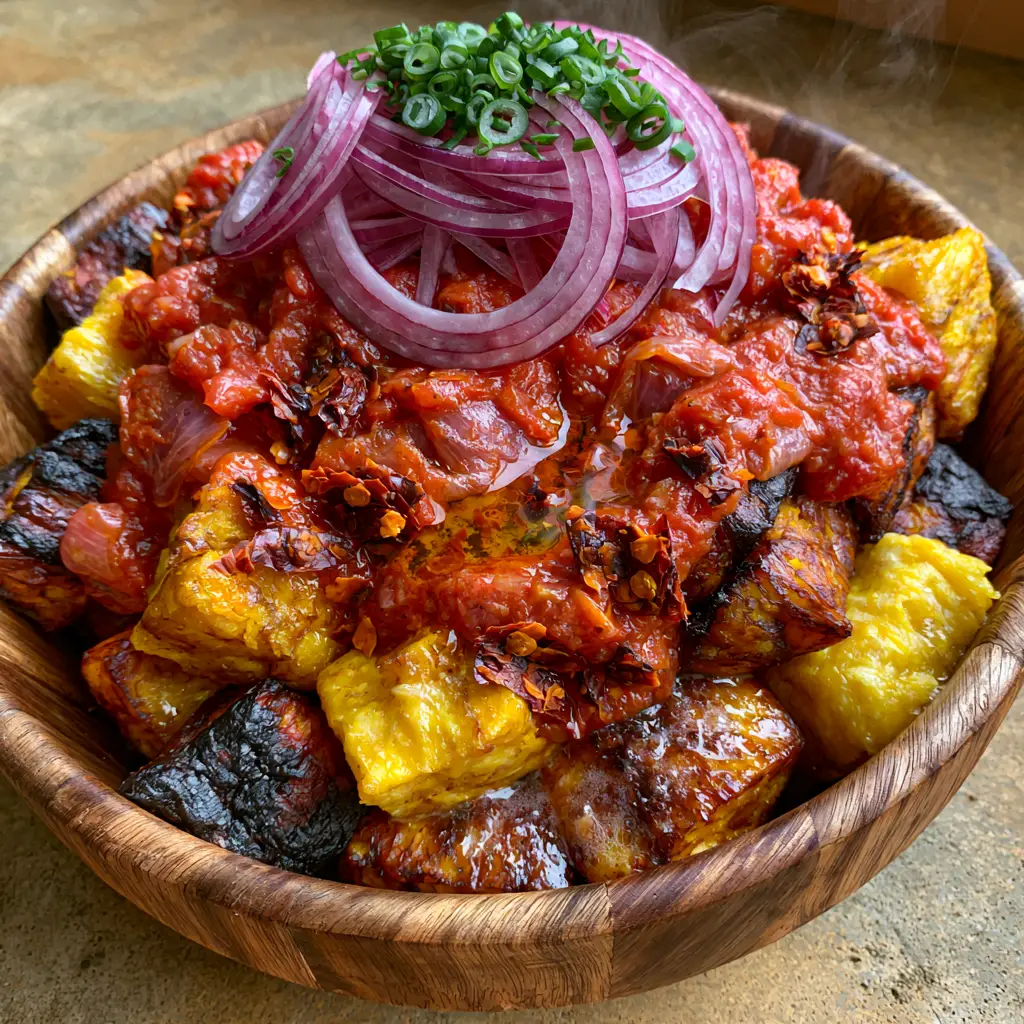
The visual appeal of Alloco is as legendary as its flavor. Imagine a rustic wooden bowl filled with golden-yellow plantain cubes, their edges darkened to a perfect mahogany. In the center, a thick, rich tomato sauce sits like a crown, dotted with softened onion chunks and red chili flakes. The finishing touch—a sprinkle of paper-thin raw red onion rings and bright green scallions—adds a fresh crunch that cuts through the richness of the fry.
Whether you are recreating a memory of West Africa or exploring these flavors for the first time, this recipe captures the handheld, smartphone-ready aesthetic of a modern Ivorian kitchen. Every bite offers a sensory journey: the sizzle of the oil, the aroma of simmering aromatics, and the final, satisfying sprinkle of sea salt flakes over glistening, oil-sheened plantains.
Why This Ivorian Alloco Recipe Works
- Perfect Caramelization: By using specifically ripe plantains, we achieve those dark, sweet edges while maintaining a soft, custard-like yellow center.
- The “Oily Separation” Secret: We teach you how to simmer the sauce until the oil slightly separates, a professional culinary cue that indicates the tomato acidity has mellowed into pure savory richness.
- Textural Harmony: The combination of soft fried plantain, thick chunky sauce, and the crisp bite of raw red onion rings creates a multi-dimensional eating experience.
- Scientifically Tested Heat: The inclusion of crushed red chili flakes allows for a controllable spice level that complements the natural sugars of the fruit.
Essential Elements for Authentic Ivorian Alloco
Yellow-Black Plantains: You need 4 large plantains (about 1.2kg) that are yellow with significant black spotting. These contain the perfect sugar-to-starch ratio to ensure the cubes develop caramelized edges without turning into mush.
Neutral Frying Oil: Use 2 cups (480ml) of peanut or canola oil. These oils have a high smoke point, which is essential for achieving that glistening oil sheen without a burnt aftertaste.
Fresh Roma Tomatoes: You will need 3 large (300g) finely diced tomatoes. Their lower water content compared to beefsteak varieties ensures the sauce remains thick and vibrant rather than watery.
The Onion Duo: One large yellow onion (200g) provides the “softened chunks” in the sauce, while one small red onion (100g) is sliced into translucent rings for a sharp, fresh garnish.
Spicy Aromatics: 1 tbsp (6g) of crushed red chili flakes provides the visible heat, while 2 cloves of minced garlic add a foundational savory depth that anchors the Ivorian recipes profile.
Fresh Green Scallions: 3 medium scallions (45g) finely sliced add the necessary green pop and a mild peppery finish to the heavy dish.
Sea Salt Flakes: 1 tsp (5g) of flaky sea salt is crucial. Unlike table salt, flakes provide a targeted burst of seasoning that highlights the sweetness of the fried fruit.
Tools for the Perfect Handheld Aesthetic
To achieve the look of our visual blueprint, you will need a heavy-bottomed frying pan or a cast-iron skillet. The heat retention of cast iron is vital for the plantains to cook evenly. You will also need a fine-mesh spider strainer to lift the cubes out of the oil, allowing excess fat to drain while maintaining that “glistening sheen.”
For the sauce, a wide saucepan is better than a deep pot. The increased surface area allows the moisture to evaporate faster, leading to that coveted “oily separation” more quickly. Finally, a sharp mandoline or a very steady hand with a chef’s knife is required for the “thinly sliced” raw red onion rings that top the dish.
The Step-by-Step Path to Golden, Caramelized Perfection
Preparing the Plantain Foundation
Begin by cutting the ends off your plantains and making a shallow slit down the length of the skin. Peel them carefully to reveal the bright yellow flesh. Slice the plantains into 1-inch (2.5cm) cubes.
Consistency is key here; if the cubes are uniform, they will all reach that perfect state of “dark caramelized edges” at the exact same time. Pat the cubes dry with a paper towel to ensure they fry rather than steam.
Mastering the Deep Fry
Heat your 2 cups (480ml) of oil to 350°F (175°C). Carefully add the plantain cubes in batches to avoid crowding the pan. If the temperature drops too low, the plantains will absorb too much oil and lose their structure.
Fry for 5-7 minutes, turning occasionally. Look for the visual cue: the edges should be a deep, dark brown (almost black in spots), while the centers remain a vibrant, soft yellow. Remove with a spider strainer and place in a rustic wooden bowl lined with a single paper towel—we want a “light oil sheen,” not a greasy puddle.
Simmering the Signature Spicy Sauce
In a separate saucepan, heat 2 tbsp (30ml) of the frying oil. Add your large yellow onion chunks and sauté until they are translucent and softened, but not browned. Stir in the minced garlic and 1 tbsp (6g) of chili flakes, letting them bloom until the air smells spicy and toasted.
Add the diced tomatoes and a pinch of salt. Lower the heat and let the sauce simmer for 15-20 minutes. You are looking for a “vibrant red” color and a “thick” consistency. The most important sensory cue is the “oily separation”—when small beads of red-tinted oil begin to pool on the surface, the sauce is ready.
Assembling the Ivorian Masterpiece
Remove the paper towel from your wooden bowl. Ensure the plantains are piled high. Pour the thick tomato sauce generously over the center of the cubes, letting some of it drip down into the crevices.
Top the dish with your “very thinly sliced” raw red onion rings. Sprinkle the finely sliced green scallions over the top. Finally, take a pinch of sea salt flakes and crush them between your fingers as you sprinkle them over the entire bowl. The steam rising slightly from the sauce will carry the aroma of the fresh onions and scallions to your guests.
Expert Tips for Alloco Success
- Avoid the “Soggy” Trap: Never cover the plantains once they are fried. The trapped steam will soften the caramelized edges, turning them mushy.
- The Ripeness Test: If the plantain is completely black, it is too ripe for Alloco and is better suited for a mash. If it’s solid green, it will be starchy and savory like a potato. Look for the “cheetah spot” yellow-black balance.
- Sauce Texture: If your tomatoes are too acidic, add a tiny pinch of sugar to the sauce. This mimics the traditional flavor profile found in many Ghanaian stews and Ivorian sauces.
- Temperature Control: If the oil starts to smoke, it’s too hot. Remove from heat immediately. Burnt oil will ruin the delicate sweetness of the fruit.
The Best Way to Store and Reheat
Alloco is best enjoyed immediately while the plantains are hot and the garnishes are crisp. However, if you have leftovers, store the plantains and sauce in separate airtight containers in the refrigerator for up to 3 days.
To reheat, avoid the microwave as it will make the plantains rubbery. Instead, toss the plantains in an air fryer at 350°F (175°C) for 3-4 minutes to regain their crisp edges. Heat the sauce in a small pan on the stove, adding a teaspoon of water if it has become too thick. Always add fresh red onion and scallions after reheating.
What to Serve With This Ivorian Classic
While Alloco is a powerhouse on its own, it is frequently served as part of a larger feast. In many West African recipe traditions, fried plantains are the perfect companion to grilled tilapia or roasted chicken. If you are looking for a complete meal, consider pairing it with a hearty maize-based side or a savory spinach stew.
For those exploring broader African recipes, Alloco serves as an excellent introduction to the continent’s love affair with the plantain. It balances the heat found in Nigerian snacks with a unique sweetness that is purely Ivorian.
Frequently Asked Questions
Yes, you can air fry them at 375°F (190°C) for 12-15 minutes, tossing halfway. However, to get the authentic ‘glistening sheen’ described in Ivorian recipes, a light spray of oil is required.
It can be! While the plantains are sweet, the sauce usually carries a kick. You can adjust the red chili flakes in this recipe to suit your personal heat tolerance.
The best plantains are yellow with heavy black spotting. This ripeness ensures the cubes caramelize beautifully due to high sugar content while staying soft inside.
While many cultures fry plantains, Ivorian Alloco is specifically defined by its cubed shape and the accompaniment of a thick, spicy, onion-rich tomato sauce and fresh garnishes.
Oily separation is a culinary cue that the water has evaporated and the tomatoes are fully cooked, resulting in a concentrated, rich, and less acidic flavor profile.
The Ultimate Ivorian Alloco Recipe
Ivorian Recipes: The Ultimate Guide to Crispy, Spicy Alloco
Ingredients
Equipment
Method
- Peel the ripe plantains and slice into 1-inch (2.5cm) cubes. Pat them dry with paper towels to ensure a crisp fry.
- Heat oil to 350°F (175°C). Fry plantain cubes in batches for 5-7 minutes until edges are dark caramelized and centers are soft yellow. Drain on a single paper towel to maintain a glistening sheen.
- In a saucepan, sauté yellow onion chunks and garlic in 2 tbsp (30ml) oil until softened. Add chili flakes and bloom for 1 minute.
- Add diced tomatoes and simmer for 15-20 minutes until the sauce is thick and a slight red oil separation appears on the surface.
- Place fried plantains in a bowl. Pour sauce over the center. Top with raw red onion rings, sliced scallions, and a sprinkle of sea salt flakes.
Notes
Ensure the oil is at the correct temperature to prevent sogginess.
Closing & Call to Action
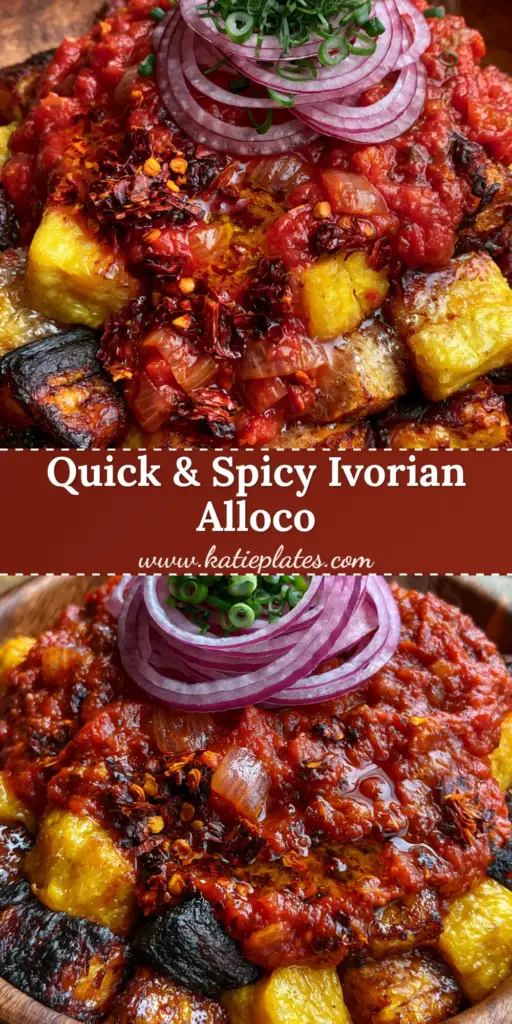
Ivorian Alloco is more than just a recipe; it’s an invitation to experience the soul of West African street food. The combination of sweet, salty, spicy, and fresh is a testament to the culinary brilliance of Côte d’Ivoire. We hope this guide helps you achieve that perfect “handheld smartphone photo” look in your own kitchen!
Did you try this recipe? We’d love to hear how your caramelization turned out! Leave a comment below and don’t forget to follow katieplates on Pinterest for more inspired Ivorian recipes and global flavors. Pin this recipe to your “African Dinner Ideas” board to save it for later!